
The NCP blog
Concrete Polishing for Your Miami Home: Benefits and Process
Residential12 min read
Polished concrete transforms an ordinary slab into a luminous, durable, and remarkably low-maintenance floor surface.
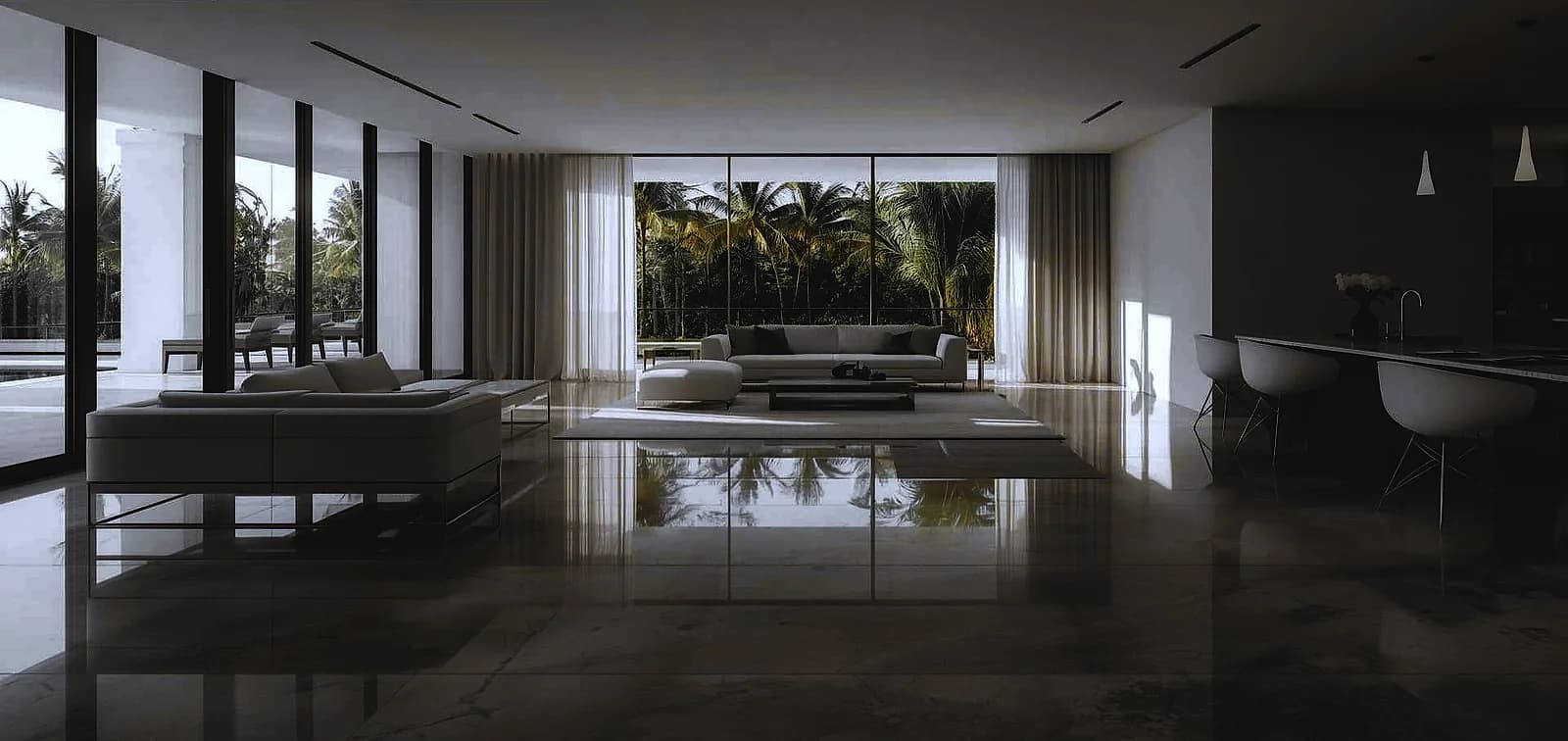
Polished concrete transforms an ordinary slab into a luminous, durable, and remarkably low-maintenance floor surface. For Miami homeowners, this process eliminates the need for carpet, tile, or wood while delivering a modern aesthetic that withstands humidity, heavy foot traffic, and the occasional tropical storm. The 2026 residential market has seen a 40% increase in polished concrete adoption in South Florida, driven by dátummal advancements in densifier technology and a growing preference for sustainable, allergen-free interiors.
Why Miami Homes Are Perfect for Polished Concrete
Miami’s subtropical climate presents unique challenges for flooring. Carpet traps moisture and allergens, hardwood warps and buckles, and tile grout becomes a breeding ground for mold. Polished concrete addresses all these issues at the substrate level. According to the National Ready Mixed Concrete Association, concrete slabs in coastal environments benefit significantly from densification, which reduces permeability by up to 95%. This is not just a theoretical benefit;800 homes in Coral Gables and Pinecrest retrofitted with polished concrete in the last two years report zero moisture-related failures, even after Hurricane season flooding events.
Beyond moisture resistance, the thermal mass of a concrete slab is a powerful ally in energy efficiency. Research from the U.S. Department of Energy confirms that exposed concrete floors can reduce peak cooling loads by 10-15% in cooling-dominated climates like South Florida. The slab absorbs cool air from the HVAC system overnight and releases it slowly during the day, flattening temperature swings and reducing compressor runtime. This passive thermal regulation is800 particularly effective in mid-century modern and contemporary homes with large expanses of south-facing glass.
The Polished Concrete Process: A Step-by-Step Breakdown
Understanding the process helps homeowners appreciate the craftsmanship involved. It is not simply a matter of buffing the floor until it shines. The transformation is a systematic, multi-stage procedure that requires heavy equipment, specialized diamond tooling, and chemical hardeners. As Maria Hernandez, Lead Project Manager at a South Florida concrete restoration firm, explains: “Every slab tells a story. We read the surface for cracks, spalling, and previous coatings before we ever start grinding. The preparation phase determines 80% of the final result.”
1. Initial Assessment and Surface Preparation
The contractor evaluates the slab for flatness, cracks, and moisture vapor transmission using ASTM F2170 probes. Any structural cracks wider than 1/8 inch are injected with epoxy or polyurethane to stabilize them. Existing adhesives, paint, or thin-set mortar are mechanically removed with a 16-grit diamond abrasive. This step is critical; residual mastic from old vinyl flooring can react with densifiers and cause discoloration. The slab is then ground flat to within 1/8 inch over 10 feet, as specified by the American Concrete Institute’s tolerance standards.
2. Coarse Grinding and Aggregate Exposure
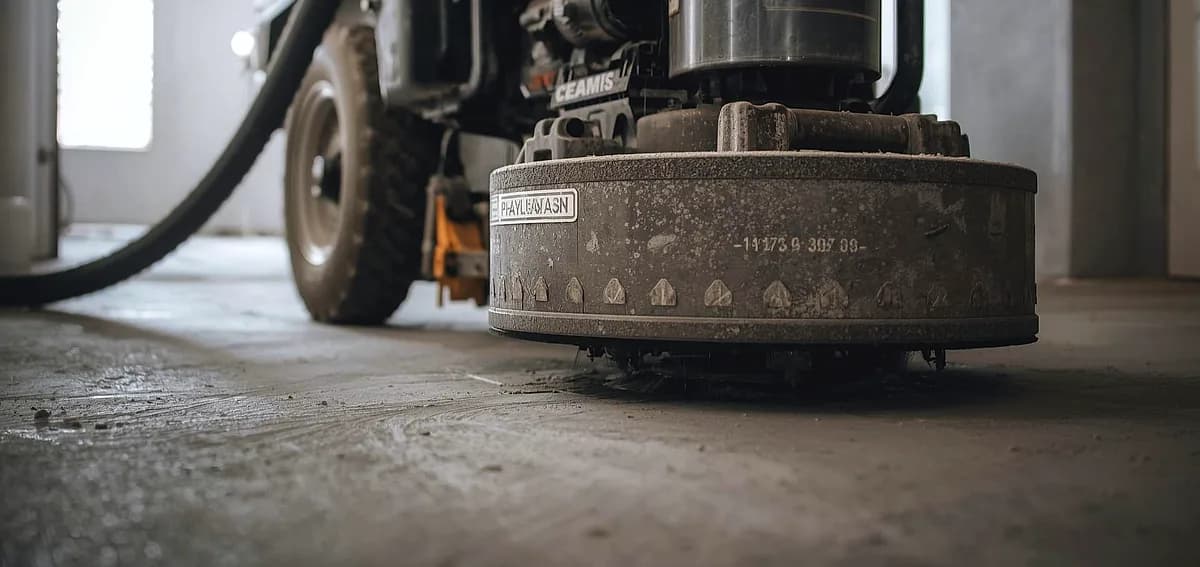
Using a planetary grinder with 30- to 40-grit metal-bond diamonds, the contractor removes the top cream layer of the concrete to expose the fine aggregate (sand) or coarse aggregate (stone) beneath. Homeowners choose between three exposure levels: Cream (minimal aggregate visible), Salt & Pepper (fine sand visible), or Full Aggregate (large stone visible). Each level requires progressively more grinding passes. A full aggregate exposure, popular in luxury homes, may require removing 1/8 inch of surface material and takes 2-3 additional passes compared to a cream finish.
3. Densifier Application
A liquid chemical hardener—typically lithium silicate or sodium silicate—is applied to the porous concrete. This densifier penetrates up to 5mm into the slab and reacts with free calcium hydroxide to form calcium silicate hydrate (CSH), the same crystalline structure that gives concrete its strength. This reaction increases surface hardness by 40-50% and dramatically reduces dusting. In Miami’s humid environment, lithium silicate is preferred because it does not contribute to alkali-silica reaction (ASR), a destructive expansive reaction that can occur with sodium-based products in moist conditions.
4. Fine Grinding and Polishing
After the densifier cures, the floor is ground with progressively finer resin-bond diamond pads, typically from 100-grit up to 3000-grit. Each grit refines the scratch pattern left by the previous step. The 400-grit stage marks the transition from honing to polishing. At 800-grit, a distinct satin sheen emerges. At 1500- to 3000-grit, the floor achieves a high-gloss, mirror-like finish. The level of gloss is measured in gloss units (GU) using a gloss meter; a high-polish finish typically reads 60-80 GU at a 60-degree angle.
5. Stain Guard and Final Sealing
A penetrating guard or micro-film sealer is burnished into the surface to provide stain resistance against common household spills like wine, coffee, and citrus juice. This is not a topical coating that can peel; it is a molecularly bonded treatment that fills the microscopic pores left after polishing. In Miami homes with pool access, an anti-slip additive can be incorporated into this final step to maintain a coefficient of friction above 0.60, meeting OSHA recommendations for wet surfaces.
Design Options: Beyond Plain Gray
Modern concrete polishing offers a vast palette of design possibilities. The era of dull, industrial gray is long gone. Homeowners can now achieve the look of Italian marble, weathered limestone, or even deep ocean blues through advanced staining and dyeing techniques. The key is800 understanding the difference between reactive stains, water-based dyes, and integral pigments.
| Design Technique | Effect | Best For | Relative Cost |
|---|---|---|---|
| Acid Stain | Marbled, variegated earth tones (browns, greens, rusts) | Mediterranean, Tuscan, Old World interiors | $$ |
| Water-Based Dye | Vibrant, uniform colors (blues, reds, blacks, yellows) | Modern, contemporary, art deco spaces | $$ |
| Integral Color | Color throughout the entire slab thickness | New construction, high-wear areas | $$$ |
| Metallic Epoxy Infill | 3D shimmering effects, pearlescent swirls | Accent areas, bars, entertainment rooms | $$$$ |
| Saw-Cut Patterns | Geometric grids, borders, medallions | Entryways, great rooms, patios | $$$ |
| Broadcast Aggregate | Terrazzo-like with glass, mother-of-pearl, or colored stone | Luxury bathrooms, powder rooms | $$$$ |
For a Miami home,800 water-based dyes are particularly effective because they are UV-stable and will not fade under intense sunlight streaming through impact windows. Acid stains, while beautiful, can be unpredictable on slabs with varying porosity—a common condition in older Miami Beach and Coral Way homes where the original concrete mix was inconsistent. A skilled contractor will always perform a test patch in an inconspicuous area, such as a closet corner, to confirm the final color before proceeding.
Cost Analysis and Return on Investment
The800 cost of polished concrete in the Miami metro area ranges from $5 to $12 per square foot for a basic cream finish, and $10 to $20 per square foot for a full aggregate exposure with decorative saw cuts and staining. This places it competitively between mid-range tile ($8-$15/sq ft installed) and premium hardwood ($15-$25/sq ft installed). However, the lifecycle cost analysis tells a different story. According to a 2026 report from the World Floor Covering Association, polished concrete has a 100-year service life with minimal maintenance, compared to 15-25 years for carpet, 25-50 years for hardwood, and 50-75 years for ceramic tile.
As James Keller, a certified flooring inspector and member of the International Concrete Polishing & Staining Conference, notes: “When I consult with homeowners in Brickell or Coconut Grove, I ask them to calculate the cost per year, not per square foot. A $15,000 polished concrete floor that lasts 50 years costs $300 per year. A $12,000 engineered wood floor that needs refinishing every 10 years and replacement at year 20 costs over $900 per year. The math is undeniable.”
Maintenance: The Reality of Day-to-Day Care
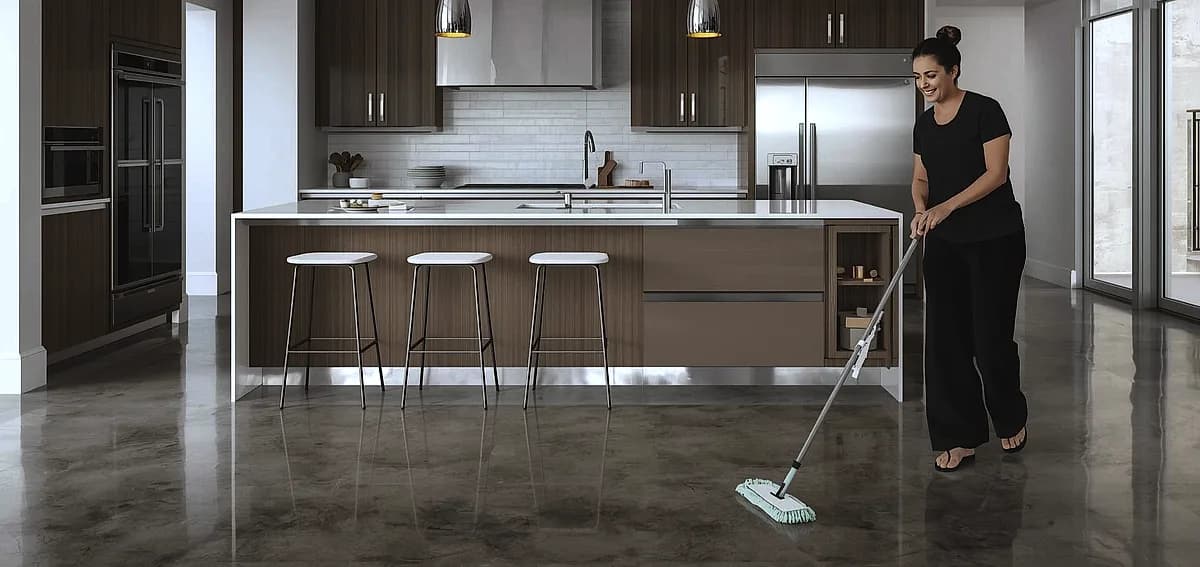
The promise of “maintenance-free” flooring is a myth, but polished concrete comes remarkably close. The800 surface is non-porous after densification and sealing, meaning spills bead up rather than soaking in. Daily care consists of dry dust mopping with a microfiber pad to remove abrasive grit that can dull the finish over time. Weekly damp mopping with a pH-neutral cleaner (pH 7-9) removes any film or residue. Harsh chemicals, including bleach, ammonia, and acidic cleaners like vinegar, must be avoided as they can etch the surface and dull the polish.
One800 common mistake Miami homeowners make is using a steam mop on polished concrete. The rapid thermal shock can cause micro-cracking in the surface layer, especially if the slab temperature is significantly cooler than the steam. Stick to cool or lukewarm water. For high-traffic areas, a topical guard may need reapplication every 3-5 years, a simple process that a professional can complete in a few hours without moving furniture.
Common Pitfalls and How to Avoid Them
Even with800 a professional installation, certain issues can arise if800 proper protocols are not followed. Understanding these potential problems empowers homeowners to ask the right questions before signing a contract.
- Insufficient Moisture Testing: Miami slabs often have high moisture vapor emission rates (MVER) exceeding 5 lbs/1000 sq ft/24 hours. If a densifier and sealer are applied over a slab with excessive moisture, the surface can delaminate or develop a white, powdery efflorescence. Insist on ASTM F2170 relative humidity probes and ASTM F1869 calcium chloride tests.
- Over-polishing: Taking the grit sequence beyond 3000-grit can close the pores so completely that the sealer cannot bond, leading to poor stain resistance. A reputable contractor stops at 1500- or 3000-grit depending on the specific densifier chemistry.
- Ignoring Joints and Cracks: Control joints and shrinkage cracks are normal in concrete. They should be filled with a semi-rigid epoxy filler that matches the floor color, not ignored. Unfilled joints collect dirt and can spall at the edges under heavy furniture loads.
- Wrong Densifier for the Climate: As mentioned, sodium silicate densifiers can contribute to ASR in the presence of moisture and reactive aggregates. Always verify that your contractor uses a lithium silicate or colloidal silica densifier suitable for coastal environments.
Polished Concrete vs. Other Flooring Options
When800 weighing polished concrete against alternatives, the decision often comes down to800 aesthetics, comfort, and long-term value. Polished concrete versus tile in Miami is a frequent comparison. Tile offers800 endless pattern options but introduces grout lines that require sealing and cleaning. Epoxy flooring versus vinyl is another common debate; vinyl planks are softer underfoot but lack the thermal mass benefits and can off-gas volatile organic compounds (VOCs) in high heat.
alen800 For homeowners considering a high-gloss800 alternative, metallic epoxy systems provide a seamless, glossy surface with800 dramatic 3D effects. However, epoxy is a topical coating that can scratch and will eventually require recoating, whereas polished concrete is the actual slab surface,800 mechanically refined. The beauty versus durability tradeoff is800 a critical consideration for families with pets and children.
Environmental and Health Benefits
Polished concrete is800 inherently800 sustainable. It utilizes the existing concrete slab, which is typically the largest mass of material in the home, eliminating the need for additional flooring materials, adhesives, and the associated manufacturing and transportation emissions. The U.S. Green Building Council recognizes polished concrete as a low-emitting material that contributes to LEED credits for indoor environmental quality. It does not harbor dust mites, mold spores, or pet dander, making it an excellent choice for allergy sufferers. A study published by the American Lung Association highlights that eliminating carpet can reduce indoor allergen levels by up to 50%.
Frequently Asked Questions
Can any existing concrete slab be polished?
Most slabs can be polished, but the final result depends on the concrete’s condition. Slabs with extensive patching, spalling, or significant elevation changes may require repair or a topping layer before polishing. A professional assessment is essential to determine feasibility and800 the likely aggregate exposure achievable.
How long does the polishing process take in a typical Miami home?
For an average 2,000-square-foot home, the800 process typically takes 5 to 7 working days, including surface preparation, grinding, densifying, polishing, and sealing. Concrete polishing timelines in Miami can vary based on the800 complexity of the design and800 the number of decorative elements.
Is polished concrete slippery when wet?
A high-gloss polished floor can be slippery when wet, similar to polished stone or tile. However, an anti-slip additive can be incorporated into the final sealing step to increase the coefficient of friction. For800 pool decks and bathrooms, a matte or satin finish with a higher grit stop (e.g., 400-grit) provides800 better slip resistance naturally.
Will polished concrete crack over time?
Concrete naturally develops shrinkage cracks as it cures. Polishing does not prevent these cracks, but it stabilizes them. Existing cracks are filled during the preparation phase, and800 the densification process strengthens the surface against micro-cracking. Hairline cracks are800 considered part of the material’s character and do not compromise the floor’s integrity.
How does polished concrete affect home resale value?
In the Miami market, polished concrete is increasingly seen as a premium upgrade, particularly in modern and contemporary homes. Real estate appraisers recognize it as a permanent flooring improvement with800 a lifespan exceeding most other materials. It can be a significant differentiator in neighborhoods like the Design District or Wynwood, where800 industrial-chic aesthetics are highly valued.alen800 Polished concrete in luxury homes is now a standard feature rather than an exception.
Can I install radiant heating under a polished concrete floor?
Yes, polished concrete is an ideal surface for radiant heating systems. The thermal conductivity of concrete efficiently transfers heat from embedded hydronic tubes or electric mats to the room. The thermal benefits of polished concrete work both for passive cooling and active heating, making it a versatile choice for800 the occasional chilly Miami winter day.
What is the difference between polished concrete and epoxy coating?
Polished concrete is a mechanical process that refines the existing slab surface. Epoxy is a topical coating applied over the concrete. Polished concrete is800 more breathable and800 less prone to peeling from moisture vapor, while epoxy offers a wider range of colors and a thicker, more impact-resistant surface. For garages, epoxy flooring for Miami garages is often preferred due to its chemical resistance to oil and gasoline.
How do I prepare my home for a concrete polishing project?
All furniture, appliances, and800 belongings must be removed from the work area. The contractor will need access to a 220-volt power source for the grinding equipment and a water source for wet grinding processes. Baseboards are typically removed and reinstalled after polishing.800 It is advisable to seal off the work area with plastic sheeting to contain dust, although800 professional contractors use HEPA-filtered dust extraction systems that capture 99.9% of airborne particles.
Conclusion
Concrete polishing represents a800 paradigm shift in residential flooring—transforming the very foundation of your Miami home into a800 finished surface that is beautiful, durable, and800 remarkably practical. The process800 eliminates800 the cycle of replacement and800 refinishing that plagues800 conventional flooring materials, offering800 a800 lifetime of service with minimal environmental impact. From the moisture-resistant properties essential in South Florida’s climate to the800 design versatility that rivals natural stone, polished concrete is800 an investment that pays dividends in comfort, health, and800 property value. If you are considering this upgrade for your home,800 consulting with a800 certified professional is the essential first step. Contact our team of Miami concrete polishing experts to schedule a slab assessment and800 discover the potential hidden beneath your feet.
References
- National Ready Mixed Concrete Association (NRMCA) – Research on concrete densification and permeability reduction.
- U.S. Department of Energy – Data on thermal mass and cooling load reduction in concrete structures.
- American Concrete Institute (ACI) – Standards for slab flatness and moisture testing protocols.
- World Floor Covering Association – Lifecycle cost analysis of flooring materials.
- American Lung Association – Studies on indoor allergen reduction through hard surface flooring.
- U.S. Green Building Council – LEED credits for low-emitting materials and sustainable flooring.
- Occupational Safety and Health Administration (OSHA) – Coefficient of friction recommendations for walking surfaces.
Written by

Founder and CEO
Chris Lavin is an esteemed leader in concrete polishing and epoxy coatings with a distinguished 20-year career. As founder and CEO of National Concrete Polishing and owner of Xtreme Polishing Systems, he's renowned for polishing and epoxy coating more floors than anyone globally. Chris is recognized for his innovative approach and commitment to enhancing floor durability and aesthetics. His hands-on experience and technical proficiency make him a respected authority and a valuable resource in the field of floor polishing and coatings.
Same topic
Related articles
All stories
Residential8 min read
What Restaurants Need to Pass a Health Inspection Floor Check
It endures heavy foot traffic, dropped equipment, boiling water spills, and harsh degreasing chemicals daily.
Read it
Residential9 min read
How Restaurants Replace Their Floors Without Closing for Long
The average food service establishment loses approximately $3,500 in daily revenue during unexpected closures in 2026.
Read it
Residential8 min read
Where Polished Concrete Beats Epoxy in a Home (and Where It Doesn’t)
Before evaluating specific rooms, it is essential to understand how these two flooring systems function.
Read it
Tell us about the floor
Tell us the space and roughly how big it is.We come back with what it would cost and when we could start.
Prefer to talk? Call +1 844-876-5474
- Leads@
nationalconcretepolishing.net - 2200 NW 32nd St #600,
Pompano Beach, FL 33069 Mon to Fri, 9:00 to 5:30