
The NCP blog
The Beauty vs Durability Trade-Off Miami Homeowners Face with Floor Coatings
Residential10 min read
The floor beauty vs durability tradeoff is the central decision Miami homeowners face when selecting floor coatings.
The floor beauty vs durability tradeoff is the central decision Miami homeowners face when selecting floor coatings. High-gloss metallic epoxies deliver stunning visual impact but may show scratches more readily than matte finishes. Ultra-durable polyurea systems resist chemicals and abrasion but offer fewer decorative options. According to the International Facility Management Association (IFMA), 67% of flooring failures stem from prioritizing aesthetics without considering environmental demands. Miami’s unique combination of 76% humidity, salt air exposure, and year-round UV radiation makes this balance especially critical.
This guide breaks down exactly how different coating systems perform on both axes, helping you make informed decisions that deliver lasting satisfaction without sacrificing the look you want.
Understanding the Beauty vs Durability Spectrum
Every floor coating occupies a position on the beauty-durability spectrum. The Concrete Polishing Association of America (CPAA) categorizes coating systems by both aesthetic complexity and performance ratings, revealing clear patterns in how these properties interact.
At one extreme, industrial urethane coatings achieve hardness ratings of 80+ Shore D and resist virtually all chemicals, but offer only basic solid colors. At the other extreme, hand-manipulated metallic epoxy designs create one-of-a-kind floor art but require more careful maintenance to preserve their appearance.
The good news: modern coating technology has narrowed this gap significantly. Systems that once required choosing between beauty and performance now deliver both, though understanding the remaining tradeoffs helps set realistic expectations.
Why Miami’s Climate Demands Both Beauty and Durability
Miami-Dade County’s environmental conditions stress floor coatings in ways northern climates simply do not. Understanding these factors reveals why balance matters more here than almost anywhere else.
Intense UV Exposure
Miami receives 248 sunny days annually with UV index readings frequently exceeding 10 (extreme). Research from Lawrence Berkeley National Laboratory indicates that UV exposure degrades standard epoxy binders by 15-25% within 3 years when directly exposed to sunlight. This degradation manifests as yellowing, chalking, and loss of gloss, directly impacting aesthetics while also compromising protective properties.
UV-stable topcoats and aliphatic polyurethanes resist this degradation, but add $1.50-$3.00 per square foot to project costs. The epoxy flooring color selection guide explains which pigments and systems maintain color stability in high-UV environments.
Constant Humidity and Moisture Vapor
Miami’s average 74-78% relative humidity creates persistent moisture challenges for floor coatings. The International Concrete Repair Institute (ICRI) reports that moisture vapor transmission causes 40% of coating failures in tropical climates. Beautiful coatings that ignore moisture management become ugly failures within months.
Proper moisture barriers add a critical durability layer beneath decorative topcoats. This hidden investment preserves both appearance and structural integrity for the coating’s full lifespan.
Salt Air and Sand Abrasion
Properties within 5 miles of the Atlantic Ocean experience accelerated coating wear from airborne salt crystals. Florida Atlantic University research shows that salt air degrades floor coatings 200-300% faster than identical systems installed inland. Sand tracked in from beaches acts as an abrasive that dulls glossy finishes and scratches decorative patterns.
The durability side of this equation requires scratch-resistant topcoats and regular maintenance protocols. The beauty side requires selecting finishes that age gracefully rather than showing every imperfection.
Floor Coating Options: Beauty and Durability Compared
Each coating system occupies a different position on the beauty-durability spectrum. The following breakdown helps Miami homeowners understand what they gain and sacrifice with each choice.
Polished Concrete: Natural Beauty Meets Extreme Durability
Professional concrete polishing achieves the rare combination of high aesthetic appeal and exceptional durability. The CPAA rates properly polished concrete at 7-9 on the Mohs hardness scale, harder than marble or granite. Because the finish is integral to the concrete itself rather than a coating applied on top, it cannot peel, delaminate, or separate from the substrate.
Beauty factors: Reflectivity ranges from matte (20-40 gloss units) to mirror-like (80+ GU). Aggregate exposure levels create unique visual interest. Color options include integral dyes and reactive stains.
Durability factors: 25+ year lifespan with minimal maintenance. Resistant to UV degradation since no coating exists to yellow. Chemical resistance depends on densifier and guard selection.
Tradeoff: Polished concrete exposes whatever lies beneath. Slabs with excessive patching, cracks, or aggregate inconsistencies produce uneven aesthetics. Luxury homes in Miami with newer, well-placed concrete achieve stunning results; older slabs may require overlays first.
Metallic Epoxy: Maximum Beauty, Moderate Durability
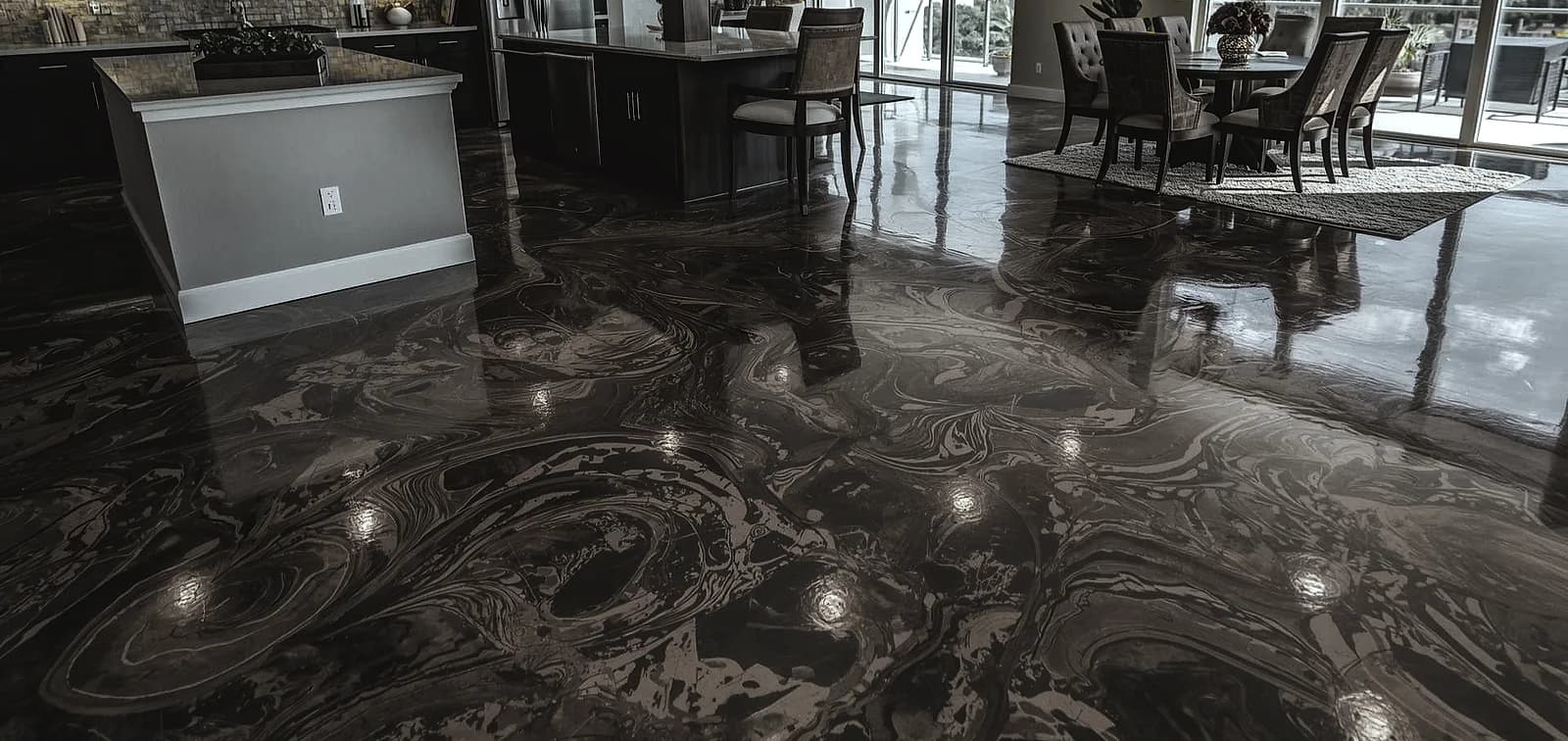
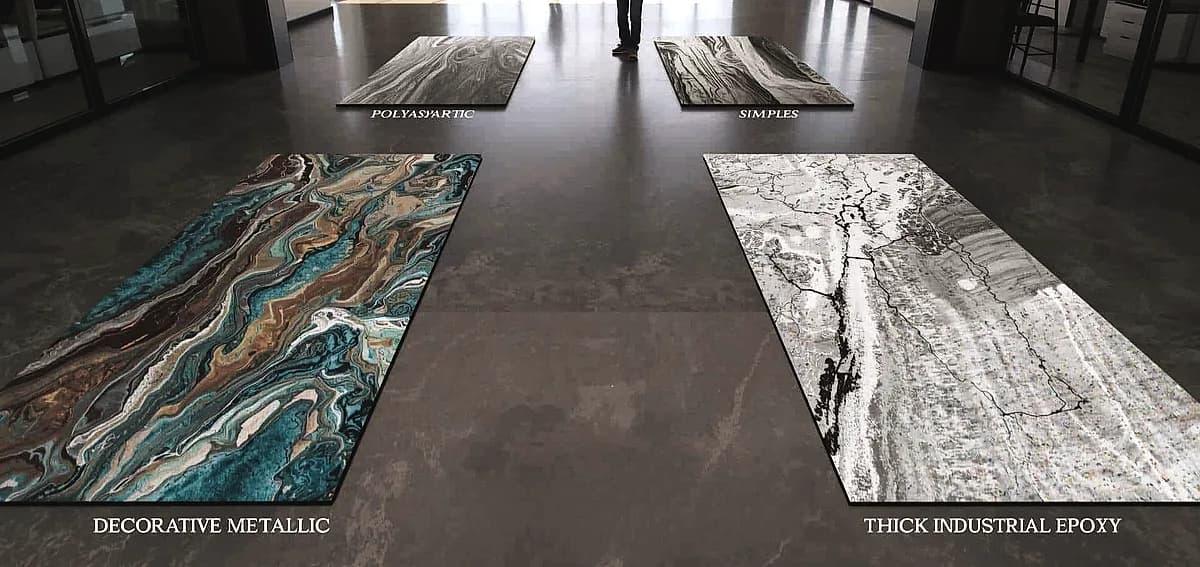
Metallic epoxy floors create the most visually dramatic results of any coating system. Metallic pigments suspended in clear epoxy are manipulated during application to produce flowing, three-dimensional effects that mimic marble, lava, or ocean waves. Each installation is genuinely unique.
Beauty factors: Unlimited design possibilities. Color shifting effects change appearance based on viewing angle and lighting. Professional application techniques create custom patterns unavailable with any other system.
Durability factors: Base epoxy achieves 70-80 Shore D hardness. Requires UV-stable topcoat to prevent yellowing in Miami’s intense sunlight. Properly installed systems last 15-20 years. Maintenance requirements are moderate.
Tradeoff: High-gloss finishes show scratches and wear patterns more readily than matte surfaces. Dark metallic colors highlight imperfections that lighter colors hide. Repairs are difficult because matching the original manipulation pattern is nearly impossible.
Solid Color Epoxy: Balanced Performance
Traditional solid color epoxy floor coatings offer the most predictable balance between aesthetics and durability. Available in virtually any color, these systems provide clean, professional appearances without the complexity of decorative finishes.
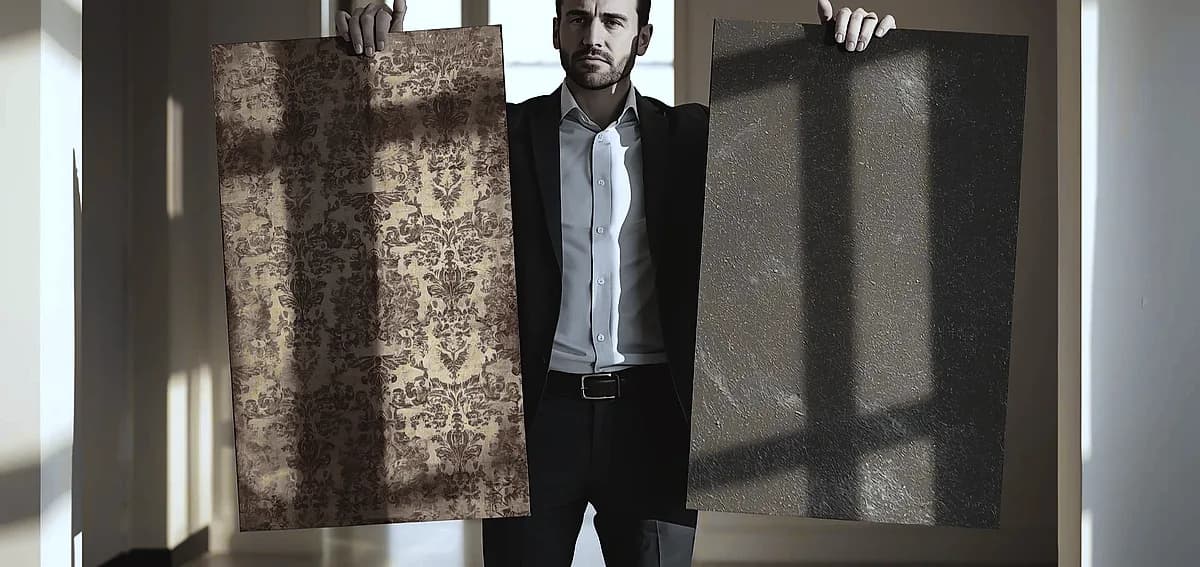
Beauty factors: Clean, uniform appearance. Wide color selection matches any design scheme. Gloss levels from matte to high-shine. Seamless installation eliminates grout lines and joints.
Durability factors: 100% solids formulations achieve excellent chemical resistance. Thickness options from 10-60 mils accommodate different wear requirements. Easier to repair than decorative systems.
Tradeoff: Solid colors show dirt, tire marks, and stains more readily than patterned finishes. Lighter colors require more frequent cleaning; darker colors show dust and scratches. Less visual interest than decorative alternatives.
Flake/Chip Systems: Durability-Forward Design
Vinyl flake or chip systems broadcast colored flakes into wet epoxy, creating terrazzo-like patterns that hide imperfections while adding texture. This approach prioritizes durability and practicality while still delivering attractive results.
Beauty factors: Multi-color patterns hide dirt, stains, and wear. Quartz flake options add sparkle and depth. Custom blends match any color scheme. Natural stone appearance appeals to traditional design preferences.
Durability factors: Flakes add physical texture that improves slip resistance. Multi-layer systems achieve 80-120 mil thickness for maximum protection. Excellent for garage floor applications where durability matters most.
Tradeoff: Texture traps dirt in crevices, requiring more aggressive cleaning. Cannot achieve the mirror-smooth finish of metallic or polished systems. Pattern randomness means less design control.
Polyaspartic Coatings: Durability Champion
Polyaspartic coatings represent the durability end of the spectrum. Originally developed for industrial applications, these aliphatic polyurea-polyaspartic hybrids cure faster, resist UV degradation, and outperform standard epoxies in nearly every measurable category.
Beauty factors: Crystal clarity maintains color accuracy. Inherent UV stability prevents yellowing without additional topcoats. Available in solid colors, flake, and some metallic formulations.
Durability factors: 4x more abrasion resistant than standard epoxy. Cures in 4-6 hours versus 24-72 for epoxy. Handles temperature extremes from -40°F to 140°F without softening. Resists hot tire pickup.
Tradeoff: Fast cure time limits working time for decorative manipulation. Higher material costs ($2-4 more per square foot than epoxy). Fewer contractors experienced with proper application techniques.
Beauty vs Durability Comparison Table
The following table rates each coating system on key beauty and durability factors (scale: 1-5, with 5 being highest):
| System | Visual Impact | Design Options | Scratch Resistance | UV Stability | Lifespan | Cost/Sq Ft |
|---|---|---|---|---|---|---|
| Polished Concrete | 4/5 | 3/5 | 5/5 | 5/5 | 25+ yrs | $3-$8 |
| Metallic Epoxy | 5/5 | 5/5 | 3/5 | 3/5* | 15-20 yrs | $8-$15 |
| Solid Color Epoxy | 3/5 | 4/5 | 4/5 | 3/5* | 15-20 yrs | $5-$10 |
| Flake/Chip System | 3/5 | 4/5 | 5/5 | 4/5 | 15-20 yrs | $6-$12 |
| Polyaspartic | 3/5 | 3/5 | 5/5 | 5/5 | 20+ yrs | $7-$14 |
*Requires UV-stable topcoat for Miami sun exposure
Room-by-Room Recommendations for Miami Homes
Different spaces demand different balances between beauty and durability. The following recommendations account for typical Miami usage patterns:
Garages and Workshops
Priority: Durability 70%, Beauty 30%
Best choice: Polyaspartic with flake broadcast or polyurea systems. These handle hot tire pickup, chemical spills, and heavy tool drops while still looking professional. Flake patterns hide oil stains and tire marks between cleanings.
Avoid: High-gloss solid colors or dark metallics. Both show every scratch, tire mark, and dust particle. For detailed guidance, see our garage floor coating comparison.
Living Rooms and Common Areas
Priority: Beauty 60%, Durability 40%
Best choice: Polished concrete with satin finish (50-70 GU) or neutral metallic epoxy. These deliver the sophisticated aesthetics Miami homeowners expect while handling foot traffic and furniture movement. Residential polished concrete offers the lowest long-term maintenance.
Avoid: Industrial-grade systems with aggressive texture. While durable, they feel cold and commercial in residential settings.
Kitchens and Dining Areas
Priority: Beauty 50%, Durability 50%
Best choice: Sealed polished concrete or solid color epoxy with polyurethane topcoat. Both resist food acids, wine spills, and dropped cookware while maintaining clean aesthetics. Consider commercial kitchen floor standards even for residential applications.
Avoid: Unsealed decorative concrete or matte finishes that absorb stains. Food preparation areas demand non-porous, cleanable surfaces.
Pool Decks and Outdoor Areas
Priority: Durability 80%, Beauty 20%
Best choice: Textured acrylic or polyurea deck coatings with aggregate for slip resistance. These handle chlorinated water, UV exposure, and barefoot traffic. Cool deck technologies reduce surface temperature by 30-40%, critical for Miami’s intense sun.
Avoid: Any high-gloss finish around pools. Water creates slipping hazards on smooth surfaces. See pool deck resurfacing options for detailed guidance.
How to Achieve Both Beauty and Durability
Modern coating technology offers strategies that minimize the beauty-durability tradeoff:
Layered System Approach
Separate the functions: use a durable base layer for protection and a decorative topcoat for aesthetics. For example, 100% solids epoxy primer provides chemical resistance while polyaspartic clear coat delivers UV stability and scratch resistance over decorative metallic middle coats.
Specify Adequate Thickness
Thin coatings fail first. The epoxy floor thickness requirements for Miami residential applications should exceed 20 mils total system thickness. Commercial installations typically specify 40-60 mils. Thicker systems cost more initially but deliver significantly longer service life, making the beauty-durability tradeoff less severe over time.
Plan for Maintenance
Even the most durable coatings require care. Building maintenance protocols into your flooring decision preserves both beauty and durability. Daily dust mopping removes abrasive particles. Weekly damp mopping prevents buildup. Annual topcoat refresh maintains gloss and protection.
Invest in Professional Installation
The quality gap between professional and DIY installation dramatically affects both aesthetics and longevity. Professional contractors perform moisture testing, proper surface preparation, and climate-controlled application that ensure coatings achieve their full potential on both beauty and durability axes.
Frequently Asked Questions
Which floor coating offers the best balance of beauty and durability for Miami homes?
Polished concrete delivers the best overall balance for most Miami residential applications. It achieves exceptional durability (25+ year lifespan, maximum scratch resistance) while offering attractive natural aesthetics. For homeowners wanting more decorative options, layered systems with metallic or flake middle coats protected by polyaspartic topcoats achieve both goals at higher cost.
Do high-gloss finishes scratch more easily than matte finishes?
High-gloss and matte finishes of the same material have identical scratch resistance. However, high-gloss surfaces show scratches more visibly because the reflective surface makes imperfections stand out. This is a perception issue, not a durability difference. For spaces where appearance matters more than hiding wear, specify 70-80 gloss units rather than maximum gloss.
How much more do UV-stable coatings cost compared to standard epoxy?
UV-stable polyaspartic or aliphatic polyurethane topcoats add $1.50-$3.00 per square foot compared to standard epoxy systems. For a typical 500 sq ft garage, this means $750-$1,500 additional investment. However, standard epoxy yellows within 2-3 years in Miami’s UV exposure, requiring complete refinishing. UV-stable systems maintain appearance for 10-15 years, making them more cost-effective long-term.
Can I add durability to an existing decorative floor without changing its appearance?
Yes. Clear polyaspartic or polyurethane topcoats can be applied over most existing coatings after light surface preparation. These protective layers add scratch resistance, UV stability, and chemical protection while preserving the underlying decorative finish. Recoating every 3-5 years extends the life of decorative floors significantly. See our maintenance guide for resurfaced concrete for protocols.
Why do some beautiful floor coatings fail quickly in Miami?
Most failures result from inadequate preparation rather than coating choice. Beautiful metallic or decorative epoxies fail when applied over moisture-compromised slabs, contaminated concrete, or improperly profiled surfaces. The coating itself may be high-quality, but improper installation creates the failure. Professional contractors address substrate conditions before focusing on aesthetics.
Is the beauty vs durability tradeoff worse in Miami than other cities?
Yes. Miami’s combination of extreme UV exposure, constant humidity, salt air, and sand abrasion stresses floor coatings more than most U.S. climates. Coatings that perform beautifully for decades in northern states may fail within years here. This makes proper system selection, professional installation, and ongoing maintenance more critical. The tradeoff is not about choosing between beauty and durability but about understanding that both require greater investment in Miami.
Get Expert Guidance on Floor Coatings in Miami
National Concrete Polishing helps Miami homeowners navigate the beauty vs durability decision with 13+ years of local experience. Our certified installers understand how Miami-Dade’s unique climate affects every coating system and can recommend solutions that deliver lasting satisfaction on both fronts.
Every consultation includes moisture testing, substrate evaluation, and honest recommendations based on your priorities and budget. We install polished concrete, metallic epoxy, polyaspartic systems, and every option in between. Contact our Miami team for a free consultation and estimate. We also serve Fort Lauderdale, Pompano Beach, and all of South Florida.
Written by

Founder and CEO
Chris Lavin is an esteemed leader in concrete polishing and epoxy coatings with a distinguished 20-year career. As founder and CEO of National Concrete Polishing and owner of Xtreme Polishing Systems, he's renowned for polishing and epoxy coating more floors than anyone globally. Chris is recognized for his innovative approach and commitment to enhancing floor durability and aesthetics. His hands-on experience and technical proficiency make him a respected authority and a valuable resource in the field of floor polishing and coatings.
Same topic
Related articles
All stories
Residential8 min read
What Restaurants Need to Pass a Health Inspection Floor Check
It endures heavy foot traffic, dropped equipment, boiling water spills, and harsh degreasing chemicals daily.
Read it
Residential9 min read
How Restaurants Replace Their Floors Without Closing for Long
The average food service establishment loses approximately $3,500 in daily revenue during unexpected closures in 2026.
Read it
Residential8 min read
Where Polished Concrete Beats Epoxy in a Home (and Where It Doesn’t)
Before evaluating specific rooms, it is essential to understand how these two flooring systems function.
Read it
Tell us about the floor
Tell us the space and roughly how big it is.We come back with what it would cost and when we could start.
Prefer to talk? Call +1 844-876-5474
- Leads@
nationalconcretepolishing.net - 2200 NW 32nd St #600,
Pompano Beach, FL 33069 Mon to Fri, 9:00 to 5:30