
The NCP blog
7 Modern Concrete Floor Finishes for Residential Spaces in Miami
Residential9 min read
The material naturally resists mold, moisture, and high temperatures that can damage wood, carpet, or laminate floors.
Miami homeowners are choosing concrete floor finishes for residential spaces that stand up to the region’s humidity, heat, and coastal conditions. These finishes offer durability that traditional flooring cannot match while providing design flexibility for modern interiors. From sleek polished surfaces to decorative stained options, concrete flooring has moved beyond industrial settings into living rooms, kitchens, and bedrooms across South Florida.
This guide covers seven concrete floor finishes suited for Miami’s subtropical climate. Each option addresses moisture resistance, maintenance requirements, and aesthetic possibilities for residential applications.
Overview
Concrete flooring systems work particularly well in Miami’s environment. The material naturally resists mold, moisture, and high temperatures that can damage wood, carpet, or laminate floors. Proper finishing transforms raw concrete into surfaces that complement contemporary, coastal, and traditional design styles. Professional installation ensures coatings bond correctly despite humidity levels that often exceed 70 percent.
Homeowners can choose from finishes ranging from high-gloss polished concrete to textured overlays that mimic natural stone. Each finish type offers specific benefits for different rooms and use cases. Cost ranges from $3 to $15 per square foot depending on the finish complexity and preparation required.
1. Polished Concrete Floors
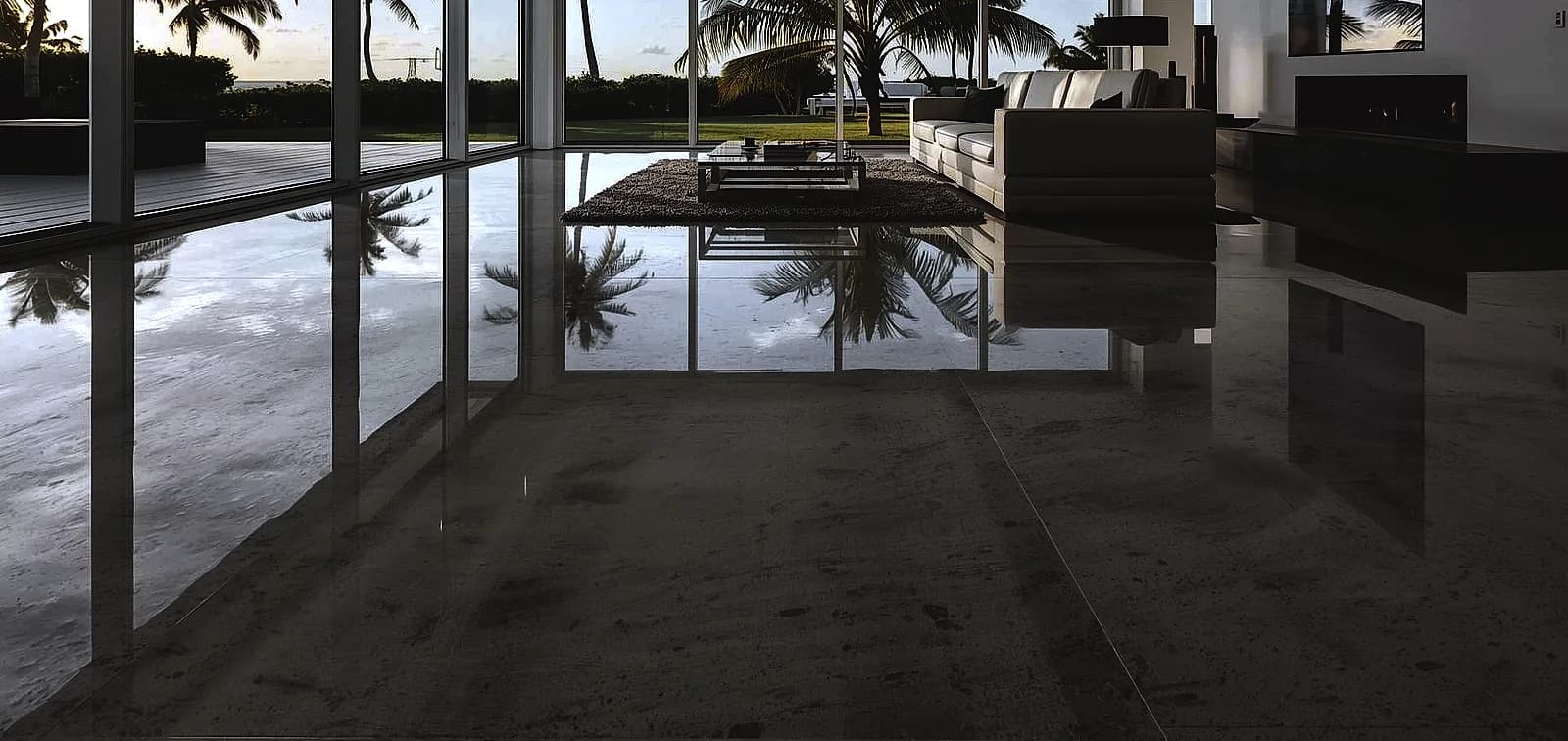
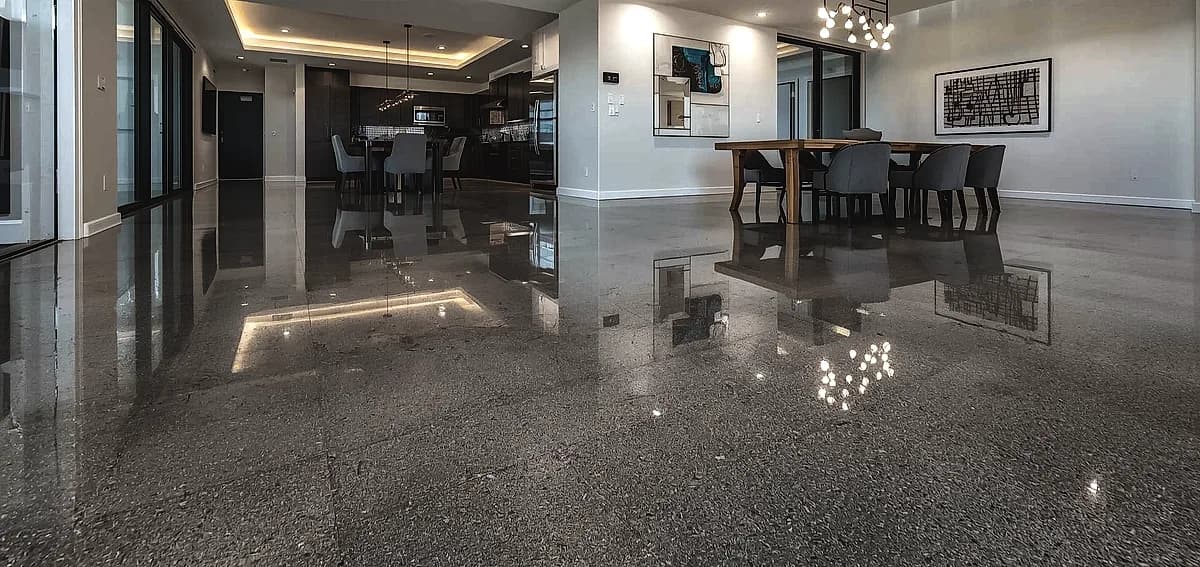
Polished concrete uses mechanical grinding with progressively finer diamond abrasives to create a smooth, reflective surface. The process densifies the concrete itself rather than adding a topical coating, making the finish integral to the slab. This grinding process produces surfaces ranging from a soft satin sheen to mirror-like reflectivity depending on homeowner preferences.
Miami homes benefit from polished concrete’s thermal mass properties. The floors absorb heat during the day and release it slowly, helping regulate indoor temperatures and reducing air conditioning loads. A properly polished floor can last 20 years or more with basic maintenance consisting of dust mopping and occasional damp cleaning.
Aggregate exposure levels offer additional design options. Cream polish leaves the surface smooth with minimal aggregate visible. Salt-and-pepper finishes reveal fine aggregate particles. Full aggregate exposure displays larger stones for a terrazzo-like appearance. Learn more about aggregate exposure options for residential applications.
2. Epoxy Floor Coatings
Epoxy coatings form a durable, non-porous surface that bonds chemically to concrete substrates. The two-part resin and hardener system creates a thermosetting polymer resistant to chemicals, abrasion, and moisture penetration. Professional-grade epoxy systems range from 4 to 10 mils thick, with thicker applications providing greater durability in high-traffic areas.
Miami’s humidity requires specific installation protocols. Temperature must remain between 71 and 77 degrees Fahrenheit during application, with relative humidity below 65 percent. Contractors use dehumidifiers and climate control equipment to maintain these conditions. Substrate moisture testing prevents adhesion failures that occur when trapped moisture pushes coatings off the slab.
Residential applications include garages, utility rooms, basements, and indoor living spaces. Color options span solid colors, decorative flake systems, and quartz broadcast finishes that add texture and hide imperfections. Explore the full range of epoxy color options available for Miami homes.
3. Stained Concrete Floors
Concrete staining penetrates the surface to create permanent color that will not fade, peel, or chip away. Two primary stain types serve different aesthetic goals. Acid stains react chemically with concrete minerals to produce variegated earth tones with natural mottling effects. Water-based stains offer broader color selections and more consistent, predictable results.
Stained concrete works on existing slabs, making it cost-effective for renovations. The finish requires sealing to protect the color and provide stain resistance. Maintenance involves regular sweeping and periodic damp mopping with pH-neutral cleaners. Resealing every two to five years maintains the protective barrier.
Design possibilities include single-color applications, multiple stain combinations, and decorative scoring patterns that create faux tile or stone effects. Miami designers often combine warm browns and terracottas that complement Spanish and Mediterranean architectural styles common throughout the region. See examples of decorative concrete finishes for interior and exterior applications.
4. Metallic Epoxy Finishes
Metallic epoxy systems incorporate metallic pigments into clear epoxy base coats to create three-dimensional visual effects. Installers manipulate the wet coating using brushes, rollers, or leaf blowers to direct pigment flow patterns. Each floor becomes a unique art piece since no two installations produce identical results.
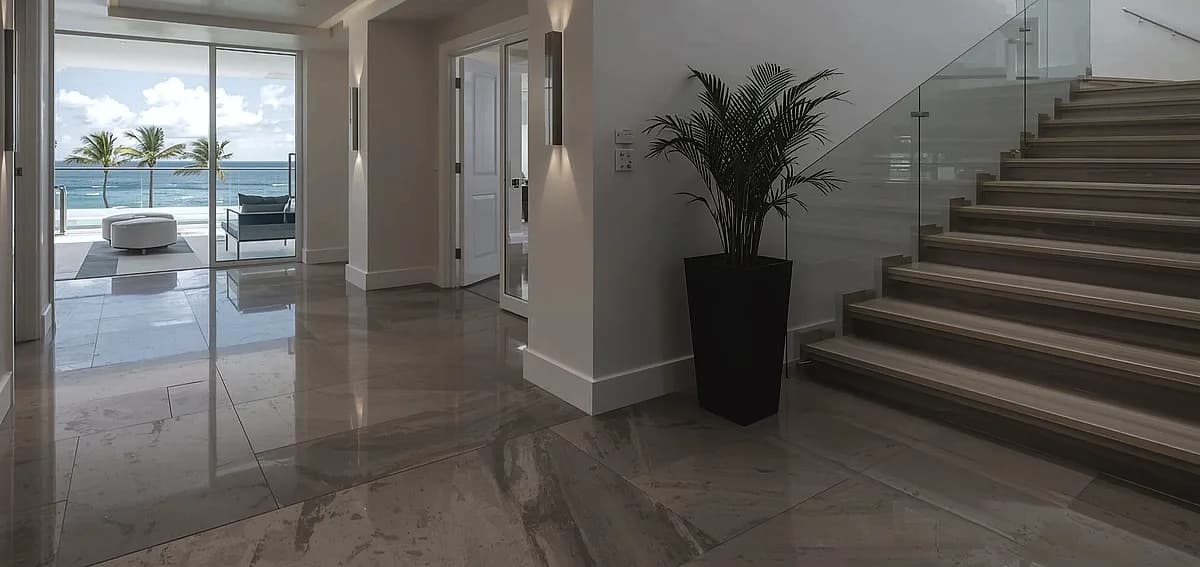
Popular metallic styles for Miami residences include pearl finishes with subtle shimmer, ocean-wave patterns in blues and teals, and lava-flow designs combining copper and bronze tones. The finish works particularly well in open-concept living areas, master bedrooms, and entertainment spaces where visual impact matters. Review metallic epoxy design ideas for inspiration.
Despite their artistic appearance, metallic epoxy floors deliver industrial-grade durability. The coating resists scratches, stains, and moisture while creating a seamless, grout-free surface that cleans easily. UV-stable topcoats prevent yellowing in sun-exposed rooms, an important consideration for Miami homes with abundant natural light.
5. Microtopping and Overlay Systems
Microtoppings are cement-based overlays applied at thicknesses from 1/16 inch to 1/4 inch over existing concrete. These systems resurface damaged, stained, or discolored slabs without removal and replacement. The thin application adds minimal height, making transitions to adjacent flooring seamless.
Application methods include troweling for smooth finishes, spraying for textured effects, and stamping for decorative patterns. Once cured, microtoppings accept stains, dyes, and sealers for custom color applications. The base material comes in white or gray, with integral coloring available during mixing.
Miami homeowners use microtoppings for living room floors, bathroom surfaces, and kitchen counters where a unified concrete aesthetic connects spaces. The material also works on vertical surfaces, allowing matching accent walls. Understand the full concrete resurfacing process before starting a project.
6. Polyaspartic Coatings
Polyaspartic coatings cure significantly faster than traditional epoxy, often reaching foot traffic readiness within four to six hours. This speed allows single-day installations that minimize household disruption. The coating performs well across broader temperature ranges, making it suitable for Miami’s warm climate year-round.
UV stability sets polyaspartic apart from standard epoxy systems. The coating resists yellowing and degradation from sunlight exposure, maintaining its appearance in sunrooms, Florida rooms, and spaces with large windows. Chemical resistance protects against common household spills including cleaners, oils, and acidic substances.
Contractors often combine polyaspartic topcoats with epoxy base coats in hybrid systems. This approach uses epoxy’s thickness and cost efficiency for the foundation layer while gaining polyaspartic’s UV protection and fast cure for the final surface. Compare polyaspartic versus epoxy to determine the right system for your project.
7. Quartz and Flake Broadcast Systems
Quartz and flake broadcast systems incorporate decorative aggregate into epoxy or polyaspartic base coats. Colored quartz granules or vinyl flakes are broadcast across wet coating, then sealed with clear topcoats. The resulting surface provides texture that improves slip resistance while hiding imperfections in the concrete substrate.
Flake systems come in standard color blends or custom combinations matched to interior design schemes. Popular Miami selections include coastal blues, tropical multicolor blends, and neutral granite-style patterns. The textured surface stands up to pool deck traffic, garage use, and high-activity family spaces. View the garage coating options that include quartz and flake systems.
Application thickness typically ranges from 12 to 16 mils, providing substantial protection for concrete substrates. The finish resists tire marks in garage applications and hot tire pickup that can damage thinner coatings. Maintenance requires only routine sweeping and occasional mopping with mild detergent solutions.
Choosing the Right Finish for Your Miami Home
Selection depends on room function, desired appearance, and budget parameters. Polished concrete suits homeowners wanting minimal maintenance and natural aesthetics. Epoxy systems work best for moisture-prone spaces requiring maximum protection. Stained concrete delivers unique character for those prioritizing visual warmth over high gloss.
Professional assessment of existing concrete condition determines viable options. Slabs with significant cracking may require repair or overlay systems before finish application. Moisture vapor emission testing identifies substrates that need mitigation before coating installation. Learn about moisture mitigation requirements specific to Florida installations.
Indoor air quality considerations favor concrete finishes over carpeting and some vinyl products. According to the EPA, volatile organic compounds concentrate at higher levels indoors than outdoors. Sealed concrete floors do not harbor dust mites, mold spores, or allergens that accumulate in soft flooring materials, making them healthier choices for Miami’s humidity.
Frequently Asked Questions
How long do concrete floor finishes last in Miami’s climate?
Polished concrete lasts 20 years or more with proper care. Epoxy and polyaspartic coatings typically perform for 10 to 15 years before requiring recoating. Stained concrete finishes are permanent, though sealers need reapplication every two to five years to maintain protection.
Are concrete floors cold in air-conditioned Miami homes?
Concrete floors feel cool in air-conditioned spaces, which many Miami residents appreciate. Area rugs add warmth in bedrooms and living areas where desired. Radiant heating systems can be integrated beneath new slabs for temperature control.
Can existing tile floors be coated with epoxy?
Yes, with proper preparation. Tiles must be mechanically abraded or diamond-ground to create a bondable profile. Grout lines may telegraph through thin coatings. Microtopping overlays often provide better results over tile by creating a uniform new surface.
How much does residential concrete flooring cost in Miami?
Basic polished concrete starts around $3 to $6 per square foot. Standard epoxy coatings range from $5 to $9 per square foot. Metallic epoxy and premium finishes run $8 to $15 per square foot. Costs vary based on concrete condition and preparation requirements. See the cost breakdown for detailed pricing factors.
Is concrete flooring slippery when wet?
High-gloss polished concrete can be slippery when wet. Anti-slip additives or textured finishes like quartz broadcast systems improve traction. Lower polish levels and matte sealers also increase slip resistance for residential applications.
How do I maintain polished concrete floors?
Daily dust mopping removes abrasive particles that can dull the surface. Damp mopping with pH-neutral cleaners handles routine cleaning. Avoid acidic cleaners that can etch the surface. Professional burnishing restores gloss if floors become dull over time. Read the complete maintenance guide for detailed care instructions.
Can concrete finishes be repaired if damaged?
Yes. Chips and scratches in epoxy coatings can be filled and recoated locally. Polished concrete scratches can be re-ground and re-polished. Stained concrete repairs require careful color matching to blend with existing finishes. Professional repair generally costs less than full replacement.
What preparation does concrete need before finishing?
Surface preparation includes grinding or shot blasting to create mechanical bond profile, crack repair, moisture testing, and thorough cleaning. Proper preparation accounts for 60 to 80 percent of a successful installation. Review the floor prep checklist before scheduling your project.
Do concrete floors increase home value?
Quality concrete finishes can increase property value by $2,000 to $8,000 for typical Miami homes. Buyers recognize the durability and low maintenance benefits. Polished and epoxy floors photograph well for listings, appealing to modern design preferences in competitive markets.
How long does installation take?
Polished concrete requires two to four days for residential spaces. Standard epoxy installations take two to three days including cure time. Polyaspartic systems can often be completed in one day due to rapid curing. Project timelines depend on floor size and required preparation work.
Sources
EPA – Volatile Organic Compounds Impact on Indoor Air Quality
RFCI – FloorScore Indoor Air Quality Certification
Transform Your Miami Home with Professional Concrete Finishes
National Concrete Polishing delivers expert concrete floor finishing for Miami residential projects. With 13+ years of experience across South Florida, our team handles everything from polished concrete to custom metallic epoxy installations. We understand the specific challenges Miami’s climate presents and use professional-grade equipment and materials designed for subtropical conditions. Contact us today for a free consultation and estimate on your residential flooring project.
Written by

Founder and CEO
Chris Lavin is an esteemed leader in concrete polishing and epoxy coatings with a distinguished 20-year career. As founder and CEO of National Concrete Polishing and owner of Xtreme Polishing Systems, he's renowned for polishing and epoxy coating more floors than anyone globally. Chris is recognized for his innovative approach and commitment to enhancing floor durability and aesthetics. His hands-on experience and technical proficiency make him a respected authority and a valuable resource in the field of floor polishing and coatings.
Same topic
Related articles
All stories
Residential8 min read
What Restaurants Need to Pass a Health Inspection Floor Check
It endures heavy foot traffic, dropped equipment, boiling water spills, and harsh degreasing chemicals daily.
Read it
Residential9 min read
How Restaurants Replace Their Floors Without Closing for Long
The average food service establishment loses approximately $3,500 in daily revenue during unexpected closures in 2026.
Read it
Residential8 min read
Where Polished Concrete Beats Epoxy in a Home (and Where It Doesn’t)
Before evaluating specific rooms, it is essential to understand how these two flooring systems function.
Read it
Tell us about the floor
Tell us the space and roughly how big it is.We come back with what it would cost and when we could start.
Prefer to talk? Call +1 844-876-5474
- Leads@
nationalconcretepolishing.net - 2200 NW 32nd St #600,
Pompano Beach, FL 33069 Mon to Fri, 9:00 to 5:30