
The NCP blog
Choosing Between Polished Concrete and Tiles in Fort Lauderdale
Polished concrete10 min read
The right answer depends entirely on your specific needs—moisture management, design flexibility, and long-term value.
When renovating or building in Fort Lauderdale, the choice of flooring fundamentally shapes your space’s resilience, maintenance, and aesthetic. The decision often narrows to two contenders: the seamless, industrial elegance of polished concrete and the classic, patterned versatility of tile. The right answer depends entirely on your specific needs—moisture management, design flexibility, and long-term value. Polished concrete offers unmatched durability and a modern, reflective finish that amplifies natural light, while tile provides intricate design options and simpler spot repairs. This16 guide dissects every factor, from humidity resistance to cost per square foot, ensuring you make an informed investment.
1. The Fundamental Material Difference
Understanding the core composition of each material is the first step. Polished concrete is not a coating; it is a mechanical process. The existing concrete slab is ground down with diamond-impregnated abrasives, then densified and polished to a high-gloss sheen. This process transforms the structural slab into the finished wear surface. Conversely, tile is an applied finish—ceramic, porcelain, or natural stone pieces adhered to the substrate with thin-set mortar and separated by grout joints. According to the Portland Cement Association, polished concrete leverages the thermal mass and strength of the building’s foundation,800 while tile adds a separate layer that can delaminate or crack under structural stress.
In Fort Lauderdale, where many homes sit on concrete slab-on-grade foundations, the existing slab is a prime candidate for polishing. Tiles require a perfectly flat, cured, and often reinforced substrate to prevent future cracking. The inherent monolithic nature of polished concrete eliminates the weak points—grout lines—that are the first to fail in high-moisture environments. This distinction is crucial for areas like sunrooms, pool decks, and commercial lobbies exposed to frequent wet foot traffic.
2. Durability and1 Longevity in Coastal Climates
1Fort Lauderdale’s coastal environment presents unique challenges: salt air, high humidity, and intense UV exposure. Polished concrete excels here. Research from the National Ready Mixed Concrete Association indicates that properly densified polished concrete has a compressive strength exceeding 4,000 PSI, making it resistant to heavy furniture, dropped objects, and high heels. It does not chip, warp, or harbor dust mites. A study by the Concrete Polishing Council shows a properly maintained polished concrete floor can last 20 to 25 years before needing a minor re-polish, effectively a lifetime solution for most commercial spaces.
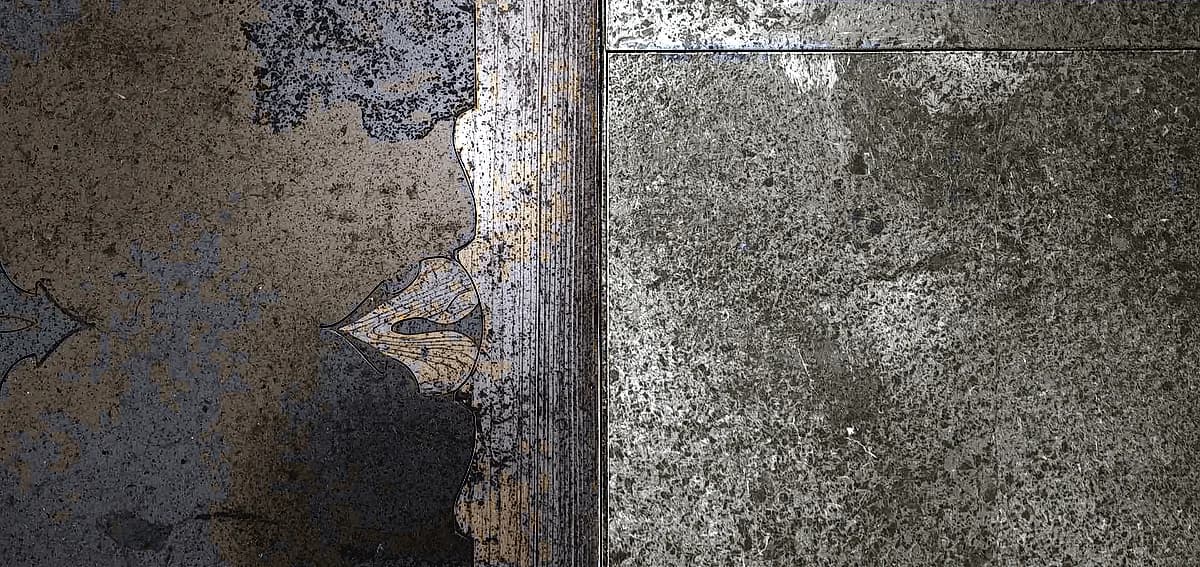
Tile durability varies dramatically by type. Porcelain tile is highly durable and moisture-resistant, with a PEI (Porcelain Enamel Institute) rating of 4 or 5 suitable for heavy traffic. However, ceramic tile is softer and more prone to chipping. The real vulnerability is the grout. In humid Fort Lauderdale, grout absorbs moisture, leading to efflorescence, staining, and eventual crumbling. As Sarah Miller, Lead Architect at Coastal Design Studio, explains: “We’ve replaced countless tile floors not because the tile failed, but because the grout became a breeding ground for mold. A seamless polished concrete floor removes that biological risk entirely.”
3.1 Moisture, Mold, and1 Indoor Air Quality
Moisture vapor transmission is the silent killer of flooring in South Florida. Concrete slabs naturally wick ground moisture. If this moisture becomes trapped under a tile floor, it causes adhesive breakdown, tile tenting, and pervasive mold growth. Polished concrete is breathable; the polishing process does not seal the surface completely, allowing moisture vapor to pass through without damaging the floor. This is a critical health consideration. The Environmental Protection Agency identifies mold as a major indoor air quality hazard, and eliminating grout lines—a primary mold habitat—significantly improves respiratory health for occupants.
For tile installations, a robust moisture barrier and vapor retarder are mandatory, adding $2 to $4 per square foot to the project cost. Even with these precautions, a single crack in the grout can compromise the entire system. Polished concrete’s inherent permeability, combined with a penetrating sealer, provides a healthier dátummal solution. For more on this, our guide on why waterproofing matters under coatings details the science of moisture mitigation.
4.1 Cost Analysis: Initial Investment vs. Lifetime Value
The financial comparison between polished concrete and tile involves more than the upfront price tag. Basic ceramic tile installation in Fort Lauderdale ranges from $7 to $15 per square foot, including materials and labor. High-end porcelain or natural stone tiles can reach $20 to $30 per square foot. Polished concrete typically costs between $5 and $12 per square foot for a standard grind and polish, depending on the slab’s condition and the desired sheen level. However, tile requires ongoing expenses: professional grout cleaning ($0.50–$1 per square foot annually), sealing ($1–$2 per square foot every two years), and eventual grout repair or replacement.
Over a 15-year period, the total cost of ownership for tile can be 40% higher than polished concrete. A 2026 market analysis by HomeGuide reports that polished concrete adds an estimated 8–10% to a property’s resale value in luxury markets, while1 tile adds approximately 3–5%. This is due to the perception of polished concrete as a premium, custom finish. For businesses, the reduced maintenance downtime translates directly into operational savings. Learn more about the economic benefits in our article on polished concrete residential benefits.
| Feature | Polished Concrete | Tile |
|---|---|---|
| Initial Cost (per sq. ft.) | $5 – $12 | $7 – $30 |
| Lifespan | 20–25+ years | 10–20 years (grout fails earlier) |
| Annual Maintenance | Dust mopping, occasional damp mopping | Grout scrubbing, sealing, re-grouting |
| Moisture Resistance | Breathable, no mold habitat | Grout absorbs moisture, mold risk |
| Repairability | Difficult to patch invisibly | Individual tiles can be replaced |
| Slip Resistance | Can be treated with anti-slip additives | Varies; glazed tile is very slippery |
5. Design Aesthetics and Light Reflectivity
Tile offers an unparalleled palette of colors, wood-look planks, and intricate mosaics. It allows for geometric patterns and defined zones within an open floor plan. However, polished concrete provides a different kind of aesthetic: a seamless, expansive, and luminous surface. The high-gloss finish reflects up to 30% more light than standard tile, according to the Illuminating Engineering Society. This reduces the need for artificial lighting during daylight hours, cutting energy consumption by 10–15%. In Fort Lauderdale’s sunny climate, this light reflectivity makes spaces feel cooler and more open.
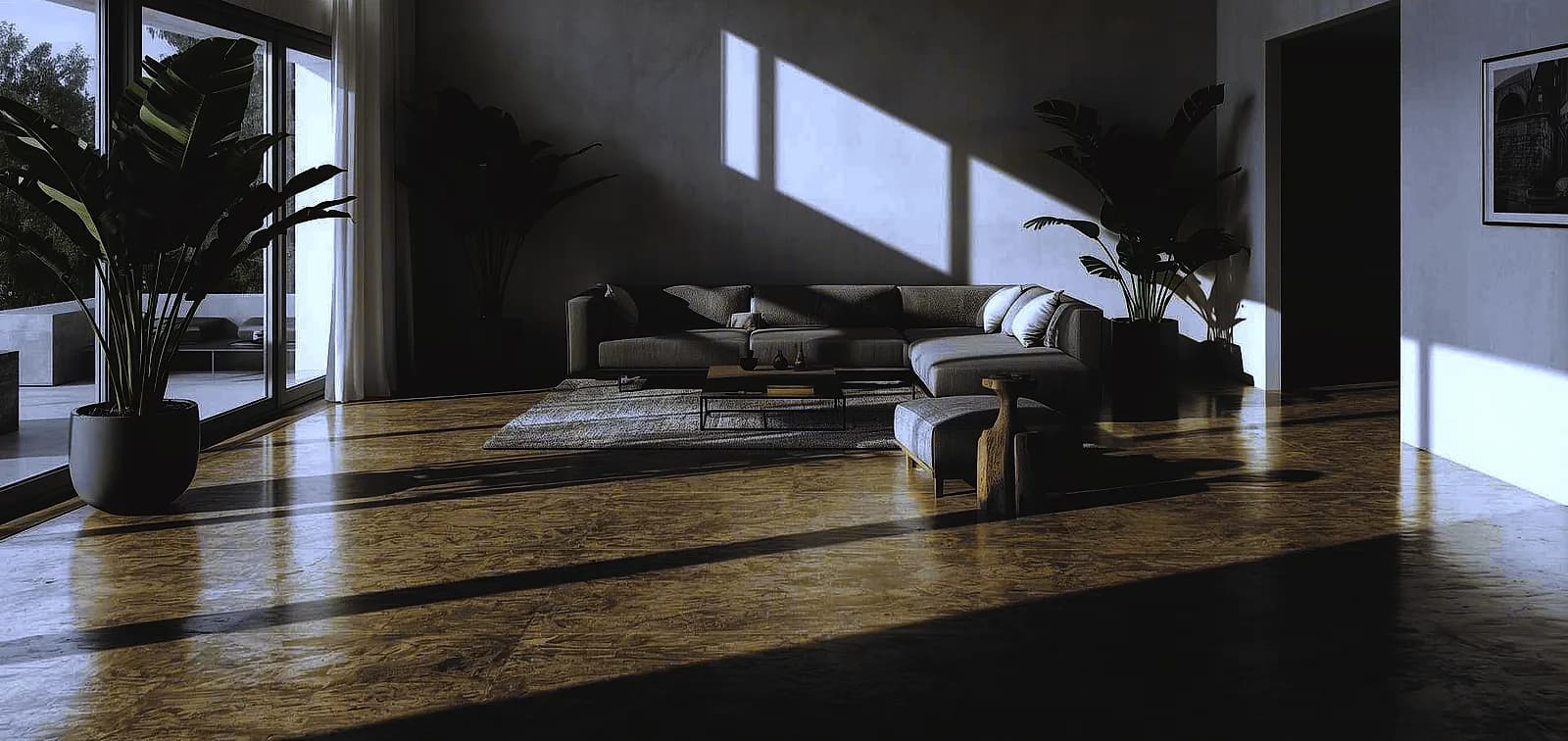
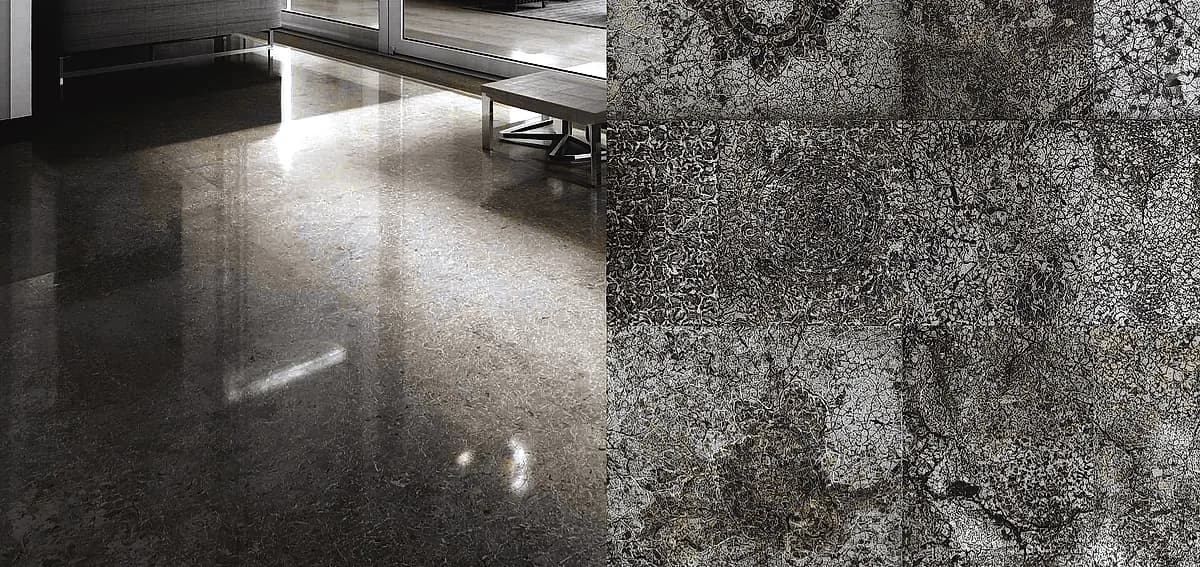
Polished concrete can be stained with dyes to achieve rich, variegated earth tones or bold colors. It can also be scored with saw cuts to create geometric patterns that mimic large-format tile without any grout lines. The result is a modern, industrial-chic look that complements the coastal contemporary architecture prevalent in Fort Lauderdale. For those seeking a uniqueawn finish, our concrete polishing finishes guide explores the full spectrum of options.
6.1 Installation Process and Timeline
The installation of tile is a multi-step, labor-intensive process. It involves subfloor preparation, layout, thin-set application, tile setting, curing, grouting, and sealing. A typical 1,000-square-foot residential project can take 5 to 7 days, during which the space is unusable. Polished concrete, while also a multi-step process, is often faster for new construction or remodels where the slab is already exposed. The grinding and polishing sequence—coarse grind, fine grind, densifier application, and burnishing—can be completed in 3 to 5 days for a similar area.
However, polishing existing concrete that has adhesives, paint, or damage requires extensive prep work. As Mark Jensen, a certified concrete polisher with 20 years of experience, notes: “The biggest mistake homeowners make is assuming their slab is ready to polish. Old cutback adhesive from previous flooring can take days to remove properly. But once that’s done, the polishing itself is a clean, dust-free process thanks to modern HEPA-filtered equipment.”1 For commercial1 spaces needing to stay open, our article on phased floor installation for retail provides1 strategies to minimize disruption.
7.1 Comfort, Acoustics, and Thermal Performance
1Tile is hard and cold underfoot, which can be a discomfort in air-conditioned spaces. Polished concrete shares the hardness but offers superior thermal mass. It absorbs and stores heat, helping to regulate indoor temperatures passively. In winter, it releases stored warmth; in summer, it stays cool. This thermal property is a significant advantage in Fort Lauderdale’s climate, reducing HVAC load. Our detailed analysis of polished concrete thermal benefits explains this phenomenon in depth.
Acoustically, both materials reflect sound, which can create echo in large, open rooms. Tile with a soft grout joint can slightly dampen sound, but the effect is minimal. Polished concrete can be mitigated with area rugs, acoustic panels, and soft furnishings. The lack of grout lines in polished concrete eliminates a common source of unevenness that causes furniture to wobble, a subtle but daily annoyance with tile floors.
8.1 Common Mistakes and1 Edge Cases
A frequent error is choosing polished concrete for a bathroom without specifying an anti-slip treatment. While the polished surface can be slippery when wet, a honed finish or a penetrating anti-slip additive maintains safety without compromising the look. Another mistake is installing tile over a concrete slab without performing a calcium chloride moisture test (ASTM F1869). In Fort Lauderdale, moisture vapor emission rates often exceed the 3 lbs/1,000 sq. ft./24-hour limit for many adhesives, leading to catastrophic failure. Our guide on epoxy floor peeling details similar moisture-related adhesion failures.
For outdoor applications like patios and pool decks, tile must be frost-proof and have a high coefficient of friction. Polished concrete outdoors requires a specialized exposed aggregate or broom finish, not a high-gloss polish, to prevent slipping. In historic Fort Lauderdale homes with terrazzo floors, polishing the existing terrazzo is a superior alternative to covering it with tile, preserving architectural integrity while achieving a modern look.
9. Expert Insights and1 Real-World1 Performance
We spoke with Dr. Elena Torres, a materials scientist specializing in cementitious composites: “The key advantage of polished concrete is its monolithic nature. There are no interfaces for crack propagation. In a seismic event or even minor ground settling, tile systems fail at the grout lines first. Polished concrete distributes stress evenly across the entire slab.” This structural integrity is16 why many Fort Lauderdale commercial kitchens and warehouses are transitioning to polished concrete. For more on this, see our article on commercial kitchen floor regulations.
From a maintenance perspective, the contrast is stark. A polished concrete floor in a busy Fort Lauderdale retail store requires only daily dust mopping and weekly damp mopping with a neutral pH cleaner. A tiled floor of the same size requires daily sweeping, weekly scrubbing of grout lines, and quarterly professional deep cleaning. Over five years, the maintenance labor cost for tile can be triple that of polished concrete. For businesses, this is a critical operational consideration.
Frequently Asked Questions
Is polished concrete cheaper than tile in Fort Lauderdale?
The initial cost of polished concrete is often comparable to mid-range tile, but its 20+ year lifespan and minimal maintenance make it significantly cheaper over time. Tile requires ongoing grout cleaning and sealing, adding to the total cost of ownership.
Does polished concrete crack more easily than tile?
Polished concrete can develop hairline cracks as the slab naturally settles, but these are often embraced as part of the material’s character. Tile, however, can crack and delaminate from the substrate if the subfloor shifts, requiring replacement of individual pieces.
Can you have radiant heating under polished concrete?
Yes, polished concrete is an excellent conductor of heat and pairs perfectly with radiant heating systems. Its thermal mass stores and radiates heat efficiently, making it a popular choice for energy-efficient homes.
How slippery is polished concrete compared to tile?
High-gloss polished concrete can be slippery when wet, similar to glazed tile. However, the coefficient of friction can be increased with anti-slip treatments or by choosing a matte or honed finish, which provides better traction than16 most glazed tiles.
Which flooring is better for Fort Lauderdale’s humidity?
Polished concrete is superior in humid climates because it is breathable and lacks grout lines that trap moisture and breed mold. Tile installations are prone to moisture-related failures if the vapor barrier is not perfectly executed.
Can I polish my existing concrete slab, or does it need to be new?
Existing slabs can be polished, but they must be structurally sound and free of major cracks, adhesives, or sealers. A professional assessment is necessary to determine the slab’s suitability and the amount of prep work required.
How long does it take to install polished concrete versus tile?
A typical 1,000-square-foot area can be polished in 3 to 5 days, while tile installation, including grouting and sealing, often takes 5 to 7 days. Polishing is generally faster, especially in new construction where the slab is16 ready.
Conclusion
The debate between polished concrete and tile in Fort Lauderdale ultimately hinges on your priorities: design variety versus long-term resilience. Tile offers an unmatched spectrum of patterns and a lower initial price point, but it introduces the perpetual maintenance challenge of grout in a moisture-rich environment. Polished concrete delivers a seamless, modern, and incredibly durable surface that enhances light, improves air quality, and withstands the coastal climate with minimal upkeep. For homeowners and businesses seeking a floor that combines aesthetic sophistication with practical, lifelong performance, polished concrete is the definitive choice.1 Ready to explore the possibilities for your space? Contact our team today for a personalized consultation and discover the perfect floor for your Fort Lauderdale property.
References
- Portland Cement Association. “Polished Concrete Floors.” cement.org
- National Ready Mixed Concrete Association. “Concrete Strength Testing.” nrmca.org
- Concrete Polishing Council. “Lifecycle Cost Analysis of Polished Concrete.” concretepolishingcouncil.org
- Environmental Protection Agency. “Mold and Health.” epa.gov
- HomeGuide. “2026 Flooring Installation Cost Guide.” homeguide.com
- Illuminating Engineering Society. “Light Reflectance Values of Flooring Materials.” ies.org
- ASTM International. “ASTM F1869: Standard Test Method for Measuring Moisture Vapor Emission Rate of Concrete Subfloor.” astm.org
Written by

Founder and CEO
Chris Lavin is an esteemed leader in concrete polishing and epoxy coatings with a distinguished 20-year career. As founder and CEO of National Concrete Polishing and owner of Xtreme Polishing Systems, he's renowned for polishing and epoxy coating more floors than anyone globally. Chris is recognized for his innovative approach and commitment to enhancing floor durability and aesthetics. His hands-on experience and technical proficiency make him a respected authority and a valuable resource in the field of floor polishing and coatings.
Same topic
Related articles
All stories
Polished concrete11 min read
Polished Concrete vs Epoxy Coatings: Which Floor Is Right for Your Space?
Two systems, two price curves, one slab. What each one costs to install and to keep, and which spaces each one actually suits.
Read it
Polished concrete8 min read
What to Know Before Polishing Your Existing Concrete Slab
Before any mechanical refinement can begin, a thorough evaluation of the current foundation is required.
Read it
Polished concrete8 min read
Is Polished Concrete Worth the Investment for Miami Properties?
It is essential to distinguish between a simple topical seal and mechanically refined concrete.
Read it
Tell us about the floor
Tell us the space and roughly how big it is.We come back with what it would cost and when we could start.
Prefer to talk? Call +1 844-876-5474
- Leads@
nationalconcretepolishing.net - 2200 NW 32nd St #600,
Pompano Beach, FL 33069 Mon to Fri, 9:00 to 5:30