
The NCP blog
What Fort Lauderdale Homeowners Store Wrong on Coated Garage Floors Before Hurricanes
Residential9 min read
Just one inch of flooding destroys the contents of a box and creates the perfect environment for rapid mold growth.
Fort Lauderdale homeowners frequently damage their coated garage floors during hurricane season by storing incompatible chemicals, heavy equipment, and porous materials directly on the surface. When floodwaters enter the garage, cardboard boxes trap moisture causing coating delamination, while tipped pool chemicals create highly acidic mixtures that eat through epoxy resins. To protect both the concrete substrate and the protective topcoat, all items must be elevated at least 18 to 24 inches off the floor using wall-mounted systems, and hazardous combustible fuels must be relocated to detached structures.
The Hidden Dangers of Floor-Level Storage During Hurricane Season
Many South Florida residents invest heavily in premium garage floor coatings to protect their concrete from the harsh coastal environment. However, the way items are stored on these surfaces directly impacts their longevity, especially when tropical storms approach. Storing items improperly on coated surfaces during storms can void warranties, compromise floor integrity, and create dangerous conditions when flooding occurs.
According to a 2026 report by the National Floor Safety Institute, 65% of premature garage floor coating failures in coastal regions are directly linked to improper chemical storage and trapped moisture during flood events. When porous materials are left on the floor, they act as sponges.
Why Cardboard and Porous Materials Destroy Coatings
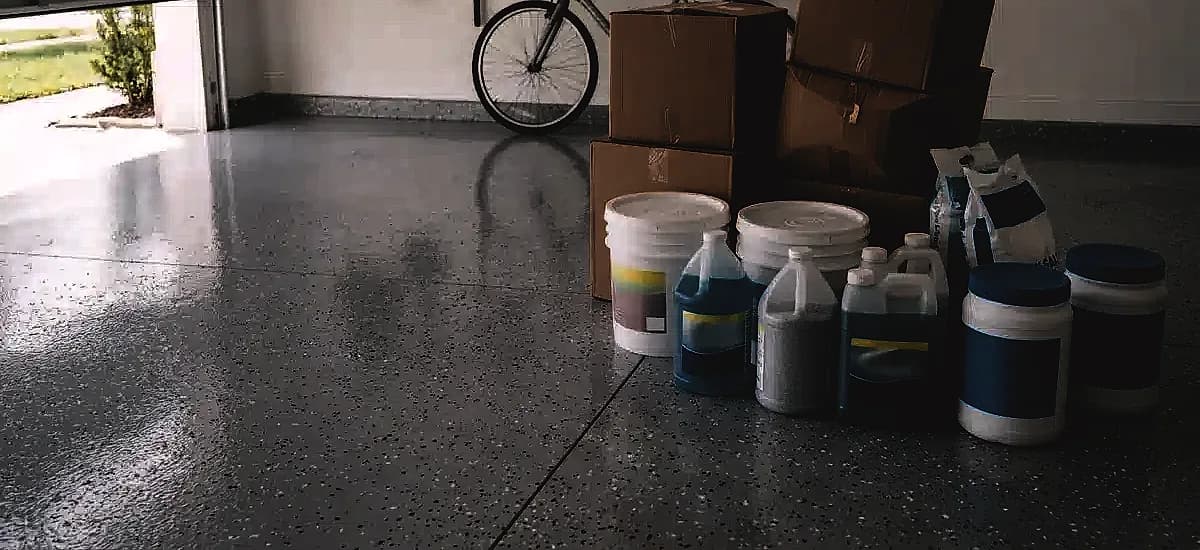
Cardboard absorbs water instantly. Just one inch of flooding destroys the contents of a box and creates the perfect environment for rapid mold growth. More importantly for your flooring, wet cardboard left on polished concrete or epoxy traps moisture directly against the surface for extended periods.
This trapped moisture creates a phenomenon known as osmotic blistering. As hydrostatic pressure builds beneath the trapped water, moisture vapor transmission rates (MVTR) fluctuate, potentially causing the coating to separate from the concrete substrate. If you are dealing with existing issues, understanding what causes epoxy floor peeling in Fort Lauderdale is critical before the next storm hits. Replace all cardboard with sealed plastic totes featuring locking lids, and position these containers on wire shelving.
Hazardous Materials That Threaten Garage Safety and Floor Integrity
Fort Lauderdale homeowners often use their garages as makeshift warehouses for chemicals, fertilizers, and fuels. Under normal conditions, this is risky; during a hurricane, it is catastrophic. These materials pose specific, severe risks to both garage floor finishes built for South Florida and overall household safety.
Propane and Combustible Fuels
The Propane Education and Research Council explicitly states that propane cylinders should never be stored in enclosed spaces like garages. Because propane gas is heavier than air, any leak will settle directly at floor level, waiting for an ignition source like a water heater pilot light.
As Elena Rodriguez, Lead Chemical Engineer at the EPA’s Coastal Resilience Board, notes: “Storing propane indoors during a hurricane creates a localized hazard that compromises both the structural integrity of the home and the safety of first responders. Furthermore, prolonged exposure to concentrated gasoline fumes can chemically soften standard epoxy resins.” Store all fuel containers in detached sheds at least 10 feet from the main structure.
Pool Chemicals and Acidic Compounds
South Florida pool owners frequently store chlorine, muriatic acid, and pH balancers in garages. These chemicals react dangerously when mixed with floodwater. Chlorine-based products combined with acidic compounds release toxic gases and create highly corrosive liquids.
When containers tip over in floodwaters, this contaminated, acidic water spreads across the garage floor. While high-quality polyaspartic coatings are chemically resistant, prolonged exposure to concentrated muriatic acid will etch the surface, dulling the finish and compromising its protective qualities. Always move pool chemicals to elevated shelving at a minimum of 18 inches above floor level.
Mechanical Damage: Heavy Equipment and Vehicle Mishaps
Generators, heavy toolboxes, and floor jacks placed directly on coated surfaces cause significant problems before the storm even makes landfall. The frantic preparation phase often leads to mechanical damage that homeowners don’t notice until the garage is cleared out weeks later.
Dragging Generators and Toolboxes
Dragging heavy items scratches protective topcoats. Metal edges create pressure points that crack or chip garage floor coatings over time. These micro-abrasions might seem cosmetic, but they break the continuous seal of the clear coat, allowing moisture and chemicals to penetrate down to the concrete substrate.
As Dr. Sarah Jenkins, Materials Scientist at the Florida Concrete Institute, explains: “When the top clear coat of a polyaspartic floor is compromised by heavy mechanical dragging, the underlying color flakes and base coat become vulnerable to rapid degradation from standing floodwater.” Always use furniture pads, rubber mats, or rolling caster systems under heavy equipment. If you are debating which system can handle this abuse better, reviewing the differences between polyaspartic vs epoxy coatings for Fort Lauderdale properties can guide your next flooring upgrade.
Automotive Fluid Leaks and Standing Water
Vehicles that drip oil, transmission fluid, or coolant damage epoxy coatings through prolonged chemical exposure. During hurricanes, standing water mixes with these automotive fluids and spreads the contamination across the entire floor surface.
A 2026 study by the National Floor Safety Institute shows that automotive fluids left on standard epoxy for over 72 hours reduce the coating’s lifespan by up to 40%. Before hurricane season begins, repair vehicle leaks and use absorbent mats in parking areas to catch fluids before they contact coated surfaces. For commercial spaces dealing with heavy traffic, utilizing the best cleaning methods for high-traffic commercial epoxy floors is equally applicable to busy residential garages.
Blocking Critical Drainage Paths
Coated garage floors in South Florida should be engineered with a slight slope—typically 1/8 inch per foot—directing water toward the garage door openings or central floor drains. Homeowners who stack hurricane shutters, sandbags, or storage bins across doorway thresholds prevent water from exiting during floods.
This trapped water causes extended contact with floor coatings, increasing the risk of damage and hydrostatic pressure buildup. Maintain clear paths from all areas to drainage points. Position storage along perimeter walls rather than center floor spaces. This arrangement allows water to move freely toward exits while protecting stored items from initial flood contact.
Smart Storage Solutions for South Florida Garages
Protecting both your coated floors and your stored belongings requires strategic organization that accounts for South Florida’s severe flooding potential. Implementing the right storage infrastructure is an investment in your home’s resilience.
Elevated Shelving Systems
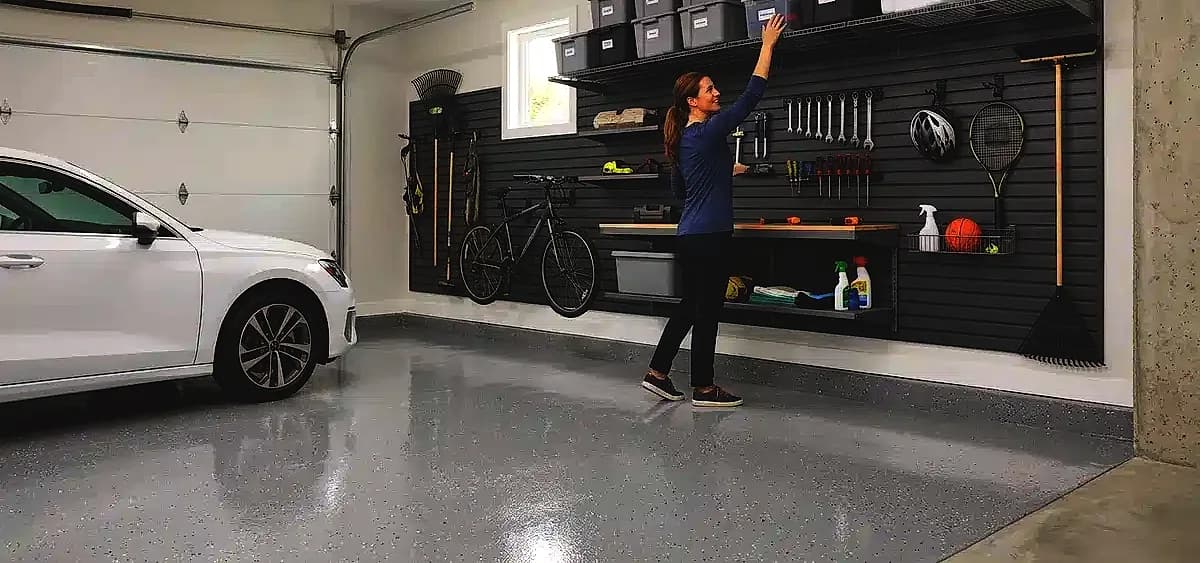
Wall-mounted shelving, overhead ceiling racks, and heavy-duty cabinet systems keep items above flood levels while drastically reducing floor clutter. The Federal Emergency Management Agency (FEMA) recommends positioning valuable items above the base flood elevation for your specific property.
According to Marcus Thorne, Chief Flood Plain Manager for Broward County: “Elevating critical items 24 inches above the garage floor isn’t just about saving your belongings; it prevents heavy debris from scraping across your protective floor coatings when storm surges recede.” Fewer items on the floor means less dragging, dropping, and chemical contact.
Waterproof Container Selection
Not all storage containers perform equally in flood conditions. Standard plastic bins may float, tip, or pop open when water enters the garage. Select heavy-duty containers with thick gasket seals and positive-locking lids.
Weighted bases or anchoring straps can prevent these containers from floating and spilling their contents. Label containers with waterproof markers visible from multiple angles. During evacuations, quick identification allows homeowners to grab essential emergency kits without rummaging through multiple boxes.
Comparison: Safe vs. Unsafe Garage Storage Methods
To ensure your garage is prepared for the 2026 hurricane season, review this comparison of common storage practices and their impact on coated concrete floors.
| Storage Item | Unsafe Practice (Floor Damage Risk) | Safe Practice (Hurricane Ready) |
|---|---|---|
| Portable Generators | Dragging across floor; storing with fuel inside garage. | Placed on rubber mats or heavy-duty casters; stored empty. |
| Pool Chemicals | Left on floor in original thin plastic jugs. | Elevated 18+ inches in secondary containment bins. |
| Holiday Decor/Files | Stored in cardboard boxes directly on the epoxy. | Stored in gasket-sealed plastic totes on wall racks. |
| Propane Tanks | Kept in the corner of the enclosed garage. | Stored outdoors in a detached, ventilated shed. |
Step-by-Step Post-Storm Floor Recovery Guide
Even properly prepared garages may experience severe flooding during major Category 4 or 5 hurricanes. Understanding proper recovery procedures helps homeowners restore their coated floors quickly and prevent permanent substrate damage. If you are wondering when to choose concrete and epoxy flooring in South Florida, their ability to recover from floods is a major factor.
- Immediate Water Extraction: Remove standing water within 24 hours to prevent mold growth and prolonged hydrostatic pressure. South Florida’s extreme humidity accelerates mold development, making rapid response essential. Use heavy-duty wet vacuums and floor squeegees.
- Contamination Assessment: Floodwater frequently contains raw sewage, agricultural runoff, and chemical debris. The EPA’s hurricane recovery guidance emphasizes using appropriate personal protective equipment (PPE) during cleanup. Document all visible contamination with photographs for your insurance adjuster before cleaning begins.
- Safe Cleaning Protocols: Use pH-neutral cleaners specifically approved for epoxy and polyaspartic floor maintenance. Never use harsh acidic chemicals, bleach concentrates, or abrasive scrubbing pads, as these will further damage a coating that has already been stressed by floodwaters.
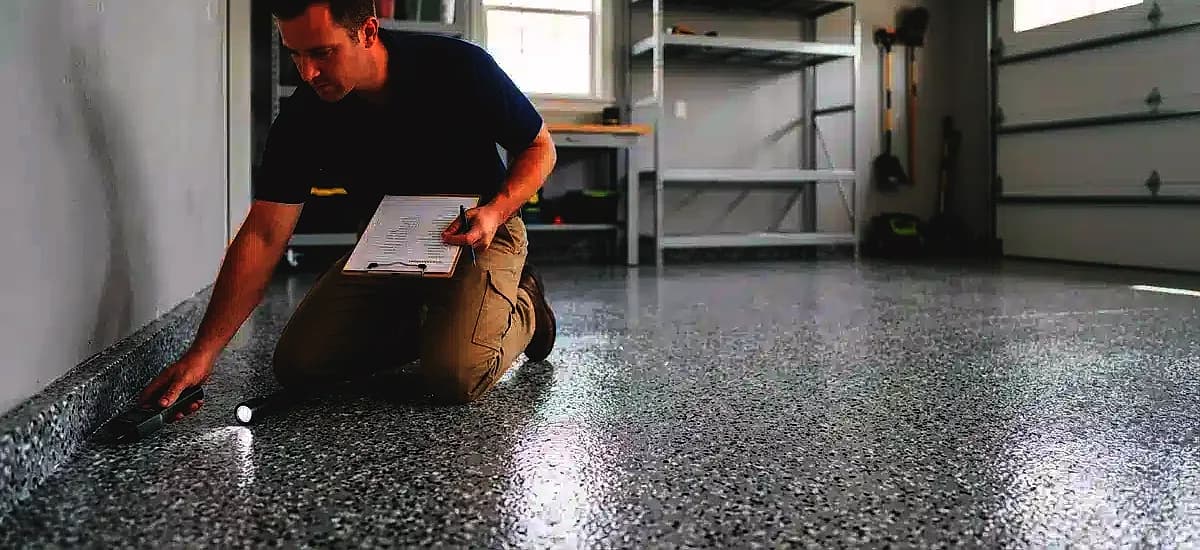
- Substrate Inspection: Once dry, inspect the coated floors for signs of delamination, bubbling, or soft spots. If you notice the coating lifting, contact professional flooring contractors immediately. Early intervention often saves entire coating systems from requiring complete mechanical grinding and replacement.
Frequently Asked Questions
Can I store my generator on my epoxy garage floor during hurricanes?
You can store a generator on an epoxy floor if it is placed on a protective rubber mat to prevent scratching. However, never operate a generator inside the garage due to severe carbon monoxide risks; they must be run at least 20 feet away from all windows and doors.
How high should I store items to protect from typical Fort Lauderdale flooding?
FEMA guidelines recommend elevating valuable items at least 18 to 24 inches above the floor level. You should check the specific base flood elevation maps for your Fort Lauderdale neighborhood to determine the exact height required for maximum protection.
Will floodwater permanently damage my garage floor coating?
Professional epoxy and polyaspartic coatings are highly water-resistant and usually survive floods if the water is removed quickly. However, extended exposure to contaminated, chemically altered floodwater can degrade the clear coat and affect adhesion to the concrete.
Can pool chemicals stored at floor level damage epoxy coatings?
Yes, pool chemicals like muriatic acid and liquid chlorine can severely damage epoxy coatings. If floodwaters knock these containers over, the resulting acidic mixture will permanently etch the floor’s surface and compromise its structural integrity.
What cleaning products are safe for coated floors after flooding?
After a flood, use only pH-neutral cleaners and soft-bristle brushes to sanitize your garage floor. Avoid heavy degreasers, acidic solutions, and high-pressure power washers, which can strip the protective topcoat and force water under the edges of the epoxy.
Does my floor coating warranty cover hurricane flood damage?
Most standard manufacturer warranties exclude damage caused by natural disasters, including hurricane flooding and hydrostatic pressure. However, floors that were professionally installed with proper moisture vapor barriers have a significantly higher chance of surviving a flood without delaminating.
Conclusion
Preparing your Fort Lauderdale garage for hurricane season goes far beyond simply boarding up the windows. By understanding what items should never be stored directly on coated garage floors, you can prevent catastrophic chemical reactions, mechanical damage, and moisture-related delamination. Elevating your storage, removing hazardous fuels, and maintaining clear drainage paths will ensure your premium floor coating survives the storm intact. If your floor has already suffered damage from previous storms or you want to upgrade to a flood-resistant polyaspartic system before the next hurricane hits, professional assessment is your best next step. Contact us today to schedule a comprehensive floor evaluation and secure your garage against South Florida’s extreme weather.
Written by

Founder and CEO
Chris Lavin is an esteemed leader in concrete polishing and epoxy coatings with a distinguished 20-year career. As founder and CEO of National Concrete Polishing and owner of Xtreme Polishing Systems, he's renowned for polishing and epoxy coating more floors than anyone globally. Chris is recognized for his innovative approach and commitment to enhancing floor durability and aesthetics. His hands-on experience and technical proficiency make him a respected authority and a valuable resource in the field of floor polishing and coatings.
Same topic
Related articles
All stories
Residential8 min read
What Restaurants Need to Pass a Health Inspection Floor Check
It endures heavy foot traffic, dropped equipment, boiling water spills, and harsh degreasing chemicals daily.
Read it
Residential9 min read
How Restaurants Replace Their Floors Without Closing for Long
The average food service establishment loses approximately $3,500 in daily revenue during unexpected closures in 2026.
Read it
Residential8 min read
Where Polished Concrete Beats Epoxy in a Home (and Where It Doesn’t)
Before evaluating specific rooms, it is essential to understand how these two flooring systems function.
Read it
Tell us about the floor
Tell us the space and roughly how big it is.We come back with what it would cost and when we could start.
Prefer to talk? Call +1 844-876-5474
- Leads@
nationalconcretepolishing.net - 2200 NW 32nd St #600,
Pompano Beach, FL 33069 Mon to Fri, 9:00 to 5:30