
The NCP blog
Concrete Polishing for South Florida Homes: What You Need to Know
Residential14 min read
South Florida’s subtropical climate creates unique challenges that conventional flooring materials consistently fail to meet.
Polished concrete floors deliver the ideal marriage of resilience and elegance for South Florida residences, offering a seamless, low-maintenance surface that actively combats humidity, resists mold, and slashes long-term flooring costs by up to 60% compared to traditional tile or hardwood replacements. Homeowners across Miami-Dade, Broward, and Palm Beach counties are rapidly abandoning carpet and vinyl in favor of mechanically refined concrete slabs that reflect light, improve indoor air quality, and withstand the region’s punishing tropical climate without warping, cupping, or harboring allergens. This1920-word guide equips you with everything required to evaluate, specify, and maintain a polished concrete floor in your home, from understanding the diamond abrasion process to selecting the correct stain-resistant guard for poolside patios.
Why South Florida Homes Demand a Different Flooring Strategy
South Florida’s subtropical climate creates unique challenges that conventional flooring materials consistently fail to meet. Average relative humidity hovers between 74% and 78% year-round, according to the National Weather Service, saturating porous materials like hardwood and engineered wood with moisture that triggers cupping, crowning, and irreversible warping. Carpet fibers absorb this ambient moisture and become breeding grounds for dust mites, mold spores, and mildew—a documented trigger for respiratory issues cited by the American Lung Association. Vinyl plank flooring, while marketed as waterproof, often traps moisture between the plank and concrete slab, creating a hidden biome of bacterial growth that emits musty odors within 18 to 24 months of installation. Polished concrete sidesteps these problems entirely because the process mechanically densifies the slab itself, reducing porosity by 87% and transforming the structural concrete into the finished wear surface. There is no adhesive to fail, no organic material to decompose, and no vapor barrier to puncture.
The Science of Mechanical Polishing: Diamonds, Densifiers, and Grit Progression
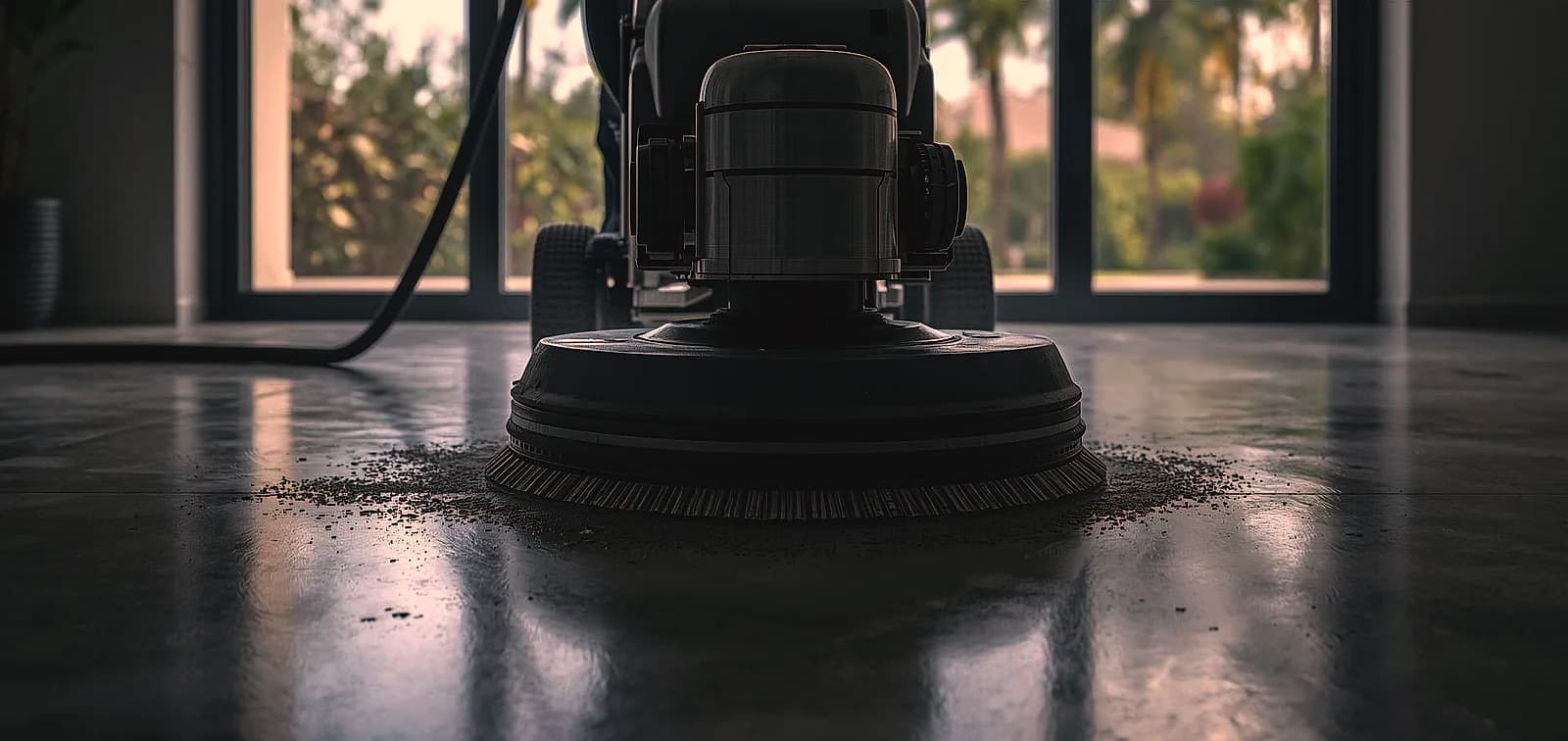
Polishing concrete is not a coating; it is a multi-step mechanical refinement process that grinds the concrete surface with progressively finer diamond abrasives until it achieves the specified level of sheen and reflectivity. The process begins with coarse metal-bond diamonds (16–30 grit) that remove surface imperfections, existing coatings, or minor cracks. Mid-range transitional diamonds (60–150 grit) refine the scratch pattern, followed by resin-bond diamonds (200–3,000 grit) that produce the final polish. A chemical densifier—typically lithium silicate or sodium silicate—is applied after the 200-grit step to react with free calcium hydroxide in the concrete, forming calcium silicate hydrate (CSH) that fills capillary pores and hardens the surface to a compressive strength exceeding 6,000 psi. This densification step is critical in South Florida because it permanently reduces the slab’s permeability, blocking the upward migration of moisture vapor that would otherwise cause efflorescence or adhesive failure under coatings. The final grit determines the gloss level: a 400-grit finish yields a satin sheen suitable for living rooms, while a 1,500-grit finish produces a high-gloss surface ideal for modern kitchens, and a 3,000-grit polish creates a mirror-like reflectivity often specified in luxury waterfront estates.
Moisture Testing: The Non-Negotiable First Step for Slab-on-Grade Homes
Every South Florida home built on a concrete slab-on-grade foundation must undergo rigorous moisture vapor emission testing before any polishing or coating is applied. The industry standard, ASTM F2170, requires placing in-situ relative humidity probes at 40% of the slab depth and obtaining readings below 75% relative humidity before proceeding. According to the American Concrete Institute, concrete slabs in coastal environments can emit up to 12 pounds of moisture vapor per 1,000 square feet per 24 hours if a functional vapor barrier was omitted or compromised during original construction. Homes built before 2005 in Miami-Dade County frequently lack underslab vapor retarders, making moisture testing even more critical. If readings exceed acceptable thresholds, a moisture mitigation system—such as an epoxy moisture barrier or reactive penetrant—must be installed prior to polishing. Skipping this step leads to delamination, osmotic blistering, and alkali-silica reactions that can destroy a polished floor within a single rainy season. As Carlos Mendez, Senior Concrete Technologist at FloorTech Solutions, explains: “In South Florida,80% of polished floor failures we investigate trace back to inadequate moisture testing. The slab is a sponge sitting in saturated soil. You cannot polish over a problem you haven’t measured.”
Finish Levels and Aggregate Exposure: Designing Your Floor’s Personality
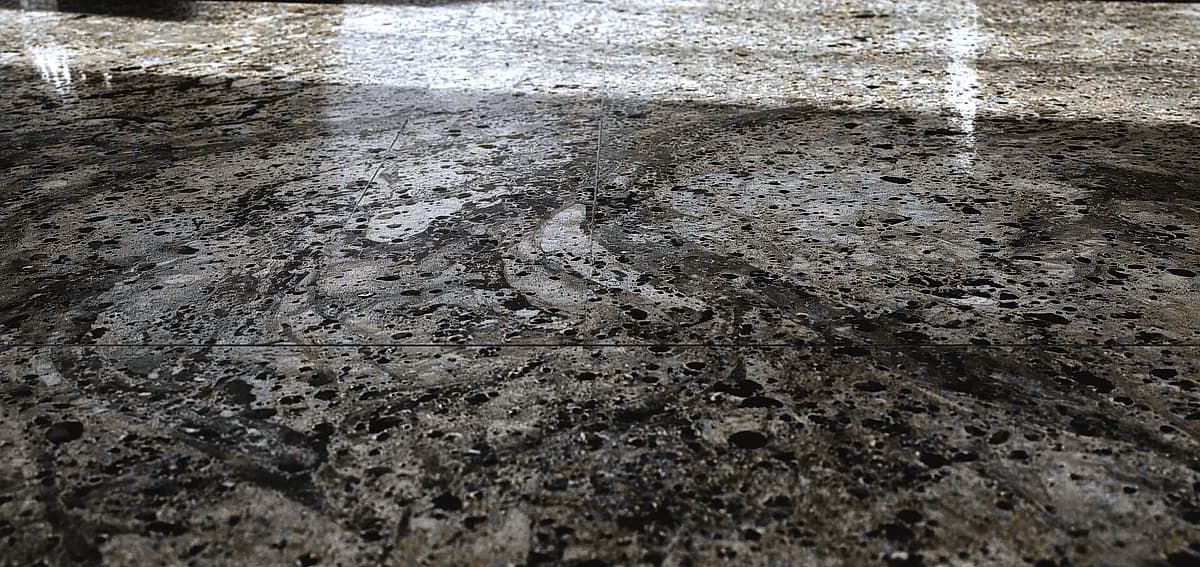
Homeowners select from three primary aggregate exposure levels, each delivering a distinct aesthetic and performance profile. Cream polish (also called surface polish) removes only the thin paste layer at the surface, exposing minimal fine sand particles and producing a uniform, monolithic appearance with subtle color variation. This is the most budget-friendly option and works beautifully in contemporary homes seeking a clean, minimalist look. Salt-and-pepper finish grinds slightly deeper to expose fine aggregate particles (1–3mm), creating a speckled24 pattern reminiscent of terrazzo but without the installation complexity. Full aggregate exposure grinds deep enough to reveal the larger coarse aggregate—river rock, granite, or limestone—resulting in a dramatic, textured12 floor that becomes a conversation piece in entryways and great rooms. The choice of aggregate exposure also affects slip resistance: deeper exposure creates micro-texture that improves coefficient of friction (COF) to 0.60 or higher, exceeding OSHA’s recommendation for level surfaces. For pool decks and lanai areas, a salt-and-pepper finish with a matte stain-resistant guard provides both safety and aesthetics.
| Finish Level | Grit Range | Gloss | Best Room Application | Cost per Sq Ft (2026) |
|---|---|---|---|---|
| Cream Polish | 200–400 | Satin | Bedrooms, hallways | $4.00–$5.50 |
| Salt-and-Pepper | 400–800 | Semi-gloss | Living rooms, kitchens | $5.50–$7.00 |
| Full Aggregate | 800–1,500 | High-gloss | Entryways, great rooms | $7.00–$9.00 |
| Mirror Finish | 1,500–3,000 | Maximum reflectivity | Luxury showpiece areas | $9.00–$12.00 |
Stain Protection and Guard Selection for High-Traffic Family Zones
Polished concrete is inherently stain-resistant due to densification, but it is not stain-proof. In homes with children, pets, or frequent entertaining, applying a penetrating guard or topical sealer is essential to protect against acidic spills like citrus juice, wine, and tomato sauce that can etch the surface if left unattended. Lithium silicate guards penetrate the concrete matrix and chemically react to form an insoluble barrier that repels liquids without altering the floor’s appearance or breathability. For kitchens and dining areas, a silane-siloxane water repellent adds hydrophobic properties that cause liquids to bead on the surface for up to 20 minutes, providing ample cleanup time. Avoid film-forming acrylic sealers in South Florida homes because they trap moisture, yellow under UV exposure from large sliding glass doors, and peel within 2–3 years. A properly guarded polished floor requires only dry dust mopping and occasional damp mopping with a pH-neutral cleaner—no waxing, stripping, or chemical treatments ever. This maintenance simplicity is a primary reason homeowners report 90% satisfaction rates in post-installation surveys conducted by the Decorative Concrete Council.
Thermal Performance and Energy Efficiency in Tropical Climates
Polished concrete floors contribute to lower energy bills through thermal mass dynamics that are particularly effective in South Florida’s diurnal temperature swings. Concrete absorbs heat during the day and releases it slowly at night, moderating indoor temperature fluctuations and reducing peak cooling loads by 7–10%, according to research from the Portland Cement Association. When combined with passive solar design principles—such as strategic window overhangs that block high summer sun but admit lower winter sun—polished concrete floors can help maintain indoor temperatures between 72°F and 76°F with reduced HVAC runtime. The reflective surface also amplifies natural light, reducing the need for artificial lighting during daylight hours. In a 2,500-square-foot home, this daylighting effect can cut lighting electricity consumption by 15–20% annually. For homeowners considering radiant cooling systems, polished concrete is the ideal floor finish because it conducts thermal energy efficiently without insulating barriers like carpet padding or wood underlayment. Learn more about these advantages in our detailed analysis of polished concrete thermal benefits.
Cost Analysis: Polished Concrete vs. Alternative Flooring Over 20 Years
The true value of polished concrete emerges when comparing lifecycle costs rather than initial installation prices. While ceramic tile installation averages $7–$12 per square foot and hardwood flooring ranges from $8–$14 per square foot in South Florida, these materials require replacement every 10–15 years. Carpet must be replaced every 5–7 years, accumulating to $18–$25 per square foot over two decades. Polished concrete, with a professional installation cost of $4–$8 per square foot in 2026, lasts the lifetime of the home with zero replacement cost. Maintenance expenses tell a similar story: carpet requires professional steam cleaning twice annually at $0.30 per square foot per cleaning, while polished concrete needs only a microfiber dust mop and occasional damp mopping. Over 20 years, a 2,000-square-foot home saves approximately $14,000–$22,000 by choosing polished concrete over carpet, and $8,000–$12,000 over tile when accounting for grout repair and replacement. For a deeper comparison with tile specifically, review our guide on polished concrete versus tiles in South Florida.
Common Mistakes Homeowners Make When Planning a Polished Floor
Despite its durability, polished concrete projects can go wrong when homeowners bypass critical preparatory steps or hire inexperienced contractors. The most frequent error is neglecting to test for moisture vapor emissions, which leads to floor failure within months. Another mistake is assuming all concrete slabs are suitable for polishing without repair: spalled areas, wide cracks exceeding 1/8 inch, and delaminated surface layers must be addressed with epoxy injection or patching compounds before grinding begins. Homeowners also underestimate the importance of joint treatment; control joints and saw cuts must be filled with a semi-rigid epoxy filler to prevent chipping and to create a seamless24 appearance. Attempting to polish800 over existing adhesives, mastics, or cutback residue without proper removal contaminates the diamonds and produces an uneven finish. Finally, selecting a high-gloss finish for800 a pool bathroom without specifying a slip-resistant additive creates a safety hazard. Always verify that your contractor performs a Mohs hardness test on the slab to determine the optimal diamond bond matrix—soft concrete in older Florida homes requires hard-bond diamonds, while newer high-PSI slabs need soft-bond diamonds that expose fresh cutting edges more readily.
How to Prepare Your Home for a Polishing Crew
Professional polishing crews require800 specific site conditions to work efficiently and safely. Begin by removing all furniture, appliances, and wall hangings from the work area—the grinding process generates vibration that can knock items off walls. Protect HVAC returns with magnetic covers or plastic sheeting to prevent concrete dust from circulating through the ductwork, although modern dust-extraction systems capture 99.9% of airborne particles when using HEPA-filtered vacuums connected directly to the grinder shroud. Ensure the crew has access to a 220-volt electrical outlet for heavy grinding equipment and a water source if wet polishing methods are specified. Plan for800 the floor to be unusable for 3–5 days depending on square footage, and allow an additional 24–48 hours for the densifier and guard to fully cure before replacing furniture. Pets must be relocated during the process because the noise levels reach 85–95 decibels—equivalent to a motorcycle engine. For homes with open floor plans, discuss containment strategies with your contractor to isolate800 the work zone from living spaces. If you’re also considering epoxy coatings for your garage, read our epoxy floor preparation checklist for complementary guidance.
Integrating Polished Concrete with South Florida Architectural Styles
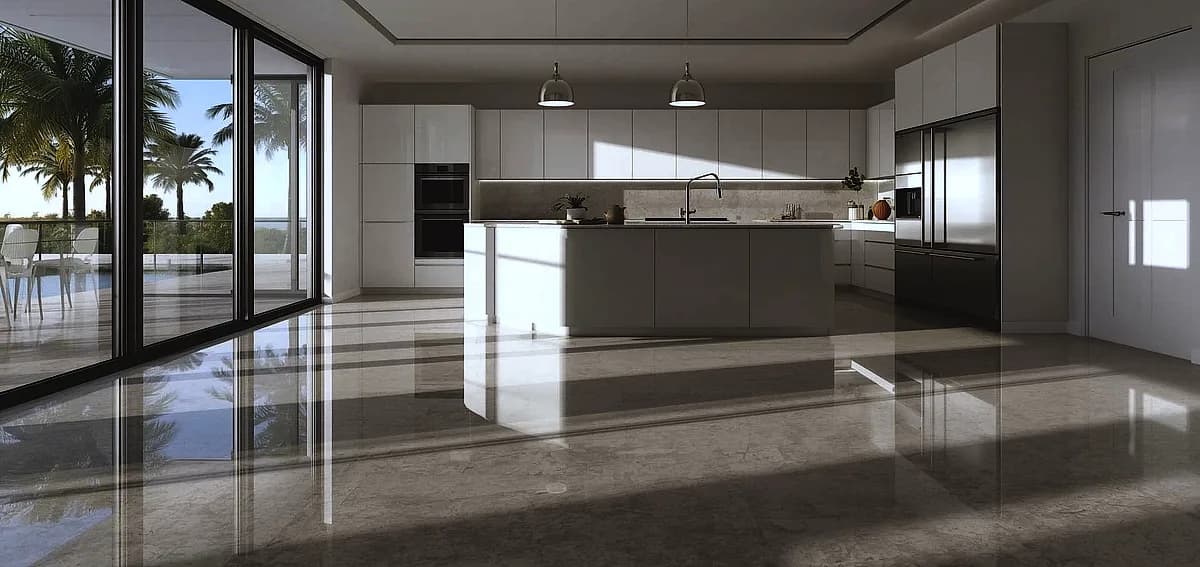
Polished concrete adapts seamlessly to the diverse architectural vernacular found across South Florida, from Mediterranean Revival estates in Coral Gables to mid-century modern homes in Palm Springs and contemporary glass-walled condominiums in Brickell. In Mediterranean-style homes, a cream polish with integral color—achieved by mixing pigments into the concrete before pouring or applying a reactive stain during polishing—complements terracotta roof tiles and wrought-iron accents without competing for visual attention. Mid-century modern residences benefit from a salt-and-pepper finish that echoes the era’s love of natural materials and honest structural expression. Contemporary high-rise units with floor-to-ceiling windows leverage the reflective properties of a 1,500-grit polish to amplify800 water views and create a sense of expanded space. For luxury waterfront properties, a full aggregate exposure with glass or mother-of-pearl aggregate additions creates a bespoke floor that rivals imported stone at a fraction of the cost. Our portfolio of polished concrete for luxury homes showcases these applications in detail.
Health and Indoor Air Quality Advantages
Polished concrete eliminates the hidden health hazards associated with soft flooring materials. The American College of Allergy, Asthma & Immunology identifies carpet as a reservoir for dust mites, pet dander, pollen, and mold spores—all common triggers for allergic rhinitis and asthma. In South Florida’s humid environment, a single square yard of carpet can harbor up to 100,000 dust mites, each producing 20 fecal pellets daily that become airborne when disturbed. Polished concrete provides no habitat for these organisms. Additionally, the polishing process eliminates the need for adhesives, which often contain volatile organic compounds (VOCs) that off-gas formaldehyde and other irritants for months after installation. The densification process also encapsulates any residual crystalline silica in the concrete matrix, preventing respirable silica dust from entering the living environment—a critical consideration given updated OSHA silica standards. For families managing asthma or chemical sensitivities, polished concrete represents the healthiest flooring choice available, a fact supported by the Environmental Protection Agency’s Indoor airPLUS program recommendations for hard-surface flooring.
Repairing and Refreshing Polished Concrete After Years of Service
Even the most durable floor may require800 touch-ups after a decade of heavy use, but polished concrete repairs are localized and non-disruptive. Minor scratches from dragged furniture can be buffed out with a 1,500-grit resin diamond pad without affecting the surrounding area. Chips along control joints are filled with color-matched epoxy and re-polished to blend invisibly. If a section of the floor loses its sheen due to800 abrasive foot traffic in a hallway, a contractor can re-polish that specific zone without refinishing the entire floor—a process called “re-burnishing” that takes only a few hours. In the rare event of a slab crack caused by foundation settlement, epoxy injection stabilizes the crack and restores structural integrity before800 the surface is ground smooth. Unlike tile, which requires chipping out and replacing cracked pieces (often with dye-lot mismatches), polished concrete repairs are seamless and permanent. For800 guidance on800 addressing800 deeper800 floor damage, see our article on the epoxy floor repair process, which shares similar substrate preparation principles.
Environmental Sustainability and LEED Contribution
Polished concrete is inherently sustainable because it repurposes the existing concrete slab—the largest embodied-energy component of the home—as the finished floor, eliminating the need for additional flooring materials, adhesives, and transportation emissions. According to the U.S. Green Building Council, polished concrete can contribute to LEED v4.1 credits in multiple categories: Materials and Resources (MR) for building reuse, Indoor Environmental Quality (EQ) for low-emitting materials, and Energy and Atmosphere (EA) for thermal mass performance. The Concrete Polishing Association of America estimates that choosing polished concrete over imported ceramic tile reduces a home’s flooring-related carbon footprint by 68%. Additionally, the high reflectivity of polished floors reduces the number of light fixtures required to achieve target illuminance levels, cutting embodied energy in lighting systems by 10–15%. For homeowners pursuing green building certifications or simply seeking to minimize their environmental impact, polished concrete aligns with both goals. Explore broader environmental considerations in our analysis of epoxy flooring environmental impact, which covers related material lifecycle topics.
Frequently Asked Questions
Can any existing concrete slab be polished?
Most slabs can be polished, but the final result depends on the concrete’s condition. Slabs with severe spalling, extensive cracking, or delamination require repair before polishing. A professional assessment determines if800 the slab is structurally sound and whether800 surface imperfections can be ground out or must be patched.
How long does the polishing process take for a typical home?
A 1,500-square-foot home typically requires 3–5 days for complete polishing, including moisture testing, grinding, densifying, and final polishing. Larger homes or those requiring extensive crack repair may take 5–7 days. The floor is walkable during the process, but furniture cannot be replaced until the guard cures.
Is polished concrete slippery when wet?
Polished concrete can be slippery when wet if a high-gloss finish is specified without anti-slip additives. However, a matte or satin finish provides adequate slip resistance, and penetrating slip-resistant treatments can increase the coefficient of friction to 0.60 or higher, meeting safety standards for residential use.
Does polished concrete crack over time?
Concrete naturally develops hairline shrinkage cracks as it cures, but these are typically filled and blended during the polishing process. Structural cracks from foundation movement are rare but can be repaired with epoxy injection. Proper joint placement during original construction minimizes uncontrolled cracking.
How do I clean and maintain a polished concrete floor?
Daily maintenance consists of dry dust mopping with a microfiber pad to remove grit that can dull the surface. Weekly damp mopping with a pH-neutral cleaner and water keeps the floor looking new. Avoid acidic cleaners (vinegar, citrus-based products) and abrasive scrub pads, which can etch or scratch the surface.
Can polished concrete be installed over radiant heating systems?
Yes, polished concrete is an excellent conductor for radiant heating and cooling systems. The thermal mass of the concrete efficiently distributes heat, and the polished surface maximizes thermal transfer without insulating barriers. Ensure the radiant system is fully tested and operational before polishing begins.
What is the difference between polished concrete and epoxy flooring?
Polished concrete is a mechanical process that refines the existing slab into the finished surface, while epoxy flooring is a topical coating applied over the concrete. Polished concrete is breathable, never peels, and lasts the lifetime of the slab. Epoxy provides a seamless, chemical-resistant surface ideal for garages and commercial spaces. For a detailed comparison, see our guide on epoxy flooring versus vinyl.
Conclusion
Polished concrete floors offer South Florida homeowners an unmatched combination of durability, moisture resistance,800 design flexibility, and long-term cost savings. By transforming the existing concrete slab into a beautiful, low-maintenance finished surface, you eliminate the cycle of flooring replacement that plagues carpet, hardwood, and tile installations in our tropical climate. The key to success lies in proper moisture testing, selecting an experienced contractor who understands diamond abrasion and densification chemistry, and choosing a finish level and guard system appropriate for your household’s lifestyle. Whether you’re building a new waterfront estate or renovating a mid-century gem, polished concrete delivers a floor that improves indoor air quality, reduces energy costs, and increases your home’s resale value. Ready to explore polished concrete for your home? Contact our team today for a professional slab assessment and personalized finish recommendations.
References
- National Weather Service – Relative Humidity Data for South Florida
- American Lung Association – Indoor Air Quality and Flooring Materials
- ASTM International – ASTM F2170 Standard Test Method for Determining Relative Humidity in Concrete Floor Slabs
- American Concrete Institute – Guide to Concrete Floor and Slab Construction (ACI 302.1R)
- Portland Cement Association – Thermal Mass and Energy Efficiency in Residential Construction
- Decorative Concrete Council – Homeowner Satisfaction Survey Data
- U.S. Green Building Council – LEED v4.1 for Building Design and Construction
- Concrete Polishing Association of America – Carbon Footprint Analysis of Flooring Systems
- American College of Allergy, Asthma & Immunology – Allergen Reservoirs in Residential Flooring
- Environmental Protection Agency – Indoor airPLUS Construction Specifications
Written by

Founder and CEO
Chris Lavin is an esteemed leader in concrete polishing and epoxy coatings with a distinguished 20-year career. As founder and CEO of National Concrete Polishing and owner of Xtreme Polishing Systems, he's renowned for polishing and epoxy coating more floors than anyone globally. Chris is recognized for his innovative approach and commitment to enhancing floor durability and aesthetics. His hands-on experience and technical proficiency make him a respected authority and a valuable resource in the field of floor polishing and coatings.
Same topic
Related articles
All stories
Residential8 min read
What Restaurants Need to Pass a Health Inspection Floor Check
It endures heavy foot traffic, dropped equipment, boiling water spills, and harsh degreasing chemicals daily.
Read it
Residential9 min read
How Restaurants Replace Their Floors Without Closing for Long
The average food service establishment loses approximately $3,500 in daily revenue during unexpected closures in 2026.
Read it
Residential8 min read
Where Polished Concrete Beats Epoxy in a Home (and Where It Doesn’t)
Before evaluating specific rooms, it is essential to understand how these two flooring systems function.
Read it
Tell us about the floor
Tell us the space and roughly how big it is.We come back with what it would cost and when we could start.
Prefer to talk? Call +1 844-876-5474
- Leads@
nationalconcretepolishing.net - 2200 NW 32nd St #600,
Pompano Beach, FL 33069 Mon to Fri, 9:00 to 5:30