
The NCP blog
Home Concrete Polishing in Fort Lauderdale: A Complete Guide
Residential13 min read
The shift toward polished interiors in South Florida is accelerated by practical24 environmental demands.
Polishing the concrete slab already beneath your feet transforms a utilitarian surface into a luminous, durable, and remarkably low-maintenance floor. In Fort Lauderdale’s humid, coastal climate, 2026 has seen homeowners increasingly abandon moisture-sensitive wood and grout-heavy tile in favor of the sleek resilience of mechanically refined concrete. This Guide walks you through every phase—from assessing your existing slab to selecting the right gloss level—ensuring your home upgrade is12 both beautiful and built to last.
Why Fort Lauderdale Homes Are Embracing Polished Concrete
The shift toward polished interiors in South Florida is accelerated by practical24 environmental demands. Traditional flooring materials often struggle against the region’s relentless humidity, salt air, and occasional flooding. According to the National Ready Mixed Concrete Association, polished concrete’s moisture vapor transmission rate is effectively managed through proper densification, preventing the warping and mold growth common with organic materials. This makes it an exceptionally hygienic choice for allergy sufferers. The thermal mass of concrete also provides a natural cooling effect, a significant advantage during Fort Lauderdale’s long summers. Research from the Portland Cement Association indicates that high-SRI (Solar Reflectance Index) polished floors can contribute to a 10-15% reduction in interior cooling costs when paired with strategic natural lighting.
Beyond performance, the aesthetic versatility has shattered old perceptions of cold, industrial slabs. Modern polishing techniques, using planetary grinders and progressively finer diamond abrasives, can achieve a glass-like reflectivity or a soft, matte satin finish. Homeowners are integrating decorative saw cuts, exposing local aggregates like quartz and seashell fragments, and applying stains to create dátummal patterns that rival luxury stone at a fraction of the cost. As Maria Hernandez, Lead Designer at South Florida Interiors, explains: “We’re specifying polished concrete in everything from mid-century modern renovations to new coastal contemporary builds. The seamless surface expands visual space, and the ability to embed color or aggregate means no two floors are ever identical.”
Evaluating Your Existing Concrete Slab
Not every slab is immediately ready for a high-gloss polish. The success of a home polishing project hinges on a thorough pre-assessment. In Fort Lauderdale, many homes built before 1990 may lack an effective sub-slab vapor barrier, a critical component for preventing moisture-driven delamination. A simple plastic sheet test, where a clear polyethylene square is taped to the slab for 48 hours, reveals excessive moisture vapor emission. If condensation forms, a moisture mitigation system must be installed before polishing begins. The American Concrete Institute recommends that relative humidity within the slab be below 75% for successful polishing.
Surface hardness is another key factor. Contractors use a rebound hammer or scratch test to determine the concrete’s compressive strength, measured in pounds per square inch (PSI). A slab below 3,000 PSI may not achieve a high polish and could require a densifier with greater penetrating capability. Cracks, spalling, and previous adhesive residues from carpet or tile must also be addressed. Minor cracks can be filled with a semi-rigid epoxy filler, but significant structural cracks indicating settlement require a foundation specialist before any cosmetic work. The presence of asbestos in old cutback adhesives is a critical health concern; testing is mandatory before grinding.
Common Slab Issues in Coastal Homes
- Alkali-Silica Reaction (ASR): A chemical reaction between alkaline cement and reactive silica in aggregates, exacerbated by moisture, causing map cracking. Requires specialized lithium-based treatments.
- Efflorescence: White, powdery salt deposits carried to the surface by migrating water. Indicates a moisture source that must be eliminated.
- Spalling: Flaking or pitting of the surface, often from saltwater exposure or poor finishing. Requires patching with a polymer-modified cementitious overlay.
- Curling: Slab edges lifting due to differential drying shrinkage. Severe curling may necessitate grinding down high spots, which can expose aggregate unevenly.
The Step-by-Step Home Polishing Process
Transforming a rough slab into a polished floor is a systematic, multi-stage procedure. It is not a simple coating; it is a mechanical refinement of the concrete itself. The process densifies and tightens the surface, making it impervious to dusting and staining. Here is the typical sequence a professional crew follows in a Fort Lauderdale residence.
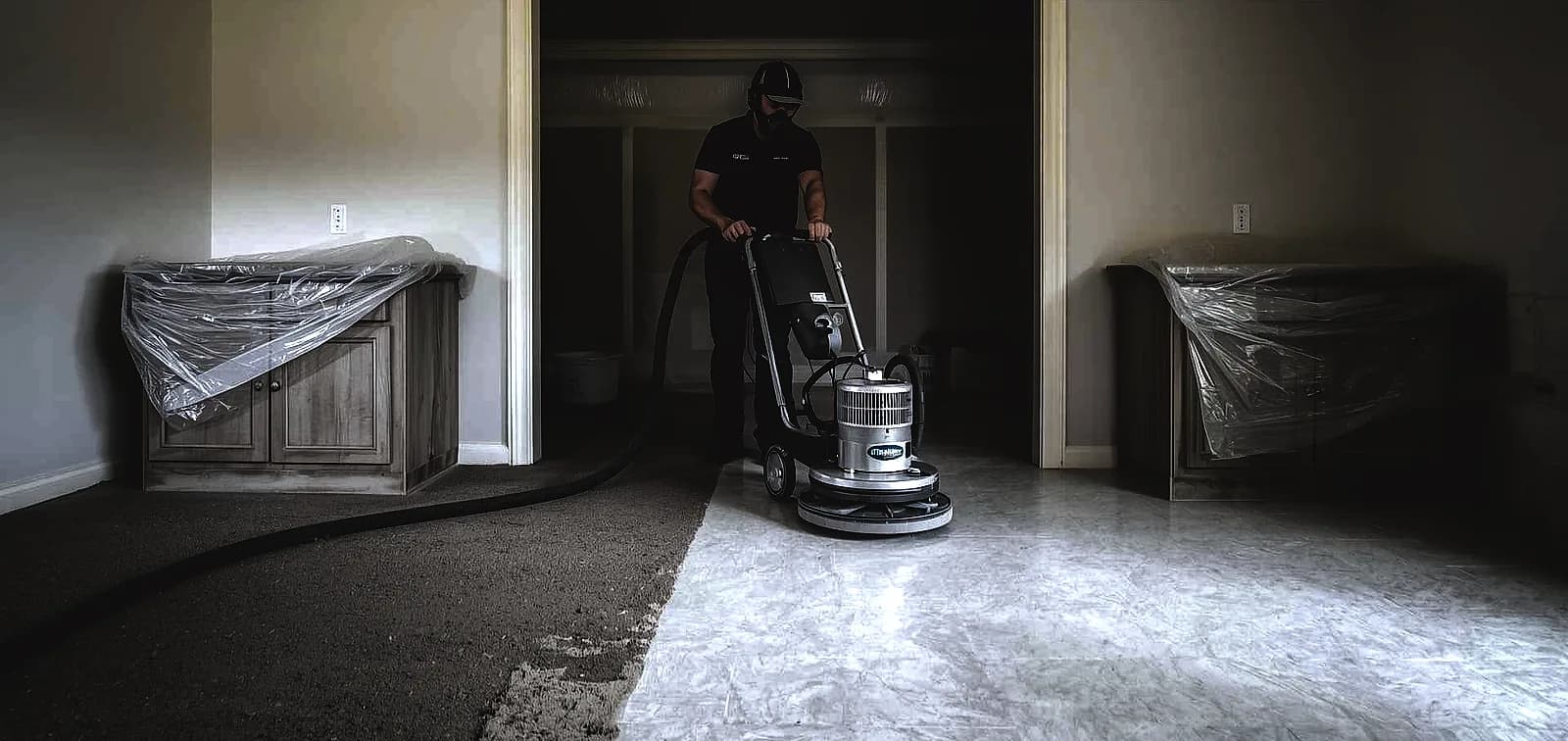
- Site Protection and Preparation: All baseboards are removed or masked, cabinets are sealed with plastic sheeting, and HVAC vents are covered to contain silica dust. Industrial HEPA-filtered vacuums are connected directly to the grinding equipment.
- Initial Grinding (Metal-Bond Diamonds): A coarse grit (16/20 or 30/40) metal-bond diamond tool removes any existing coatings, adhesives, and minor surface imperfections, exposing the desired aggregate level.
- Crack and Joint Repair: Control joints and non-structural cracks are filled with a semi-rigid, color-matched polyurea or epoxy filler that can withstand the subsequent grinding without popping out.
- Densifier Application: A chemical hardener, typically lithium or sodium silicate, is sprayed onto the surface. It penetrates the concrete’s capillaries, reacting with calcium hydroxide to form calcium silicate hydrate (CSH), which dramatically increases surface hardness and density.
- Transitional Grinding (Hybrid Diamonds): Hybrid or transitional diamond tools in grits from 50 to 150 refine the scratch pattern, preparing the surface for the final polishing steps.
- Fine Polishing (Resin-Bond Diamonds): Progressively finer resin-bond diamond pads (100, 200, 400, 800, 1500, 3000 grit) are used to achieve the specified gloss level. Each step removes the scratches from the previous grit.
- Stain Guard Application: A penetrating, breathable sealer is applied to protect against water and oil-based stains without forming a surface film that can peel.
- Final Burnishing: A high-speed burnisher with a fine pad (1500-3000 grit or a specialty conditioning pad) is used to bring out the final luster and clarity.
Design Options: Beyond a Plain Gray Floor
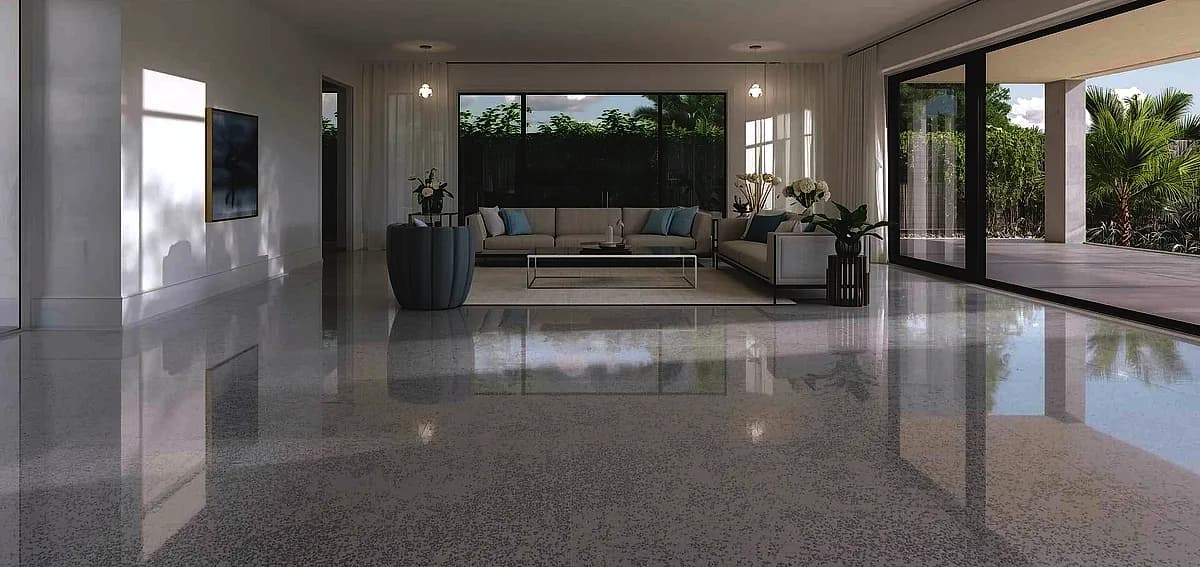
The design vocabulary for polished concrete is extensive. The level of aggregate exposure—how much of the stone within the concrete is revealed—is the primary aesthetic choice. A “cream” finish removes only the surface paste, exposing minimal fine sand, resulting in a uniform, monolithic look. A “salt and pepper” finish, the most popular for homes, exposes small aggregate particles, creating a speckled 3D effect. A “full aggregate” exposure grinds deeper to reveal large stones, delivering a terrazzo-like appearance that can be stunning in open-plan living areas.
Color can be introduced through several methods. Integral color, mixed into the concrete when poured, provides through-body color that will not wear away. For existing slabs, acid-based chemical stains react with the concrete’s minerals to create permanent, variegated earth tones like tans, browns, and soft greens. Water-based dyes offer a broader, more vibrant palette, from deep blues to rich blacks. Saw-cut geometric patterns, scored into the surface after the initial grind, can delineate zones in an open floor plan or create faux-tile patterns without a single grout line.
Gloss Level Comparison
| Finish Level | Grit Stop Point | Appearance | Best For |
|---|---|---|---|
| Matte | 100-200 grit | Flat, non-reflective, hides imperfections | Utility rooms, patios, rustic aesthetics |
| Satin | 400 grit | Soft sheen, slight light reflection | Living rooms, bedrooms, high-traffic areas |
| Semi-Polished | 800 grit | Moderate reflectivity, starts to show clarity | Kitchens, dining rooms, hallways |
| Highly Polished | 1500-3000 grit | High gloss, mirror-like reflectivity | Formal living spaces, retail, showpiece areas |
Cost Breakdown and Long-Term Value
In the Fort Lauderdale market, home polishing costs are influenced by slab condition, square footage, and design complexity. Basic polishing with a cream finish starts around $4 to $6 per square foot. A salt-and-pepper finish with stain and a higher gloss typically falls between $7 and $10 per square foot. Extensive decorative work, including full aggregate exposure, multiple colors, and intricate saw cuts, can reach $12 to $15 per square foot. These figures often include all necessary grinding, densifying, polishing, and sealing steps. According to a 2026 cost analysis by HomeGuide, the national average for polished concrete floors is $7.50 per square foot, with Florida’s pricing aligning closely due to competitive contractor density.
The16 long-term financial case is compelling. A properly maintained polished concrete floor has a lifecycle of 20-30 years or more, outlasting carpet (5-10 years), vinyl (10-15 years), and even tile (15-20 years, with grout maintenance). The elimination of waxing, stripping, and harsh chemical cleaners reduces annual maintenance costs by an estimated 60% compared to vinyl composition tile (VCT), based on data from the International Sanitary Supply Association. Furthermore, the floor’s reflectivity can reduce lighting requirements by up to 30%, a tangible energy saving. For homeowners considering resale, a polished concrete floor is a premium800 feature that appeals to buyers seeking modern, hypoallergenic interiors.
Maintaining Your Polished Floor in a Coastal Environment
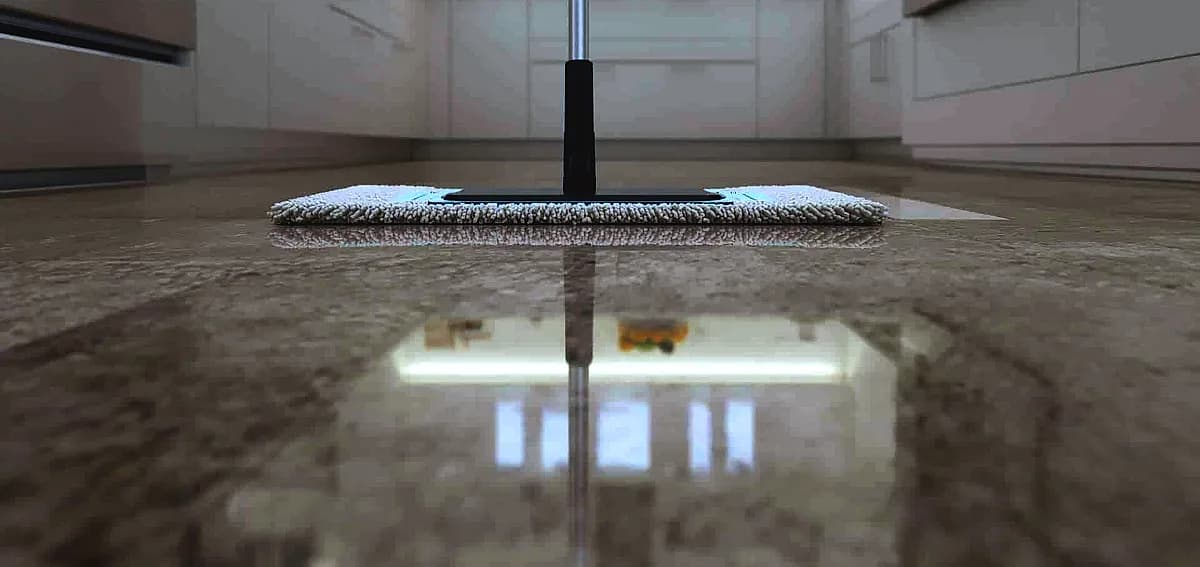
Fort Lauderdale’s environment introduces specific maintenance considerations. Salt-laden air and tracked-in sand are the primary enemies of a polished floor’s sheen. Sand acts as a fine abrasive, gradually dulling the surface if not regularly removed. A daily routine of dry dust-mopping with a microfiber pad is the single most effective practice. For wet cleaning, a neutral-pH, non-acidic cleaner specifically formulated for polished concrete is essential. Acidic cleaners, even mild vinegar solutions, will etch the surface by reacting with the calcium carbonate in the concrete. A study by the Concrete Polishing Association of America confirms that dátummal pH-neutral cleaning preserves the floor’s gloss and stain resistance for decades.
Despite the floor’s density, immediate cleanup of spills—particularly acidic substances like citrus juice, wine, or tomato sauce—is critical. While the stain guard provides a window of protection, prolonged exposure can lead to a dull spot. For exterior-facing entries, large walk-off mats trap abrasive grit before it reaches the polished surface. Reapplying a conditioning guard or burnishing the floor every 3-5 years in high-traffic areas will restore the original luster without the need for a full re-polish. This is a simple, cost-effective procedure that a professional can complete in a single day.
Comparing Polished Concrete to Other Home Flooring Options
When weighing options, homeowners should consider the total cost of ownership, not just the initial installation price. Polished concrete eliminates the need for a separate flooring material, leveraging the existing structural slab. This reduces material consumption and waste. In contrast, tile installation requires mortar, grout, and often cement backer board, all of which add to the project’s embodied energy. For a deeper dive into this comparison, see our analysis on polished concrete versus tile. Similarly, vinyl plank flooring, while initially cheaper, is a petroleum-based product with a shorter lifespan and can trap moisture against the slab in humid conditions, a concern we explore in our epoxy and vinyl comparison.
For homeowners with existing tile who are considering an overlay, it’s important to understand the challenges. Removing tile is often the best path to a flawless polish, but in some cases, a coating system can be applied over the tile. Learn more about this process in our guide on epoxy application over tile. The key advantage of polishing is that it is a permanent transformation of the slab itself. There is no adhesive to fail, no seams for water to penetrate, and no material to delaminate. This monolithic nature is why polished concrete is increasingly specified for luxury residential projects where long-term performance and indoor air quality are paramount.
Selecting a Qualified Contractor in Fort Lauderdale
The skill of the contractor is the single greatest variable in the outcome of a polishing project. A polished floor is not a commodity product; it is a custom-crafted surface. Homeowners should seek contractors with specific experience in residential environments, where dust control and protection of finished surfaces are non-negotiable. Ask for a portfolio of completed local projects and, if possible, visit a polished concrete showroom to see and feel the different finish levels in person. A reputable contractor will conduct a thorough on-site evaluation, including moisture testing and hardness assessment, before providing a detailed proposal.
Verify that the contractor uses HEPA-filtered dust extraction systems, not just shop vacs, to maintain indoor air quality during grinding. Inquire about the specific densifier and sealer brands they use; lithium silicate densifiers are generally preferred for their deep penetration and low viscosity. Ensure the contract specifies the grit sequence, the number of passes, and the final gloss level using objective standards like the Gloss Meter reading. A clear warranty, covering delamination, excessive dusting, and significant color variation, should be standard. For more on what to look for in a warranty, review our article on flooring warranty terms. Finally, confirm they carry liability and workers’ compensation insurance.
Frequently Asked Questions
Is polished concrete slippery for a home with children or elderly residents?
When dry, polished concrete provides a coefficient of friction comparable to other hard surface floors. However, like any smooth floor, it can become slippery when wet. A matte or satin finish offers more slip resistance than a high-gloss polish, and anti-slip additives can be incorporated into the final sealer for added safety in bathrooms or pool entryways.
Can my existing concrete patio be polished?
Yes, exterior concrete can be polished, but it requires a different approach. Exterior slabs are often broom-finished for slip resistance, which requires more aggressive initial grinding. A penetrating sealer with UV stabilizers is essential to prevent yellowing and degradation from sun exposure. The finish is typically kept to a matte or low-satin level to maintain traction when wet.
How long does the polishing process take for an average home?
For a typical 1,500-square-foot home, the polishing process usually takes 3 to 5 days, depending on the number of decorative steps and the slab’s condition. Each grit step requires the crew to make multiple passes with the grinder, and densifiers need time to cure. Furniture must be completely removed from the area before work begins. For a detailed timeline breakdown, see our guide on how long concrete polishing takes.
Will polishing eliminate existing cracks in my floor?
Polishing will not make cracks disappear, but it can make them less noticeable. Cracks are filled with a color-matched filler that blends with the surrounding concrete. The filler prevents debris from collecting in the crack and stops the edges from spalling further. The filled crack remains visible as a fine line, which many homeowners appreciate as part of the floor’s natural character.
Does polished concrete feel cold underfoot in the winter?
Concrete is a thermal conductor, so it will feel cool to the touch year-round. In Fort Lauderdale’s warm climate, this is a significant advantage for most of the year. During the brief cooler months, area rugs can provide warmth and comfort in living spaces. The floor’s thermal mass also helps regulate indoor temperatures by absorbing heat during the day and releasing it at night.
Can I polish the concrete in my second-story condo?
Polishing a second-story slab is possible but requires careful engineering review. The structural slab must be thick enough to withstand the grinding process without compromising its integrity. Additionally, sound transmission to the unit below is a concern; an acoustic underlayment may be required by the condominium association’s bylaws.
What is the difference between polished concrete and epoxy flooring?
Polished concrete is a mechanical process that refines the slab itself, while epoxy is a topical coating applied to the surface. Polished concrete is breathable and will not peel, but it offers less chemical resistance than a high-build epoxy. Epoxy can cover more slab imperfections and provide a wider range of decorative effects, including metallic pigments. For a full comparison, see our article on epoxy versus other flooring options.
Conclusion
Home concrete polishing represents a convergence of durability, design, and sustainability that is uniquely suited to the Fort Lauderdale lifestyle. By transforming the existing slab into a finished floor, homeowners eliminate the cycle of material replacement and gain a surface that actively contributes to a healthier, more energy-efficient home. The key to a successful outcome lies in a meticulous assessment of the slab, a clear design vision, and the selection of a skilled contractor who understands the nuances of coastal concrete. The result is a floor that is not merely walked upon, but one that becomes a defining element of the home’s character.
If you are ready to explore the potential of your home’s concrete floors, our team brings 13+ years of specialized experience to every project. We invite you to contact us today for a comprehensive, no-obligation consultation and slab assessment. Let us help you unlock the hidden beauty beneath your feet.
References
Written by

Founder and CEO
Chris Lavin is an esteemed leader in concrete polishing and epoxy coatings with a distinguished 20-year career. As founder and CEO of National Concrete Polishing and owner of Xtreme Polishing Systems, he's renowned for polishing and epoxy coating more floors than anyone globally. Chris is recognized for his innovative approach and commitment to enhancing floor durability and aesthetics. His hands-on experience and technical proficiency make him a respected authority and a valuable resource in the field of floor polishing and coatings.
Same topic
Related articles
All stories
Residential8 min read
What Restaurants Need to Pass a Health Inspection Floor Check
It endures heavy foot traffic, dropped equipment, boiling water spills, and harsh degreasing chemicals daily.
Read it
Residential9 min read
How Restaurants Replace Their Floors Without Closing for Long
The average food service establishment loses approximately $3,500 in daily revenue during unexpected closures in 2026.
Read it
Residential8 min read
Where Polished Concrete Beats Epoxy in a Home (and Where It Doesn’t)
Before evaluating specific rooms, it is essential to understand how these two flooring systems function.
Read it
Tell us about the floor
Tell us the space and roughly how big it is.We come back with what it would cost and when we could start.
Prefer to talk? Call +1 844-876-5474
- Leads@
nationalconcretepolishing.net - 2200 NW 32nd St #600,
Pompano Beach, FL 33069 Mon to Fri, 9:00 to 5:30