
The NCP blog
Hot Tire Pickup on Epoxy Garage Floors: Causes and Solutions
ResidentialUpdated 6 min read
Hot tire pickup on epoxy garage floors: why tire marks form when parking, what makes them worse and how to prevent them.
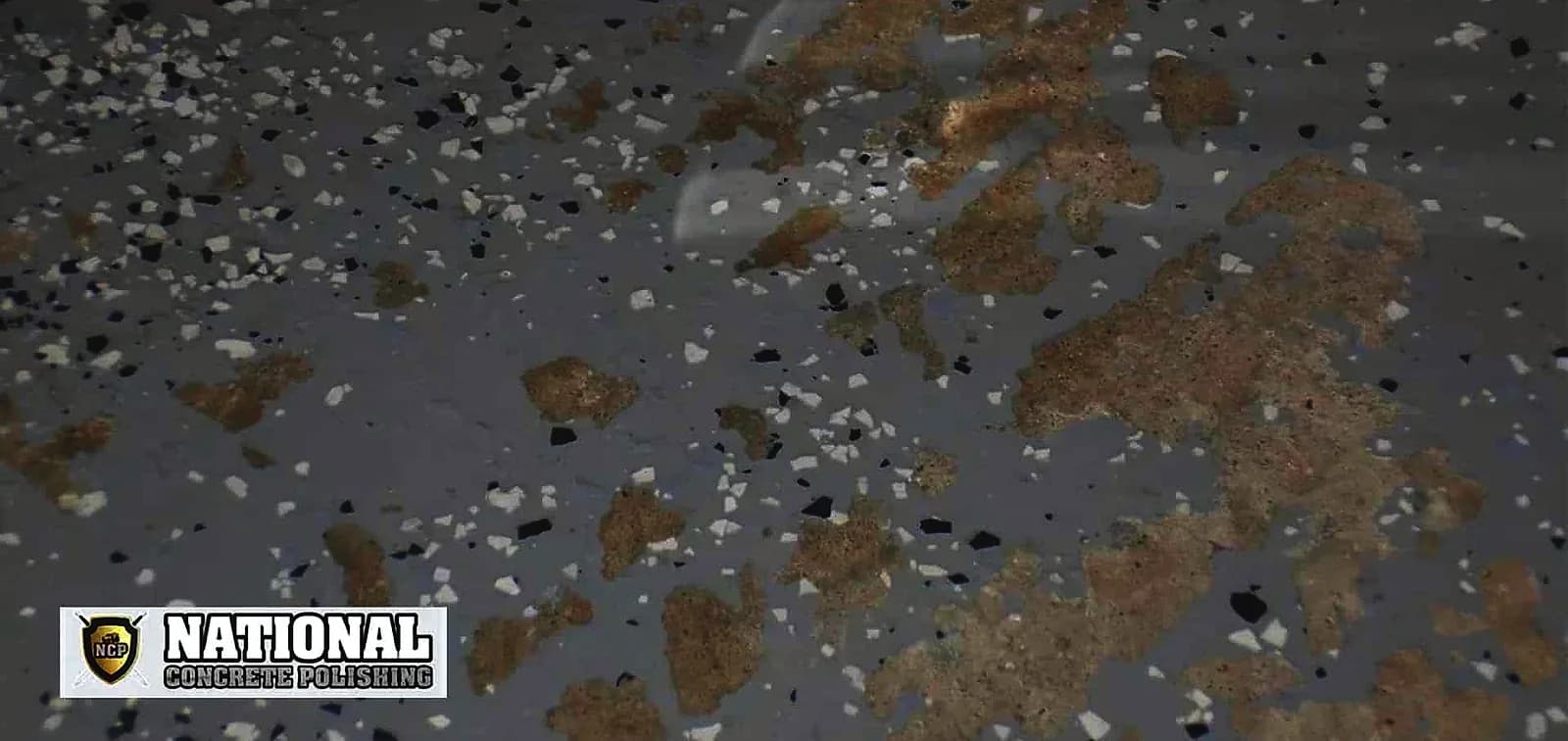
Dark tire marks on epoxy-coated garage floors, known as hot tire pickup, occur when a heated, loaded tire overcomes the bond of the coating, and a trade article on sealers for decorative concrete names adhesion to the substrate as the most important factor.
Heat is a factor, but a trade article on sealers for stamped concrete says the sealer is not melting: the outcome depends mostly on how well the sealer is bonded to the substrate. A poorly bonded coating can smudge or lift under a heated tire, and extended parking puts the same load and heat on one spot.
The coating system, its bond to the slab and proper maintenance all affect how often these marks appear. Check the data sheet for the temperature and load limits the product states.
Hot Tire Pickup on Epoxy Floors
Vehicle tires can leave stubborn marks on epoxy surfaces when a heated tire presses on a coating whose adhesion gives way. The risk is highest where vehicles rest for extended periods, such as parking spots.
The Issue and Its Characteristics
Hot tire pickup creates dark, sticky smudges that resist standard scrubbing. These marks form when:
- A tire heated by driving or by the sun presses on the coating
- The coating is not well bonded to the slab
- The car stays parked in the same spot for a long time
On some floors the mark is dirt that scrubbing removes. On others the coating itself has lifted and needs repair.
How Heat and Rubber Interact with Epoxy Surfaces
Tires are warm after driving, and the vehicle’s weight presses them onto the floor. A trade article on sealers for stamped concrete says the sealer is not melting, and that hot-tire pickup comes down to sealer type and, more importantly, adhesion to the substrate.
Three things influence how likely a mark is:
- Adhesion to the slab, which depends on surface preparation
- Parking duration and how hot the tires are
- Material quality (industrial-grade epoxies are formulated for heavy service, so check the data sheet)
Proper surface preparation before installation helps the coating bond to the slab: in coating applications, surface prep is intended to maximize adhesion. Regular cleaning with a pH-neutral cleaner keeps oil and grit off the floor.
Key Factors and Root Causes
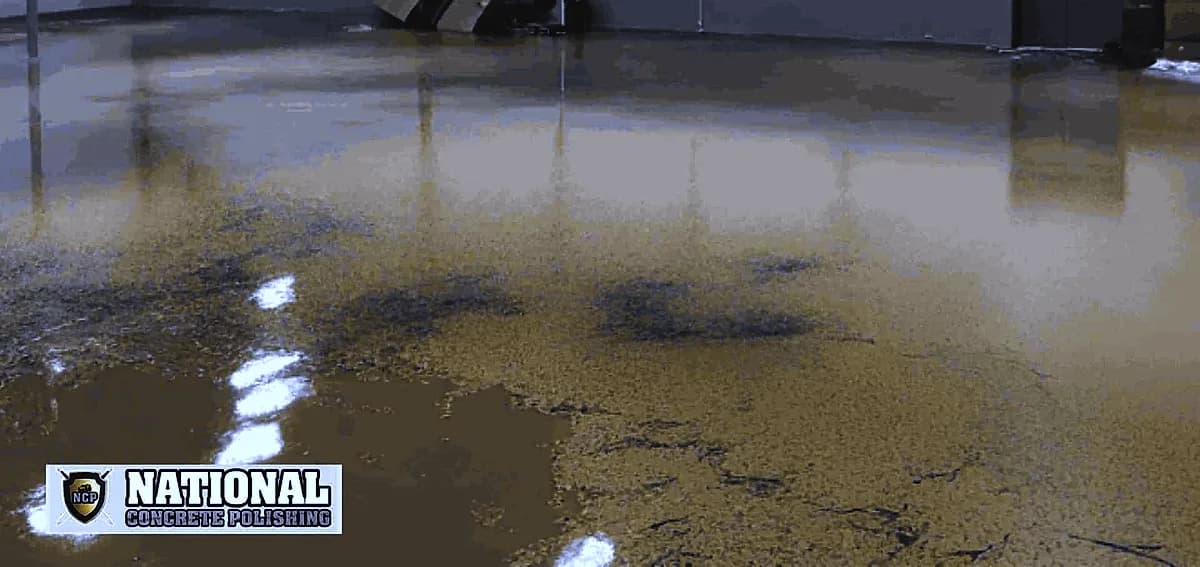
Multiple elements combine to create stubborn marks on coated surfaces. Three primary contributors determine how quickly these blemishes form and their severity.
Impact of Vehicle Heat on Epoxy Coatings
Your car’s tires are warm after driving, and a coating that is not well bonded can give way under that heat and load. Extended parking leaves a heated tire on the same spot for longer.
Quality of Epoxy and Installation Techniques
Heat resistance varies by product, and the data sheet states what each one has been tested for. Proper application involves:
- Surface etching for better adhesion
- Multi-layer curing processes
- UV-stable topcoats
Environmental and Parking Considerations
Vehicles left stationary for days put prolonged load on the same spot. Coastal climates add salt exposure.
Regular sweeping removes abrasive particles. Immediate spill cleanup prevents chemical interactions. Rotating parking spots distributes weight evenly across the surface.
What Causes Hot Tire Pickup on Epoxy Garage Floors
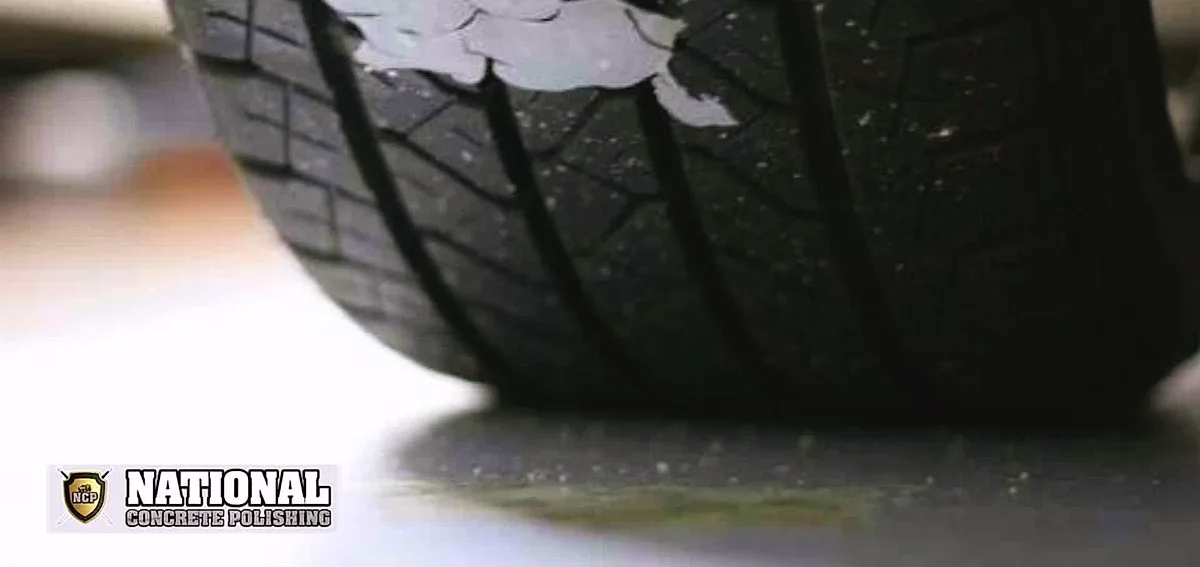
A heated tire under load can overcome a coating’s bond. When it does, it leaves a mark.
Thermal Dynamics and Material Stress
Tires are warm after driving, and that heat passes to the floor surface through contact. The tire then presses on the coating with the weight of the vehicle.
Two factors stand out:
- Adhesion to the slab: the most important factor in hot-tire pickup is adhesion to the substrate
- Cross-linking: a trade article on stamped concrete sealers says acrylic sealers perform worse than epoxies and polyurethanes
Parking duration matters because the tire stays on the same spot under load.
Installation quality determines resistance levels. Preparing the slab properly and following the manufacturer’s cure times both protect the bond, and the data sheet gives the temperatures and times for each product.
Practical prevention steps:
- Let the tires cool before parking when you can
- Rotate parking positions weekly
- Place a small piece of nonporous material, such as sheet metal or plexiglass, between the tires and the floor, as one manufacturer’s data sheet for a polyaspartic floor suggests
Get Expert Assistance in South Florida
National Concrete Polishing brings 13+ years of regional experience to every project.
Call +1 844-876-5474 to schedule a consultation. We look at the floor first, and the written price follows once we have seen it.
Three advantages of professional intervention:
- A bond that starts with proper surface preparation
- A system chosen for the way the garage is used
- A written price once the floor has been seen
Don’t let temporary fixes compromise your investment. A site visit shows whether the marks come from the coating, the bond or the way the car is parked, and the fix follows from that.
Conclusion
Protecting your coated surfaces requires understanding material interactions under stress. Hot tire pickup occurs when a heated, loaded tire overcomes the bond of the coating. The result is a mark or a lifted patch.
Three factors affect mark formation: surface temperature, the coating and its bond, and parking habits. Proper installation supports adhesion.
Preventive strategies start with surface preparation. Etched concrete bases and multi-layer applications create durable foundations. Regular maintenance with pH-neutral cleaners removes contaminants that promote bonding. Rotating parking positions minimizes concentrated pressure points.
Knowledge transforms reactive fixes into proactive solutions. Recognizing how heat cycles affect materials helps select appropriate protective systems. A system chosen for the way the garage is used, installed on a well-prepared slab, gives the bond its best chance.
Implementing these insights preserves your investment’s functionality and visual appeal. Consistent care routines and quality materials work together to keep the surface in good shape. Stay informed, choose wisely, and enjoy durable protection against thermal challenges.
Frequently Asked Questions
How does tire heat affect epoxy garage floors?
A heated tire under load can mark or lift a coating whose bond is weak, which is more likely in warm climates like South Florida.
Are all epoxy coatings prone to tire pickup issues?
No. A trade article on sealers for stamped concrete says highly cross-linked systems such as epoxy, polyurethane and polyurea resist hot-tire pickup better than acrylic sealers, and that the bond to the substrate matters most, so surface preparation and cure also reduce the risk.
Can parking habits influence damage to coated surfaces?
Yes. Parking in shaded areas or rotating vehicle positions keeps the same spot from taking a hot, loaded tire day after day.
What cleaning methods remove rubber stains without harming epoxy?
Use a pH-neutral cleaner that the coating manufacturer approves, and avoid abrasive tools; microfiber cloths are a safe choice. For stubborn marks, ask the installer to look at the floor.
Does humidity during installation impact long-term durability?
Absolutely. Moisture trapped under coatings during application weakens bonding. Ensure concrete is fully dry, and have the slab moisture-tested before applying an epoxy system.
How soon can vehicles park on a newly coated surface?
Parking puts heat and load on the coating, so follow the longer manufacturer release window for vehicles rather than the earliest foot-traffic time. National Concrete Polishing’s planning range for epoxy is wheels after 24 to 72 hours and full cure in about 7 days.
Can sealants prevent tire marks on existing epoxy floors?
It can help. A trade article on sealers for stamped concrete says cross-linked systems such as polyurethane resist hot-tire pickup better than acrylic sealers, but adhesion decides the result, so the existing floor has to be prepared and the topcoat matched to it.
Does tire pressure impact the likelihood of pickup?
Keeping tires at the vehicle manufacturer’s recommended pressure spreads the load over the whole contact patch.
Written by

Founder and CEO
Chris Lavin is an esteemed leader in concrete polishing and epoxy coatings with a distinguished 20-year career. As founder and CEO of National Concrete Polishing and owner of Xtreme Polishing Systems, he's renowned for polishing and epoxy coating more floors than anyone globally. Chris is recognized for his innovative approach and commitment to enhancing floor durability and aesthetics. His hands-on experience and technical proficiency make him a respected authority and a valuable resource in the field of floor polishing and coatings.
Same topic
Related articles
All stories
Commercial10 min read
Commercial Kitchen Floor Requirements in Florida
What Florida food code rules (Chapter 61C-4) ask of commercial kitchen floors: smooth, non-absorbent surfaces and coving at the walls.
Read it
Residential7 min read
Polished Concrete Garage Floor vs Epoxy: Pros and Cons
This process smooths the surface, and a densifier hardens it, so polished concrete is used in high-traffic areas.
Read it
Residential7 min read
Matte Polished Concrete Floors: The Complete Guide for South Florida Homes
A complete guide to matte polished concrete floors for South Florida homes, covering how they look, wear and hide everyday marks.
Read it
Tell us about the floor
Tell us the space and roughly how big it is.We come back with what it would cost and when we could start.
Prefer to talk? Call +1 844-876-5474
- Leads@
nationalconcretepolishing.net - 2200 NW 32nd St #600,
Pompano Beach, FL 33069 Mon to Fri, 9:00 to 5:30