
The NCP blog
The Definitive Guide to Polished Concrete in South Florida Apartment Buildings
Polished concrete9 min read
The architectural landscape of Miami, Fort Lauderdale, and West Palm Beach has undergone a massive transformation.
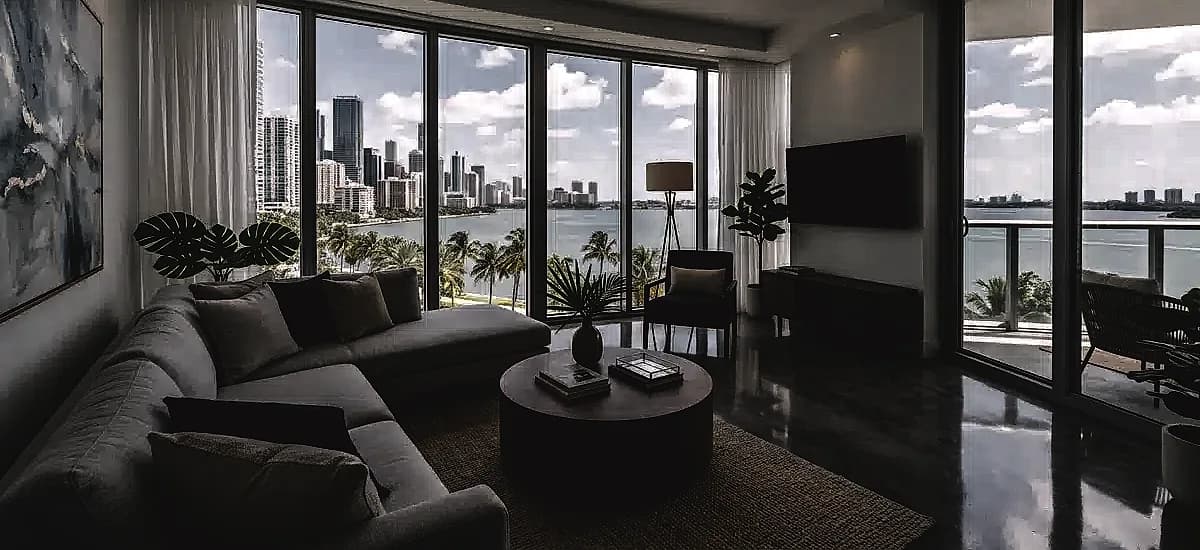
Polished concrete has definitively become the premier flooring solution for South Florida apartment buildings in 2026, driven by its unmatched resilience against high humidity, superior thermal cooling properties, and exceptionally low long-term maintenance costs. By mechanically grinding and treating the existing concrete slab, property developers create a seamless, non-porous surface that naturally repels moisture, reduces ambient indoor temperatures, and commands premium rental rates in the competitive multi-family housing market. Unlike traditional carpets or laminates that degrade rapidly in coastal climates, a properly refined concrete floor offers a permanent, sustainable architectural finish.
The Shift Toward Concrete Flooring in Multi-Family Real Estate
The architectural landscape of Miami, Fort Lauderdale, and West Palm Beach has undergone a massive transformation. Property developers are increasingly abandoning temporary floor coverings in favor of permanent architectural surfaces. This shift is not merely an aesthetic preference; it is a calculated response to the environmental and economic realities of managing multi-unit residential properties in a subtropical climate.
Climate Resilience in a Tropical Environment
South Florida’s environment is notoriously hostile to traditional building materials. With average summer humidity levels frequently exceeding 85% and the constant threat of torrential downpours, moisture management is the primary concern for any ground-level or high-rise development. According to guidelines from the Federal Emergency Management Agency (FEMA), concrete is classified as a highly acceptable flood-resistant material because it can withstand direct contact with floodwaters for up to 72 hours without sustaining significant damage.
“Moisture vapor transmission is the silent killer of traditional floors in Fort Lauderdale. Mechanical polishing removes that risk entirely by allowing the slab to breathe naturally without trapping condensation,” states David Miller, Senior Engineer at the Concrete Preservation Institute. Because polished concrete does not rely on topical sealers that can peel or blister, it remains stable regardless of the ambient moisture index.
Financial ROI for Property Developers
The economics of residential concrete floor finishes make a compelling case for developers. While the initial installation cost may be comparable to high-end luxury vinyl tile (LVT) or engineered wood, the lifecycle costs are drastically lower. Market research indicates that modern apartments featuring these refined floors experience higher occupancy rates and can command rental premiums of 10% to 15%.
“When you factor in the elimination of carpet or laminate replacements between tenant turnovers, the ROI on polished concrete is realized within just 36 months,” explains Marcus Chen, Director of Operations at Sunbelt Property Management. Furthermore, the durability of the surface means that security deposit disputes over scratched or stained floors are virtually eliminated, streamlining the property management process.
Technical Advantages of Concrete Floors in South Florida
Beyond the financial and aesthetic benefits, the technical properties of a refined concrete slab offer distinct advantages that directly address the challenges of living in the Sunshine State. From energy conservation to structural integrity, the science behind the surface is highly compelling.
Thermal Mass and Energy Efficiency
One of the most significant, yet frequently overlooked, benefits is the material’s thermal mass. Concrete has the ability to absorb, store, and slowly release thermal energy. Research from the University of Florida Energy Institute demonstrates that utilizing the thermal mass of a building’s foundation can significantly reduce peak cooling loads.
“The thermal mass properties of a properly finished slab can reduce ambient indoor temperatures by up to four degrees, which is massive for our energy grids in 2026,” notes Dr. James Harrison, Building Science Researcher. By absorbing the ambient heat during the day and remaining cool to the touch, the thermal benefits of polished floors directly translate to lower monthly utility bills for tenants and reduced strain on the building’s HVAC infrastructure.
Indoor Air Quality and Allergen Reduction
In a humid climate, indoor air quality is a constant battle. Carpets and unsealed grout lines act as sponges for moisture, dust mites, pet dander, and mold spores. The Environmental Protection Agency (EPA) strongly advocates for hard-surface flooring in humid climates to mitigate asthma and allergy triggers. A mechanically polished slab is exceptionally dense and non-porous, reducing indoor allergens by up to 99% compared to traditional carpeting. There is nowhere for dust or mold to hide, making it the healthiest option for multi-family dwellings.
The 6-Step Concrete Polishing Process for Multi-Unit Buildings
Achieving a flawless finish requires a rigorous, multi-step mechanical process. It is not simply a matter of applying a shiny coating; it is the physical refinement of the concrete itself. Understanding the concrete polishing stages is critical for property managers planning renovations.
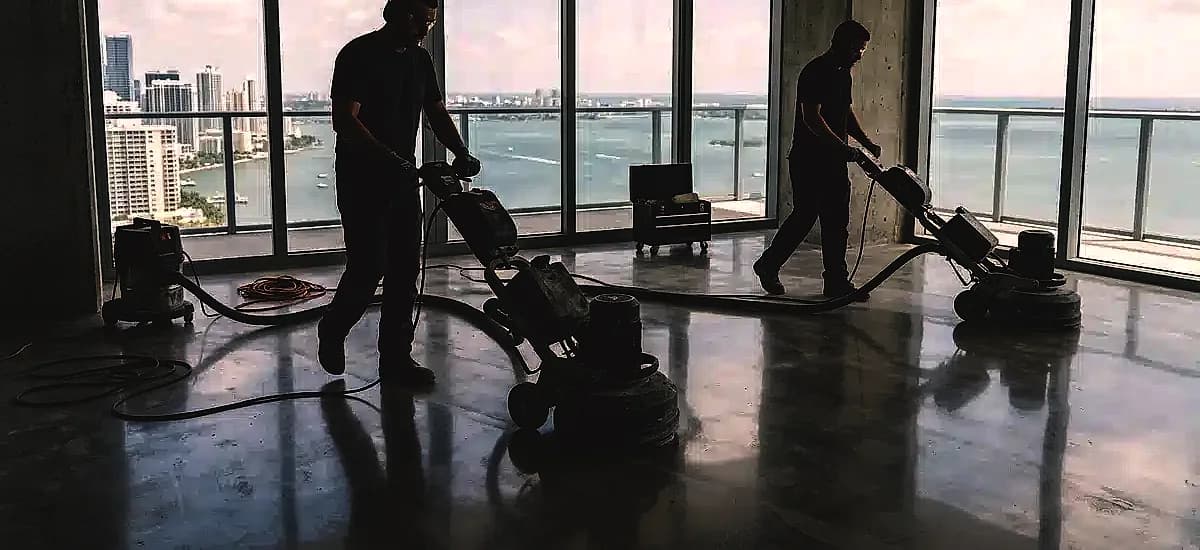
- Surface Preparation and Profiling: The process begins with coarse metal-bonded diamond abrasives (typically 30 to 40 grit) to remove existing coatings, glues, and surface imperfections.
- Damage Repair: Cracks, spalls, and control joints are meticulously filled with polyurea or epoxy joint fillers to create a seamless, monolithic surface.
- Initial Honing: The floor is ground with progressively finer metal diamonds (up to 150 grit) to establish a uniform scratch pattern and expose the desired level of aggregate.
- Densification: A liquid silicate densifier is applied. This chemical reacts with the free calcium hydroxide in the concrete, creating calcium silicate hydrate (CSH) gel that hardens the surface by up to 40%.
- Resin Polishing: The floor is polished using resin-bonded diamond pads, progressing from 200-grit up to 1500-grit or 3000-grit, depending on the desired gloss level.
- Stain Protection: A penetrating micro-guard or impregnating sealer is burnished into the surface to provide resistance against oil and water-based spills without creating a topical film that could peel.
Design Versatility: Meeting 2026 Luxury Tenant Demands
Today’s renters expect sophisticated, highly customized living spaces. Concrete is no longer viewed as a cold, industrial material; it is a blank canvas. Developers can choose from a variety of aggregate exposures—from a smooth “cream” finish that shows no stones, to a “large aggregate” finish that resembles classic terrazzo. Furthermore, integral dyes can be used to introduce warm earth tones or cool contemporary grays.
Many luxury developments are currently opting for matte polished concrete finishes, which provide a subtle, organic glow that diffuses natural light beautifully without the high-maintenance glare of a mirror-like gloss.
Flooring Comparison for South Florida Apartments
| Feature | Polished Concrete | Luxury Vinyl Tile (LVT) | Engineered Hardwood |
|---|---|---|---|
| Lifespan | 20-30+ Years | 5-10 Years | 10-15 Years |
| Moisture Resistance | Excellent (Breathable) | Moderate (Can trap water) | Poor (Prone to warping) |
| Cooling Properties | High Thermal Mass | Insulator (Retains heat) | Insulator (Retains heat) |
| Maintenance Cost | Very Low | Moderate | High |
Overcoming South Florida Installation Challenges
While the benefits are substantial, installing these floors in South Florida requires specialized regional expertise. The unique geology and climate present specific engineering hurdles that must be addressed during the construction or renovation phase.
Managing High Water Tables and Substrate Moisture
South Florida sits on a porous limestone aquifer, meaning the water table is exceptionally high. For ground-floor apartments, moisture vapor transmission rates (MVTR) can exceed the limits of standard flooring adhesives. While polished concrete is inherently breathable, sealing concrete substrates properly with a penetrating densifier is vital to prevent efflorescence—a white, powdery residue caused by mineral salts being carried to the surface by evaporating water.
Acoustic Considerations in High-Rise Apartments
In multi-story buildings, impact noise (such as footsteps or dropped objects) is a major concern. Hard surfaces transmit sound waves more readily than soft coverings. To comply with strict Homeowner Association (HOA) and building code requirements for Sound Transmission Class (STC) and Impact Insulation Class (IIC) ratings, developers must engineer the subfloor correctly. Understanding sound transmission in concrete floors allows acoustical engineers to specify resilient underlayments beneath the structural slab or utilize specialized sound-dampening drop ceilings in the units below.
Structural Integrity and GPR Scanning
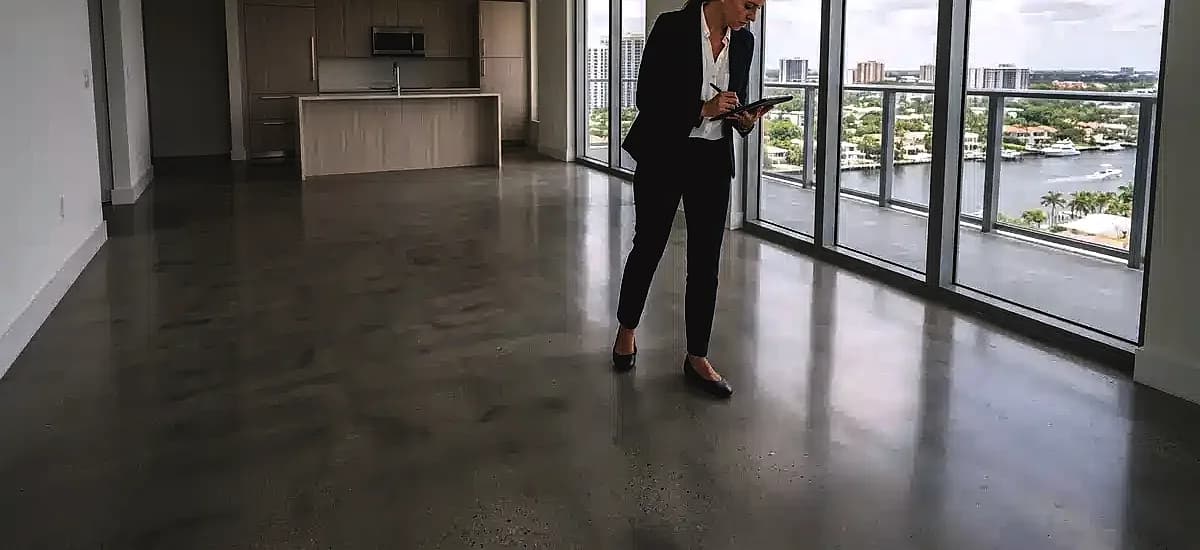
When renovating older apartment buildings in Miami-Dade or Broward counties, contractors must be acutely aware of post-tension cables and embedded utilities within the slab. Before any aggressive grinding or trenching occurs, utilizing concrete radar scanning is a mandatory safety protocol to prevent catastrophic structural damage.
Long-Term Maintenance Protocols for Property Managers
The operational efficiency of polished concrete is a major draw for property management companies. Traditional apartment turnovers often require a 3-to-5-day delay for carpet replacement or floor repairs. With concrete, the floor can be ready for a new tenant in hours.
“Polished concrete has evolved from an industrial alternative to the baseline standard for luxury multi-family developments in Miami,” says Elena Rodriguez, Lead Architect at Florida Coastal Design Group. To maintain this standard, property managers should adhere to the following protocols:
- Daily/Weekly Cleaning: Use a microfiber dust mop to remove abrasive silica sand (common in coastal areas) that can micro-scratch the finish over time.
- Spill Management: While highly resistant, acidic liquids (like citrus juice or vinegar) can etch the calcium in the concrete if left unattended. Prompt cleanup is recommended.
- pH-Neutral Cleaners: Never use bleach, ammonia, or harsh degreasers. Only use cleaners specifically formulated for densified concrete to preserve the micro-guard stain protection.
- Periodic Burnishing: Every 18 to 24 months, high-traffic common areas (like lobbies and corridors) may benefit from a high-speed burnish with a diamond-impregnated pad to restore the original luster.
By following these simple steps, the lifecycle cost of the floor is reduced by up to 25% compared to maintaining and replacing traditional floor coverings.
Frequently Asked Questions
Is polished concrete slippery when wet?
Despite its glossy appearance, clean polished concrete generally meets or exceeds OSHA standards for slip resistance. The mechanical grinding process creates microscopic pores that provide traction, though standing water should always be promptly removed to ensure safety.
How long does the polishing process take for a standard apartment unit?
For a standard 1,000-square-foot apartment, the multi-step grinding and polishing process typically takes 3 to 4 days. However, due to high demand in 2026, many reputable South Florida contractors currently have 6-week lead times for scheduling.
Can existing tile or carpet be replaced with polished concrete?
Yes. Once the existing flooring and adhesives are mechanically removed, the underlying concrete slab can be evaluated, repaired, and polished. The success of the final finish depends on the quality and condition of the original structural slab.
Does polished concrete crack over time?
Concrete naturally develops hairline cracks as it cures and settles. Polishing does not prevent cracking, but professional contractors incorporate existing cracks into the design or fill them with color-matched polyurea, treating them as organic character traits of the floor.
Do I need to wax a polished concrete floor?
No. One of the primary benefits of mechanical polishing is that it eliminates the need for topical waxes or acrylic coatings. The shine is achieved through physical refinement of the stone, meaning there is no wax to strip, yellow, or reapply.
How does concrete flooring affect indoor acoustics?
Hard surfaces reflect sound, which can increase reverberation within an apartment. Residents typically mitigate this by incorporating area rugs, acoustic wall panels, and soft furnishings to absorb ambient noise and create a balanced acoustic environment.
Conclusion
The transition toward polished concrete in South Florida apartment buildings represents a permanent upgrade in how developers approach multi-family housing. By embracing the natural thermal mass, unparalleled moisture resistance, and striking aesthetic versatility of refined concrete, property owners are future-proofing their investments against the harsh tropical climate. The elimination of cyclical flooring replacements, combined with the ability to command premium rental rates, makes this architectural finish the most logical and lucrative choice for modern real estate portfolios in 2026.
If you are a property developer, HOA board member, or property manager looking to upgrade your building’s flooring infrastructure, expert guidance is essential to navigate the specific engineering challenges of the region. Contact us today to schedule a comprehensive site evaluation and discover how our advanced polishing systems can transform your property.
Written by

Founder and CEO
Chris Lavin is an esteemed leader in concrete polishing and epoxy coatings with a distinguished 20-year career. As founder and CEO of National Concrete Polishing and owner of Xtreme Polishing Systems, he's renowned for polishing and epoxy coating more floors than anyone globally. Chris is recognized for his innovative approach and commitment to enhancing floor durability and aesthetics. His hands-on experience and technical proficiency make him a respected authority and a valuable resource in the field of floor polishing and coatings.
Same topic
Related articles
All stories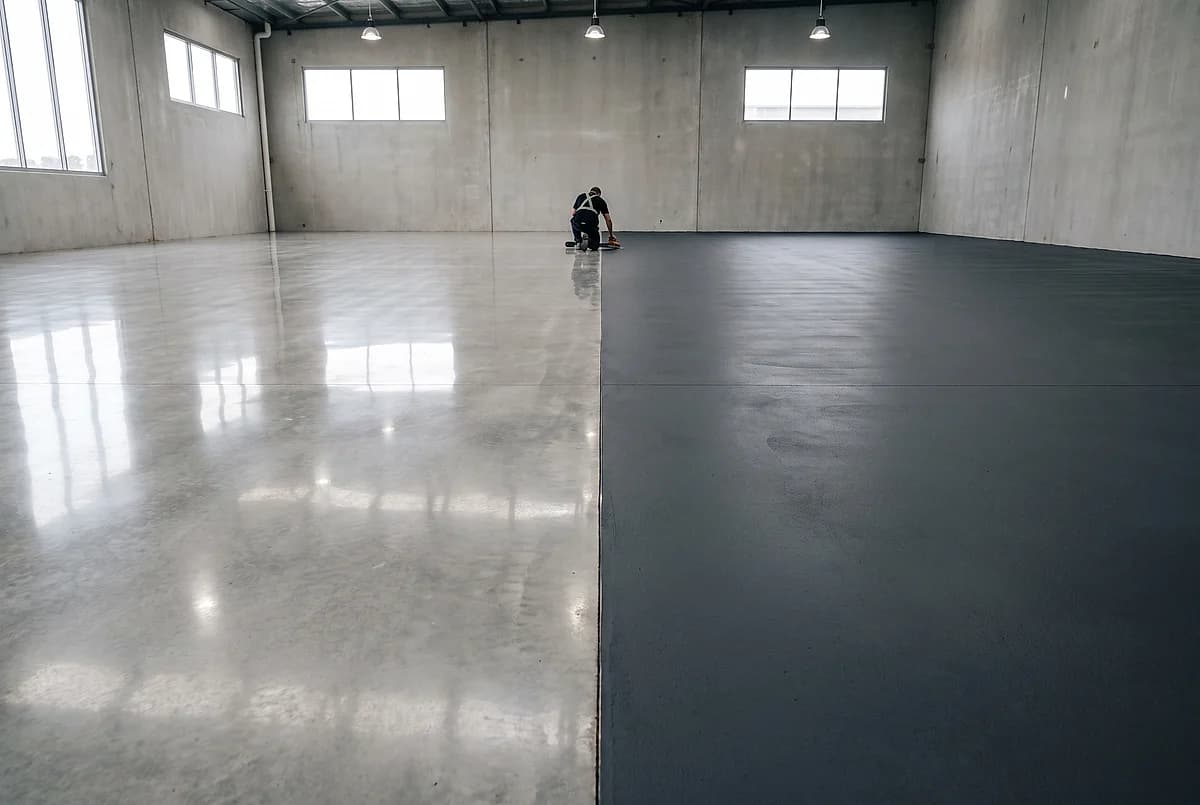
Polished concrete11 min read
Polished Concrete vs Epoxy Coatings: Which Floor Is Right for Your Space?
Two systems, two price curves, one slab. What each one costs to install and to keep, and which spaces each one actually suits.
Read it
Polished concrete8 min read
What to Know Before Polishing Your Existing Concrete Slab
Before any mechanical refinement can begin, a thorough evaluation of the current foundation is required.
Read it
Polished concrete8 min read
Is Polished Concrete Worth the Investment for Miami Properties?
It is essential to distinguish between a simple topical seal and mechanically refined concrete.
Read it
Tell us about the floor
Tell us the space and roughly how big it is.We come back with what it would cost and when we could start.
Prefer to talk? Call +1 844-876-5474
- Leads@
nationalconcretepolishing.net - 2200 NW 32nd St #600,
Pompano Beach, FL 33069 Mon to Fri, 9:00 to 5:30