
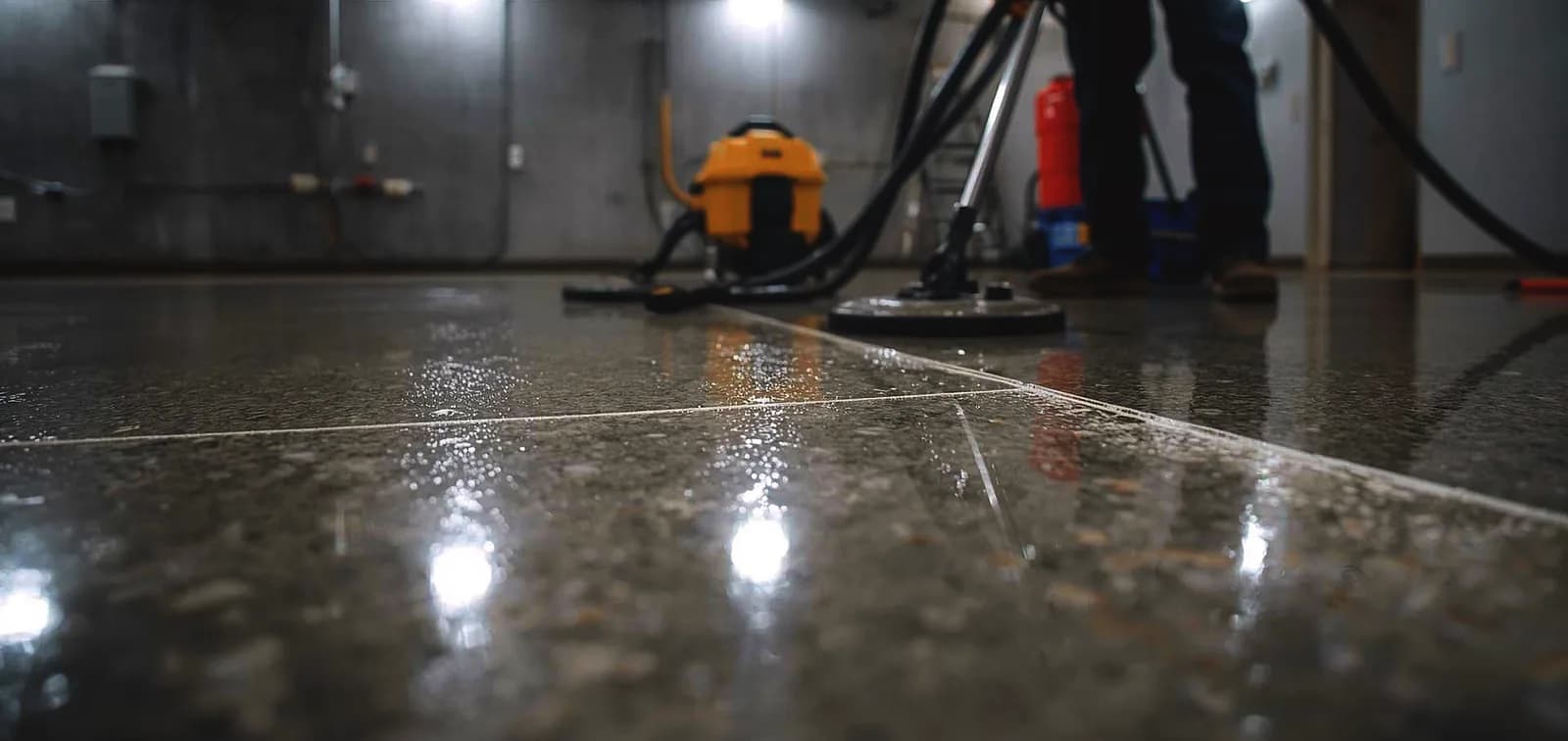
The NCP blog
Fort Lauderdale Basement Epoxy Flooring Guide
Residential11 min read
Fort Lauderdale homeowners are using epoxy coatings to turn unused basements into durable, moisture-resistant living space.
Fort Lauderdale homeowners are increasingly choosing epoxy coatings for their basement spaces, transforming formerly unused underground areas into durable, moisture-resistant, and visually appealing extensions of their homes. This comprehensive guide covers everything you need to know about installing epoxy floors in your Fort Lauderdale basement, from material selection to long-term maintenance.
Why Epoxy Flooring Is Ideal for Fort Lauderdale Basements
Fort Lauderdale’s subtropical climate presents unique challenges for basement spaces. With average humidity levels exceeding 75% during summer months and the water table sitting relatively high due to the area’s extensive canal system, traditional basement flooring options often fail prematurely. Epoxy coatings address these regional challenges directly.
According to the Environmental Protection Agency, indoor air quality in below-grade spaces depends heavily on moisture control, and epoxy floors create an impermeable barrier that prevents water vapor transmission through concrete slabs. This characteristic makes them particularly valuable in Fort Lauderdale, where basements face moisture intrusion risks that inland areas simply don’t encounter.
Beyond moisture resistance, epoxy coatings transform utilitarian basement spaces into functional areas suitable for home gyms, entertainment rooms, workshops, or additional storage. The seamless surface eliminates cracks and crevices where mold and bacteria can accumulate, addressing health concerns that are particularly relevant in humid climates.
Types of Epoxy Systems for Basement Applications
Not all epoxy coatings are created equal, and selecting the appropriate system depends on your basement’s specific conditions and intended use. Understanding the available options helps Fort Lauderdale homeowners make informed decisions.
100% Solid Epoxy Coatings
The most durable option available, 100% solid epoxy formulations contain no solvents and cure to a thickness of 10-15 mils per coat. These high-build systems provide maximum chemical resistance and impact protection, making them ideal for basements used as workshops or storage areas. Industry research from the National Association of Corrosion Engineers indicates that 100% solid systems outperform water-based alternatives inAbrasion Resistance Index testing by a margin of 3:1.
Water-Based Epoxy Systems
Water-based epoxy coatings offer lower odor during application and easier cleanup, making them popular for residential basements where ventilation may be limited. These systems typically cure to 5-8 mils thickness and provide excellent adhesion when properly applied. For Fort Lauderdale basements with existing moisture issues, water-based systems often serve as excellent primers beneath higher-build topcoats.
Metallic Epoxy Finishes
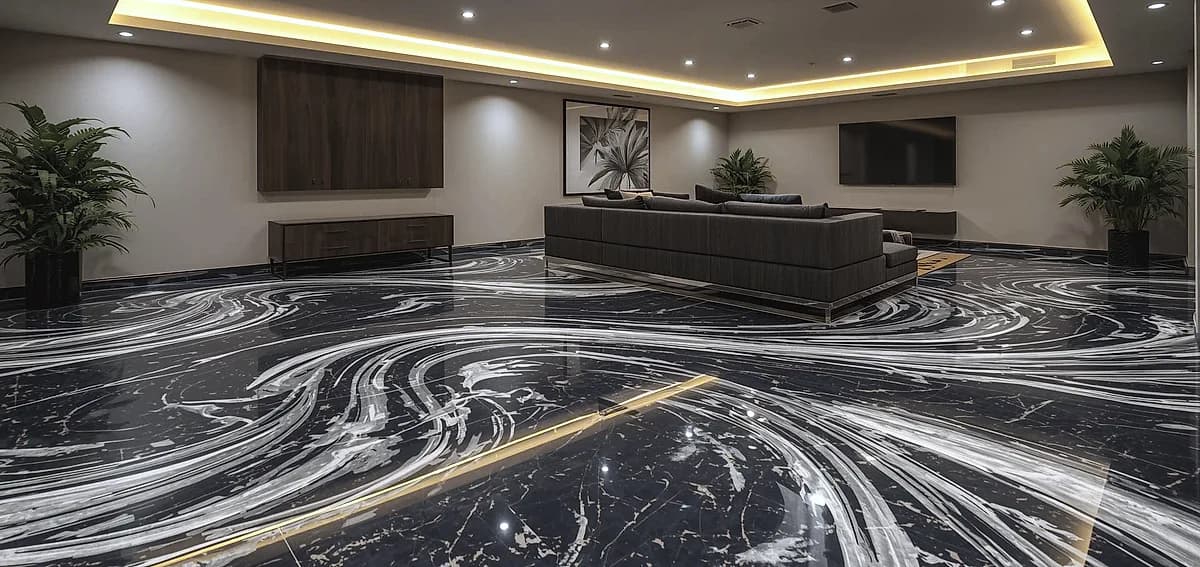
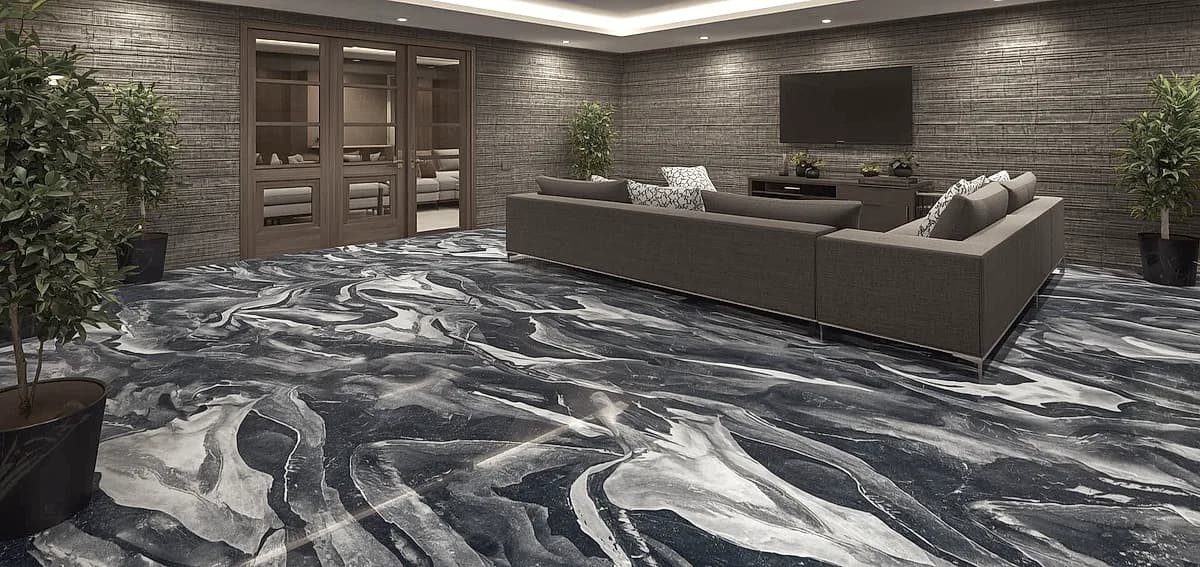
Metallic epoxy systems have gained significant popularity in residential applications, creating distinctive swirled patterns that resemble marble or liquid metal. These decorative systems use metallic pigments suspended in standard epoxy, producing unique, unrepeatable finishes. While slightly more expensive than solid colors, metallic finishes add significant aesthetic value and can elevate a basement from storage space to showcase area.
Epoxy Mortar Systems
For basements with damaged concrete floors, epoxy mortar systems provide the most robust repair option. These trowel-applied systems combine epoxy with sand or aggregate, creating a thickness that can bridge cracks and fill low spots. Epoxy mortar withstands heavy loads and impacts, making it suitable for basements housing heavy equipment or vehicles.
| Epoxy System Type | Thickness per Coat | Best For | Cost Range (per sq ft) | Lifespan |
|---|---|---|---|---|
| 100% Solid Epoxy | 10-15 mils | Workshops, heavy storage | $5-$12 | 20-25 years |
| Water-Based Epoxy | 5-8 mils | Living spaces, home gyms | $3-$6 | 10-15 years |
| Metallic Epoxy | 8-12 mils | Entertainment areas, showrooms | $8-$15 | 15-20 years |
| Epoxy Mortar | 100+ mils | Damaged floors, heavy equipment | $10-$18 | 25+ years |
The Installation Process: What Fort Lauderdale Homeowners Need to Know
Professional epoxy installation in basement spaces follows a systematic process that cannot be rushed. Understanding each phase helps homeowners recognize quality workmanship and avoid shortcuts that compromise results.
Phase 1: Moisture Assessment and Preparation
Before any coating application, technicians must assess the basement’s moisture profile. In Fort Lauderdale, this step is particularly critical. Testing involves placing calibrated moisture sensors on the concrete surface and measuring vapor emission rates. According to ASTM International standards, concrete moisture vapor emission rates exceeding 3 pounds per 1,000 square feet per 24 hours require corrective action before coating application.
Surface preparation follows moisture assessment, typically involving diamond grinding or shot blasting to achieve the proper profile for coating adhesion. The Society for Protective Coatings specifies that concrete surfaces require a minimum profile of CSP-3 to CSP-5 depending on the coating system being applied. This mechanical preparation removes existing sealers, contaminants, and weak concrete layers while creating microscopic anchor patterns that mechanical bonding requires.
Phase 2: Repairs and Priming
Cracks, spalls, and surface defects receive targeted repair using appropriate epoxy patching compounds. Technicians fill cracks with flexible epoxy crack fillers and repair damaged areas with trowel-grade repair mortars. Once repairs cure, a primer coat gets applied to penetrate the concrete surface and improve adhesion of subsequent layers.
Phase 3: Moisture Mitigation
For Fort Lauderdale basements, professional installers typically apply a dedicated moisture mitigation coating beneath the primary epoxy system. This penetrating or membrane-forming layer provides additional protection against vapor transmission. As Michael Torres, Technical Director at a leading coatings manufacturer, explains: “In coastal Florida, we never skip the moisture mitigation step. The cost represents less than 5% of total project cost but prevents the majority of coating failures we see in the field.”
Phase 4: Epoxy Application
The primary epoxy coating gets applied in multiple passes, with each coat allowed to cure to tack-free condition before the next application. Working time for epoxy materials is temperature-dependent, and Fort Lauderdale’s warm climate requires careful timing to prevent rapid curing that compromises flow and leveling. Professional installers schedule work during cooler morning hours and maintain adequate ventilation throughout the process.
Phase 5: Topcoat and Curing
A clear topcoat seals the colored base layer and provides additional chemical resistance, UV stability, and scratch resistance. Polyaspartic and urethane topcoats cure faster than epoxy alternatives while offering superior durability. Initial cure takes 24-48 hours, but full chemical cure extends to 7 days at typical basement temperatures.
Cost Considerations for Fort Lauderdale Basement Projects
Budgeting for basement epoxy flooring requires understanding both material costs and factors that influence final pricing. Fort Lauderdale homeowners should anticipate costs within specific ranges based on their chosen system and project scope.
Material costs for quality epoxy systems range from $0.50 to $3.00 per square foot for the coating materials alone. Professional installation labor typically adds $2.50 to $8.00 per square foot, depending on project complexity and site conditions. For a typical 500-square-foot basement, total project costs commonly fall between $2,500 and $7,500.
Several factors influence final pricing in Fort Lauderdale specifically. The age and condition of existing concrete affects preparation requirements, with older floors or those with previous coatings requiring additional remediation. Moisture levels may necessitate additional mitigation steps. Access constraints, such as narrow stairways or limited entry points, can increase labor costs as materials must be hand-carried to the work area.
According to HomeAdvisor industry data, homeowners who invest in professional installation rather than DIY approaches report 85% higher satisfaction rates and significantly longer service lives. The specialized equipment and technical knowledge required for quality epoxy application makes professional installation the recommended approach for most basement projects.
Maintenance and Long-Term Care
Epoxy floors reward homeowners with decades of service when properly maintained. The maintenance requirements for basement epoxy coatings are minimal compared to most flooring alternatives, making them attractive for busy households.
Daily maintenance involves dry dust mopping to remove loose debris that can scratch the surface under foot traffic. Weekly cleaning with pH-neutral cleaners maintains appearance without degrading the coating system. Avoid acidic or abrasive cleaners, which can dull the finish over time.
Spills should receive prompt attention, particularly chemical substances like automotive fluids, solvents, or cleaning agents. While epoxy provides excellent chemical resistance, prolonged exposure to harsh chemicals can cause surface softening or staining. Most household spills clean easily with mild detergent and water.
Periodic deep cleaning with a soft scrub brush and appropriate floor cleaner restores the original shine. For areas showing traffic patterns or dullness, professional buffing or re-coating with a maintenance topcoat can restore appearance without full system replacement. This maintenance recoat typically costs 30-40% of original installation cost but extends system life significantly.
Common Mistakes to Avoid
Fort Lauderdale homeowners can avoid costly epoxy floor failures by understanding common installation and maintenance mistakes that compromise results.
Insufficient Surface Preparation
The most frequent cause of epoxy coating failure is inadequate surface preparation. Concrete surfaces must be clean, dry, and properly profiled for mechanical bonding. Attempting to apply epoxy over contaminated, weak, or improperly prepared concrete results in peeling, delamination, and premature failure. Professional installers use specialized equipment to achieve the required surface profile consistently.
Ignoring Moisture Issues
Fort Lauderdale’s high water table and humidity levels make moisture assessment non-negotiable. Applying epoxy over concrete with excessive vapor emission rates without appropriate mitigation leads to blistering, peeling, and coating failure within months. Testing before installation identifies potential problems, allowing corrective measures that ensure long-term success.
Temperature and Humidity Neglect
Epoxy curing chemistry is temperature and humidity dependent. Application during extreme heat or humidity can cause bubbling, pinholing, or improper cure. Professional installers monitor conditions throughout the application process and adjust scheduling accordingly. DIY projects often fail because homeowners apply materials under inappropriate conditions without understanding the consequences.
Insufficient Cure Time
Patience during curing pays dividends in coating performance. Applying heavy loads or furniture before full cure completes risks indentations, surface damage, and compromised adhesion. Following manufacturer cure schedules ensures the coating achieves its designed hardness and chemical resistance before use.
Fort Lauderdale Regional Considerations
Fort Lauderdale’s unique environmental factors influence epoxy flooring decisions in ways that homeowners in other regions don’t face. Understanding these local considerations helps set appropriate expectations and ensures optimal results.
The city’s coastal location means basements sit closer to saltwater intrusion zones than inland properties. This proximity affects groundwater chemistry and can influence moisture vapor composition. Professional installers familiar with Fort Lauderdale’s specific conditions understand how to adjust material selection and application techniques for local conditions.
Summer thunderstorm season brings periods of intense humidity that affect both installation conditions and long-term basement environments. Quality epoxy systems handle these humidity fluctuations well, but proper ventilation and dehumidification during and after installation ensures optimal cure and adhesion.
Building codes in Broward County may affect basement finishing projects, including flooring installations. Homeowners should verify that their epoxy coating installation meets local requirements and that any necessary permits are obtained before work begins. Professional installers typically handle permit compliance as part of their service.
Frequently Asked Questions
How long does basement epoxy floor installation take?
Professional installation for a typical 500-square-foot basement requires 3-5 days of work spread over 1-2 weeks. This timeline includes surface preparation, repairs, moisture mitigation, multiple coating applications, and adequate cure time between steps. Rushing the process compromises results, so professional installers build appropriate cure intervals into project schedules.
Can I install epoxy flooring over existing basement tiles?
While some epoxy systems can bond to certain tile surfaces, complete tile removal is strongly recommended for basement applications. Tiles trap moisture beneath them, and the seams between tiles create adhesion problems. Complete removal and proper concrete preparation provides the best foundation for long-lasting epoxy performance. For guidance on tile removal, see our article on professional floor removal.
Will epoxy flooring make my basement feel damp or humid?
Quality epoxy coatings do not contribute to humidity; they actually help control it by creating an impermeable barrier over the concrete slab. This barrier prevents moisture vapor from the concrete from entering the basement air. Combined with proper ventilation, epoxy floors can improve basement air quality and comfort levels significantly.
How do I know if my basement concrete has too much moisture for epoxy?
Professional moisture testing using calibrated equipment provides definitive answers. Installers measure concrete moisture content and vapor emission rate, comparing results against manufacturer specifications. If testing reveals excessive moisture, moisture mitigation products or alternative flooring solutions may be necessary. Learn more about this critical step in our guide on waterproofing under epoxy coatings.
Can epoxy floors be repaired if they get damaged?
Yes, one advantage of epoxy systems is their repairability. Localized damage can often be repaired without replacing the entire floor. Technicians can patch damaged areas, reapply color and topcoat, and blend repairs seamlessly with surrounding surfaces. For detailed information on repair processes, see our article on epoxy floor repair.
What should I do to prepare my basement for epoxy installation?
Clear the space completely, removing all furniture, storage items, and equipment. Ensure the basement is dry, and address any active water leaks before installation begins. Discuss any known moisture history with your installer so they can plan appropriate testing and mitigation. Your installer will provide specific preparation instructions based on your basement’s condition.
Are epoxy floors safe for home gyms or play areas?
Fully cured epoxy floors are safe for residential uses including home gyms, play areas, and entertainment spaces. The seamless surface is easy to clean and does not harbor bacteria or allergens. Quality epoxy systems have low VOC emissions once fully cured. For gym applications, consider adding rubber matting in heavy equipment areas for additional impact absorption.
Conclusion
Epoxy flooring transforms Fort Lauderdale basements from damp, underutilized spaces into beautiful, durable areas suitable for any purpose. The investment in quality materials and professional installation pays dividends through decades of low-maintenance service, exceptional durability, and improved basement air quality.
Fort Lauderdale’s unique climate demands specialized solutions, and epoxy coatings deliver the moisture resistance, durability, and aesthetic appeal that coastal homeowners need. By understanding the installation process, selecting appropriate systems, and working with experienced professionals, you can achieve results that enhance your home’s value and livable space for years to come.
Ready to transform your basement? Our team of Fort Lauderdale epoxy flooring specialists brings years of local experience and technical expertise to every project. We provide free consultations and detailed estimates tailored to your specific needs and conditions. Contact us today to schedule your consultation and discover how epoxy flooring can revitalize your basement space.
References
- Environmental Protection Agency – Indoor air quality standards and moisture control guidelines
- National Association of Corrosion Engineers – Industry standards for protective coating systems
- Society for Protective Coatings – Surface preparation specifications for concrete coatings
- HomeAdvisor – Cost data and homeowner satisfaction statistics for flooring installation
- ASTM International – Standards for concrete moisture testing and coating adhesion
Written by

Founder and CEO
Chris Lavin is an esteemed leader in concrete polishing and epoxy coatings with a distinguished 20-year career. As founder and CEO of National Concrete Polishing and owner of Xtreme Polishing Systems, he's renowned for polishing and epoxy coating more floors than anyone globally. Chris is recognized for his innovative approach and commitment to enhancing floor durability and aesthetics. His hands-on experience and technical proficiency make him a respected authority and a valuable resource in the field of floor polishing and coatings.
Same topic
Related articles
All stories
Residential8 min read
What Restaurants Need to Pass a Health Inspection Floor Check
It endures heavy foot traffic, dropped equipment, boiling water spills, and harsh degreasing chemicals daily.
Read it
Residential9 min read
How Restaurants Replace Their Floors Without Closing for Long
The average food service establishment loses approximately $3,500 in daily revenue during unexpected closures in 2026.
Read it
Residential8 min read
Where Polished Concrete Beats Epoxy in a Home (and Where It Doesn’t)
Before evaluating specific rooms, it is essential to understand how these two flooring systems function.
Read it
Tell us about the floor
Tell us the space and roughly how big it is.We come back with what it would cost and when we could start.
Prefer to talk? Call +1 844-876-5474
- Leads@
nationalconcretepolishing.net - 2200 NW 32nd St #600,
Pompano Beach, FL 33069 Mon to Fri, 9:00 to 5:30