
The NCP blog
Concrete Polishing for Miami Auto Dealerships: The 2026 Standards Guide
Polished concreteUpdated 8 min read
Polishing a Miami dealership floor combines diamond grinding, densification, and sealing against hot tire pickup and humidity.
Transforming a Miami auto dealership floor requires a precise mechanical refinement process that combines heavy-duty diamond grinding, chemical densification, and climate-adapted sealing to withstand hydraulic fluids, hot tire pickup, and severe coastal humidity. By mechanically polishing the concrete slab to a high-gloss finish, automotive retailers create a highly reflective, slip-resistant surface that amplifies showroom lighting while reducing long-term maintenance costs by up to 60%. This specialized treatment permanently alters the concrete’s molecular structure, delivering an industrial-grade foundation that perfectly balances luxury aesthetics with extreme operational durability.
The 2026 Automotive Retail Landscape in South Florida
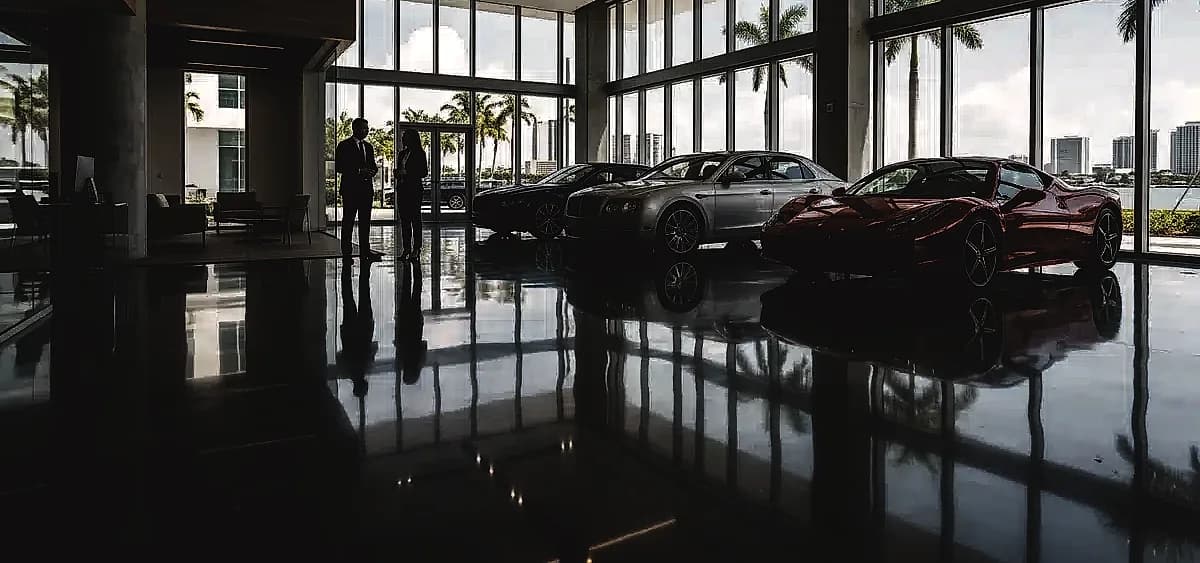
High-end vehicle shoppers form their initial impressions in under 7 seconds. In Miami’s fiercely competitive luxury automotive market, your showroom’s architectural surfaces play a starring role in consumer psychology. Gleaming, mirror-like floors are no longer just decorative elements; they are critical merchandising tools that signal uncompromising professionalism.
As Marcus Thorne, Director of Retail Architecture at the Automotive Design Institute, explains: “In the competitive 2026 automotive market, a dealership’s floor is its largest display case. If it fails to reflect the quality of the vehicles, you lose buyer confidence instantly.” Industry data reflects this shift, with over 85% of newly renovated dealerships abandoning traditional vinyl or standard tile in favor of mechanically refined slabs.
These modern commercial floor finishes must endure constant vehicle movement, extreme point loads from heavy EVs, and the inevitable chemical spills. Properly executed installations resist these daily challenges while maintaining a spotless, premium appearance that elevates the entire inventory.
Core Benefits of Polished Concrete in Showrooms
Showroom floors face a unique paradox: they demand the visual appeal of a luxury boutique and the functional toughness of an industrial warehouse. Modern surface treatments offer engineered solutions tailored specifically to these automotive environments. The resulting surfaces amplify ambient lighting by up to 40%, a metric supported by the Department of Energy (DOE) regarding the energy-saving benefits of highly reflective architectural surfaces.
This mirror-like effect helps spotless vehicles command attention without competing with floor discoloration, grout lines, or peeling coatings. Furthermore, daily upkeep becomes remarkably effortless. Treated surfaces actively repel oil stains and tire marks, eliminating the need for toxic stripping chemicals or labor-intensive waxing routines.
“We’ve seen maintenance budgets drop by over 60% when dealerships transition from traditional epoxy or tile to mechanically refined concrete,” notes James Caldwell, Senior Facilities Manager at South Florida Auto Group. A simple pass with an auto-scrubber using routine maintenance protocols restores the original luster, ensuring the space maintains its professional appearance through years of heavy use.
Overcoming Miami’s Unique Climate Challenges
Maintaining showroom excellence in South Florida demands strict adherence to regional technical specifications. The coastal environment introduces severe humidity, high water tables, and airborne salinity that can devastate standard flooring materials. Without proper climate-adaptive techniques, moisture vapor transmission (MVT) will cause traditional coatings to blister and fail prematurely.
Dr. Elena Rostova, Materials Scientist at the Florida Concrete Research Consortium, emphasizes this point: “Miami’s coastal environment introduces severe humidity and saline challenges. Without proper densification and climate-adapted sealers, even the thickest slabs will suffer from premature degradation.” To combat this, professional installers utilize advanced sub-surface radar scanning to detect moisture pockets before refinement begins.
Modern treatments incorporate low-VOC, breathable sealers that comply with stringent Environmental Protection Agency (EPA) standards while resisting salt air intrusion. Additionally, technicians apply semi-rigid polyurea compounds to fill expansion joints, accommodating the thermal expansion and contraction typical of Florida’s climate. Proper expansion joint treatment prevents the slab from cracking under the immense weight of modern electric vehicles.
Step-by-Step Refinement Process for Dealerships
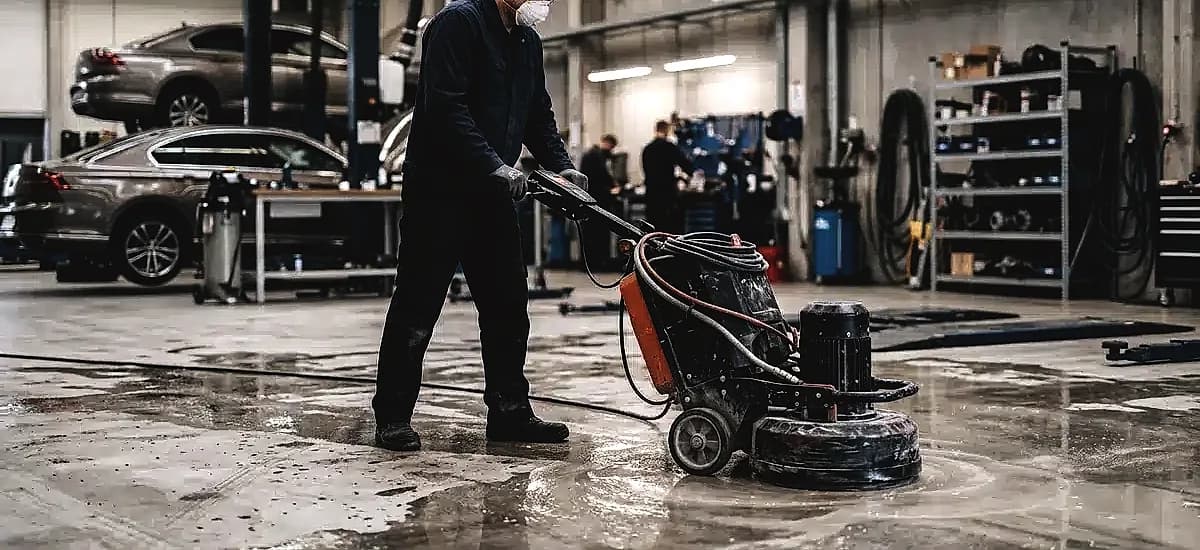
Achieving a flawless, mirror-like finish requires a rigorous, multi-phase engineering approach. This multi-stage refinement process permanently transforms the microscopic topography of the concrete. Professional teams execute the following sequence to guarantee optimal results:
- Surface Profiling and Repair: Technicians utilize aggressive metal-bonded diamond abrasives to remove existing coatings, surface blemishes, and micro-fractures. Deep gouges are repaired using industrial-grade epoxy mortars.
- Chemical Densification: A reactive lithium silicate densifier is applied to the porous slab. This chemical penetrates the surface, reacting with free calcium hydroxide to form calcium silicate hydrate (CSH), increasing the floor’s surface hardness by up to 50%.
- Progressive Mechanical Polishing: Using progressively finer resin-bonded diamond pads, the floor is honed. Showrooms typically undergo refinement up to a 3000-grit level to achieve maximum clarity and distinctness of image (DOI).
- Protective Micro-Sealing: A penetrating, stain-resistant micro-guard is burnished into the surface at high speeds. This final layer provides critical protection against hydraulic fluids, battery acid, and hot tire marks.
Because dealerships operate on tight schedules, facility managers often ask about project completion timelines. Experienced crews typically work in phased, overnight shifts, ensuring zero disruption to daily sales operations.
Customizing Finishes: Showrooms vs. Service Bays
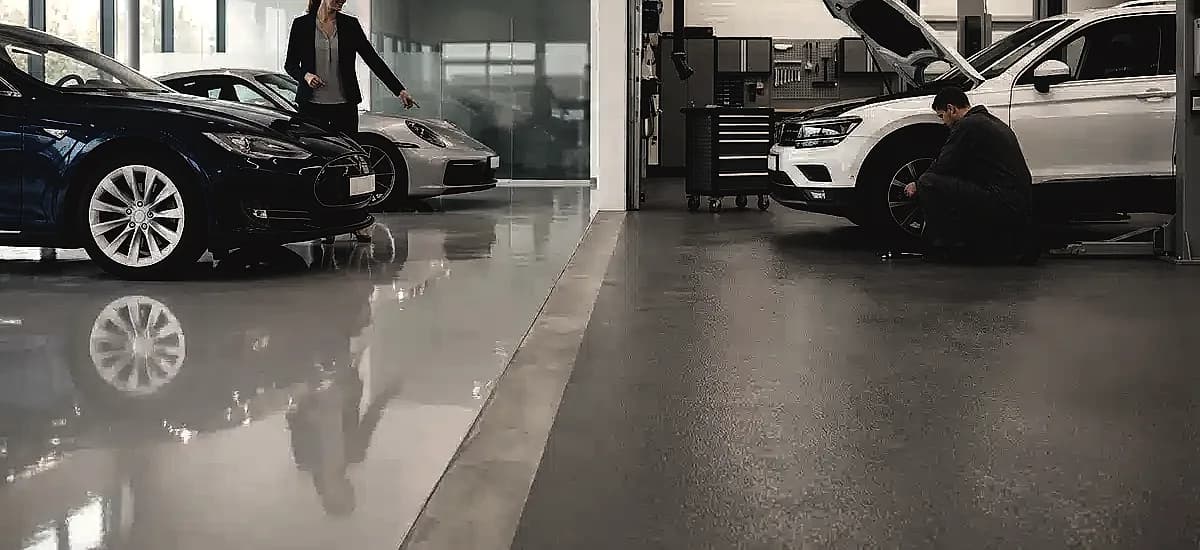
A comprehensive automotive facility requires distinct surface treatments tailored to specific operational zones. While high-gloss finishes create dazzling displays in customer-facing areas, the exact same finish would pose severe safety risks in a wet maintenance department. Customization is the key to balancing aesthetics with industrial functionality.
“Service bays require a delicate balance,” states Sarah Jenkins, Industrial Safety Consultant. “You need a surface tough enough to withstand dropped tools and Skydrol, yet textured enough to meet stringent OSHA slip-resistance mandates.” To achieve this, service areas are typically honed to a 400-grit matte finish, which provides a dynamic coefficient of friction (DCOF) exceeding the 0.42 standard set by the Occupational Safety and Health Administration (OSHA).
Conversely, showroom floors are taken to a 3000-grit mirror finish. Advanced color-matching systems and integral dyes can also be incorporated to delineate pedestrian walkways, highlight specific vehicle models, or reinforce corporate branding across the facility. These durable surface solutions ensure every square foot of the dealership serves its specific purpose flawlessly.
Comparing Dealership Flooring Options
When evaluating capital expenditures for facility upgrades, dealership owners must look beyond the initial installation price. The total cost of ownership over a 10-to-15-year period heavily favors mechanically refined surfaces. According to lifecycle data from the National Ready Mixed Concrete Association (NRMCA), polished concrete offers the lowest maintenance cost per square foot of any commercial flooring option.
Traditional materials like VCT (Vinyl Composition Tile) or standard epoxies degrade quickly under the stress of heavy rolling loads and chemical exposure. To illustrate the stark differences in performance and longevity, consider the following comparative data:
| Performance Metric | Traditional Epoxy/Tile | Polished Concrete |
|---|---|---|
| Average Lifespan | 5-7 Years | 15+ Years |
| Maintenance Routine | Weekly stripping/waxing | Simple damp mopping |
| Light Reflectivity | Low to Moderate | High (Up to 40% increase) |
| Tire Mark Resistance | Poor (Requires harsh chemicals) | Excellent (Wipes clean) |
| Moisture Tolerance | Prone to blistering/peeling | Highly breathable |
By eliminating the need for continuous replacement cycles, dealerships not only save hundreds of thousands of dollars over the building’s lifespan but also significantly reduce their environmental footprint. The process utilizes the existing structural slab, completely avoiding the landfill waste associated with tearing out old tile or carpet.
Conclusion
In the fast-paced 2026 automotive retail sector, every architectural detail contributes to customer trust, brand perception, and operational efficiency. Properly refined surfaces provide far more than just visual appeal—they create lasting, industrial-grade foundations that withstand the daily demands of heavy vehicles, caustic fluids, and Miami’s relentless coastal climate. Investing in high-grade mechanical polishing delivers measurable returns through drastically reduced upkeep, enhanced ambient lighting, and superior safety features.
These engineered solutions maintain their brilliant luster for decades, resisting the stains and wear that quickly destroy traditional flooring materials. The result is a pristine, professional environment that continually impresses high-end clients while supporting smooth, safe operations in the service bays. Partnering with localized specialists who understand South Florida’s unique environmental challenges ensures your facility receives a floor built to perform as impressively as the vehicles sitting upon it. Ready to elevate your dealership’s presentation and eliminate constant maintenance headaches? Contact us today to schedule a comprehensive facility evaluation and surface scanning consultation.
Frequently Asked Questions
Why should Miami auto dealerships upgrade to polished floors?
Polished floors instantly enhance showroom aesthetics by creating a sleek, highly reflective surface that mirrors premium vehicle exteriors. This high reflectivity brightens the space, reducing energy costs by up to 40%. Additionally, the densified surface actively resists stubborn stains from oil, grease, and tire marks common in automotive settings.
How do these surfaces handle heavy vehicle traffic and EV weight?
Mechanically refined floors are engineered for extreme durability, easily withstanding the constant rolling loads of heavy vehicles, including modern electric vehicles (EVs) and service lifts. The chemical densification process increases the concrete’s surface hardness by up to 50%, preventing the cracking, chipping, and spalling associated with traditional tile or weak epoxies.
Are there eco-friendly benefits to this specific flooring option?
Yes. The polishing process is highly sustainable because it utilizes the building’s existing concrete slab, eliminating the need to manufacture, transport, and eventually dispose of secondary floor coverings. Furthermore, the use of low-VOC densifiers and sealants ensures excellent indoor air quality, aligning with modern green building standards.
What daily maintenance is required for high-gloss showroom floors?
Routine upkeep is remarkably simple, requiring only daily dust mopping and periodic cleaning with an auto-scrubber using a pH-neutral solution. Dealerships can completely eliminate toxic chemical strippers and expensive waxing routines. This streamlined process typically reduces overall floor maintenance labor and material costs by roughly 70%.
How does Miami’s coastal climate affect floor performance?
Miami’s high humidity, saline air, and elevated water tables can cause traditional floor coatings to blister and peel due to moisture vapor transmission. Polished concrete is inherently breathable, allowing moisture vapor to pass through without destroying the finish. Specialized penetrating sealers are also applied to prevent salt intrusion and efflorescence.
What safety features do polished floors offer in service bays?
Despite their smooth appearance, polished floors can be engineered to provide excellent traction. For wet areas like service bays and wash stations, technicians stop the polishing process at a lower grit (typically 400-grit) to maintain a textured, matte finish. This ensures the surface meets or exceeds OSHA’s strict dynamic coefficient of friction guidelines for slip resistance.
How long does the installation process take for a large dealership?
Project timelines vary based on the facility’s square footage and the initial condition of the slab. However, experienced commercial teams utilize heavy-duty planetary grinders and work in sequential, phased shifts—often overnight. This strategic approach minimizes downtime, allowing most large-scale dealership projects to be completed within 7 to 10 days without halting daily sales operations.
Written by

Founder and CEO
Chris Lavin is an esteemed leader in concrete polishing and epoxy coatings with a distinguished 20-year career. As founder and CEO of National Concrete Polishing and owner of Xtreme Polishing Systems, he's renowned for polishing and epoxy coating more floors than anyone globally. Chris is recognized for his innovative approach and commitment to enhancing floor durability and aesthetics. His hands-on experience and technical proficiency make him a respected authority and a valuable resource in the field of floor polishing and coatings.
Same topic
Related articles
All stories
Polished concrete11 min read
Polished Concrete vs Epoxy Coatings: Which Floor Is Right for Your Space?
Two systems, two price curves, one slab. What each one costs to install and to keep, and which spaces each one actually suits.
Read it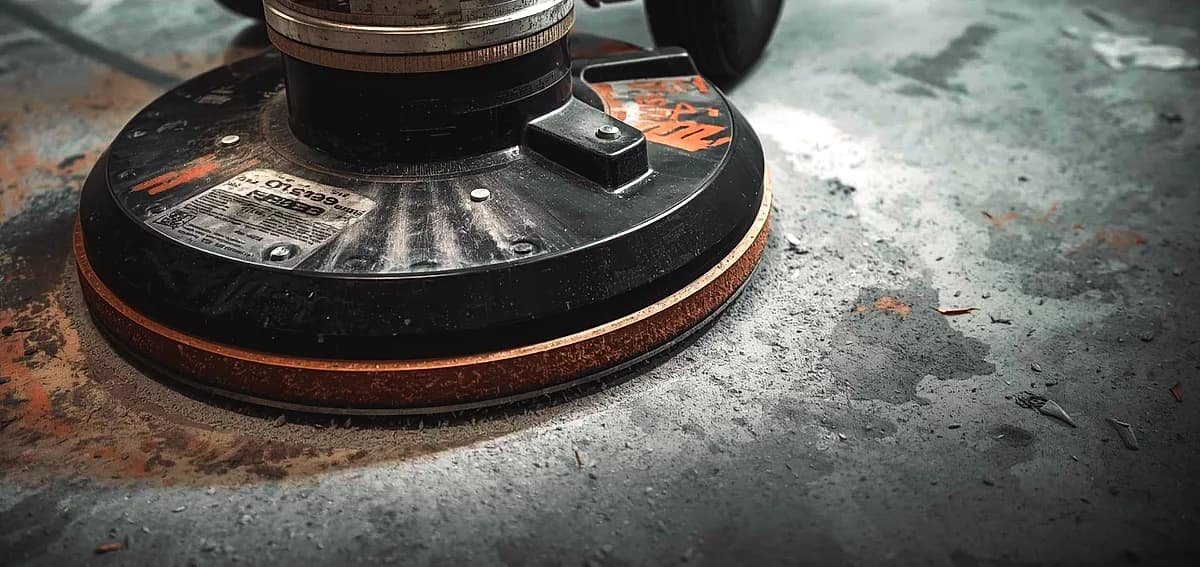
Polished concrete8 min read
What to Know Before Polishing Your Existing Concrete Slab
Before any mechanical refinement can begin, a thorough evaluation of the current foundation is required.
Read it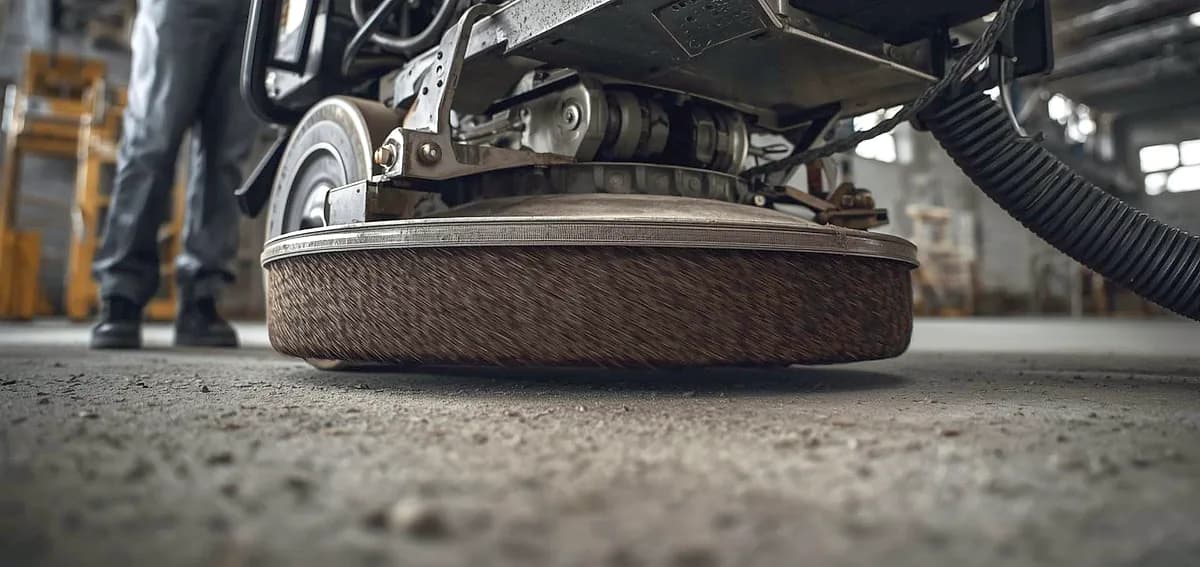
Polished concrete8 min read
Is Polished Concrete Worth the Investment for Miami Properties?
It is essential to distinguish between a simple topical seal and mechanically refined concrete.
Read it
Tell us about the floor
Tell us the space and roughly how big it is.We come back with what it would cost and when we could start.
Prefer to talk? Call +1 844-876-5474
- Leads@
nationalconcretepolishing.net - 2200 NW 32nd St #600,
Pompano Beach, FL 33069 Mon to Fri, 9:00 to 5:30