

The NCP blog
Mastering Farm Sink and Concrete Countertop Integration in Florida
Polished concrete8 min read
An apron-front farm sink in a concrete countertop needs structural reinforcement, specialized sealants, and controlled curing.
Integrating an apron-front farm sink with a custom concrete countertop requires engineered structural reinforcement capable of supporting over 300 pounds of dynamic weight, specialized moisture-resistant sealants, and climate-controlled curing protocols. When executed correctly, this combination delivers a seamless, highly durable workspace perfectly suited for Florida’s humid, coastal environment, eliminating the bacterial traps common in traditional drop-in sink installations.
The Architectural Shift Toward Industrial-Rustic Kitchens in 2026
The intersection of industrial durability and rustic charm has fundamentally reshaped residential architecture across the Sun Belt. According to the National Kitchen & Bath Association (NKBA) 2026 design trend report, there has been a 68% increase in farmhouse sink installations paired with non-traditional solid surfaces in Florida over the past three years. This surge is driven by a growing preference for materials that can withstand the rigors of indoor-outdoor entertaining while offering bespoke aesthetic appeal.
Concrete countertops offer unparalleled versatility. Unlike quarried stone, which is limited by natural veining and standard slab sizes, liquid concrete can be cast to exact specifications. This allows for flawless integration with large, deep-basin farm sinks that are essential for cleaning oversized cookware and fresh local seafood.
“We are seeing a massive shift toward matte finishes in coastal homes because they hide micro-scratches while providing superior slip resistance and a softer, more organic visual texture,” explains David Chen, Director of Design at Coastal Interiors Group.
For homeowners interested in this aesthetic, exploring why Miami homeowners choose matte polished concrete provides valuable insight into balancing visual appeal with daily functionality.
Engineering Structural Support for Heavy Apron-Front Sinks
The most critical phase of integrating a farm sink into a concrete countertop is engineering the substrate and cabinetry support. A standard 36-inch fireclay farm sink can weigh up to 150 pounds empty. When filled with water and heavy cast-iron cookware, the dynamic load easily exceeds 300 pounds. Coupled with a 2-inch thick concrete slab, the total weight demands robust structural planning.
Standard modular cabinetry is rarely sufficient for this application. Professional installers must reinforce the sink base cabinet using 2×4 timber framing or specialized steel brackets. The concrete slab itself requires internal reinforcement, typically utilizing 3/8-inch steel rebar or a specialized Glass-Fiber Reinforced Concrete (GFRC) mix. GFRC significantly reduces the overall weight of the slab while increasing its tensile strength, making it an ideal choice for complex sink cutouts.
“The sheer mass of a water-filled fireclay sink requires engineered substrate support, not just standard cabinetry reinforcement. A failure in load distribution will inevitably lead to micro-fissures in the concrete within the first six months,” notes Sarah Jenkins, Lead Structural Designer at the Florida Kitchen Architecture Institute.</p
Achieving a flawless surface around these complex cutouts requires precision. Understanding the complete guide to achieving a smooth concrete finish is essential for preventing weak points along the sink’s edge profile.
Navigating Florida’s Subtropical Climate During Installation
Florida’s unique climate presents distinct challenges for concrete casting and curing. Concrete does not “dry”; it cures through a chemical reaction called hydration. This process is highly sensitive to ambient temperature and relative humidity. In Florida, where relative humidity frequently exceeds 85%, managing the hydration rate is paramount to achieving a dense, non-porous surface.
Research from the University of Florida IFAS Extension indicates that excessive ambient moisture can dilute the surface water-to-cement ratio, leading to a weakened top layer prone to dusting and staining. To counteract this, professional contractors utilize climate-controlled environments for pre-cast slabs or deploy specialized dehumidification equipment for pour-in-place applications.
“In South Florida’s 2026 climate, managing the hydration rate of concrete during the first 48 hours is the difference between a flawless slab and a structural failure,” states Marcus Thorne, Senior Materials Engineer at the American Concrete Institute.
The curing timeline is also impacted by these environmental factors. Homeowners often wonder about project durations; reviewing how long concrete polishing takes in South Florida helps set realistic expectations for kitchen downtime. Furthermore, contractors must perform rigorous testing to ensure the slab is ready for final sealing, utilizing methods similar to a cure verification test to guarantee optimal sealer adhesion.
Step-by-Step Integration Process for Seamless Countertops
The integration of a farm sink into a concrete countertop is a meticulous process that requires specialized tooling and extensive experience. Here is the standard protocol utilized by top-tier Florida contractors:
- Digital Templating: Utilizing laser measurement tools, contractors create a precise digital template of the kitchen layout, accounting for the exact dimensions of the chosen farm sink, faucet placements, and required overhangs. Accuracy within millimeters is crucial for a tight fit.
- Form Building and Sink Scribing: Custom melamine forms are built. For undermount farm sinks, a precise knockout is created. The front apron of the sink must be perfectly scribed to ensure the concrete flows seamlessly up to the edge without gaps.
- Reinforcement and Pouring: Rebar or structural mesh is placed within the form. The concrete mix, adjusted for local humidity, is poured. Installers use vibration consolidation techniques to force trapped air bubbles to the surface, ensuring a dense, void-free edge around the sink basin.
- Curing and Demolding: The slab is left to cure for a minimum of 7 to 14 days. Once it reaches sufficient compressive strength, the forms are carefully removed.
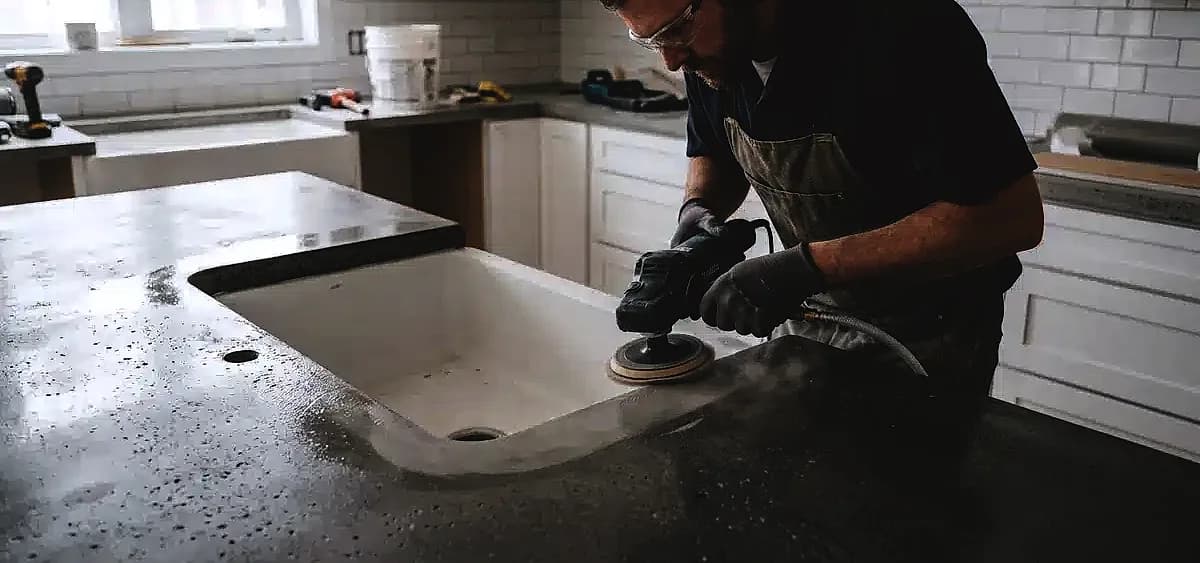
- Progressive Polishing: The concrete undergoes a multi-step diamond polishing process to achieve the desired sheen. This stage requires strict adherence to OSHA silica dust safety standards. For a detailed breakdown of this phase, review the concrete polishing stages in Fort Lauderdale.
- Sealing: A penetrating sealer is applied, followed by a topical protective coating to render the surface impervious to water and kitchen acids.
Material Comparison: Choosing the Right Sink for Concrete Integration
The material of the farm sink significantly impacts both the installation method and the long-term durability of the kitchen workspace. Below is a comparison of the most popular sink materials paired with concrete countertops in Florida homes.
| Sink Material | Weight (Empty) | Durability & Maintenance | Integration Compatibility with Concrete |
|---|---|---|---|
| Fireclay | 100 – 150 lbs | Highly resistant to scratches and heat. Requires non-abrasive cleaners. | Excellent. The classic choice, though variations in firing mean templates must be made from the exact sink, not a spec sheet. |
| Cast Iron (Enameled) | 120 – 180 lbs | Extremely durable but enamel can chip if heavy pots are dropped. | Good. Requires maximum structural reinforcement due to immense weight. |
| Stainless Steel | 30 – 50 lbs | Industrial look, highly sanitary, prone to water spots and minor scratching. | Excellent. Lightweight nature makes it the easiest to support structurally under a heavy concrete slab. |
| Integral Concrete | N/A (Cast as one piece) | Matches countertop exactly. Requires diligent resealing to prevent staining. | Ultimate seamless look. Eliminates all caulk lines and rim gaps, offering superior hygiene. |
Advanced Sealing Protocols and Long-Term Maintenance
The longevity of a concrete countertop, particularly around the high-moisture zone of a farm sink, is entirely dependent on the quality and maintenance of its sealing system. Concrete is naturally porous; without protection, it will rapidly absorb water, oil, and acidic substances like citrus juice or wine, leading to permanent etching and bacterial growth.
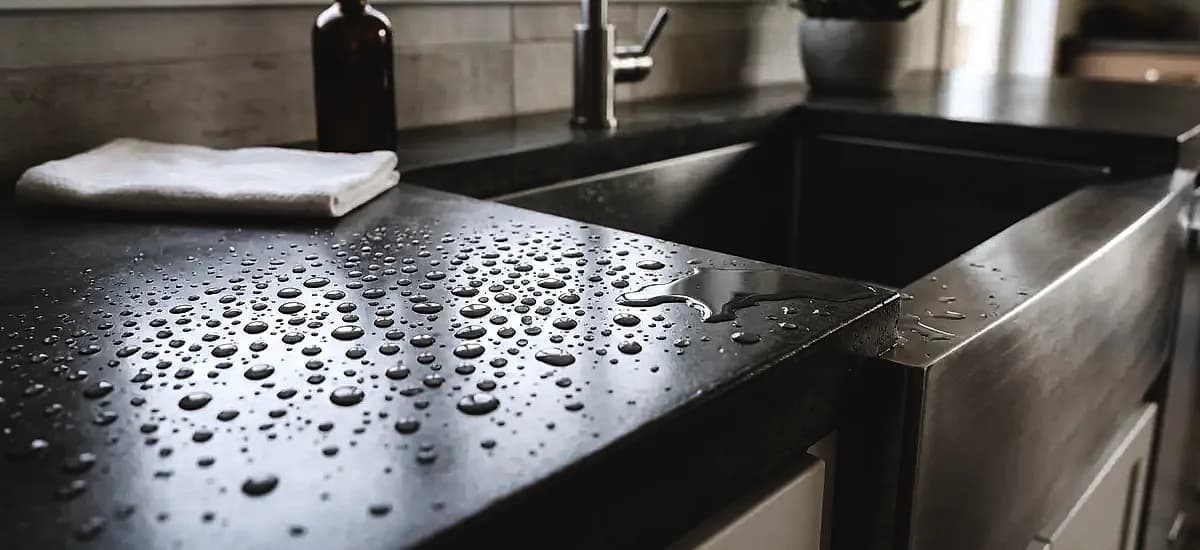
Modern sealing technology has advanced significantly. High-grade polyaspartic or specialized epoxy sealers create a non-porous barrier that provides a 99.9% reduction in bacterial accumulation compared to unsealed surfaces.
“Integrating an apron-front sink into a seamless concrete pour eliminates the bacterial traps common in traditional drop-in installations. However, this hygienic advantage is only maintained if the micro-sealant barrier remains intact,” advises Dr. Elena Rostova, Environmental Health Specialist at the University of Miami.
Daily maintenance should be restricted to pH-neutral cleaners. Harsh chemicals, bleach, and abrasive scrubbing pads will degrade the sealer. In Florida’s humid environment, professional sealer renewal is recommended every 2 to 3 years. Homeowners looking for broader applications of these durable materials should explore concrete floor finishes in South Florida to create a cohesive design language throughout their property.
Frequently Asked Questions
How much weight can a custom concrete countertop support?
When properly engineered with 3/8-inch steel rebar or GFRC technology, a concrete countertop can support 150 to 200 pounds per square foot. However, the cabinetry beneath must be specifically reinforced to carry the combined weight of the slab and a filled farm sink.
Do concrete countertops crack around the sink cutout?
Micro-cracking around sink cutouts is a risk if the concrete lacks proper internal reinforcement or if the cabinetry settles. Professional installers mitigate this by using specialized fiber-reinforced mixes and ensuring the substrate is perfectly level and structurally sound prior to pouring.
How does Florida’s humidity affect the installation process?
High humidity alters the hydration rate of curing concrete, potentially weakening the surface if not managed. Contractors use climate-controlled environments for pre-casting or deploy dehumidifiers on-site to ensure the concrete cures to its maximum compressive strength.
Can I use an integral concrete sink instead of a separate farm sink?
Yes, integral concrete sinks are highly popular as they offer a completely seamless transition from countertop to basin. This eliminates caulk lines where bacteria can hide, though the basin will require the same diligent sealing maintenance as the countertop.
What is the best way to clean a concrete countertop daily?
Use only pH-neutral dish soap and warm water with a soft microfiber cloth. Avoid vinegar, bleach, citrus-based cleaners, and abrasive sponges, as these will chemically etch the protective sealer and expose the porous concrete beneath.
How long does the entire fabrication and installation process take?
From the initial digital templating to the final application of the protective sealer, the process typically takes 10 to 14 days. The majority of this time is dedicated to the mandatory curing phase required before the concrete can be polished and sealed.
Conclusion
Integrating a farm sink with a custom concrete countertop offers an unmatched blend of industrial durability and bespoke aesthetic appeal, making it a premier choice for modern Florida kitchens. Success relies heavily on precise structural engineering to manage the immense weight, strict adherence to climate-controlled curing protocols, and the application of advanced, moisture-resistant sealers. By understanding these technical requirements and partnering with experienced professionals, homeowners can achieve a stunning, highly functional workspace designed to last for decades.
If you are ready to elevate your kitchen with custom concrete surfaces engineered for Florida’s unique climate, contact our team today to schedule a comprehensive design consultation and site evaluation.
Written by

Founder and CEO
Chris Lavin is an esteemed leader in concrete polishing and epoxy coatings with a distinguished 20-year career. As founder and CEO of National Concrete Polishing and owner of Xtreme Polishing Systems, he's renowned for polishing and epoxy coating more floors than anyone globally. Chris is recognized for his innovative approach and commitment to enhancing floor durability and aesthetics. His hands-on experience and technical proficiency make him a respected authority and a valuable resource in the field of floor polishing and coatings.
Same topic
Related articles
All stories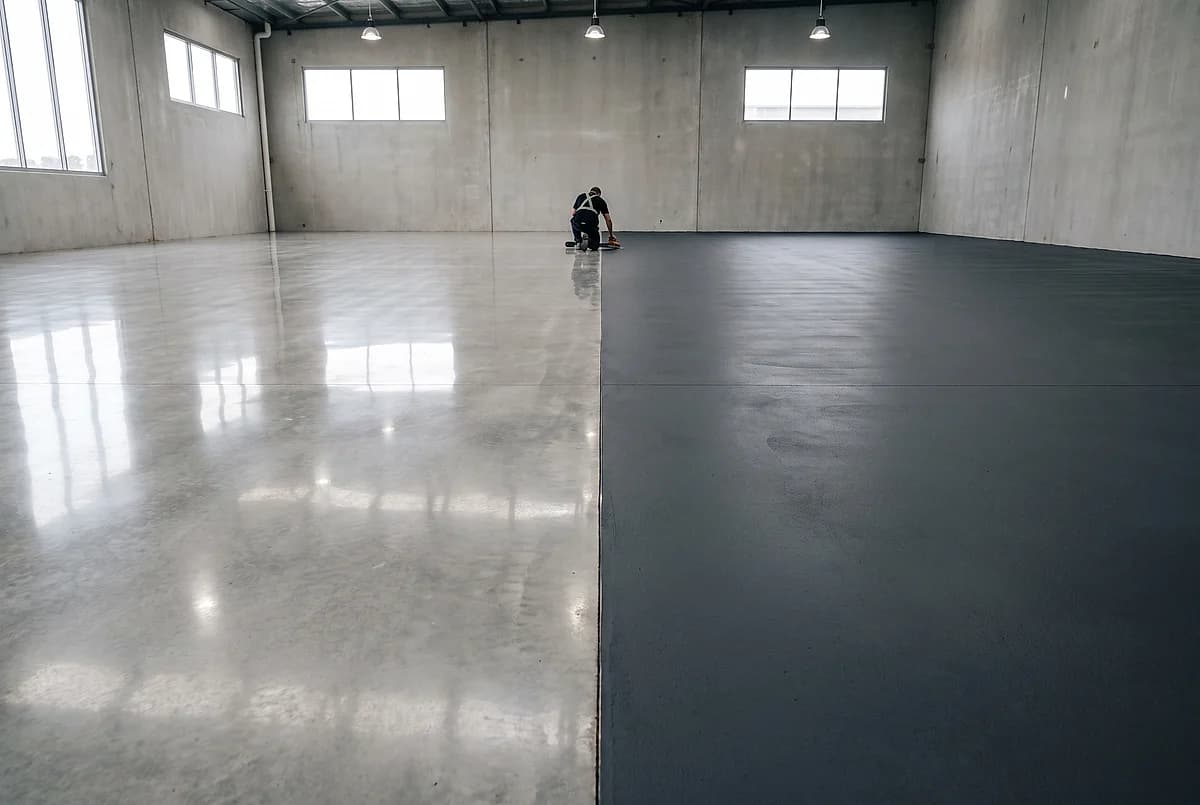
Polished concrete11 min read
Polished Concrete vs Epoxy Coatings: Which Floor Is Right for Your Space?
Two systems, two price curves, one slab. What each one costs to install and to keep, and which spaces each one actually suits.
Read it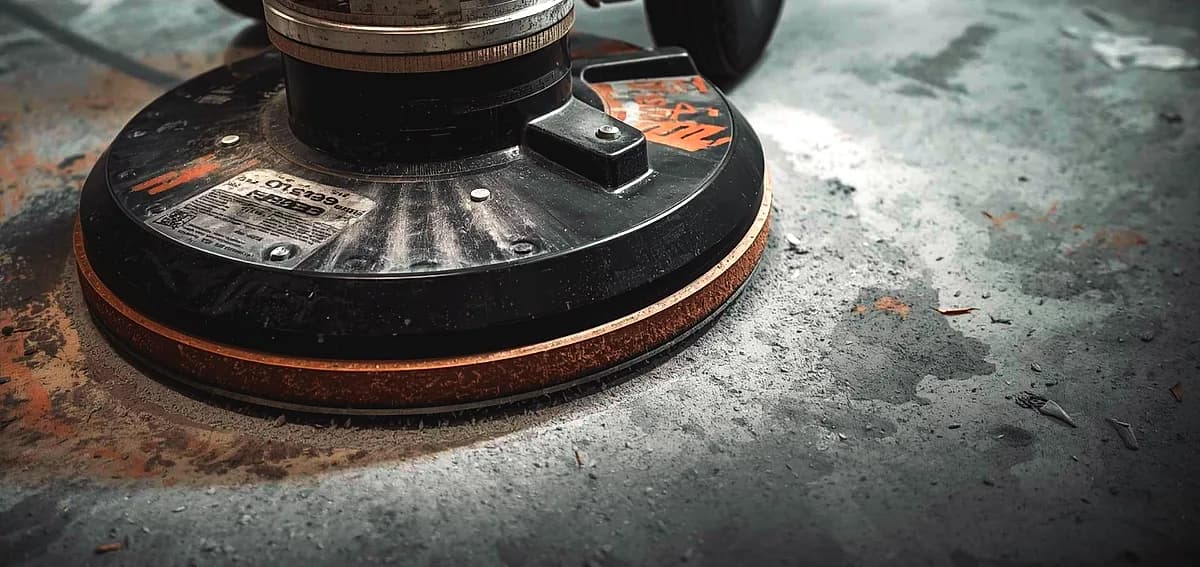
Polished concrete8 min read
What to Know Before Polishing Your Existing Concrete Slab
Before any mechanical refinement can begin, a thorough evaluation of the current foundation is required.
Read it
Polished concrete8 min read
Is Polished Concrete Worth the Investment for Miami Properties?
It is essential to distinguish between a simple topical seal and mechanically refined concrete.
Read it
Tell us about the floor
Tell us the space and roughly how big it is.We come back with what it would cost and when we could start.
Prefer to talk? Call +1 844-876-5474
- Leads@
nationalconcretepolishing.net - 2200 NW 32nd St #600,
Pompano Beach, FL 33069 Mon to Fri, 9:00 to 5:30