
The NCP blog
Advanced Joint Sealing Techniques for Large Commercial Concrete Floors
Commercial9 min read
Large commercial concrete floors represent some of the most demanding environments in modern construction.
Joint sealing in large commercial concrete floors involves the systematic preparation, filling, and protection of intentional slab gaps—such as control, expansion, and isolation joints—to prevent edge spalling, moisture intrusion, and structural degradation. The most effective modern techniques utilize semi-rigid epoxies, rapid-curing polyurea elastomers, or high-performance polyurethanes, specifically chosen based on the facility’s thermal fluctuations and mechanical load requirements. By properly transferring heavy wheel loads across the joint gap, a high-quality seal ensures the long-term structural integrity and safe operation of high-traffic industrial and commercial environments.
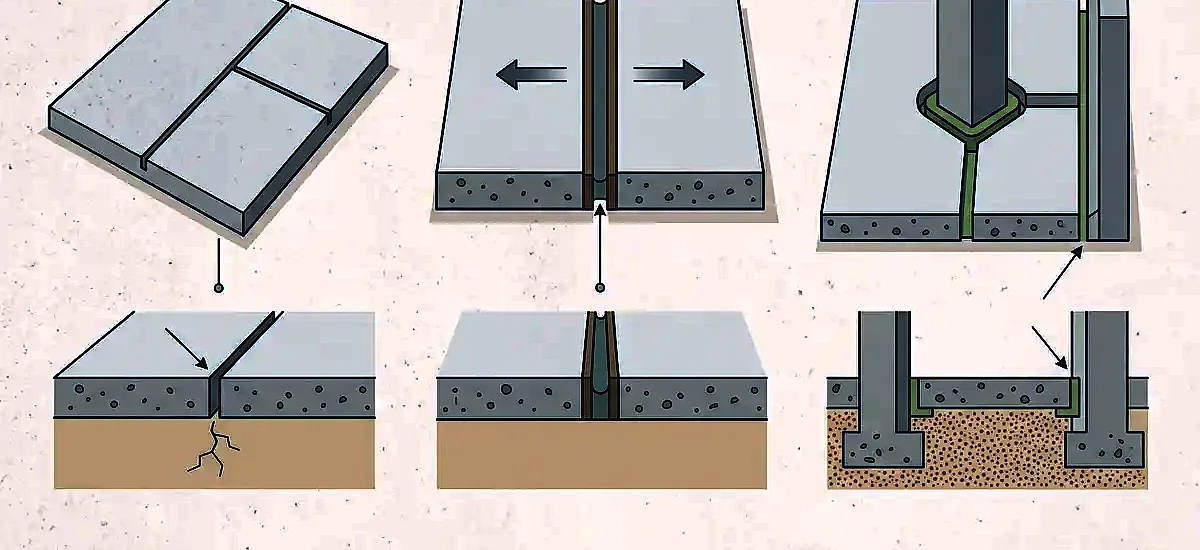
The Anatomy of Commercial Concrete Floor Joints
Large commercial concrete floors represent some of the most demanding environments in modern construction. These expansive surfaces, spanning thousands of square feet in warehouses, manufacturing facilities, retail spaces, and distribution centers, face unique challenges. The complexity of treating these installations goes far beyond simple crack filling. To understand how to protect these surfaces, facility managers must first understand the distinct types of joints engineered into the slab.
Control Joints (Contraction Joints)
Control joints are deliberately created weak points saw-cut into the slab. As concrete cures, it naturally shrinks. By cutting a straight line typically extending one-quarter to one-third of the slab’s depth, engineers force the concrete to crack in a predetermined, straight line rather than randomly across the floor. These joints require semi-rigid fillers to support the edges while still allowing for microscopic movement.
Expansion and Isolation Joints
Expansion joints accommodate thermal movement and structural settling. Unlike control joints, expansion joints extend through the full depth of the slab and often include compressible filler materials. Isolation joints serve a similar purpose but specifically separate concrete slabs from walls, columns, and other structural elements, allowing independent movement between different building components. Because these joints experience significant expansion and contraction, they require highly flexible elastomeric sealants.
The High Cost of Joint Failure in Industrial Settings
Modern commercial environments place unprecedented demands on concrete flooring systems. From the constant movement of forklifts to exposure to temperature fluctuations and chemical spills, these floors must perform reliably. According to the American Concrete Institute (ACI), up to 85% of commercial floor failures originate at the joints. When a joint is left unsealed or improperly filled, the hard polyurethane wheels of material handling equipment strike the unprotected 90-degree concrete edge.
“The integrity of a commercial concrete floor is only as strong as its weakest joint. Neglecting proper sealant protocols guarantees premature edge spalling, which rapidly degrades material handling equipment and slows down facility operations,” says Dr. Robert Vance, Structural Engineering Director at the American Concrete Institute.
Forklifts equipped with hard wheels can exert up to 10,000 PSI on joint edges. Over time, this repetitive impact causes the concrete to chip and break away—a process known as spalling. This is why understanding that proper joint treatment is critical for epoxy floors and bare concrete alike. Furthermore, heavy machinery like scissor lifts are quietly destroying warehouse floors when joints are not properly stabilized to handle the dynamic weight transfer.
Advanced Sealant Materials for 2026
The evolution of joint sealing technology has provided contractors with an array of advanced materials. The selection process must consider factors such as expected joint movement, environmental exposure, chemical compatibility, and long-term maintenance requirements. In 2026, the industry standard has largely shifted toward high-performance polyurea and specialized epoxy systems.
Material Comparison Matrix
| Material Type | Primary Benefit | Best Application | Cure Time |
|---|---|---|---|
| Polyurea Elastomers | Rapid curing, high flexibility | High-traffic warehouses, cold storage | 45 – 90 minutes |
| Semi-Rigid Epoxy | Superior edge support, high shore hardness | Manufacturing floors, heavy point loads | 12 – 24 hours |
| Polyurethane | Excellent adhesion, moderate flexibility | Pedestrian areas, retail spaces | 24 – 48 hours |
| Silicone | UV stability, extreme weather resistance | Exterior expansion joints | 24 – 72 hours |
“In high-traffic warehouses, transitioning to rapid-curing polyurea elastomers has revolutionized our maintenance schedules, cutting downtime by nearly 70%,” notes Sarah Jenkins, Lead Facilities Manager at Logistics North America. Polyurea’s ability to cure in under an hour allows facilities to return to full operational capacity almost immediately, a crucial factor in modern 24/7 logistics hubs.
Conversely, when dealing with extreme weights, epoxies remain king. “When dealing with heavy point loads from material handling equipment, semi-rigid epoxy fillers provide the necessary sidewall support that flexible sealants simply cannot match,” states David Chen, Chief Flooring Consultant at Industrial Floor Tech.
Step-by-Step Joint Sealing Process
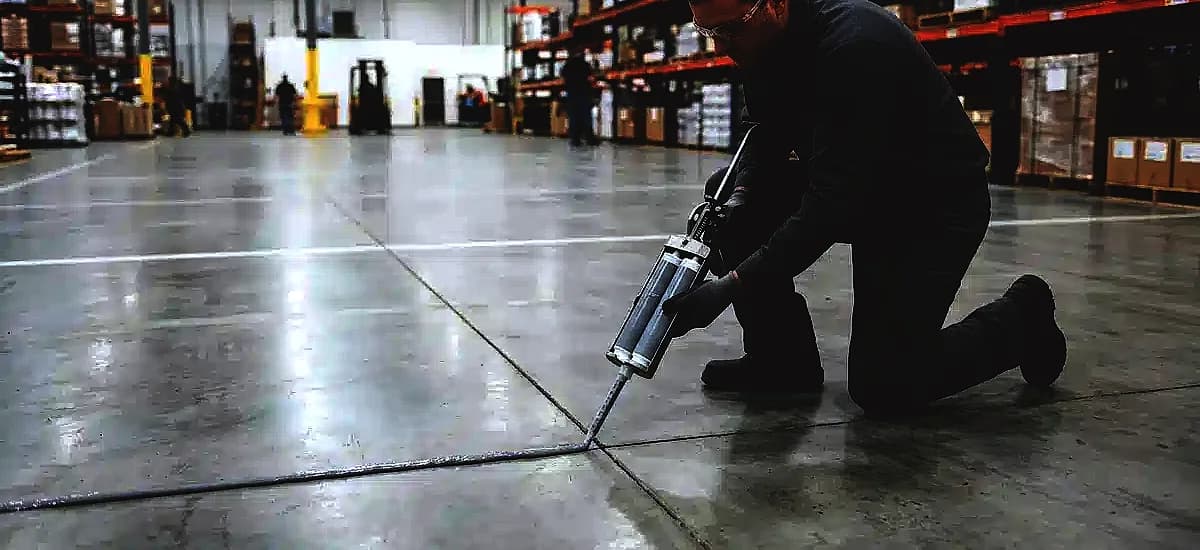
Effective surface preparation forms the foundation of successful joint sealing. Even the most expensive sealant will fail if applied to a poorly prepared joint. Professional contractors follow a strict, systematic approach to ensure long-lasting results.
- Subsurface Analysis: Before cutting or grinding, professionals often utilize GPR scanning for concrete projects to locate post-tension cables, rebar, or conduits hidden beneath the slab, ensuring safe preparation.
- Mechanical Cleaning: The joint must be routed out using a dustless concrete saw equipped with a diamond blade. 2026 industry standards require 99% dustless grinding using HEPA-filtered vacuums to remove old sealants, dirt, and laitance. Both sidewalls of the joint must expose fresh, clean concrete.
- Vacuuming and Debris Removal: Compressed air and high-powered vacuums are used to remove all remaining silica dust. Any residual dust acts as a bond breaker, preventing the sealant from adhering to the concrete.
- Moisture Testing: Concrete surfaces must be thoroughly dry. Using electronic relative humidity (RH) probes, technicians verify that moisture levels are within the manufacturer’s specified limits (typically below 3 lbs per 1,000 sq ft).
- Backer Rod Installation: For expansion and isolation joints, a closed-cell foam backer rod is inserted into the joint. This prevents “three-sided adhesion,” ensuring the sealant only bonds to the two sidewalls. This allows the sealant to stretch and compress naturally like a rubber band.
- Mixing and Application: Using specialized plural-component pumps, the two-part epoxy or polyurea is mixed precisely at the nozzle and injected into the joint. The joint is typically overfilled slightly to account for settling.
- Shaving and Tooling: Once the material has cured to a semi-solid state, a sharp floor scraper is used to shave the excess material perfectly flush with the floor surface, ensuring a seamless transition for forklift wheels.
Environmental and Load Considerations
The selection of appropriate joint sealing methods requires careful consideration of environmental conditions. Temperature fluctuations, moisture exposure, and chemical contact require specific formulations for optimal results. For instance, facilities operating cold storage units face unique challenges. Rapid temperature drops can cause severe slab contraction. Furthermore, ice machines and freezers keep cracking concrete due to thermal shock, demanding sealants that remain elastomeric at sub-zero temperatures.
Research from the Portland Cement Association (PCA) indicates that thermal expansion can cause up to 0.5 inches of movement per 100 feet of concrete slab. If a rigid epoxy is used in an expansion joint subject to this level of movement, the epoxy will crack, or worse, it will tear the concrete sidewall away.
Quality Control and Testing Protocols
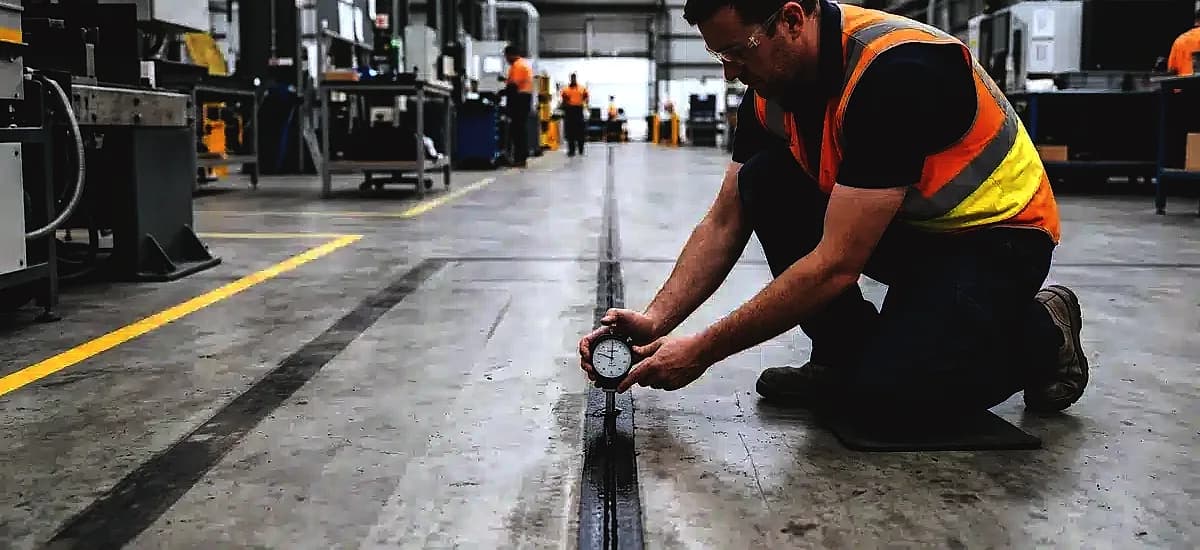
Implementing systematic inspection and testing protocols during application reduces the risk of defects. Quality control measures include visual inspection of sealant adhesion, verification of proper joint filling, and testing of sealant cure characteristics. It is vital to verify your floor coating is actually cured before allowing heavy traffic back onto the surface.
“Moisture vapor transmission remains the silent killer of joint sealants. If you aren’t testing the relative humidity of the slab before application, you are gambling with the facility’s operational safety,” explains Marcus Thorne, Senior Materials Scientist at the International Concrete Repair Institute (ICRI). Proper documentation of these quality control activities provides valuable information for warranty purposes and future maintenance planning.
Long-Term Maintenance and Performance Optimization
Effective maintenance programs are essential for maximizing the service life of joint sealing systems. Research from the National Institute of Standards and Technology (NIST) shows that proactive joint maintenance can result in a 60% reduction in overall floor repair costs over a 5-year period. Proper sealing extends the overall slab life by up to 40%.
Regular inspection schedules should be established to monitor sealant condition, identify early signs of deterioration, and plan preventive maintenance activities. These inspections typically focus on sealant adhesion, surface cracking, and joint contamination. Facility managers should also implement the best cleaning methods for high-traffic commercial floors, utilizing neutral-pH cleaners and avoiding highly abrasive brush attachments that can gouge the joint filler. By maintaining the integrity of the joints, businesses ensure that their concrete floor finishes for commercial spaces remain pristine, safe, and highly functional for decades.
Frequently Asked Questions
What is the difference between a control joint and an expansion joint?
A control joint is a shallow saw cut designed to dictate where a concrete slab will crack as it shrinks during curing. An expansion joint goes entirely through the slab, providing a physical gap that allows separate concrete pours to expand and contract with temperature changes without crushing against each other.
Why do forklift wheels damage concrete joints?
Forklifts use hard polyurethane wheels that do not absorb shock. When these wheels cross an unfilled or improperly filled joint, they strike the hard 90-degree edge of the concrete, causing it to chip and break away under the immense pressure (up to 10,000 PSI).
How long does joint sealant take to cure?
Cure times vary drastically by material. Advanced polyurea elastomers can cure and be ready for heavy traffic in as little as 45 to 90 minutes. Semi-rigid epoxies typically require 12 to 24 hours, while standard polyurethanes may need up to 48 hours to fully cure.
What is a backer rod and why is it used?
A backer rod is a cylindrical piece of closed-cell foam pushed into a joint before sealing. It controls the depth of the sealant and prevents the sealant from bonding to the bottom of the joint, ensuring the material can stretch horizontally without tearing.
Can joint sealing be done on old, damaged floors?
Yes. Damaged joints can be repaired by saw-cutting the spalled edges to create clean, vertical sidewalls. The joint is then thoroughly cleaned, rebuilt if necessary with specialized repair mortars, and finally sealed with appropriate industrial fillers.
How often should commercial concrete joints be resealed?
The lifespan of a joint seal depends on traffic volume and environmental conditions. In high-traffic industrial environments, polyurea or epoxy fillers may need inspection and touch-ups every 3 to 5 years, while lower-traffic commercial spaces can see seals last 10 years or more.
Conclusion
Mastering joint sealing techniques for large commercial concrete floors is not merely an aesthetic choice; it is a critical structural necessity. By understanding the distinct functions of control, expansion, and isolation joints, and by selecting the appropriate advanced materials like polyurea or semi-rigid epoxy, facility managers can prevent devastating edge spalling and costly operational downtime. Proper surface preparation, rigorous moisture testing, and precise application are the cornerstones of a flooring system built to withstand the punishing demands of modern industry. If your facility is experiencing joint degradation, spalling, or you are preparing for a new commercial installation, professional intervention is essential to protect your investment. Get in touch with our team today to schedule a comprehensive floor assessment and secure the long-term integrity of your commercial concrete surfaces.
Written by

Founder and CEO
Chris Lavin is an esteemed leader in concrete polishing and epoxy coatings with a distinguished 20-year career. As founder and CEO of National Concrete Polishing and owner of Xtreme Polishing Systems, he's renowned for polishing and epoxy coating more floors than anyone globally. Chris is recognized for his innovative approach and commitment to enhancing floor durability and aesthetics. His hands-on experience and technical proficiency make him a respected authority and a valuable resource in the field of floor polishing and coatings.
Same topic
Related articles
All stories
Commercial9 min read
How Polished Concrete Solves Office Acoustic Problems
Hard floors and noise complaints. What polished concrete does to sound in an open office, and how to spec around it.
Read it
Commercial10 min read
Flooring for Hotel Wet Areas, Kitchens, and Parking Decks
Kitchens, pool decks and parking structures punish a floor daily. Which systems hold up in hotel service areas, and why.
Read it
Commercial11 min read
Specifying Floors for a New Hotel Build
For owners and architects on a new build. What to write into the flooring spec so the hotel opens on a floor that lasts.
Read it
Tell us about the floor
Tell us the space and roughly how big it is.We come back with what it would cost and when we could start.
Prefer to talk? Call +1 844-876-5474
- Leads@
nationalconcretepolishing.net - 2200 NW 32nd St #600,
Pompano Beach, FL 33069 Mon to Fri, 9:00 to 5:30