The NCP blog
How Scissor Lifts Destroy Miami Warehouse Floors (And the Engineering Required to Stop It)
Commercial9 min read
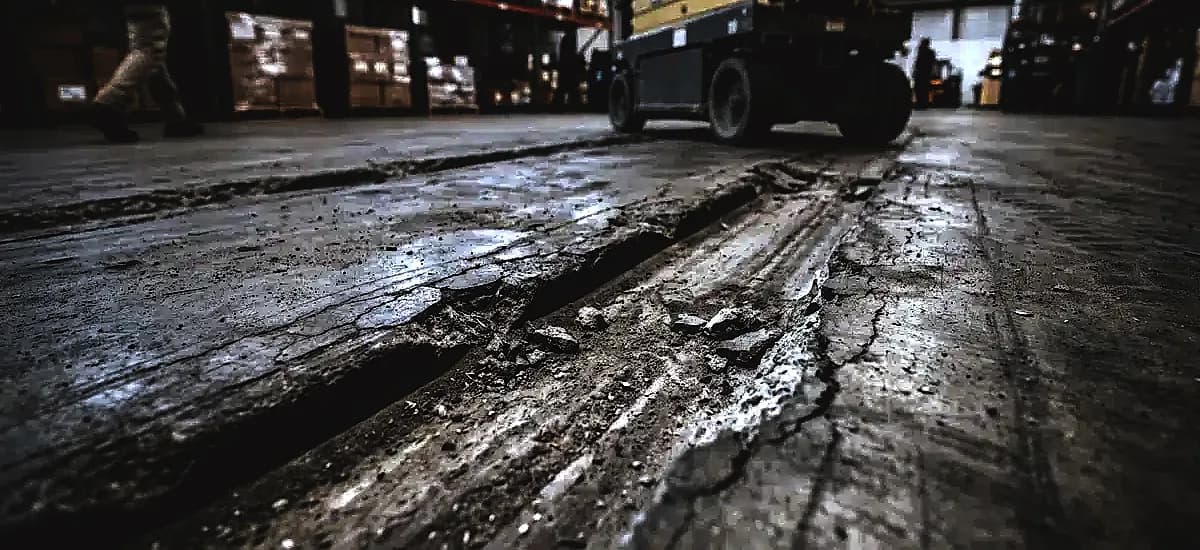
The resulting damage manifests as deep wheel ruts, hazardous silica dusting, and catastrophic joint failure.
Scissor lifts destroy unprotected warehouse floors because their massive weight transfers through four small polyurethane wheels, generating concentrated point loads that frequently exceed 150 to 250 PSI. This immense pressure, combined with the aggressive scrubbing action of tight turns and Miami’s perpetually high humidity, rapidly breaks down standard 4,000 PSI concrete. The resulting damage manifests as deep wheel ruts, hazardous silica dusting, and catastrophic joint failure. Preventing this costly degradation requires installing high-build industrial epoxy coatings paired with polyaspartic topcoats that distribute the mechanical weight and resist severe abrasion.
The Physics of Scissor Lift Floor Damage
To understand why aerial work platforms cause such severe damage, facility managers must examine the physics of point loading. Standard warehouse scissor lifts weigh between 4,500 and 14,000 pounds. When that weight transfers through four small, rigid polyurethane wheels, the pressure per square inch (PSI) at the contact patch reaches extreme levels. Compare a scissor lift’s 150-250 PSI to forklift tires at 80-120 PSI or standard pedestrian traffic at just 25-40 PSI. The mathematics clearly explain why scissor lifts carve deep ruts into concrete that heavy forklifts barely scratch.
Research from the Portland Cement Association confirms that standard 4,000 PSI warehouse concrete begins showing microscopic stress fractures when subjected to repeated, concentrated point loads exceeding 120 PSI. Scissor lifts regularly exceed that threshold by 50% to 100%. The damage compounds with each pass, especially in high-traffic lanes where operators follow the exact same paths daily. This repetitive stress leads to sub-surface micro-cracking that eventually telegraphs to the surface as visible spalling.
“When a 14,000-pound aerial lift pivots on a dime, the polyurethane wheels act like grinding stones against the cement paste,” explains Dr. Robert Chen, a Materials Engineer at the International Concrete Repair Institute. “The rotational friction generates localized heat and shear forces that literally tear the aggregate out of its binder.” This is precisely why some South Florida commercial floors feel bouncy and springy after years of structural abuse.
Why Miami’s Climate Accelerates Concrete Degradation
Miami warehouses face an additional, invisible enemy: the climate. South Florida’s 76% average humidity creates environmental conditions that drastically accelerate floor degradation. Moisture vapor transmission (MVT) through concrete slabs keeps the substrate perpetually damp, even in climate-controlled facilities. According to testing protocols from the National Institute of Standards and Technology (NIST), wet concrete possesses 15% to 20% less compressive strength than fully cured, dry concrete. Scissor lift wheels push into this softened, vulnerable surface with every single pass.
Temperature fluctuations compound the moisture problem. As of 2026, Miami warehouse floors experience daily temperature swings of 15 to 25 degrees Fahrenheit as massive loading dock doors open and close to accommodate shipping schedules. These thermal cycles cause micro-expansion and contraction within the slab, which gradually loosens the chemical bonds holding the aggregate together. Facility managers must choose garage floor finishes in South Florida built for heat and humidity to combat these specific environmental stressors.
Recognizing the Three Stages of Wheel Damage
Concrete floor failure under scissor lift traffic does not happen overnight. It follows a predictable, three-stage degradation process that facility managers must learn to identify early.
1. Surface Dusting and Cement Erosion
The first sign of impending failure is surface dusting. As scissor lift wheels abrade the concrete, they release fine cement dust into the warehouse environment. The Occupational Safety and Health Administration (OSHA) identifies respirable crystalline silica from concrete dusting as a severe workplace health hazard. Beyond the safety and compliance concerns, this dusting indicates active surface failure. Each pass removes more cement paste, eventually exposing the rough aggregate beneath.
2. Joint Deterioration and Spalling
Control joints and expansion joints are the intentional weak points in any concrete slab, making them highly vulnerable to heavy wheel loads. When a scissor lift rolls over an unprotected joint, the hard polyurethane wheels strike the edge of the concrete, causing it to chip and spall outward. This creates severe trip hazards and allows moisture infiltration. Understanding why proper joint treatment is critical for epoxy floors in Florida is essential for long-term facility maintenance.
3. Deep Wheel Rut Formation
Within 6 to 12 months on unprotected floors, distinct wheel ruts develop. These grooves typically measure 1/4 to 3/4 inch deep and follow primary traffic patterns near racking systems. The ruts collect water, dirt, and debris, creating slip hazards and accelerating further deterioration. Once ruts form, the structural integrity of the slab is compromised, requiring extensive mechanical repair.
Equipment Load Comparison: Impact on Warehouse Floors
Understanding relative equipment loads helps facility managers prioritize their floor protection strategies. The following table illustrates the dramatic difference in contact pressure between various warehouse vehicles.
| Equipment Type | Typical Weight | Contact Pressure (PSI) | Damage Risk | Time to Visible Damage |
|---|---|---|---|---|
| Scissor Lift | 4,500 – 14,000 lbs | 150 – 250 PSI | Very High | 6 – 12 months |
| Boom Lift | 12,000 – 20,000 lbs | 180 – 280 PSI | Extreme | 3 – 8 months |
| Sit-Down Forklift | 8,000 – 15,000 lbs | 80 – 120 PSI | Medium | 18 – 36 months |
| Pallet Jack | 150 – 350 lbs | 40 – 70 PSI | Low | 36 – 60 months |
Industrial Floor Coating Solutions That Actually Work
Not all floor coatings handle aerial work platform traffic equally. Standard residential-grade systems or thin-mil paints will fail within weeks under the crushing weight of a scissor lift. Commercial facilities require specialized industrial coatings that provide massive compressive strength and extreme abrasion resistance.
High-Build Epoxy Systems
Industrial epoxy systems applied at 20 to 40 mils thickness are the gold standard for heavy equipment lanes. This thickness creates a rigid, structural barrier that distributes point loads across a much larger surface area. Quality industrial epoxy achieves 10,000+ PSI compressive strength, easily neutralizing the 250 PSI contact pressure from the wheels. The critical specification to look for is Shore D hardness. Coatings rated at 80+ Shore D resist wheel abrasion without softening or deforming under sustained loads.
Polyaspartic and Polyurea Topcoats
Miami warehouses benefit immensely from hybrid systems. When evaluating polyaspartic vs epoxy flooring for South Florida, the best solution is often a combination of both. An epoxy base layer provides the compressive strength, while a polyaspartic topcoat delivers superior abrasion resistance, chemical resistance, and UV stability. The polyaspartic layer acts as a shock absorber, dissipating the rotational scrubbing energy that occurs when scissor lifts turn in place.
Step-by-Step Surface Preparation for Damaged Slabs
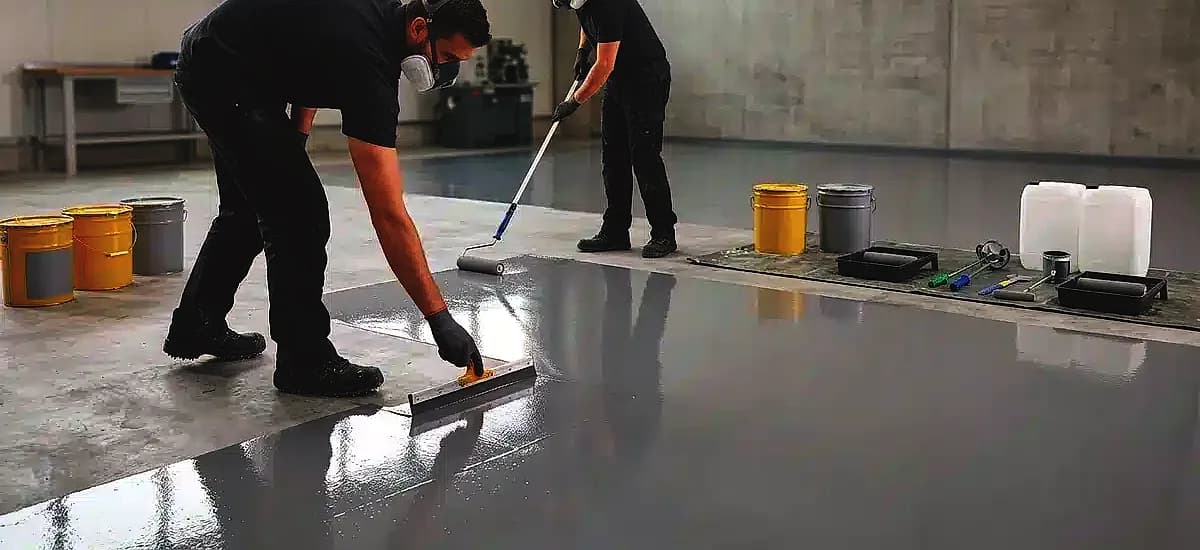
Applying premium coatings over compromised concrete without rigorous preparation guarantees catastrophic failure. The International Concrete Repair Institute specifies a Concrete Surface Profile (CSP) of 3 to 5 for heavy industrial coatings. Achieving this requires a strict, multi-step mechanical process.
- Subsurface Assessment: Before any grinding begins, technicians must determine what’s hiding under your concrete and why Miami projects need GPR scanning. Ground Penetrating Radar identifies post-tension cables, rebar depth, and hidden voids that could collapse under heavy machinery.
- Shot Blasting: This method propels steel shot at high velocity against the floor, aggressively abrading away weak, dusted material and exposing sound aggregate. Shot blasting effectively handles minor wheel ruts and removes deep oil contamination that would otherwise prevent epoxy adhesion.
- Diamond Grinding: For deeper damage patterns, multi-head planetary grinders equipped with metal-bond diamond tooling remove up to 1/8 inch of concrete per pass. This step is crucial for establishing a perfectly level plane. Understanding the concrete polishing stages in Fort Lauderdale helps facility managers appreciate the labor involved in proper profile correction.
- Joint and Crack Reconstruction: All structural cracks and spalled joints must be rebuilt. Technicians use high-strength epoxy injections to weld cracks together, restoring the slab’s monolithic integrity. Semi-rigid polyurea joint fillers are then installed to support the edges of control joints under heavy wheel traffic.
Skipping any of these steps is the primary reason facilities experience epoxy floor peeling in Fort Lauderdale and Miami warehouses.
The Financial ROI: Repair vs. Proactive Prevention
The financial argument for installing protective industrial coatings is overwhelming when analyzing long-term facility maintenance budgets. A standard 50,000-square-foot Miami distribution center operating multiple scissor lifts faces two very different financial realities over a 10-year period.
“Facility managers often balk at the initial $6 to $10 per square foot for a high-build epoxy system, but they ignore the $40,000 slab replacement looming just eight years down the road,” notes Sarah Jenkins, Lead Industrial Estimator at the Material Handling Industry (MHI).
Without protection, a facility will spend $8,000 to $15,000 annually on localized concrete patching and joint repairs. Furthermore, uneven, rutted floors cause severe vibration damage to the scissor lifts themselves, leading to premature equipment failure and decreased operator productivity. Over a decade, the total cost of an unprotected floor easily exceeds $200,000.
Conversely, a proactive industrial coating system requires an initial investment, but reduces annual maintenance to basic cleaning. With a lifespan of 12 to 18 years, the protected floor costs roughly $10 to $15 per square foot over its lifetime, while delivering vastly superior performance, safety, and aesthetic value.
Operational Strategies to Minimize Wear
While industrial coatings provide the ultimate defense, facility managers should also implement operational changes to extend the life of their floors. First, vary traffic patterns whenever possible to prevent concentrated wear in specific lanes. Second, train operators to avoid in-place rotation; moving the lift slightly forward or backward while turning drastically reduces the scrubbing friction that grinds away topcoats.
Finally, maintain rigorous equipment standards. Inspect polyurethane wheels weekly for flat spots or embedded debris. A wheel with a flat spot acts like a hammer, striking the floor with immense force on every revolution. Replacing worn wheels promptly is one of the most cost-effective floor protection strategies available.
Frequently Asked Questions
How quickly do scissor lifts damage unprotected warehouse floors?
Visible damage typically appears within 6 to 12 months on unprotected concrete. The concentrated wheel loads of 150-250 PSI exceed concrete’s natural stress threshold, rapidly creating wheel ruts, surface erosion, and joint deterioration.
What coating thickness is required for scissor lift traffic?
Industrial facilities operating scissor lifts require a minimum coating thickness of 20 to 40 mils. This high-build thickness is necessary to distribute point loads and provide adequate wear resistance against aggressive polyurethane wheels.
Can severely damaged concrete floors be repaired before coating?
Yes, professional concrete repair processes can restore damaged substrates. Technicians use shot blasting to remove surface deterioration, diamond grinding to level deep wheel ruts, and epoxy injections to rebuild structural integrity before applying the final coating.
Do polished concrete floors handle scissor lift traffic well?
Properly densified polished concrete handles moderate scissor lift traffic adequately, as the densification process hardens the surface by up to 40%. However, it offers less impact protection than high-build epoxy systems and cannot bridge existing severe damage.
How long do warehouse floor coatings last under heavy scissor lift use?
High-build epoxy systems paired with polyaspartic topcoats generally last 12 to 18 years under regular scissor lift traffic. The exact lifespan depends on traffic intensity, coating thickness, and adherence to routine maintenance protocols.
What maintenance extends floor coating life in industrial settings?
Regular commercial floor scrubbing removes abrasive silica sand and debris that accelerate wear. Weekly cleaning prevents grit from acting as a grinding agent under the lift’s wheels, significantly extending the life of the polyaspartic topcoat.
Conclusion
Scissor lifts are essential for modern warehouse operations, but their immense weight and rigid wheels make them highly destructive to unprotected concrete. In Miami’s humid, demanding climate, the rapid degradation of warehouse floors leads to massive repair bills, safety hazards, and operational downtime. By understanding the physics of point-load damage and investing in high-build industrial epoxy and polyaspartic coating systems, facility managers can permanently halt concrete erosion and protect their infrastructure for decades. Don’t wait until your slab requires a complete structural replacement. Get in touch with our team today to schedule a comprehensive floor assessment and discover the ideal coating solution for your facility.
Written by

Founder and CEO
Chris Lavin is an esteemed leader in concrete polishing and epoxy coatings with a distinguished 20-year career. As founder and CEO of National Concrete Polishing and owner of Xtreme Polishing Systems, he's renowned for polishing and epoxy coating more floors than anyone globally. Chris is recognized for his innovative approach and commitment to enhancing floor durability and aesthetics. His hands-on experience and technical proficiency make him a respected authority and a valuable resource in the field of floor polishing and coatings.
Same topic
Related articles
All stories
Commercial9 min read
How Polished Concrete Solves Office Acoustic Problems
Hard floors and noise complaints. What polished concrete does to sound in an open office, and how to spec around it.
Read it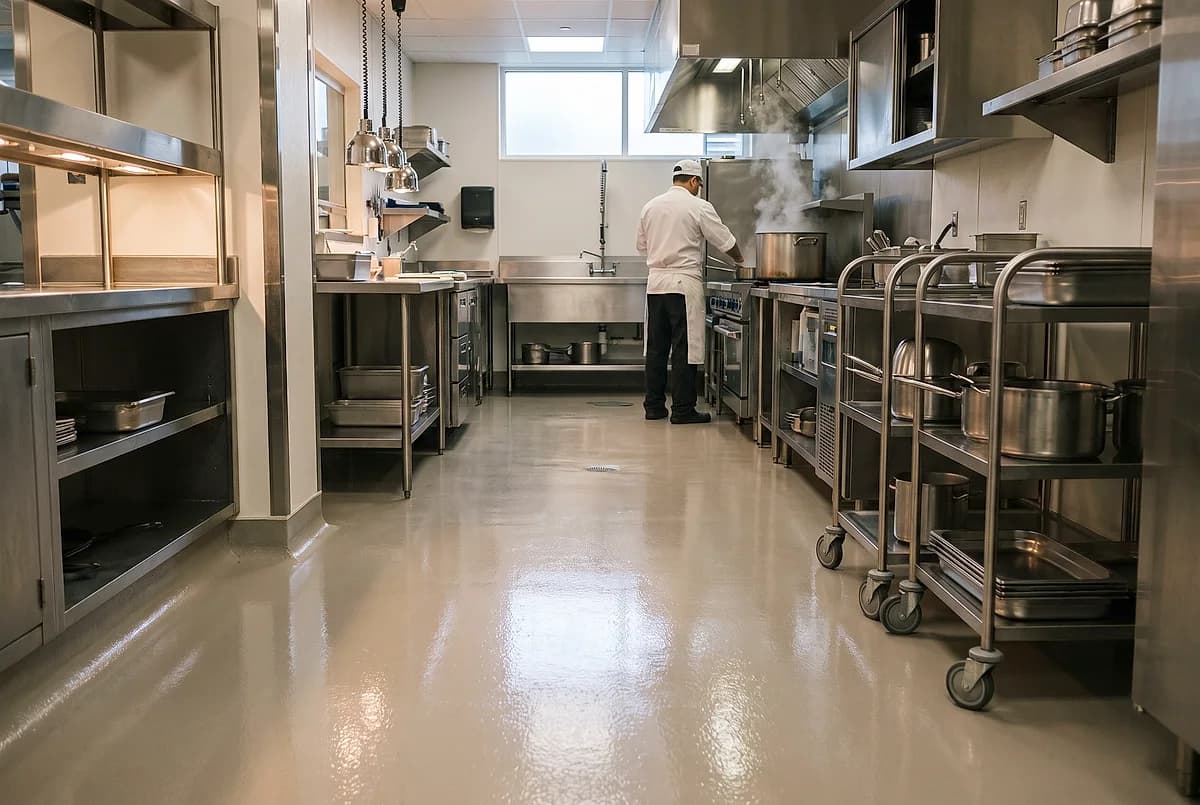
Commercial10 min read
Flooring for Hotel Wet Areas, Kitchens, and Parking Decks
Kitchens, pool decks and parking structures punish a floor daily. Which systems hold up in hotel service areas, and why.
Read it
Commercial11 min read
Specifying Floors for a New Hotel Build
For owners and architects on a new build. What to write into the flooring spec so the hotel opens on a floor that lasts.
Read it
Tell us about the floor
Tell us the space and roughly how big it is.We come back with what it would cost and when we could start.
Prefer to talk? Call +1 844-876-5474
- Leads@
nationalconcretepolishing.net - 2200 NW 32nd St #600,
Pompano Beach, FL 33069 Mon to Fri, 9:00 to 5:30