
The NCP blog
How to Get Oil Off Driveway: Tips and Tricks
ResidentialUpdated 8 min read
Oil stains on your driveway can be a real eyesore, significantly impacting your home’s curb appeal.
Oil stains on your driveway can be a real eyesore, significantly impacting your home’s curb appeal. A stained driveway not only looks neglected, but it can also be a sign of a deeper issue that needs to be addressed.
Whether you’re dealing with a fresh spill or a stubborn stain that’s been there for months, removing it can seem like a daunting task. Fortunately, there are various effective methods to tackle oil stains on both concrete and asphalt driveways.
National Concrete Polishing understands the frustration of dealing with oil stains and offers professional solutions for particularly challenging cases. For expert help, you can reach out to them for assistance.
Understanding Oil Stains on Your Driveway
Driveway oil stains can be a frustrating problem, detracting from the appearance of your home and potentially causing long-term damage. Oil spills can occur due to various reasons such as vehicle leaks, accidental spills during maintenance, or even from equipment used on your property.
Common Types of Oil Stains
Different types of oil can leave stains on your driveway, each with its own characteristics. Understanding the type of oil stain you’re dealing with can help in choosing the most effective removal method.
Motor Oil
Motor oil is one of the most common sources of oil stains on driveways. It’s used in vehicles and can leak onto the driveway surface.
Transmission Fluid
Transmission fluid is another type of oil that can stain driveways. It has a distinct consistency and color, making it identifiable.
Gasoline
Although less likely to leave a lasting stain due to its volatile nature, gasoline spills can still cause discoloration on driveway surfaces.
Why Oil Stains Should Be Removed Promptly
Removing oil stains promptly is crucial for maintaining your driveway’s integrity and appearance. If left unattended, oil stains can penetrate deeper into the concrete, making them harder to remove and potentially causing long-term damage.
- Oil stains can deteriorate driveway material over time, leading to cracks and premature aging.
- Tracked oil can damage interior flooring and carpets, creating a larger cleaning issue.
- Prompt removal helps maintain property value and curb appeal.
- Oil stains can create slippery surfaces, posing safety hazards.
How to Get Oil Off Driveway Using Household Products
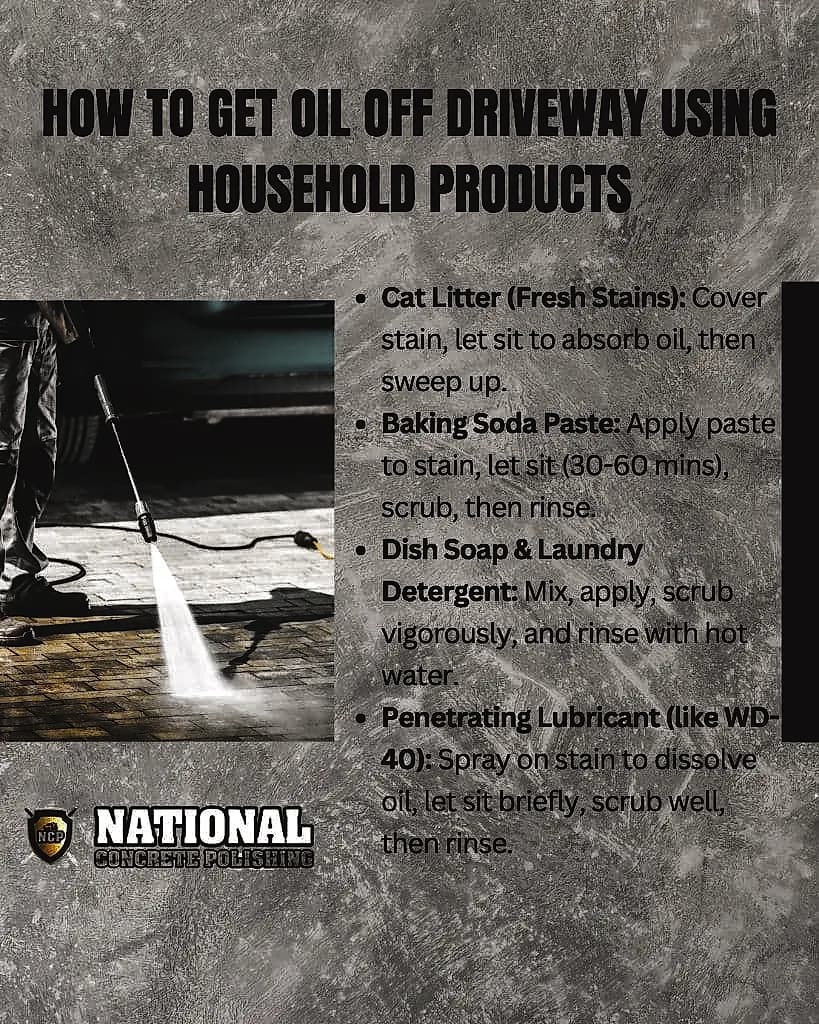
You don’t need to rush out to buy commercial cleaners to remove oil stains from your driveway; household products can do the trick. Various common household items can be used to effectively clean oil stains, making it a cost-efficient and environmentally friendly approach.
Using Cat Litter for Fresh Oil Stains
For fresh oil stains, cat litter can be a highly effective absorbent. It works by soaking up the oil, making it easier to remove.
Step-by-Step Application Process
First, cover the oil stain completely with cat litter. Let it sit for a few hours or overnight to allow it to absorb as much oil as possible. Then, sweep up the cat litter and dispose of it properly. If some stain remains, you may need to repeat the process.
Baking Soda Method
Baking soda is another versatile household product that can be used to remove oil stains. It works by creating a paste that can lift the stain from the driveway surface.
Creating and Applying a Baking Soda Paste
Mix baking soda with water to form a paste. Apply this paste to the oil stain and let it sit for about 30 minutes to an hour. Then, scrub the area with a brush and rinse with water. This method is particularly effective for smaller stains.
Dish Soap and Laundry Detergent Solutions
A mixture of dish soap and laundry detergent can also be effective in removing oil stains. This solution works by breaking down the oil, making it easier to scrub away.
Scrubbing Techniques for Best Results
Apply the soap and detergent mixture to the stain and scrub vigorously with a stiff-bristled brush. Make sure to cover the entire stained area. Rinse thoroughly with hot water to remove the soap and the oil residue.
WD-40 Technique
WD-40 is a blend of lubricants that can be used to clean oil from a concrete driveway. It works on the principle of “like dissolves like,” where the petroleum-based WD-40 helps to dissolve and lift oil stains.
Application and Clean-up Process
Spray WD-40 onto the oil stain, ensuring the entire area is covered. Let it sit for 5-10 minutes before scrubbing with a heavy-duty brush. Once the stain is lifted, rinse the area with water. If a faint stain remains, consider a follow-up treatment with cat litter or baking soda.
| Method | Materials Needed | Effectiveness |
|---|---|---|
| Cat Litter | Cat litter | Highly effective for fresh stains |
| Baking Soda Paste | Baking soda, water | Effective for smaller stains |
| Dish Soap & Laundry Detergent | Dish soap, laundry detergent | Effective for breaking down oil |
| WD-40 | WD-40 | Effective for dissolving oil stains |
Commercial Products for Stubborn Oil Stains
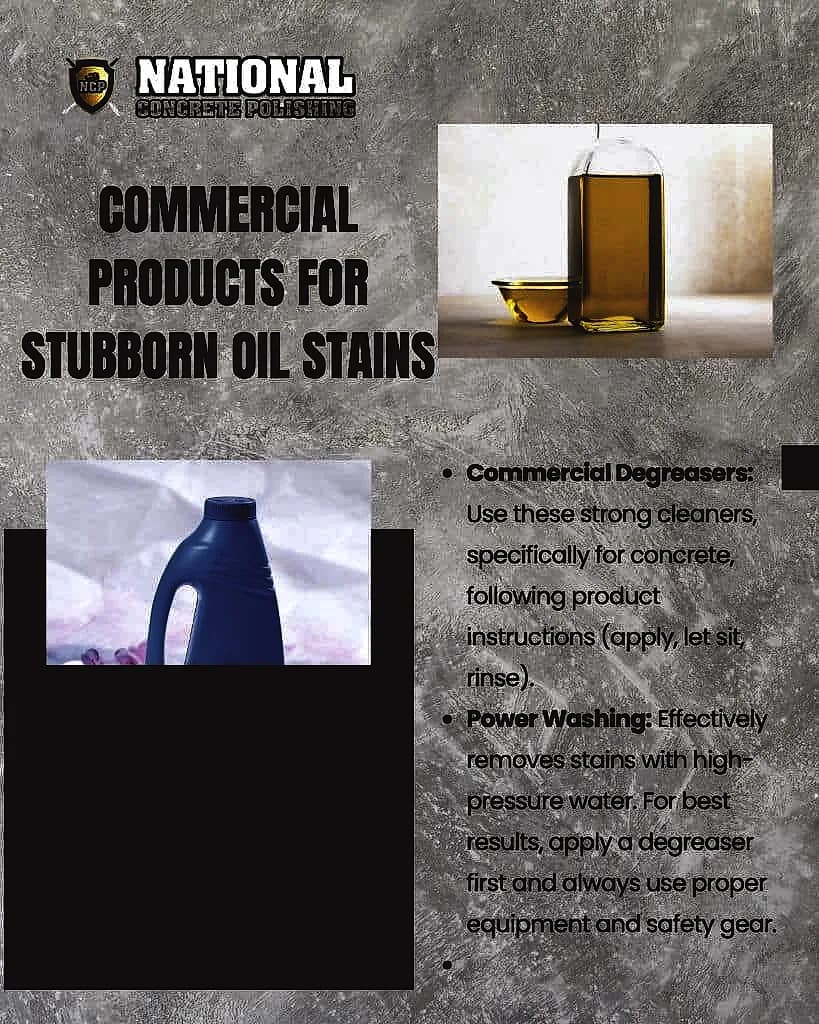
When household products fail to remove oil stains, it’s time to consider commercial cleaners and techniques. For particularly stubborn stains, specialized products can provide a more effective solution.
Driveway Cleaners and Degreasers
Driveway cleaners and degreasers are formulated to tackle tough oil stains on driveways. These products are designed to be used on concrete surfaces and can be highly effective when used correctly.
Application Methods
To get the best results, follow the manufacturer’s instructions for application. Typically, this involves applying the cleaner to the stained area, allowing it to dwell for a specified period, and then rinsing it off thoroughly.
Power Washing Techniques
Power washing is another effective method for removing oil stains from driveways. It involves using a high-pressure washer to force cleaning agents deep into the concrete.
Equipment and Safety Considerations
When using a power washer, it’s essential to select the right equipment and follow safety guidelines. This includes wearing protective gear such as gloves, eye protection, and closed-toe shoes. A 25-degree nozzle and a pressure setting of 3000-4000 PSI are typically recommended for concrete surfaces.
For optimal results, apply a concrete-safe degreaser before power washing. Allow the degreaser to dwell for 10-15 minutes before washing. This combination can effectively remove oil stains from driveways.
Removing Old and Set-In Oil Stains
Oil stains that have been left untreated for a long time can become particularly difficult to remove from concrete surfaces. These stubborn stains require a more intensive approach to eliminate them completely.
Multi-Step Approach for Tough Stains
For old and set-in oil stains, a single method may not be sufficient. A multi-step approach is often necessary to effectively remove these tough stains.
Combining Methods for Maximum Effectiveness
One effective method involves using a product like Oil & Grease Stain Remover. To use this product, follow these steps: pour it onto the stain, let it sit for 5-12 hours, remove the material, clean the residue, and repeat if necessary. Combining such products with other techniques, like scrubbing or using absorbent materials, can enhance the removal process.
When to Call Professional Help
There are instances where DIY methods are not enough to remove stubborn oil stains, especially when dealing with extensive contamination or valuable concrete surfaces. In such cases, seeking professional help is advisable.
Services Offered by National Concrete Polishing
National Concrete Polishing specializes in advanced stain removal techniques, including chemical treatments and mechanical grinding. Their professional-grade equipment can extract oil from deep within concrete pores. For homeowners dealing with persistent oil stains, contacting National Concrete Polishing can provide a viable solution. Some benefits of professional services include:
- Advanced techniques not available to typical homeowners
- Prevention of damage to valuable or decorative concrete surfaces
- Effective removal of deep-seated stains
Preventing Future Oil Stains on Your Driveway
To keep your driveway looking its best, it’s essential to take preventive measures against oil stains. One effective way to avoid automotive oil stains is by laying down cardboard under your vehicle when performing maintenance or when filling lawn equipment with fuel. Regular vehicle maintenance is also crucial, as a well-maintained car is less likely to leak oil onto your driveway.
Sealing your driveway is another preventive measure. For concrete driveways, sealing every 5 years is recommended, while asphalt driveways should be sealed every 2-3 years. This creates a protective barrier that prevents oil from penetrating the surface.
Additional strategies include using drip pans or cardboard sheets under vehicles with known leaks, employing specialized driveway mats to catch automotive fluids, and establishing a regular cleaning routine for your driveway. By taking these steps, you can significantly reduce the occurrence of oil stains and keep your driveway looking clean and well-maintained.
Frequently Asked Questions
What are the most common causes of oil stains on driveways?
Oil stains on driveways are often caused by leaks from vehicles, such as motor oil or transmission fluid, or from equipment and machinery.
Can I remove old oil stains from my driveway?
Yes, old oil stains can be removed using a multi-step approach, including applying a degreaser, scrubbing with a brush, and rinsing with water. For particularly tough stains, professional help may be necessary.
Is cat litter effective in cleaning fresh oil stains?
Yes, cat litter can be used to absorb fresh oil stains. Simply sprinkle the litter over the stain, let it sit for a while, and then sweep it up and dispose of it properly.
Can I use household cleaners to remove oil stains from my driveway?
Yes, household cleaners like dish soap, laundry detergent, and baking soda can be used to remove oil stains. However, for tougher stains, a commercial degreaser may be more effective.
How can I prevent future oil stains on my driveway?
To prevent future oil stains, regularly inspect your vehicle for leaks, use a drip pan under your vehicle when parked, and consider applying a concrete sealer to your driveway.
Are there any specific cleaning products designed for removing oil stains from concrete driveways?
Yes, there are various commercial products available, including driveway cleaners and degreasers, that are specifically designed to remove oil stains from concrete driveways.
Can power washing damage my driveway?
Power washing can potentially damage your driveway if not done correctly. Use a wide fan tip, keep the nozzle at least 12 inches away from the surface, and use a low to moderate pressure setting to avoid damaging the concrete.
Written by

Founder and CEO
Chris Lavin is an esteemed leader in concrete polishing and epoxy coatings with a distinguished 20-year career. As founder and CEO of National Concrete Polishing and owner of Xtreme Polishing Systems, he's renowned for polishing and epoxy coating more floors than anyone globally. Chris is recognized for his innovative approach and commitment to enhancing floor durability and aesthetics. His hands-on experience and technical proficiency make him a respected authority and a valuable resource in the field of floor polishing and coatings.
Same topic
Related articles
All stories
Residential8 min read
What Restaurants Need to Pass a Health Inspection Floor Check
It endures heavy foot traffic, dropped equipment, boiling water spills, and harsh degreasing chemicals daily.
Read it
Residential9 min read
How Restaurants Replace Their Floors Without Closing for Long
The average food service establishment loses approximately $3,500 in daily revenue during unexpected closures in 2026.
Read it
Residential8 min read
Where Polished Concrete Beats Epoxy in a Home (and Where It Doesn’t)
Before evaluating specific rooms, it is essential to understand how these two flooring systems function.
Read it
Tell us about the floor
Tell us the space and roughly how big it is.We come back with what it would cost and when we could start.
Prefer to talk? Call +1 844-876-5474
- Leads@
nationalconcretepolishing.net - 2200 NW 32nd St #600,
Pompano Beach, FL 33069 Mon to Fri, 9:00 to 5:30