
The NCP blog
Garage Floor Sealer vs Epoxy: Which Provides Better Protection?
ResidentialUpdated 6 min read
The main difference between garage floor sealer and epoxy flooring lies in durability and application.
A garage floor sealer is a protective coating designed to penetrate or cover concrete surfaces, enhancing their durability and resistance to moisture, stains, and minor abrasions.
Epoxy flooring is a high-performance coating made by combining resin and hardener to create a chemically bonded, durable surface. Applied as a thick layer over concrete, epoxy forms a glossy, seamless finish that resists impacts, chemical spills, and heavy traffic.
The main difference between garage floor sealer and epoxy flooring lies in durability and application. Sealers lightly coat the surface, offering basic protection against moisture and stains but limited resistance to abrasions. Epoxy, on the other hand, creates a thicker, more robust barrier, making it better suited for high-traffic areas or garages with heavy equipment.
Garage floor sealers are more affordable upfront, with prices ranging from $0.25 to $1 per square foot, depending on the type of sealer used. Epoxy flooring, while more expensive at $3 to $7 per square foot, offers greater durability and typically needs fewer touch-ups over time.
The best option depends on your garage’s needs and budget. For light-duty garages, a sealer is a cost-effective solution. However, if durability is a priority, epoxy flooring is the more durable choice.
What Is a Garage Floor Sealer?
A garage floor sealer is a coating applied to concrete surfaces to protect them from moisture, stains, and wear. It enhances the durability of the floor by preventing water seepage and resisting damage from oil, grease, and chemicals. Sealers also help preserve the natural appearance of concrete floors.
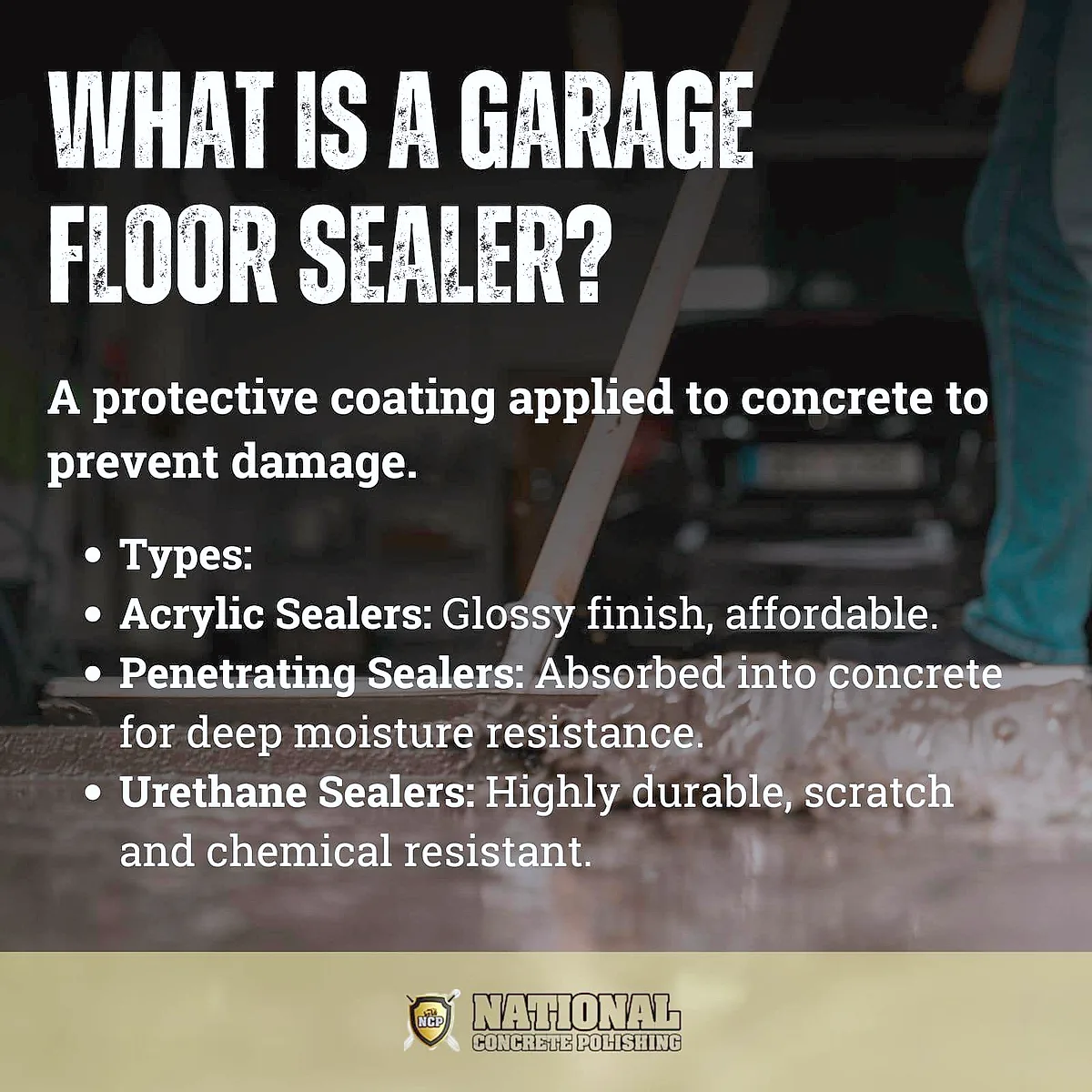
There are several types of garage floor sealers, each with unique properties. Acrylic sealers are affordable and provide a glossy finish, while penetrating sealers soak into the concrete to offer deep moisture resistance. Urethane sealers are more durable, offering higher resistance to scratches, chemicals, and heavy traffic.
Garage floor sealers are popular for their ease of application and versatility. They are ideal for light-duty garages or spaces requiring basic protection. While they do not provide the thick, durable layer of epoxy coatings, sealers are a cost-effective solution for maintaining the integrity of concrete floors.
What Is Epoxy for Garage Floors?
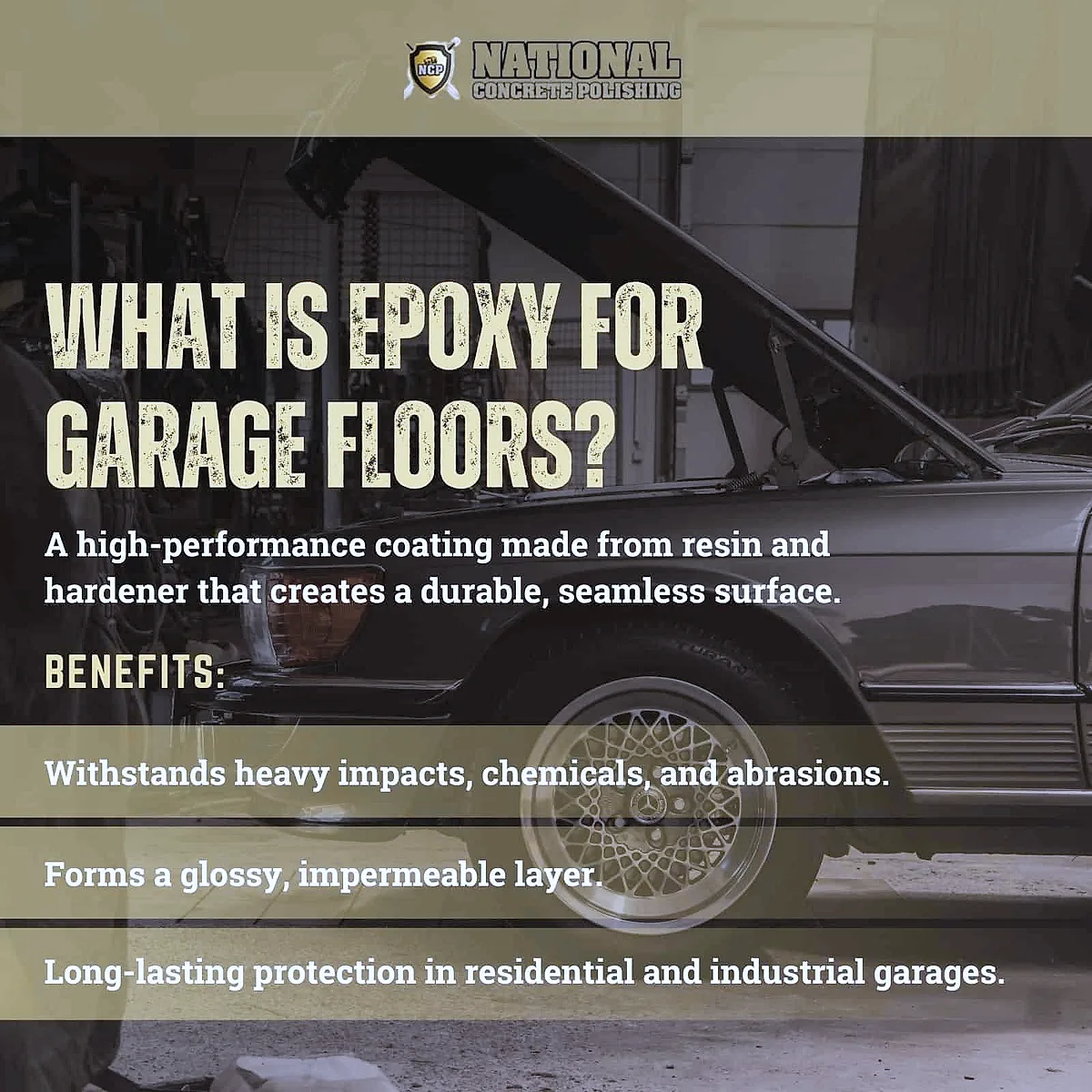
Epoxy for garage floors is a high-performance coating made from a combination of resin and hardener that chemically bonds to create a thick, durable surface. When applied to concrete, it forms a strong, seamless layer that resists heavy impacts, abrasions, and chemicals, making it ideal for garages.
The application process involves preparing the concrete surface, mixing the resin and hardener, and spreading the liquid epoxy evenly. During the curing process, the epoxy hardens into a tough, protective coating that adheres firmly to the concrete, ensuring superior bond strength and long-lasting performance.
Epoxy coatings enhance garage floors with their durability and polished aesthetic. They are known for their ability to withstand heavy traffic, protect against moisture and stains, and provide a glossy or textured finish, making them a popular choice for residential and industrial garages alike.
How Does a Floor Sealer Protect Your Garage?
A floor sealer protects your garage by offering moisture protection, resistance to chemicals, and abrasion resistance. Sealers enhance the durability and longevity of concrete while preserving its visual appeal. Sealers shield the concrete from damage, maintaining its strength and appearance over time.
The ways by which a floor sealer protects your garage are:
- Moisture Protection: This refers to the barrier sealers form to prevent water from penetrating the concrete. Penetrating sealers soak into the surface to block internal moisture, while acrylic sealers create a protective top layer, reducing water damage.
- Chemical Resistance: This describes the sealer’s ability to protect against exposure to oils, grease, and other substances. Urethane sealers excel at guarding against chemical damage, making them ideal for garages frequently exposed to automotive fluids.
- Abrasion Resistance: This is the ability of a sealer to reduce wear and tear from foot traffic and vehicles. Epoxy-based sealers provide strong abrasion resistance for high-traffic areas, while acrylic sealers offer moderate protection for low-traffic garages. Regular resealing improves performance over time.
How Does Epoxy Protect a Garage Floor?
Epoxy protects a garage floor by forming an impermeable layer, resisting chemical exposure, and withstanding heavy impacts. Its durable properties ensure long-lasting protection for concrete surfaces in demanding conditions. This protection extends to safeguarding the underlying concrete from cracks, stains, and wear, even in high-traffic or industrial settings.
The ways by which epoxy protects a garage floor are:
- Impermeable Layer: This refers to the seamless, non-porous coating epoxy creates over concrete. It prevents water, oil, and other liquids from penetrating the surface. This reduces moisture-related damage on the surface, although moisture rising through the slab can still push a coating off if the slab is not tested and prepared first.
- Chemical Resistance: This describes epoxy’s ability to withstand many common garage substances, such as automotive fluids. Resistance varies by product and by chemical, so a spill of a strong acid or solvent should still be cleaned up quickly.
- Impact and Abrasion Resistance: This is the ability of epoxy to endure heavy traffic, impacts, and abrasions without damage. Epoxy’s tough finish resists chipping and scratching, ensuring the garage floor remains intact in high-traffic or heavy-load environments.
Which Is Easier to Apply: Sealer or Epoxy?
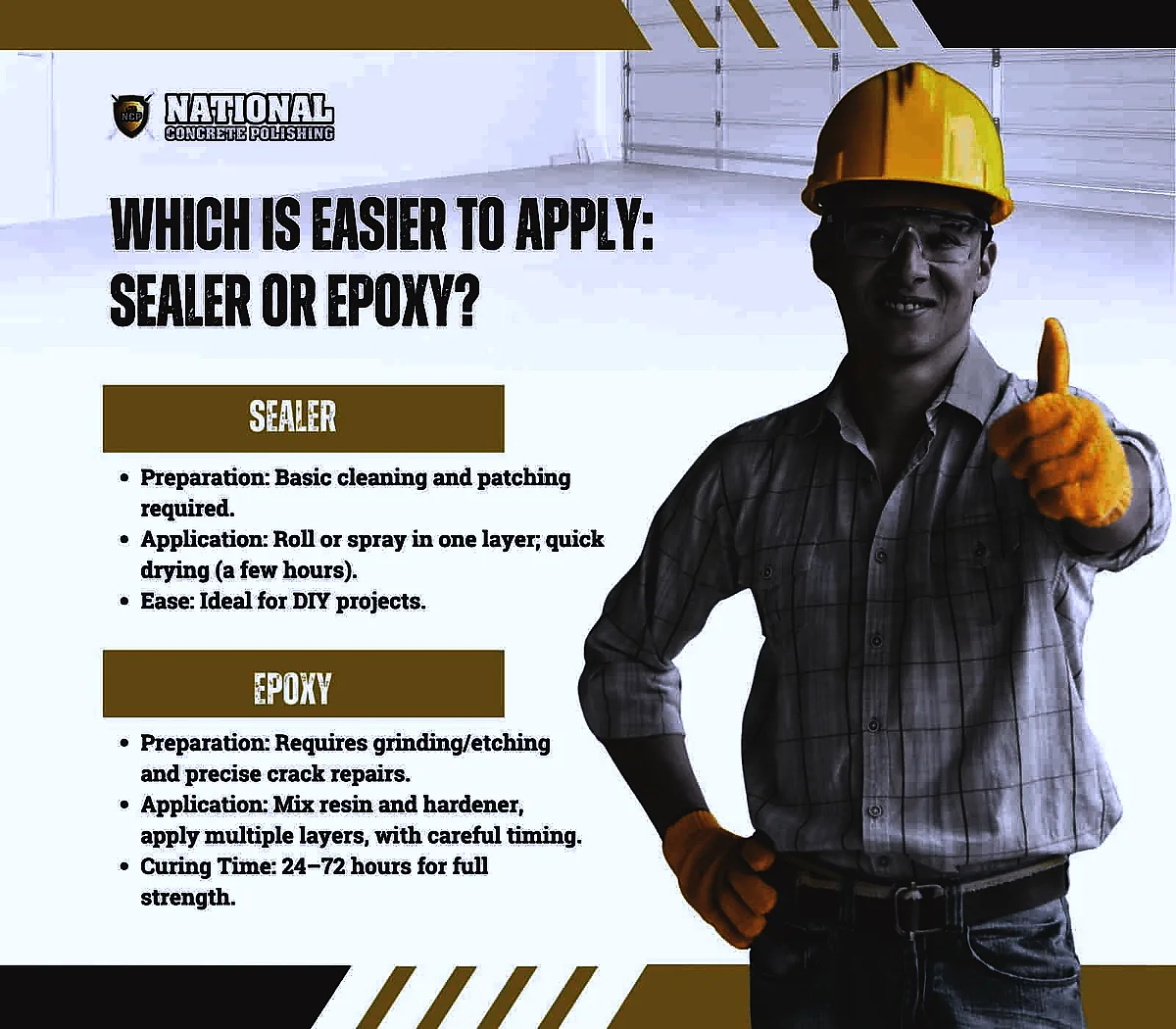
The flooring option that is easier to apply is a sealer. Its straightforward application process requires minimal tools and preparation compared to epoxy, making it a preferred choice for DIY projects. By forming a protective barrier, sealers prevent surface damage and deterioration caused by environmental factors, ensuring the concrete remains intact and functional over time.
The reasons why sealer is easier to apply are:
- Surface Preparation: This involves cleaning and prepping the floor for coating. Sealers typically need basic cleaning and minor patching to ensure a smooth application. In contrast, epoxy requires more intensive preparation, such as grinding or etching the surface and repairing cracks, to create a textured base for strong adhesion.
- Application Process: This describes the steps involved in applying the coating. Sealers are applied using a roller or sprayer in a single layer, followed by simple drying. Epoxy demands mixing resin and hardener, applying multiple layers (including a primer), and using precise timing to ensure a uniform finish.
- Curing/Drying Times: This refers to the time it takes for the coating to set. Sealers generally dry faster than epoxy, allowing for faster usability. With the epoxy systems we install, foot traffic is back in 10 to 24 hours and wheels in 24 to 72, with full cure in about 7 days, so the installation takes longer but delivers a more durable finish.
What Are the Maintenance Requirements for Sealers vs. Epoxy?
Sealers require more frequent maintenance compared to epoxy. A sealer is a sacrificial coat, so it needs reapplication as it wears. The ASCC Decorative Concrete Council says the timing varies tremendously with conditions, and its rule of thumb for decorative concrete sealers is every two to three years in high-traffic or UV-exposed areas and four to five years in lighter-traffic interior areas. This upkeep adds to long-term maintenance costs.
Regular cleaning with mild soap and water is essential, although their porous nature makes them more prone to staining and dirt buildup.
Epoxy floors, in contrast, demand less maintenance. Their non-porous, chemically bonded surface resists stains, dirt, and moisture, making cleaning straightforward with occasional sweeping and mopping. Epoxy is typically resurfaced rather than replaced. The industry's reporting rules for resinous floor coatings, initiated by the American Coatings Association, assume a refurbishment about every 6 years for thin-mil coatings and every 7 for self-leveling ones, and they note that actual service life varies considerably with use and conditions, so traffic levels matter.
For spaces requiring durable, low-maintenance flooring, epoxy is the better option, while sealers are suited for short-term, cost-effective protection.
How Do Sealers and Epoxy Compare in Terms of Cost?
Sealers are more affordable upfront compared to epoxy, with material costs ranging from $0.15 to $0.25 per square foot. DIY applications minimize labor expenses, but professional sealing adds to the total cost.
Sealers need reapplication about every two to three years in high-traffic or UV-exposed areas, by the ASCC rule of thumb quoted above. Over time, these recurring maintenance expenses increase overall costs. Sealers are best suited for low-traffic surfaces or short-term protective needs.
Epoxy flooring has an initial cost of $3 to $7 per square foot, including professional installation. While its upfront expense is higher, epoxy’s durability can reduce maintenance costs over time. How long it lasts depends on the system, the prep and how the floor is used, not one fixed number, and it resists impacts and chemical spills better than a sealer does. In heavy-use spaces, that durability can make epoxy the more cost-effective choice. Epoxy suits high-traffic environments where lower upkeep matters.
Which Option Offers Better Protection: Sealer or Epoxy?
Epoxy provides better protection due to its durable, thick coating that resists heavy impacts, chemical spills, and moisture penetration. Its chemically bonded surface creates a hard, impermeable layer ideal for high-traffic areas, garages, and spaces exposed to harsh environmental conditions.
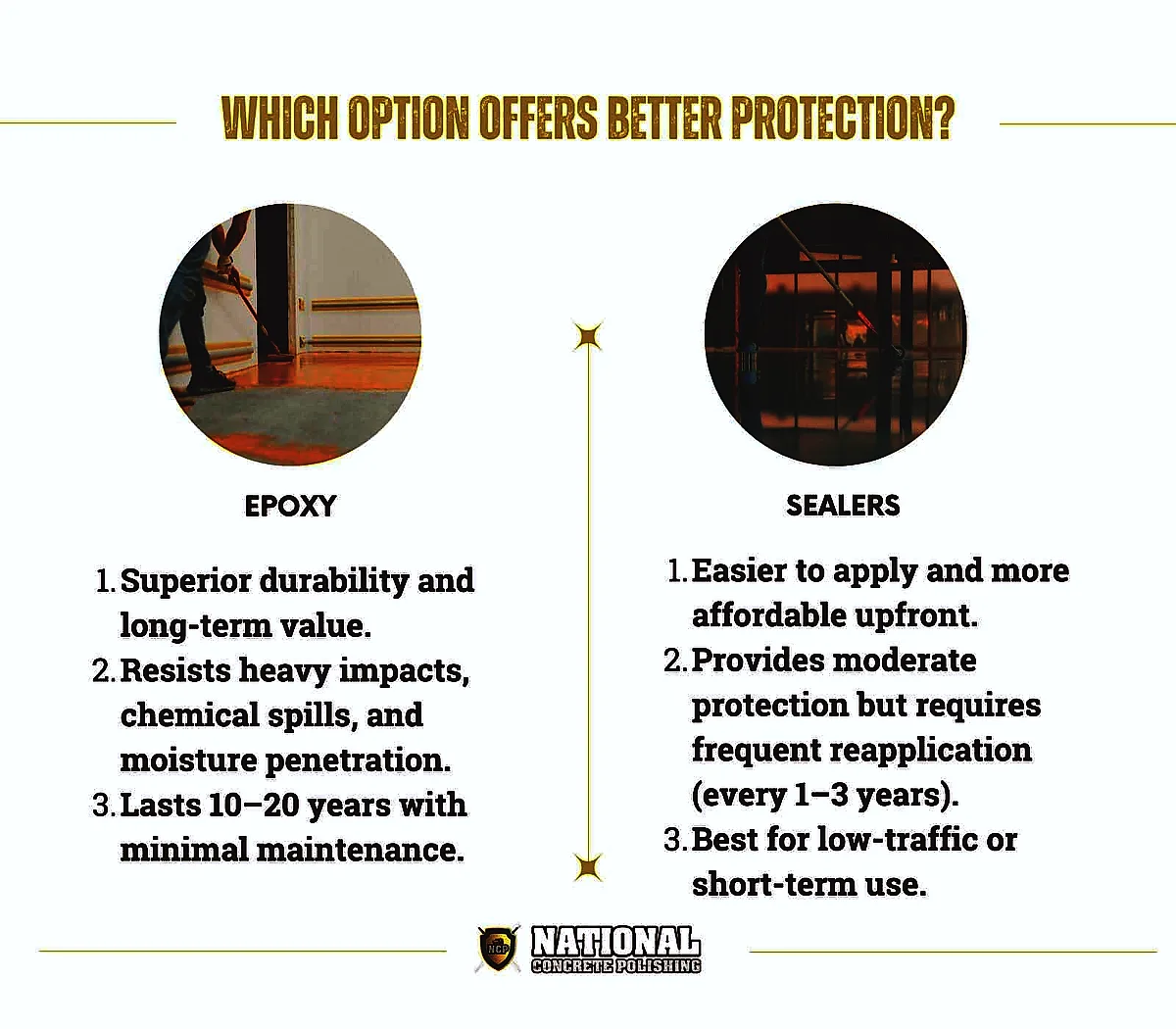
Epoxy is the better choice for long-term durability and heavy-duty protection in demanding environments, with its ability to withstand abrasions and heavy loads.
Sealers, while easier to apply, offer moderate protection by forming a barrier against moisture, mild stains, and surface wear. However, they are less resistant to physical damage and chemical exposure compared to epoxy.
Sealers are better suited for low-traffic areas or surfaces requiring periodic upkeep, providing a cost-effective and accessible option for basic surface protection in residential or less demanding spaces.
Written by

Founder and CEO
Chris Lavin is an esteemed leader in concrete polishing and epoxy coatings with a distinguished 20-year career. As founder and CEO of National Concrete Polishing and owner of Xtreme Polishing Systems, he's renowned for polishing and epoxy coating more floors than anyone globally. Chris is recognized for his innovative approach and commitment to enhancing floor durability and aesthetics. His hands-on experience and technical proficiency make him a respected authority and a valuable resource in the field of floor polishing and coatings.
Same topic
Related articles
All stories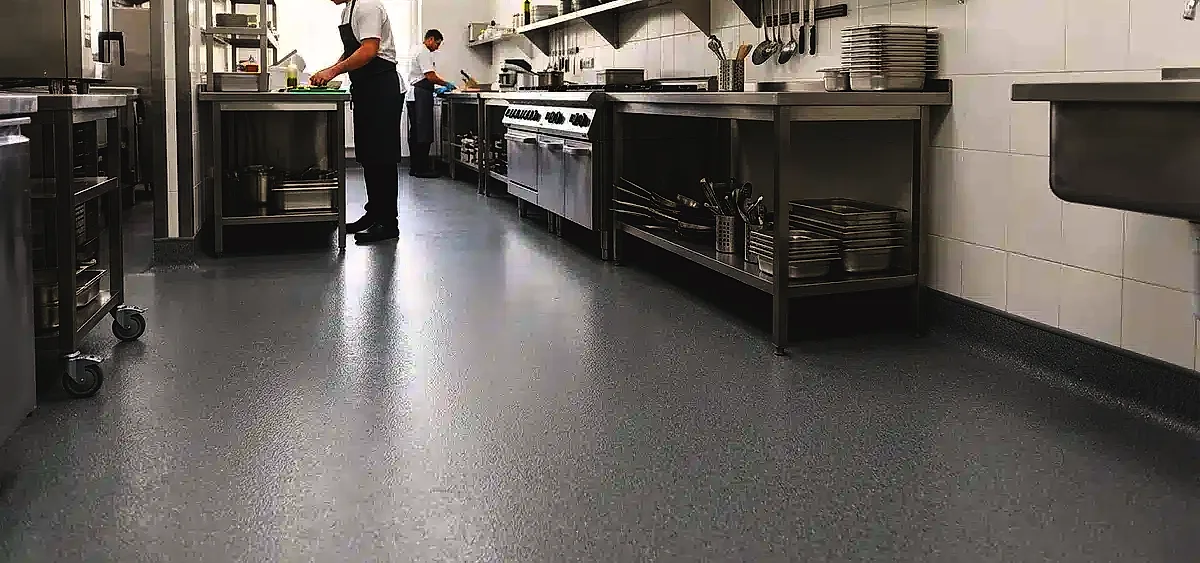
Commercial10 min read
Commercial Kitchen Floor Requirements in Florida
What Florida food code rules (Chapter 61C-4) ask of commercial kitchen floors: smooth, non-absorbent surfaces and coving at the walls.
Read it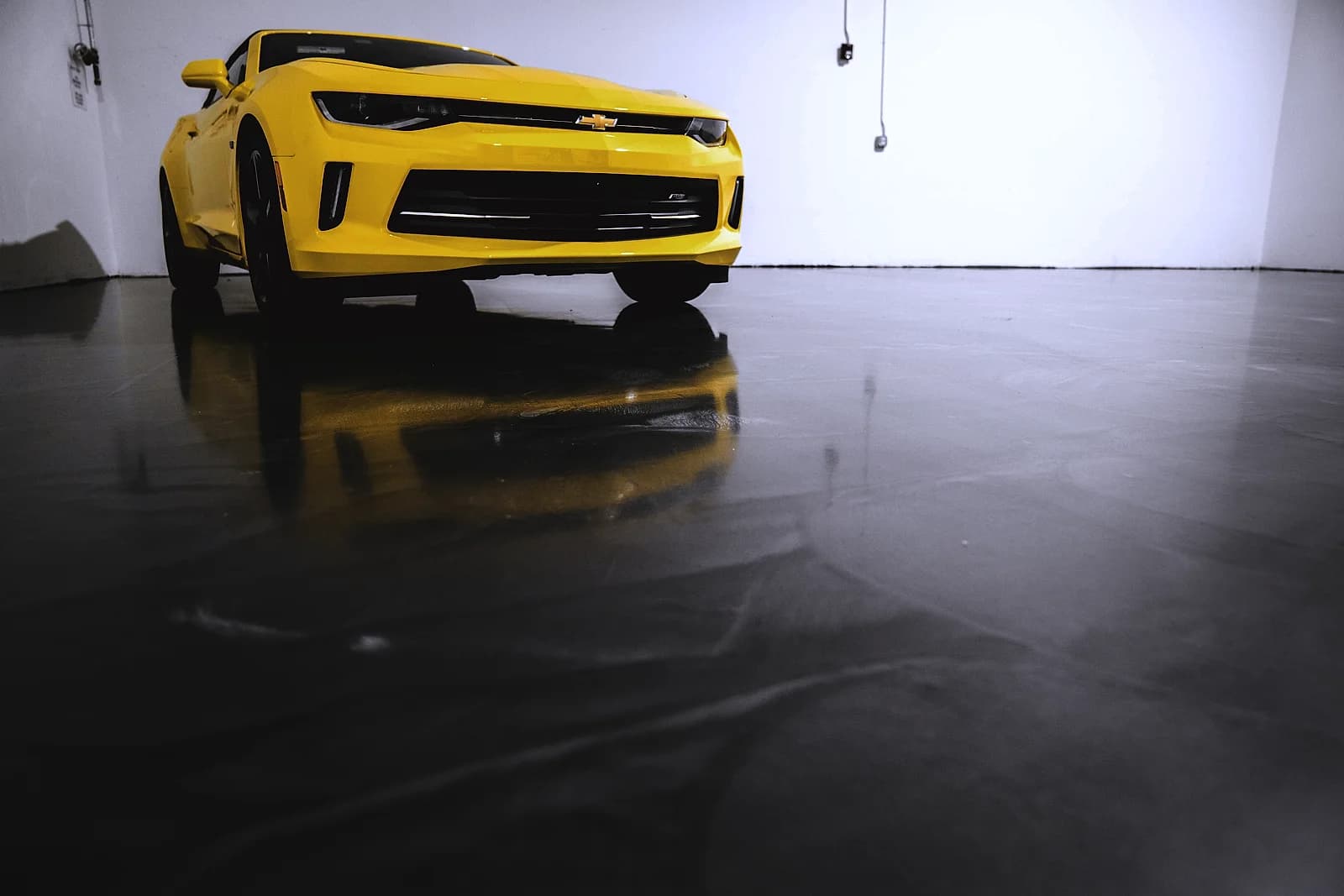
Residential7 min read
Polished Concrete Garage Floor vs Epoxy: Pros and Cons
This process smooths the surface, and a densifier hardens it, so polished concrete is used in high-traffic areas.
Read it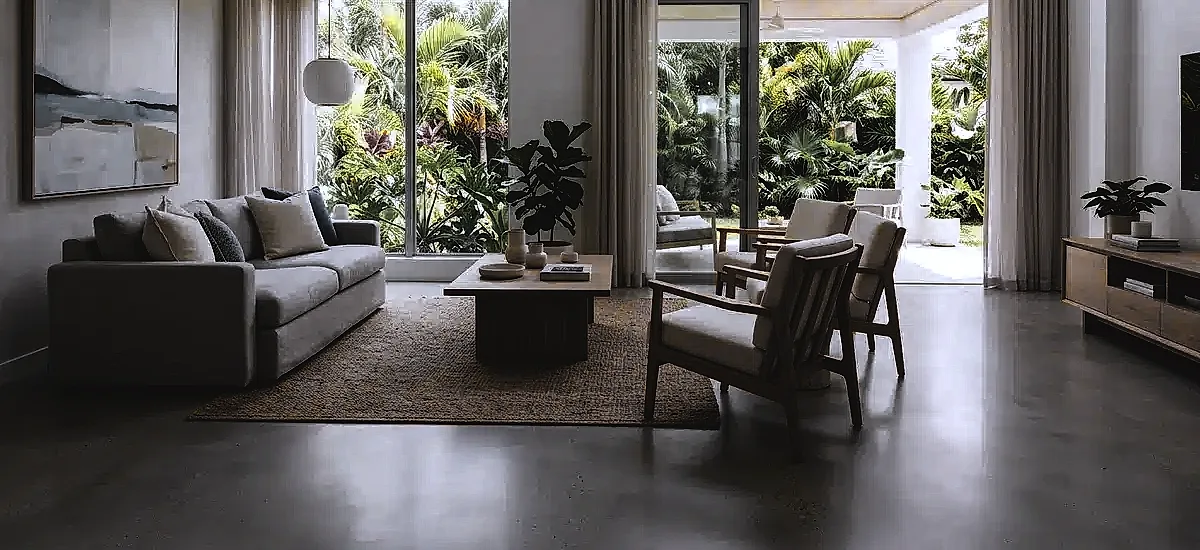
Residential7 min read
Matte Polished Concrete Floors: The Complete Guide for South Florida Homes
A complete guide to matte polished concrete floors for South Florida homes, covering how they look, wear and hide everyday marks.
Read it
Tell us about the floor
Tell us the space and roughly how big it is.We come back with what it would cost and when we could start.
Prefer to talk? Call +1 844-876-5474
- Leads@
nationalconcretepolishing.net - 2200 NW 32nd St #600,
Pompano Beach, FL 33069 Mon to Fri, 9:00 to 5:30