The NCP blog
Can industrial epoxy floors withstand heavy machinery
CommercialUpdated 8 min read
Did you know some high-performance surfaces endure over 30 years of daily abuse from multi-ton equipment?
Industrial floors take daily abuse from multi-ton equipment, and an epoxy system can be built for that when the system, the preparation and the loads are matched.
Epoxy is a layered protective system that bonds to the concrete. Built for the load, it can resist wear and stains as well as many chemicals. Thermal movement and impact are known stresses for any coating, so the system has to be chosen for the temperatures and loads it will see.
National Concrete Polishing has worked in South Florida since 2013. Our team starts with surface preparation methods, because the coating bonds to the prepared concrete. A Minnesota Concrete Council surface-preparation presentation puts it plainly: in coating applications, surface prep is intended to maximize adhesion.
Understanding Industrial Epoxy Floors
Modern facilities demand surfaces that handle both relentless activity and harsh conditions without faltering. Specialized floor systems achieve this through layered protection and chemistry chosen for the job. They suit spaces where safety and efficiency collide daily.
What Makes This Flooring Unique?
Epoxy is a two-part system of resin and hardener, often with additives. The two react during curing to form a rigid, hard plastic that bonds to the concrete. A poured system has no seams for contaminants to exploit.
Proper concrete preparation is what holds the coating on. On the epoxy jobs NCP has documented, such as an aircraft hangar of about 6,500 square feet in Naples, Florida, the work starts with a diamond grind.
Advantages for Demanding Environments
Jointless installations simplify cleaning, and a non-porous finish keeps most liquids on the surface until they are wiped up. Resistance to oils and acids varies by system and by chemical, so check the manufacturer’s resistance chart against what your facility uses.
- Customizable thickness for specific load requirements
- UV-stable topcoat options for sunlit areas
- Fast-cure options can shorten return to service
NCP’s documented projects include the automotive bays of a technical school in Miami, about 20,000 square feet of quartz traffic-coat system with a high-traffic urethane top coat, across four buildings. For tailored solutions, contact us here.
Can industrial epoxy floors withstand heavy machinery
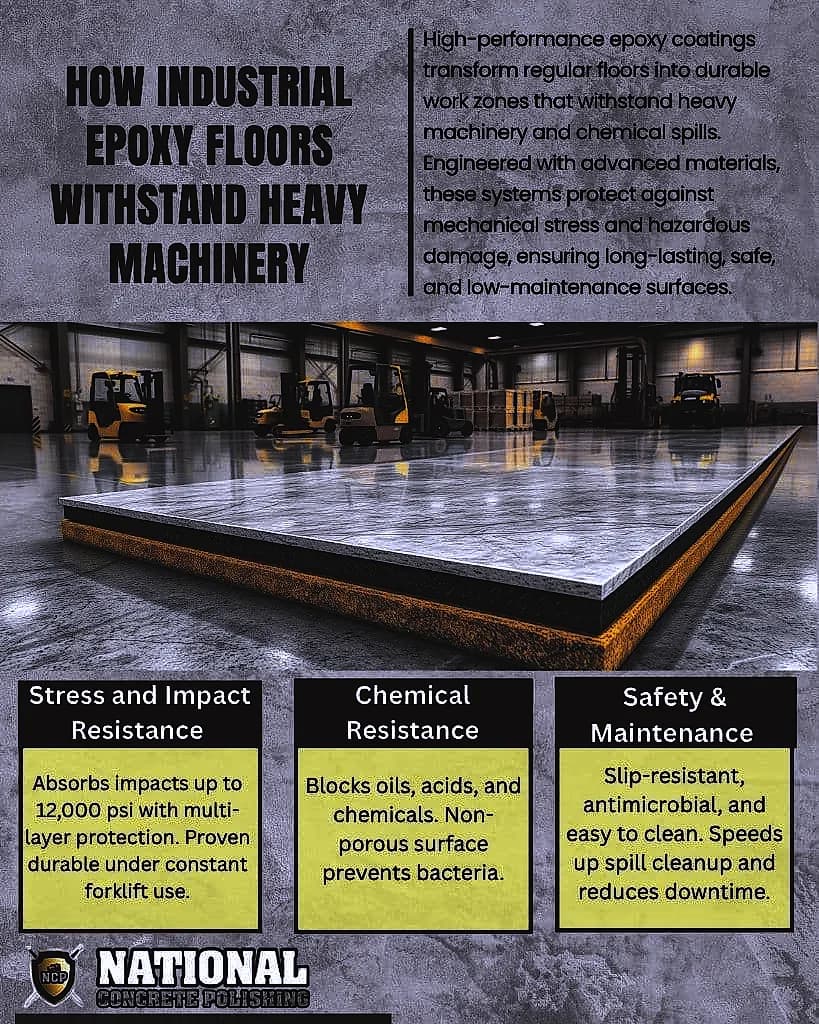
High-performance coatings transform ordinary spaces into resilient work zones capable of handling intense daily operations. These systems combine science and engineering to address two critical challenges: mechanical stress and hazardous spills.
Stress and Impact Resistance
Specialized formulations absorb kinetic energy from dropped tools or moving equipment. Impact resistance is measured as energy (ASTM D2794), not as pressure in psi. One manufacturer’s data sheet, for Sikafloor-264, lists an impact strength of 26 ft-lbs and a compressive strength of 7,426 psi (ASTM C579), and ASTM D2794 warns that its numerical values should be used within one laboratory because of the method’s poor reproducibility.
Heavy-duty epoxy systems are built in layers, usually a primer, body coats and a topcoat, and a thicker build adds protection against impact.
Chemical Resistance and Safety Features
A sealed, non-porous surface keeps liquids from soaking into the concrete. How well it resists a given oil, solvent or acid depends on the system and the chemical, so check the manufacturer’s resistance chart. A non-porous surface also gives bacteria less to hold on to.
A non-absorbent surface makes spills easier to clean up. Slip resistance has to be specified for the floor: OSHA sets no slip-resistance value, but its rule for walking-working surfaces requires workroom floors to be kept clean and, to the extent feasible, dry, and free of hazards such as spills.
Maintenance is straightforward: regular sweeping and mopping keep the surface in good condition.
Surface Preparation and Installation Process
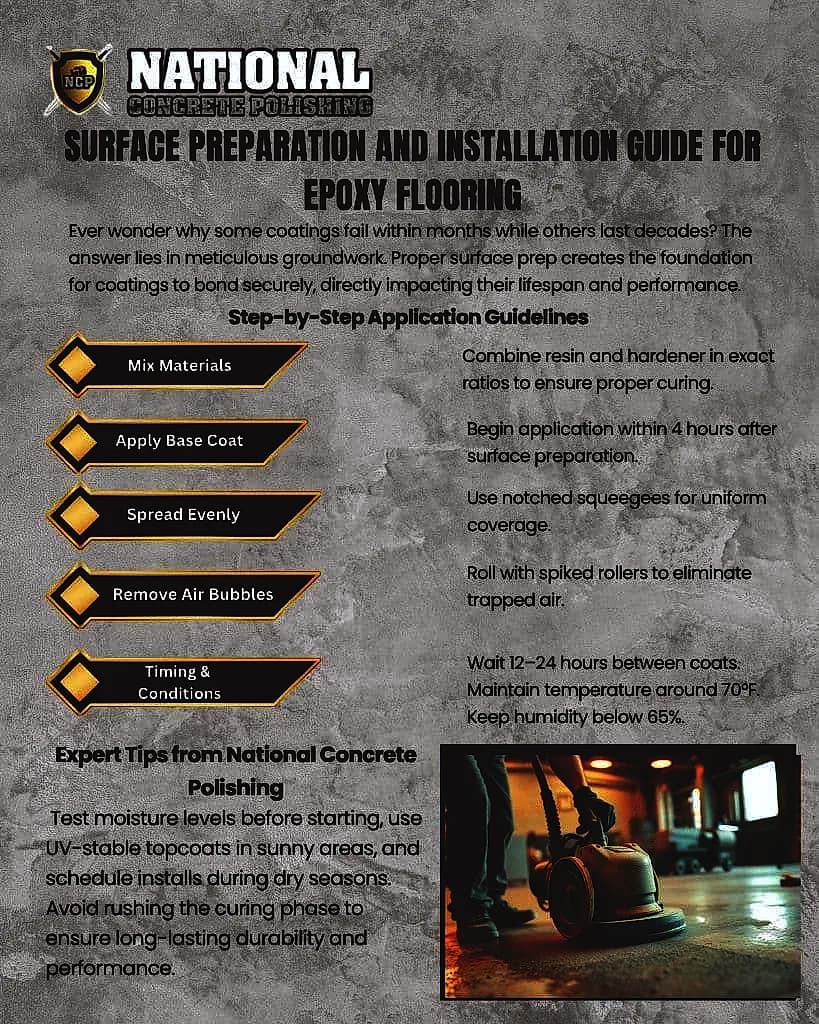
Ever wonder why some coatings fail early while others serve for years? The answer lies in careful groundwork. Proper surface prep creates the foundation for coatings to bond securely, directly affecting their lifespan and performance.
Importance of Proper Surface Preparation
Concrete must be free of contaminants and imperfections before application. Dust and oil residues compromise adhesion, and cracks need repair before coating. National Concrete Polishing uses diamond grinders to prepare the surface so the coating can bond to it.
On a dealership service corridor of about 7,000 square feet in West Palm Beach, preparation meant tile demolition and diamond grinding before the flake system went down.
Step-by-Step Application Guidelines
Mix resin and hardener in the ratio on the data sheet: errors here cause curing issues. Apply the base coat promptly after preparation so the prepared surface stays clean. Use notched squeegees for even distribution, followed by spiked rollers to eliminate air bubbles.
Timing matters:
- Follow the recoat window on the data sheet: for one epoxy, 8 to 24 hours at 68°F
- Keep ambient and slab temperature within the data sheet’s range, which is 50 to 85°F for that same epoxy
- Keep humidity within the data sheet’s limit, which is 85% at most for that epoxy, and keep the slab at least 5°F above the dew point
Practical Tips
Worth doing on any industrial floor:
- Testing concrete moisture levels before starting
- Using UV-stable topcoats in sunlit areas
- Keeping temperature and humidity within the data sheet’s limits during application and cure
For advice on your facility, call us for more detailed advice. Proper execution at every stage helps your surface reach its full resistance and durability.
Maintenance and Longevity of Epoxy Flooring
What separates a floor that lasts from one that needs early replacement? Consistent care and smart repair strategies make all the difference. Proper upkeep preserves both appearance and structural performance in high-traffic spaces.
Routine Cleaning and Care
Daily maintenance takes minutes but helps extend your surface’s lifespan. Use pH-neutral cleaners with soft-bristle brooms to avoid scratching the resin layer. For stubborn stains, warm water and mild detergent work better than harsh chemicals.
Key practices include:
- Immediate spill cleanup to prevent staining
- Non-abrasive pads for scrubbing
- Thorough rinsing after chemical exposure
Repair Techniques and Longevity Factors
Address minor chips quickly using epoxy repair kits. Clean damaged areas thoroughly before applying fresh resin. For cracks, consult professionals like National Concrete Polishing to prevent subsurface issues.
| Maintenance Task | Frequency | Tools Needed |
|---|---|---|
| Surface Sweeping | Daily | Soft broom |
| Deep Cleaning | Weekly | Auto-scrubber |
| Wear and damage check | Regularly, more often in high-traffic areas | Visual inspection |
Quality installation reduces future repairs, and a coating bonds best to a properly prepared surface.
Debunking Common Epoxy Floor Misconceptions
Many believe epoxy surfaces can’t handle daily wear. Let’s separate fact from fiction.
Myths about Durability and Foot Traffic
Two worries come up most: chipping under pallet jacks and fading. Both depend on the system. A build matched to the load is made for pallet jacks and forklifts, and epoxy itself can yellow under UV light, which is why sunlit areas get a UV-stable topcoat.
Clarifying Installation and Maintenance Misbeliefs
DIY videos suggest epoxy application is a weekend project. Professionals know better. Proper installation is a sequence that runs from moisture testing to cure, and each step affects how long the floor lasts. Skipping a step can cut the floor’s life short.
Maintenance myths cause problems. Unlike outdated beliefs:
- Routine cleaning is quick with an auto-scrubber, and the time depends on the size of the floor
- pH-neutral cleaners preserve the surface better than harsh chemicals
- Professional repairs can restore much of the original look
We tailor the system to how the floor will be used.
Cost Considerations and Industrial Benefits
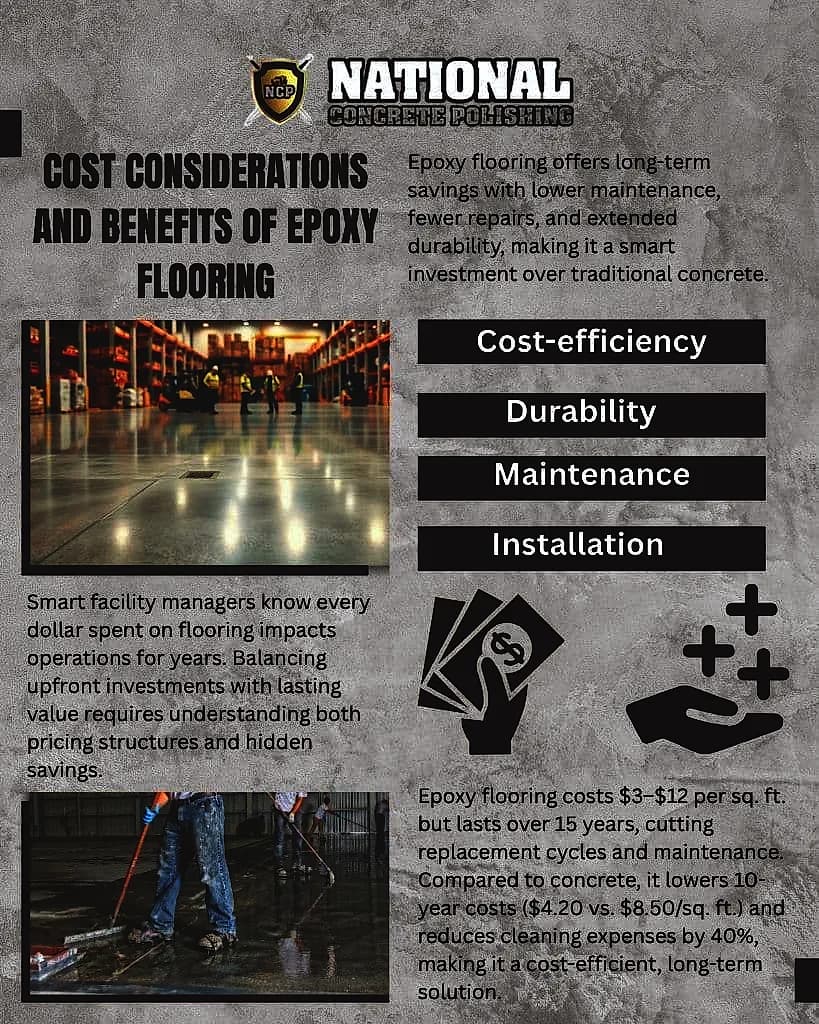
Smart facility managers know every dollar spent on flooring impacts operations for years. Balancing upfront investments with lasting value requires understanding both pricing structures and hidden savings.
Budgeting for Installation and Repairs
Initial costs range from $3-$12 per square foot depending on surface conditions and design complexity. See how much it costs to epoxy a floor for more on pricing. Three key factors influence your quote:
- Concrete preparation requirements
- Coating thickness and specialty additives
- Project timeline constraints
Long-Term Cost Efficiency and Value
Long-term cost is best judged over the life of the floor. ASTM E917 describes life-cycle costing as a way to judge whether a higher initial cost is justified by lower future operating, maintenance, repair, or replacement costs. Compare typical expenses:
| Floor Type | 10-Year Cost | Stain Resistance |
|---|---|---|
| Traditional Concrete | $8.50/sq ft | Poor |
| Epoxy Systems | $4.20/sq ft | Excellent |
The right finish reduces the need for frequent recoating while maintaining slip resistance.
Contact us and we can discuss custom options matching your performance requirements and budget.
Conclusion
In demanding work environments, your floor’s performance directly impacts operational success. High-quality protective surfaces can hold up where others fail, but only when the system is matched to the chemicals, equipment loads, and temperatures it will see. A well-matched system keeps its integrity longer, which reduces replacement costs and downtime.
Safety features shine in these installations. Non-slip textures and jointless designs help reduce accidents and resist dirt accumulation. Proper maintenance keeps the surface clean and its traction intact under constant use. Chemical resistance protects against spills within the limits of the system, and the temperature limits on the manufacturer’s data sheet should be checked against the conditions on your floor.
National Concrete Polishing installs epoxy flooring in South Florida, where our in-house crews prepare the surface so the coating can bond. Regular care preserves appearance and structural performance, keeping your environment safe and productive.
Facing grime, heavy loads, or chemical exposure? Trust professionals who prioritize safety protocols and quality. Call +18448765474 today to discuss solutions tailored to your facility’s needs. A floor matched to your facility’s loads and chemicals protects both your workspace and your bottom line.
Frequently Asked Questions
What makes epoxy coatings ideal for high-traffic areas?
These systems combine resin and hardeners to create a seamless, non-porous surface. A strong bond to the prepared concrete helps resist cracking, while chemical resistance protects against spills. This makes them well suited to warehouses, factories, and garages with constant foot or vehicle movement.
Can these surfaces handle extreme temperatures or harsh chemicals?
Yes, within limits. Chemical resistance depends on the product and the chemical, so check the manufacturer’s resistance chart for what your facility uses. Temperature limits matter too, particularly for steam or hot-water washdowns.
How long does installation take in large commercial spaces?
Installation time depends on square footage and preparation as well as curing time; for example, an aircraft hangar of about 6,500 square feet in Naples took five days. Proper surface preparation by a professional crew such as National Concrete Polishing helps avoid rework. For epoxy, NCP plans on 10 to 24 hours before foot traffic and 24 to 72 hours before wheeled traffic, with full cure in about 7 days; the product’s data sheet sets the final release.
Are there slip-resistant finishes for safety in wet conditions?
Absolutely. Additives like quartz sand or aluminum oxide create textured surfaces that improve traction. Specialized finishes are available for areas prone to moisture, reducing accident risks without compromising aesthetics.
What maintenance routines extend the lifespan of these floors?
Sweep daily and mop weekly with pH-neutral cleaners. Avoid abrasive tools. For stubborn stains, use approved degreasers. Annual inspections and minor repairs by professionals prevent small issues from escalating, preserving durability.
Do they require frequent recoating in manufacturing facilities?
Not necessarily. Industrial settings use thicker builds matched to the loads, which handle forklifts and heavy equipment better than thin coatings. How often a floor needs refurbishing depends on the system, traffic and wear. As a yardstick, the industry’s reporting rules for resinous floor coatings assume a refurbishment about every 6 years for thin-mil coatings (15 to 20 mils dry), every 7 years for self-leveling and slurry systems (60 to 100 mils) and every 9 years for mortar systems (1/4 to 3/8 inch), and state that actual service life varies considerably with use and conditions. Regular cleaning minimizes premature aging.
Are there eco-friendly options compliant with industry standards?
Yes. Low-VOC epoxy formulas are available, and the product’s data sheet or safety data sheet states its VOC content. Low-VOC formulas can reduce odor during curing, which suits facilities prioritizing sustainability.
How do costs compare to polished concrete or tile solutions?
Initial expenses are higher, but over the life of the floor, maintenance, repair and replacement matter as much as the initial cost. Unlike tile, there is no grout to clean.
Written by

Founder and CEO
Chris Lavin is an esteemed leader in concrete polishing and epoxy coatings with a distinguished 20-year career. As founder and CEO of National Concrete Polishing and owner of Xtreme Polishing Systems, he's renowned for polishing and epoxy coating more floors than anyone globally. Chris is recognized for his innovative approach and commitment to enhancing floor durability and aesthetics. His hands-on experience and technical proficiency make him a respected authority and a valuable resource in the field of floor polishing and coatings.
Same topic
Related articles
All stories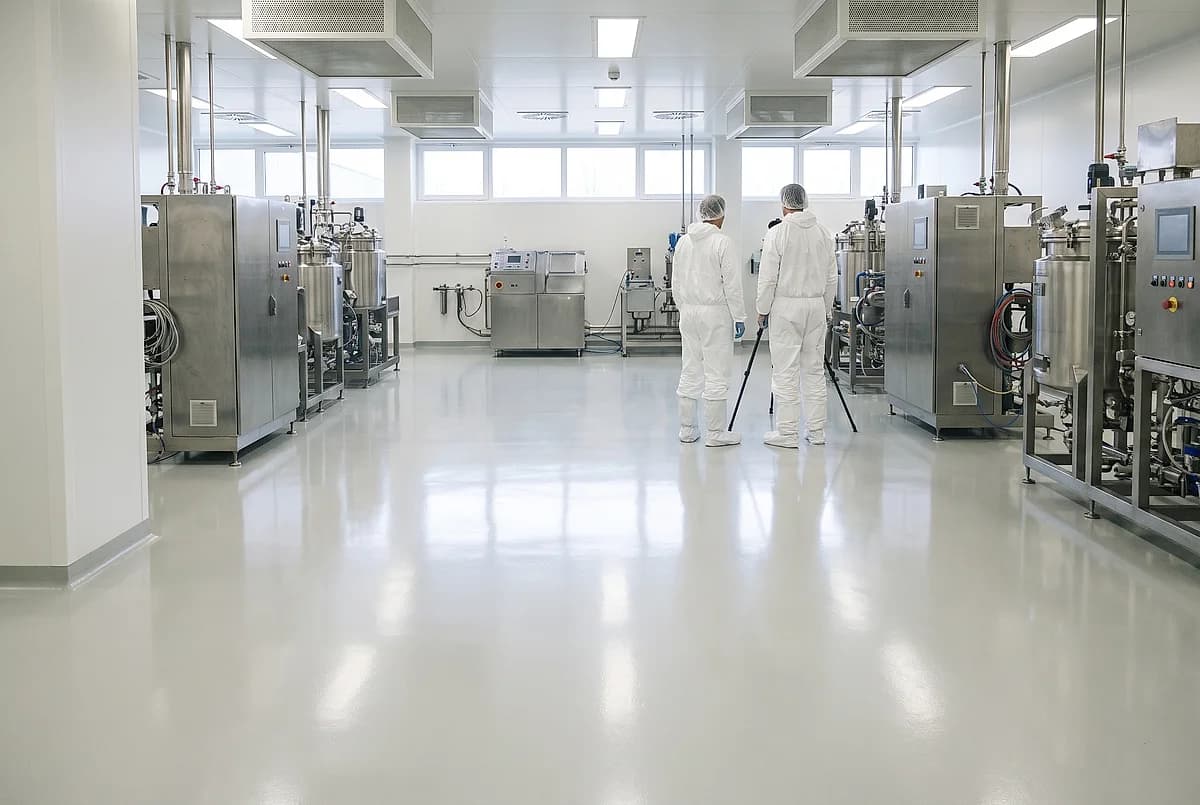
Commercial12 min read
Cleanroom Floor Standards for Semiconductor, Biotech, and GMP Facilities
Semiconductor, biotech and GMP floors have written standards. What those standards require, and which concrete systems meet them.
Read it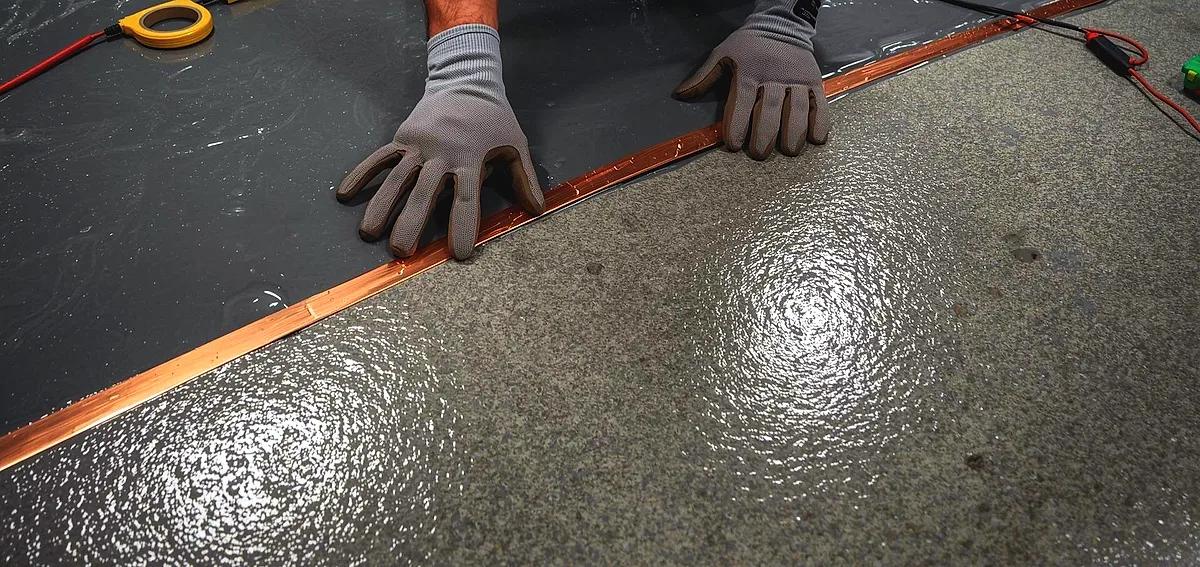
Commercial5 min read
Grounding Requirements for Floors in Fort Lauderdale Electronics Facilities
A discharge as small as 20 volts can damage microelectronic components, yet humans cannot feel discharges below 3,500 volts.
Read it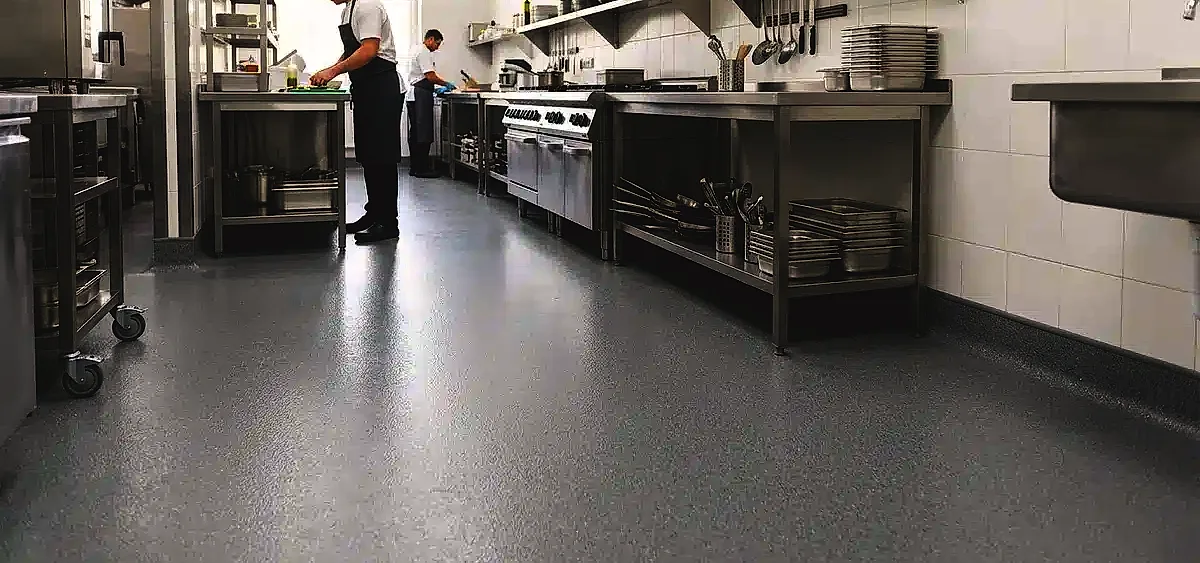
Commercial10 min read
Commercial Kitchen Floor Requirements in Florida
Operating a food service establishment in South Florida requires navigating a complex web of building and health codes.
Read it
Tell us about the floor
Tell us the space and roughly how big it is.We come back with what it would cost and when we could start.
Prefer to talk? Call +1 844-876-5474
- Leads@
nationalconcretepolishing.net - 2200 NW 32nd St #600,
Pompano Beach, FL 33069 Mon to Fri, 9:00 to 5:30