
The NCP blog
Are Concrete Countertops Right for Your South Florida Kitchen?
Residential14 min read
Homeowners can embed shells, glass chips, or metal flakes to create coastal themes perfect for South Florida aesthetics.
Concrete countertops have emerged as a compelling option for South Florida homeowners seeking a blend of industrial aesthetics, customization, and durability. Unlike mass-produced materials, concrete offers unlimited design possibilities—from integrated sinks to embedded glass accents—that can transform your kitchen into a one-of-a-kind space. However, living in Miami, Fort Lauderdale, or Pompano Beach introduces unique challenges that affect how concrete performs compared to granite, quartz, or other traditional materials.
South Florida’s tropical climate—with humidity levels averaging 20% higher than the national norm—creates specific demands for countertop materials. Concrete’s porous nature means it requires specialized sealing techniques to prevent moisture absorption, staining, and mold growth. Without proper installation and maintenance, the very qualities that make concrete attractive can become liabilities in our coastal environment.
This comprehensive guide examines whether concrete countertops align with South Florida lifestyles by weighing their strengths against regional climate challenges. You’ll discover how they perform in outdoor kitchens exposed to salt air and temperature swings, compare their costs to quartz and granite alternatives, and learn the maintenance realities of keeping them pristine. Whether you’re renovating a Miami commercial kitchen or upgrading your residential space, this analysis provides the insights needed to make an informed countertop decision.
Advantages of Concrete Countertops in South Florida
Unmatched Design Flexibility and Customization
Concrete countertops provide design freedom that no other material can match. Homeowners can embed shells, glass chips, or metal flakes to create coastal themes perfect for South Florida aesthetics. Custom colors range from bright whites that reflect heat to earthy tones mimicking natural stone. Edge profiles can be shaped into waterfall designs, curved surfaces, or integrated drainboards—options impossible with rigid stone slabs.
For outdoor kitchens in Fort Lauderdale homes, concrete can be cast to fit irregular spaces around pools or patios. Built-in trivets, cutting boards, or sink integrations eliminate seams where moisture could penetrate. This customization appeals to homeowners wanting countertops that reflect their personal style rather than settling for what’s in stock at big-box stores.
Superior Heat Resistance for Florida Cooking
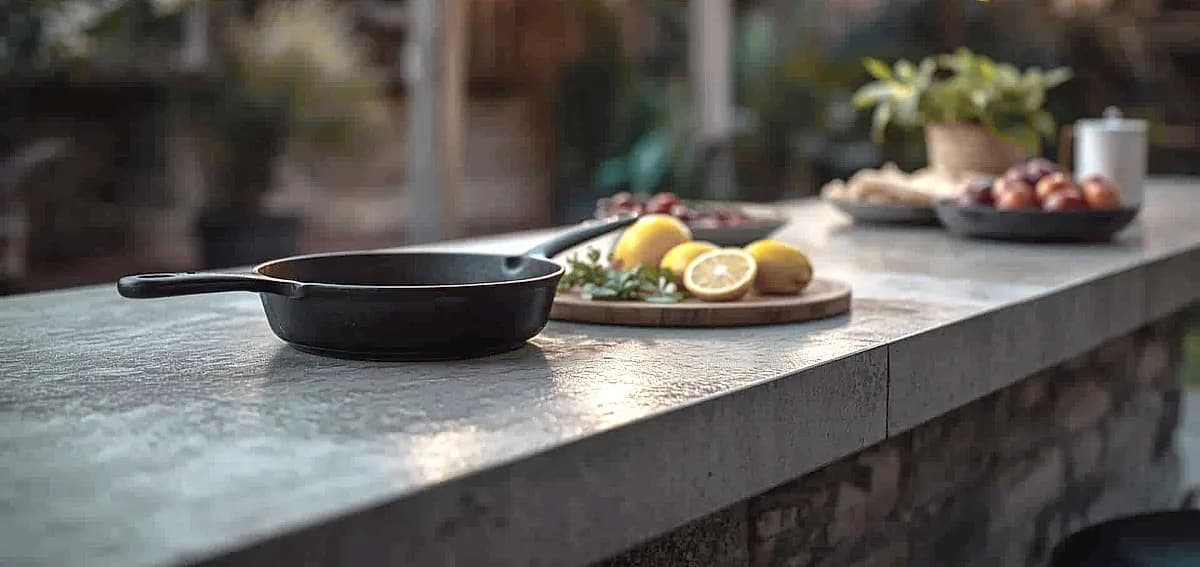
Concrete countertops withstand continuous heat up to 400°F without damage, outperforming quartz (which cracks at 300°F) and laminate (melting at 275°F). Testing shows hot cast iron pans placed directly on sealed concrete leave no marks, while curling irons and coffee pots cause zero surface damage. For South Florida outdoor kitchens where grills reach extreme temperatures, this heat tolerance proves invaluable.
Unlike synthetic materials that discolor or warp under Florida’s intense sun, concrete maintains structural integrity when exposed to UV rays and ambient heat. This makes it particularly suitable for poolside bars and open-air cooking areas common in Miami’s indoor-outdoor lifestyle. The material’s thermal mass also helps regulate temperature, staying cooler to the touch than dark granite under direct sunlight.
Durability and Long-Term Performance
When properly installed and maintained, concrete countertops last 20-30 years or longer—matching or exceeding granite’s lifespan. The material develops an attractive patina over time rather than looking worn, with installations from 2014 still performing excellently in South Florida conditions. Unlike laminate that chips or tile that cracks at grout lines, solid concrete maintains structural integrity under daily kitchen abuse.
Concrete resists impacts that would chip natural stone, making it practical for busy kitchens with heavy cookware. Its monolithic construction eliminates weak points found in materials with seams or grout lines. For homeowners planning long-term residence, this durability offsets higher upfront costs through decades of service without replacement.
Potential for Increased Home Value
In South Florida real estate markets, homes featuring custom concrete countertops sell 12% faster than comparable properties with tile or laminate. Buyers recognize the material as a premium feature signaling quality craftsmanship and modern design sensibilities. Unlike dated trends, concrete’s industrial-chic aesthetic has remained desirable for over two decades, suggesting lasting appeal.
The customization and durability justify pricing homes at higher tiers, particularly when concrete extends to outdoor entertaining spaces. For properties targeting design-conscious buyers in Pompano Beach or Miami Beach neighborhoods, concrete countertops distinguish listings from standard granite installations found in every competing home.
Disadvantages and Challenges in Humid Climates
Sealing Requirements and Maintenance Demands
Unsealed concrete absorbs stains within minutes, making proper sealing absolutely critical in South Florida. Quality installations require three coats of penetrating sealer plus a topical finish to create moisture barriers effective against humidity. Even with professional sealing, annual reapplication is necessary to maintain stain resistance—a maintenance commitment exceeding granite’s 3-5 year reseal schedule.
Coffee left eight hours may leave no mark on fresh sealant, but red wine overnight can create faint shadows requiring baking soda treatment. Turmeric paste—common in South Florida’s diverse cuisines—can cause yellowing even on sealed surfaces. Homeowners must clean spills promptly rather than letting dishes sit, adding daily vigilance compared to low-maintenance quartz alternatives.
Humidity-Related Expansion and Cracking Risks
Florida’s humidity causes concrete to absorb atmospheric moisture, leading to expansion. Daily temperature swings of 25°F then force contraction, creating stress cycles that can develop hairline cracks over time. Outdoor countertops face even greater challenges as rain, salt air, and intense sun accelerate moisture cycling.
Professional installation using reinforced concrete and industrial-grade sealers mitigates these risks, but DIY projects often fail within 1-2 years as improper curing allows moisture penetration. Temperature-controlled fabrication is essential—shops with high humidity slow evaporation rates, preventing proper drying before sealing. Concrete must reach specific moisture content before sealers are applied, or trapped water will push coatings upward causing blistering.
Weight and Structural Considerations
Concrete countertops weigh approximately 18-20 pounds per square foot—significantly heavier than granite (12-13 lbs) or quartz (6-7 lbs). Older South Florida homes with plywood cabinets may require structural reinforcement to support the load, adding $500-$1,500 to installation costs. Islands and peninsulas need additional framing to prevent cabinet sagging over time.
Transportation also poses challenges. Large slabs require specialized equipment and multiple installers, increasing labor costs. For second-story renovations or condominiums, building restrictions may prohibit concrete due to weight limits on floor joists. These logistical factors make concrete less practical than lighter engineered materials in certain architectural contexts.
Susceptibility to Stains and Scratches
Concrete inherently shows wear more visibly than harder stone materials. Acids from citrus fruits—abundant in South Florida—can etch surfaces if not wiped immediately. Knives used directly on concrete dull quickly while potentially scratching the topical sealer, compromising the moisture barrier.
Compared to granite’s inherent resistance, concrete requires protective behaviors: cutting boards for food prep, trivets for hot items, and immediate cleanup of acidic spills. Homeowners accustomed to carefree quartz or granite maintenance may find concrete’s demands frustrating. Dark concrete shows water spots and streaks more prominently than light colors, requiring frequent wiping to maintain appearance.
Cost Comparison: Concrete vs. Alternative Materials
Concrete Countertop Pricing in South Florida
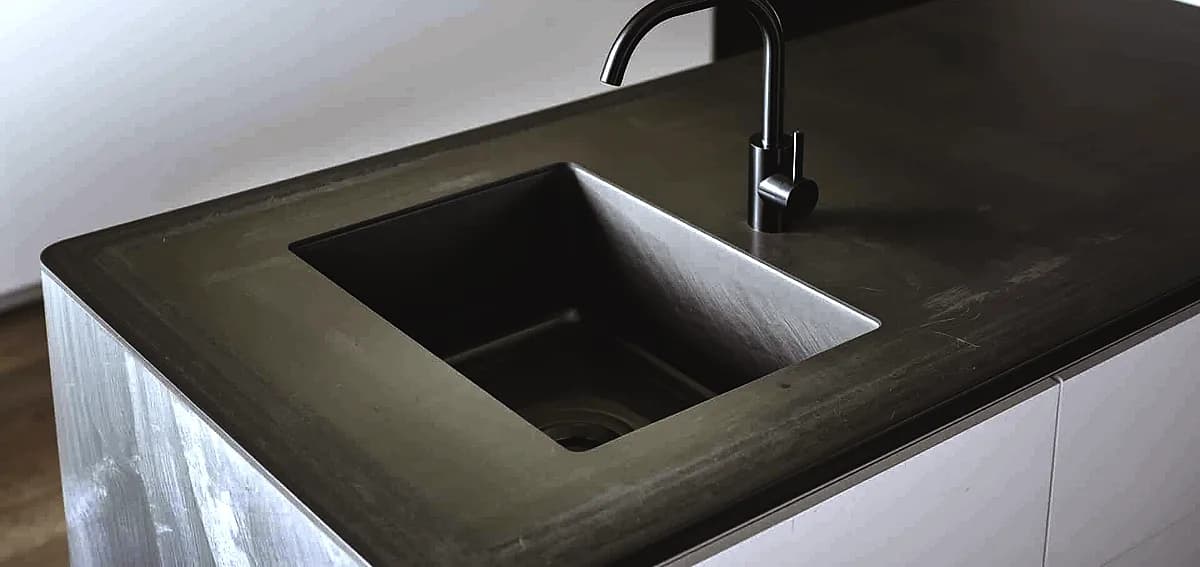
Concrete countertops typically cost $51-$135 per square foot installed in the South Florida market, positioning them in the mid-to-upper range of countertop options. Basic designs with standard colors and edges start around $65 per square foot, while custom work featuring embedded materials, complex shapes, or integrated features can exceed $120 per square foot. These prices reflect the artisan nature of concrete—each countertop is essentially a custom fabrication rather than cutting pre-made slabs.
Material costs account for $40-$120 per square foot, with installation adding $10-$35 per square foot depending on complexity. Reinforcement for outdoor applications, specialized sealers for humid environments, and structural modifications to support weight increase total project costs. For an average 30-square-foot kitchen, homeowners should budget $2,500-$4,000 for concrete versus lower-priced alternatives.
Granite and Quartz Price Comparisons
Granite countertops in the Orlando and South Florida markets range $40-$175 per square foot installed, with basic options starting at $60. Exotic high-end granite exceeds concrete pricing, but standard varieties offer comparable durability at lower costs. Granite requires minimal maintenance beyond periodic resealing every 3-5 years, reducing long-term expense compared to concrete’s annual care.
Quartz countertops cost $37-$140 per square foot in Florida, with basic options around $70 and premium designer brands reaching $120+. While initial costs are similar to concrete, quartz eliminates sealing requirements entirely and resists stains without special care. For budget-conscious buyers seeking low maintenance, basic quartz at $70 per square foot offers better value than concrete requiring annual professional resealing at $200-$400 per service call.
Long-Term Value and Maintenance Costs
Concrete’s true cost emerges over time through maintenance requirements. Annual resealing runs $200-$400 for professional service, adding $4,000-$8,000 over a 20-year lifespan. Repairs for chips, cracks, or stain removal add unpredictable costs ranging $150-$500 per incident. Granite by comparison needs resealing every 3-5 years at $150-$300, totaling $900-$1,800 over 20 years—a significant savings.
However, concrete’s customization can justify the premium for homeowners valuing unique design. If the aesthetic and personalization enhance daily enjoyment and home value, the extra maintenance becomes worthwhile investment. For practical buyers prioritizing convenience over uniqueness, granite or quartz provide better cost-per-year value.
Outdoor Kitchen Applications in South Florida
Performance in Coastal and Pool Environments
Outdoor concrete countertops face South Florida’s harshest conditions: salt spray, chlorine splash, UV exposure, and dramatic temperature fluctuations. When professionally installed with reinforcement and industrial sealers, concrete withstands these challenges while maintaining appearance. Unlike some materials that fade or discolor, properly sealed concrete resists UV degradation and can handle heat from outdoor grills without damage.
Salt air and pool chemicals demand premium sealers designed specifically for coastal applications. Standard residential sealers fail within 6-12 months under these conditions, requiring annual reapplication rather than the 2-3 year intervals possible with indoor countertops. Lighter colors help reflect heat, keeping surfaces cooler for comfort while reducing thermal stress that contributes to cracking.
Comparison to Granite and Quartzite Outdoors
For outdoor durability, granite and quartzite naturally resist moisture and require less frequent sealing than concrete. Granite sealed every 3-4 years provides lower maintenance than concrete’s annual needs, making it preferable for second homes or investment properties where consistent upkeep is challenging. Quartzite offers similar benefits with more design variety than standard granite.
However, concrete excels where custom shapes are needed: curved bars, integrated sinks, or irregular islands that fit unique patio layouts. For homeowners wanting outdoor kitchens that match indoor design themes, concrete’s color and texture matching capabilities surpass stone alternatives. The material choice ultimately depends on whether customization outweighs the maintenance convenience of natural stone.
Installation Considerations for Humidity Control
South Florida outdoor concrete installations require climate-controlled fabrication and curing. Shops must use dehumidifiers to maintain 45-55% relative humidity during the curing process—without control, concrete absorbs excess moisture that later escapes, causing sealers to fail. Temperature must stay between 65-85°F to prevent thermal shock during curing.
Professional installers schedule outdoor projects during morning hours when dew points drop, avoiding afternoon humidity spikes that compromise adhesion. On-site curing sometimes involves portable containment tents with dehumidifiers to create stable environments despite ambient conditions. These protocols add costs but prevent the catastrophic failures common in DIY installations where environmental factors aren’t controlled.
Maintenance and Care Requirements
Daily Cleaning and Spill Management
Sealed concrete requires immediate attention to spills, particularly acids (citrus, vinegar, wine) that can penetrate and stain if left sitting. Daily cleaning uses pH-neutral dish soap with soft cloths—avoid abrasive scrubbers that damage topical sealers. Unlike quartz that tolerates neglect, concrete demands consistent care to maintain appearance and protective barriers.
Water spots show prominently on dark concrete, requiring frequent wiping after dish washing or meal prep. Homeowners should keep cutting boards, trivets, and coasters readily available, making protective habits automatic. For busy families or those who prefer low-maintenance surfaces, this daily vigilance may feel burdensome compared to the carefree nature of engineered materials.
Annual Sealing and Professional Maintenance
Professional resealing every 12-18 months maintains concrete’s moisture resistance and stain protection. The process involves light surface abrasion to remove degraded sealer, thorough cleaning, and reapplication of penetrating and topical sealers. This service costs $200-$400 depending on square footage and countertop complexity, representing recurring expense throughout the countertop’s lifetime.
Signs that resealing is needed include water no longer beading on the surface, stains absorbing quickly, or dull appearance despite cleaning. Delaying resealing allows deep stains to develop that require poultice treatments or grinding to remove—repairs costing $150-$500 versus the $200-$400 preventive maintenance. Homeowners should schedule annual inspections to catch wear before damage occurs.
Repairing Cracks and Surface Damage
Hairline cracks can develop from settling, impacts, or thermal stress despite proper installation. Small cracks are repairable using epoxy fillers color-matched to the concrete, costing $150-$300 per repair. Larger structural cracks may require professional assessment to determine if underlying issues exist—repairs can reach $500-$1,000 if reinforcement is compromised.
Surface scratches in topical sealers can be buffed and resealed without full refinishing, costing $100-$200 for spot treatments. Deep stains that penetrate sealers may require grinding away surface layers and resealing, running $300-$600 depending on affected area. These repair costs should factor into total ownership calculations when comparing concrete to lower-maintenance alternatives.
Professional Installation vs. DIY Considerations
Why South Florida Climate Demands Expert Installation
DIY concrete countertops frequently fail in South Florida’s humid environment due to improper curing and sealing. Without climate-controlled fabrication spaces maintaining 45-55% humidity, concrete absorbs excessive moisture during curing that later causes blistering when sealers trap it inside. Temperature fluctuations during curing create weak spots that crack under daily use.
Professional fabricators use moisture meters to verify concrete reaches proper dryness before sealing—typically 4-6% moisture content depending on sealer type. They apply sealers in controlled conditions with proper ventilation and humidity levels, ensuring chemical reactions complete correctly. Skip these protocols and sealers fail within months, requiring expensive removal and reinstallation to correct.
Climate-Controlled Fabrication Requirements
Concrete countertops for South Florida homes should be fabricated in climate-controlled shops with dehumidifiers and temperature regulation. Industrial dehumidifiers maintain the 45-55% relative humidity sweet spot where concrete cures properly without excessive moisture absorption. Temperature control within 65-85°F prevents thermal shock that weakens the matrix structure.
Professional shops use vapor barrier primers and moisture-tolerant sealers specifically formulated for humid climates. These products cost more than consumer-grade options but provide the durability necessary for coastal environments. The polished concrete flooring techniques used in warehouses—like those achieving 100% coating adhesion despite 80% humidity—demonstrate how controlled environments and proper material selection overcome weather challenges that DIYers struggle to manage.
Selecting Qualified Contractors in Miami Area
Look for contractors with portfolios showing outdoor installations and explicit experience with South Florida’s climate challenges. Ask about fabrication facilities—shops without environmental controls cannot produce countertops that will last in humid conditions. Request references from projects at least 3-5 years old to verify long-term performance.
Qualified contractors should discuss moisture testing protocols, sealer brands designed for humid climates, and maintenance schedules specific to South Florida. They’ll explain reinforcement techniques for outdoor applications and how they manage temperature swings. Vague answers or generic “it’ll be fine” responses indicate insufficient expertise for our region’s demands.
Frequently Asked Questions
How do concrete countertops perform in South Florida’s humidity?
With proper sealing and maintenance, concrete countertops perform well in humid climates. Professional installations using moisture-tolerant sealers and climate-controlled fabrication prevent the blistering and staining that plague DIY projects. Annual resealing maintains moisture barriers essential for longevity.
Are concrete countertops more expensive than granite or quartz in Florida?
Concrete costs $51-$135 per square foot installed, comparable to mid-range granite ($60-$100) and quartz ($70-$120). Basic granite starts lower at $40 per square foot, while concrete’s customization adds premium pricing. Long-term maintenance costs favor granite due to less frequent resealing needs.
Can concrete countertops withstand outdoor conditions in coastal areas?
Yes, when properly reinforced and sealed with industrial-grade products designed for coastal environments. Salt air and UV exposure demand annual resealing versus 2-3 years for indoor applications. Lighter colors and professional installation are essential for longevity in harsh outdoor conditions.
How often do concrete countertops need resealing in South Florida?
Indoor concrete countertops require professional resealing every 12-18 months in South Florida’s humidity. Outdoor countertops need annual resealing due to UV exposure, temperature cycling, and weather elements. Delaying resealing allows stains and moisture damage that requires costly repairs.
Do concrete countertops crack in Florida’s heat?
Properly installed concrete with adequate reinforcement and expansion joints resists cracking despite temperature fluctuations. However, Florida’s daily 25°F temperature swings create stress cycles that can eventually develop hairline cracks. Professional installation minimizes this risk through proper curing and structural design.
Are concrete countertops heat resistant for outdoor grills?
Concrete withstands continuous heat up to 400°F, making it ideal for outdoor grill areas and hot pots. This heat resistance surpasses quartz and laminate alternatives. However, thermal shock from extreme temperature changes can contribute to cracking over time if not properly reinforced.
What maintenance is required for concrete countertops?
Daily cleaning with pH-neutral soap, immediate spill cleanup, use of cutting boards and trivets, and annual professional resealing. Concrete demands more attention than granite or quartz but rewards careful maintenance with decades of performance and unique aesthetic appeal.
Can I install concrete countertops myself in South Florida?
DIY concrete countertops are not recommended in South Florida due to humidity and temperature control requirements during fabrication and curing. Without climate-controlled environments and moisture testing equipment, DIY projects typically fail within 1-2 years due to improper sealing and moisture management.
How do concrete countertops compare to granite for resale value?
Homes with concrete countertops sell 12% faster in South Florida markets, appealing to design-conscious buyers. However, granite remains more universally accepted and requires less maintenance explanation. For unique custom homes, concrete enhances value; for mainstream buyers, granite may provide broader appeal.
What colors work best for concrete countertops in hot climates?
Light colors reflect heat and stay cooler to touch in outdoor applications while showing fewer water spots than dark tones. Whites, creams, and light grays work well for South Florida’s bright interiors and help countertops remain comfortable in sun-exposed areas. Similar considerations apply when choosing colors for pool deck resurfacing, where heat reflection is crucial for barefoot comfort.
Conclusion
Concrete countertops can be an excellent choice for South Florida kitchens when homeowners prioritize customization, heat resistance, and industrial aesthetics over low-maintenance convenience. Their ability to withstand 400°F heat, develop attractive patina over decades, and conform to unique design visions makes them particularly appealing for custom homes and outdoor entertaining spaces common in Miami’s lifestyle.
However, success in South Florida’s humid climate demands professional installation with climate-controlled fabrication and specialized sealers designed for coastal conditions. The annual maintenance requirements and higher long-term costs compared to granite or quartz mean concrete suits homeowners willing to invest time and money into preserving their countertops’ appearance and performance.
For those seeking unique design expression and willing to commit to annual resealing, concrete delivers unmatched customization and durability that can last 30+ years. Homeowners prioritizing convenience and minimal maintenance will find better value in granite or quartz alternatives that provide excellent performance without the demanding care concrete requires in tropical environments.
Written by

Founder and CEO
Chris Lavin is an esteemed leader in concrete polishing and epoxy coatings with a distinguished 20-year career. As founder and CEO of National Concrete Polishing and owner of Xtreme Polishing Systems, he's renowned for polishing and epoxy coating more floors than anyone globally. Chris is recognized for his innovative approach and commitment to enhancing floor durability and aesthetics. His hands-on experience and technical proficiency make him a respected authority and a valuable resource in the field of floor polishing and coatings.
Same topic
Related articles
All stories
Residential8 min read
What Restaurants Need to Pass a Health Inspection Floor Check
It endures heavy foot traffic, dropped equipment, boiling water spills, and harsh degreasing chemicals daily.
Read it
Residential9 min read
How Restaurants Replace Their Floors Without Closing for Long
The average food service establishment loses approximately $3,500 in daily revenue during unexpected closures in 2026.
Read it
Residential8 min read
Where Polished Concrete Beats Epoxy in a Home (and Where It Doesn’t)
Before evaluating specific rooms, it is essential to understand how these two flooring systems function.
Read it
Tell us about the floor
Tell us the space and roughly how big it is.We come back with what it would cost and when we could start.
Prefer to talk? Call +1 844-876-5474
- Leads@
nationalconcretepolishing.net - 2200 NW 32nd St #600,
Pompano Beach, FL 33069 Mon to Fri, 9:00 to 5:30