
The NCP blog
Health Code Compliant Epoxy Floors for Fort Lauderdale Restaurants
Epoxy & coatings13 min read
Traditional flooring materials often fall short when exposed to the harsh realities of commercial food service operations.
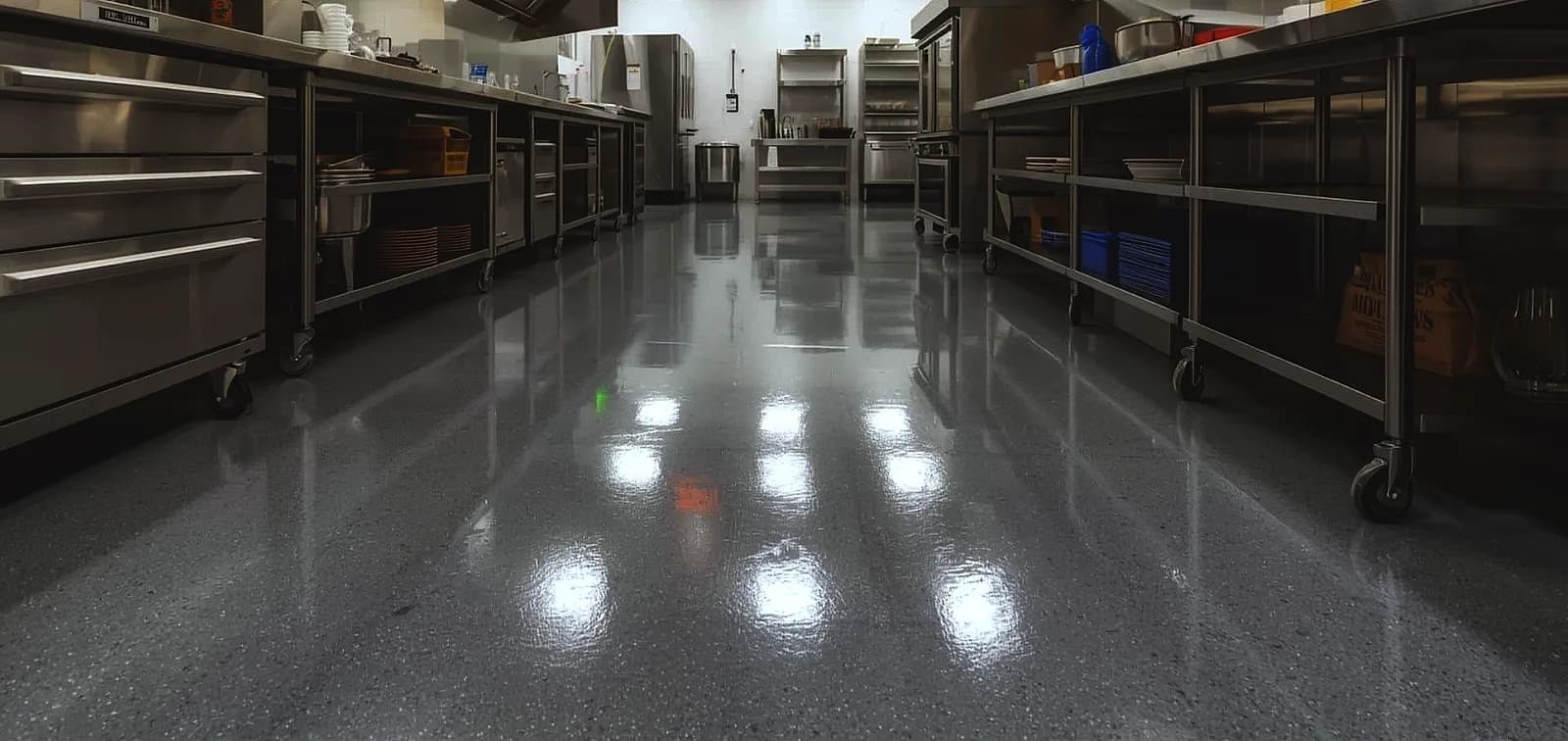
Fort Lauderdale’s vibrant restaurant scene demands flooring solutions that can withstand the rigorous demands of commercial kitchens while maintaining strict health code compliance. The combination of high foot traffic, frequent spills, temperature fluctuations, and intensive cleaning protocols creates unique challenges that require specialized flooring systems. Commercial epoxy restaurant flooring in Fort Lauderdale has emerged as the gold standard for establishments seeking durability, safety, and regulatory compliance.
Restaurant owners throughout Broward County face mounting pressure to maintain pristine facilities that meet or exceed health department standards. Traditional flooring materials often fall short when exposed to the harsh realities of commercial food service operations. Grease, acids, hot liquids, and constant moisture exposure can quickly deteriorate conventional surfaces, creating potential health hazards and costly maintenance issues.
The Florida Department of Health maintains stringent requirements for commercial kitchen flooring, mandating surfaces that are non-porous, easily cleanable, and resistant to bacterial growth. These regulations exist to protect public health and ensure food safety standards remain uncompromised. Failure to comply can result in citations, temporary closures, or permanent license revocation, making proper flooring selection a critical business decision.
Commercial epoxy flooring systems offer restaurant owners a comprehensive solution that addresses both operational needs and regulatory requirements. These advanced polymer-based surfaces create seamless, non-porous barriers that resist chemical damage while providing slip-resistant properties essential for kitchen safety. The installation process involves multiple layers of specialized coatings that cure to form an incredibly durable surface capable of withstanding decades of intensive use.
Beyond compliance considerations, modern restaurant operators recognize that flooring choices directly impact operational efficiency and long-term profitability. Properly installed commercial epoxy systems reduce cleaning time, minimize maintenance costs, and create professional environments that enhance both employee productivity and customer perception. The investment in quality flooring pays dividends through reduced downtime, lower replacement costs, and improved operational reliability.
Key Takeaways
Health Code Compliance: Commercial epoxy restaurant flooring in Fort Lauderdale meets all Florida Department of Health requirements for non-porous, easily cleanable surfaces that prevent bacterial growth and contamination risks.
Chemical Resistance: Advanced epoxy formulations resist damage from grease, acids, cleaning chemicals, and hot liquids commonly found in commercial kitchen environments, maintaining surface integrity over time.
Seamless Installation: Professional application creates continuous surfaces without joints or seams where bacteria and debris can accumulate, simplifying cleaning protocols and enhancing sanitation efforts.
Slip Resistance: Specialized texturing options provide essential traction in wet conditions, reducing workplace injury risks and potential liability issues for restaurant operators.
Cost Effectiveness: While initial installation costs may exceed traditional materials, commercial epoxy flooring delivers superior long-term value through reduced maintenance, extended lifespan, and minimal replacement requirements.
Quick Installation: Modern epoxy systems can be installed with minimal operational disruption, allowing restaurants to maintain service schedules while upgrading their facilities.
Customization Options: Multiple color and finish choices enable restaurant owners to create branded environments that enhance their establishment’s aesthetic appeal while maintaining functional requirements.
Professional Installation Required: Proper surface preparation, environmental controls, and application techniques are essential for achieving optimal performance, making experienced contractors like National Concrete Polishing crucial for project success.
Understanding Commercial Epoxy Flooring
Commercial epoxy restaurant flooring represents a sophisticated engineered system designed specifically for the demanding requirements of food service establishments. Unlike residential epoxy applications, commercial systems incorporate multiple specialized layers that work together to create surfaces capable of withstanding extreme conditions while maintaining health code compliance. The foundation begins with thorough surface preparation, including concrete repair, cleaning, and profile creation to ensure optimal adhesion.
The base coat typically consists of a penetrating primer that seals the concrete substrate and provides a stable foundation for subsequent layers. This primer penetrates deep into the concrete pores, creating a chemical bond that prevents moisture transmission and substrate degradation. Following the primer application, installers apply one or more coats of high-performance epoxy resin formulated specifically for commercial kitchen environments.
Advanced commercial epoxy systems often incorporate antimicrobial additives that actively inhibit bacterial growth on the surface. These additives remain effective throughout the floor’s lifespan, providing an additional layer of protection against foodborne pathogens. The antimicrobial properties complement regular cleaning protocols, creating environments that exceed basic health code requirements and demonstrate proactive food safety management.
Surface texturing options allow restaurant operators to customize slip resistance based on their specific needs. Light textures work well in dining areas where appearance is paramount, while more aggressive textures provide enhanced safety in high-risk areas like dishwashing stations and prep areas. Understanding what makes epoxy floors slip-resistant helps operators make informed decisions.
Temperature resistance represents another critical performance characteristic for restaurant applications. Commercial kitchens regularly experience temperature fluctuations from freezer spills to hot oil splashes, requiring flooring systems that maintain structural integrity across extreme ranges. High-quality commercial epoxy formulations remain stable from below freezing to over 200 degrees Fahrenheit, ensuring reliable performance regardless of operational conditions.
Health Code Requirements
Florida’s health code requirements for restaurant flooring are among the most stringent in the nation, reflecting the state’s commitment to food safety and public health protection. The Florida Administrative Code Chapter 61C-4 establishes specific criteria that all commercial kitchen surfaces must meet, including requirements for non-porosity, cleanability, and resistance to bacterial harboring. These regulations apply to all food service establishments, from small cafes to large-scale commercial kitchens.
Non-porosity requirements mandate that flooring surfaces cannot absorb liquids, preventing the accumulation of organic matter that could support bacterial growth. Traditional materials like unsealed concrete, wood, or standard vinyl tiles fail to meet these standards due to their porous nature or joint configurations. Commercial epoxy restaurant flooring in Fort Lauderdale excels in this area by creating completely sealed surfaces with no penetrable pores or seams.
Cleanability standards require surfaces that can be effectively sanitized using approved cleaning chemicals and methods. The flooring must withstand repeated exposure to disinfectants, degreasers, and sanitizing solutions without degrading or losing protective properties. Understanding how commercial kitchen floors meet Florida health codes ensures proper compliance. The Florida Department of Business and Professional Regulation oversees restaurant inspections and enforces these critical standards.
Slope and drainage requirements ensure that liquids flow toward designated drains rather than pooling on the surface. Health inspectors pay particular attention to areas around equipment, prep stations, and dishwashing facilities where water accumulation could create sanitation hazards. Professional epoxy installation includes proper sloping techniques that direct water flow while maintaining level surfaces for equipment placement and employee safety.
Documentation and certification requirements often accompany health code compliance, particularly for new construction or major renovations. Restaurant owners may need to provide material specifications, installation certifications, and performance warranties to satisfy permit requirements. Experienced contractors like National Concrete Polishing maintain comprehensive documentation packages that streamline the approval process and demonstrate regulatory compliance.
Regular inspection protocols evaluate ongoing compliance with health code standards, making long-term performance a critical consideration. Inspectors assess surface condition, cleanliness, and structural integrity during routine visits. Commercial epoxy flooring systems that maintain their properties over time help restaurant operators consistently pass inspections while avoiding costly remediation or replacement projects.
Installation Process and Professional Requirements
The installation of commercial epoxy restaurant flooring requires specialized expertise, advanced equipment, and strict adherence to environmental controls that distinguish it from standard flooring projects. Professional contractors must coordinate multiple phases of work while maintaining precise timing and environmental conditions to ensure optimal results. The process typically begins with comprehensive site evaluation and preparation planning that addresses substrate conditions, environmental factors, and operational constraints.
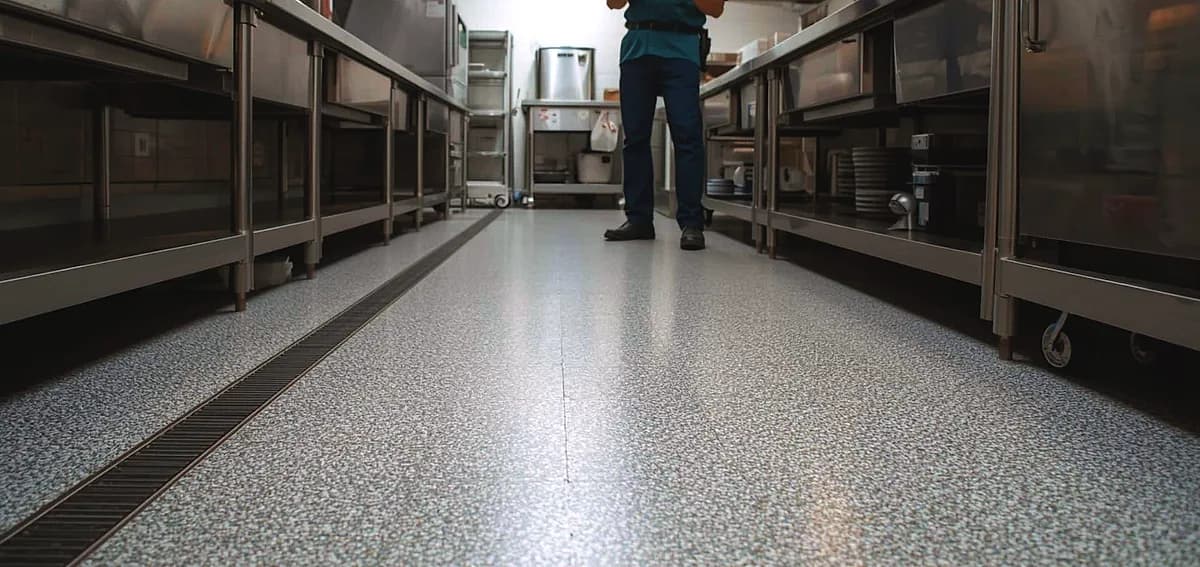
Surface preparation represents the most critical phase of commercial epoxy installation, often determining the long-term success or failure of the entire system. Concrete substrates must be thoroughly cleaned, repaired, and profiled to create optimal bonding conditions. This process may involve diamond grinding, shot blasting, or chemical etching to remove contaminants and create the proper surface profile. Learning why concrete floor preparation is critical for epoxy helps ensure successful installations.
Environmental controls during installation are essential for achieving proper cure characteristics and avoiding defects. Temperature and humidity levels must be maintained within specific ranges throughout the application and curing process. Professional contractors use industrial dehumidifiers, heaters, and ventilation systems to create controlled environments that ensure consistent results regardless of external weather conditions. Understanding how humidity affects epoxy floors in Miami is crucial for South Florida installations.
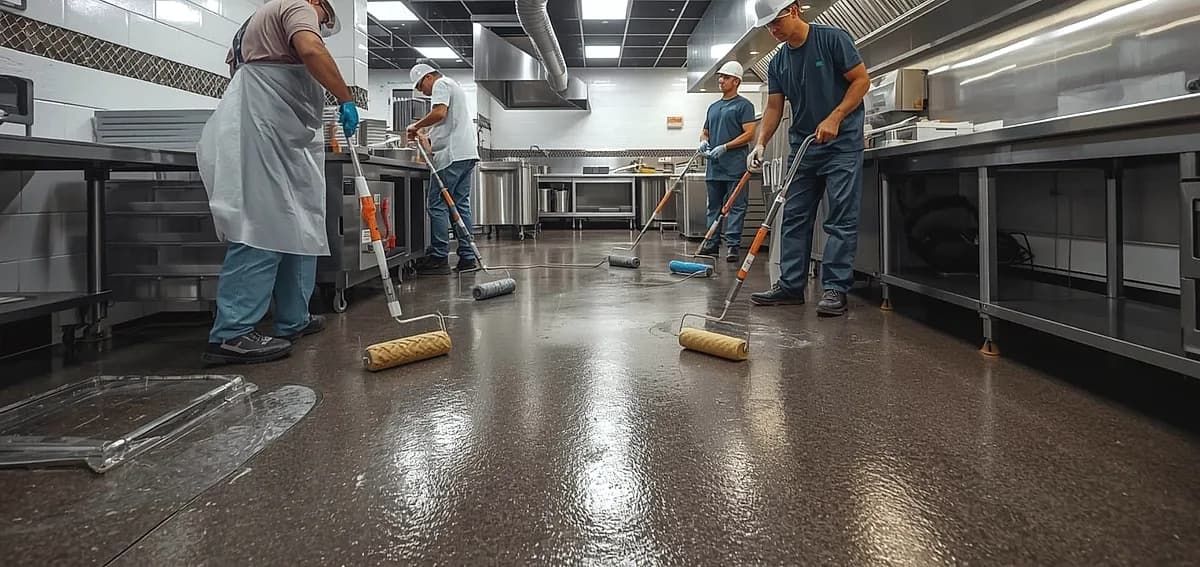
Material mixing and application require precise timing and technique to achieve uniform coverage and proper chemical cross-linking. Commercial epoxy systems often have limited working times, requiring coordinated application by experienced crews using specialized equipment. Roller techniques, squeegee applications, and spray methods may be employed depending on the specific product and area requirements.
Quality control measures throughout the installation process include thickness monitoring, visual inspection, and adhesion testing to verify proper application. Professional contractors document each phase of work, maintaining records that support warranty coverage and regulatory compliance. These documentation practices become particularly important for commercial applications where performance failures could result in significant operational disruptions.
Curing and protection protocols ensure that newly installed surfaces achieve full strength and chemical resistance before exposure to operational stresses. This may require temporary barriers, controlled access, and specific environmental conditions for several days following application. Restaurant operators must coordinate installation timing with their operational schedules to minimize business disruption while allowing adequate curing time. Understanding how epoxy flooring cures in South Florida weather helps with proper planning.
Maintenance and Long-Term Performance
Proper maintenance protocols are essential for maximizing the lifespan and performance of commercial epoxy restaurant flooring while ensuring continued health code compliance. Unlike traditional flooring materials that may require frequent replacement or intensive restoration, well-maintained epoxy systems can provide decades of reliable service with relatively simple care procedures. The key lies in establishing consistent cleaning routines and addressing minor issues before they develop into major problems.
Daily cleaning procedures for commercial epoxy flooring focus on removing food debris, grease, and spills that could create safety hazards or sanitation concerns. The non-porous surface characteristics of quality epoxy systems make cleaning more efficient compared to traditional materials, as contaminants cannot penetrate the surface. Standard commercial cleaners and degreasers are typically sufficient for routine maintenance, though specific product recommendations may vary based on the epoxy formulation. Learning about the best cleaner for epoxy floors ensures proper care.
Deep cleaning protocols should be implemented weekly or monthly depending on operational intensity and local health department requirements. These procedures may involve specialized cleaning equipment, stronger chemical solutions, and more thorough sanitization processes. The chemical resistance of commercial epoxy flooring allows restaurant operators to use aggressive cleaning agents when necessary without fear of surface damage or degradation. Understanding how epoxy floors resist chemicals provides confidence in maintenance procedures.
Preventive maintenance measures help identify potential issues before they compromise performance or compliance. Regular inspections should focus on high-wear areas, drainage points, and equipment interfaces where problems typically develop first. Early detection of minor surface damage, coating wear, or drainage issues allows for targeted repairs that prevent more extensive and costly remediation projects.
Professional maintenance services can supplement in-house cleaning efforts with specialized equipment and expertise. Periodic deep cleaning, surface restoration, and protective coating renewal help maintain optimal performance characteristics throughout the floor’s lifespan. Companies like National Concrete Polishing often provide ongoing maintenance programs that ensure continued compliance and performance while extending the investment’s value.
Performance monitoring should include tracking of slip resistance, chemical resistance, and overall surface condition over time. Documentation of maintenance activities and performance metrics can support warranty claims, insurance requirements, and regulatory compliance demonstrations. This proactive approach helps restaurant operators avoid unexpected failures while maintaining the professional appearance and functionality that supports their business operations.
Cost Analysis and Investment
The financial considerations surrounding commercial epoxy restaurant flooring in Fort Lauderdale extend far beyond initial installation costs, encompassing long-term operational savings, reduced maintenance expenses, and improved business efficiency. While premium epoxy systems may require higher upfront investments compared to traditional flooring materials, comprehensive cost analysis typically reveals significant long-term value propositions that justify the initial expenditure.
Initial installation costs for commercial epoxy flooring vary based on substrate conditions, system specifications, and project complexity. Factors influencing pricing include surface preparation requirements, epoxy system selection, area size, and installation timeline constraints. Restaurant operators should expect to invest more in proper preparation and high-performance materials, as these factors directly impact long-term performance and compliance maintenance.
Operational cost savings begin immediately following installation through reduced cleaning time and chemical consumption. The seamless, non-porous characteristics of epoxy surfaces require less intensive cleaning efforts compared to traditional materials with grout lines, seams, or porous surfaces. Restaurant staff can complete cleaning tasks more efficiently, reducing labor costs while achieving superior sanitation results.
Maintenance cost reductions represent another significant financial benefit of commercial epoxy flooring systems. Traditional materials often require periodic replacement, refinishing, or intensive restoration procedures that disrupt operations and generate substantial expenses. Quality epoxy systems can operate for decades with minimal maintenance requirements, eliminating the recurring costs associated with frequent flooring replacement.
Business continuity benefits include reduced downtime for flooring repairs or replacement, consistent compliance with health codes, and improved operational reliability. Restaurant operators avoid the revenue losses associated with temporary closures, failed inspections, or emergency repairs that could otherwise disrupt their business operations. The reliability of commercial epoxy flooring contributes to predictable operational costs and reduced financial risk.
Insurance and liability considerations may also favor commercial epoxy flooring installations. The slip-resistant properties, chemical resistance, and compliance characteristics of quality systems can reduce workplace injury risks and potential liability exposures. Some insurance providers offer premium reductions for establishments that demonstrate proactive safety measures and regulatory compliance through proper flooring selection.
National Concrete Polishing works with restaurant operators to develop comprehensive cost analyses that account for all relevant financial factors. These evaluations help business owners make informed decisions based on total cost of ownership rather than initial price considerations alone, ensuring that flooring investments support long-term business objectives and financial performance.
Frequently Asked Questions
How long does commercial epoxy restaurant flooring installation take?
Installation timelines for commercial epoxy flooring typically range from 3-7 days depending on area size, substrate conditions, and system specifications. The process includes surface preparation, primer application, base coat installation, and final curing time before the area can return to full service.
Can restaurants remain open during epoxy flooring installation?
Most restaurants can maintain limited operations during installation by working in phases or scheduling work during closed hours. Professional contractors like National Concrete Polishing coordinate installation timing to minimize business disruption while ensuring proper curing conditions.
What makes commercial epoxy different from residential epoxy flooring?
Commercial epoxy systems use higher-performance resins, antimicrobial additives, and specialized application techniques designed for intensive use and health code compliance. These systems provide superior chemical resistance, durability, and safety features required for restaurant environments.
How do I maintain commercial epoxy flooring to ensure health code compliance?
Daily cleaning with commercial degreasers and sanitizers, weekly deep cleaning protocols, and regular inspection of high-wear areas maintain compliance. The non-porous surface characteristics make cleaning more efficient while supporting superior sanitation results.
What warranty coverage is available for commercial restaurant epoxy flooring?
Professional installations typically include material and workmanship warranties ranging from 5-15 years depending on system specifications and usage conditions. Warranty coverage may include adhesion failure, premature wear, and chemical resistance performance.
Are there color and design options available for restaurant epoxy flooring?
Commercial epoxy systems offer numerous color choices, decorative flake options, and custom design possibilities that allow restaurants to create branded environments while maintaining functional requirements and health code compliance.
How does commercial epoxy flooring perform in freezer and cooler areas?
High-quality commercial epoxy systems maintain flexibility and adhesion across extreme temperature ranges, making them suitable for freezer, cooler, and kitchen applications where temperature fluctuations are common.
What happens if the epoxy flooring is damaged during restaurant operations?
Minor damage can often be repaired through spot application techniques that restore surface integrity and compliance. Professional contractors can assess damage and recommend appropriate repair procedures that minimize operational disruption.
Conclusion
Commercial epoxy restaurant flooring in Fort Lauderdale represents the optimal solution for food service establishments seeking to balance regulatory compliance, operational efficiency, and long-term value. The combination of health code compliance, chemical resistance, and durability makes epoxy systems the preferred choice for restaurant operators who understand the importance of proper flooring in their business success.
The investment in quality commercial epoxy flooring pays dividends through reduced maintenance costs, improved operational efficiency, and consistent regulatory compliance. Restaurant owners who choose professional installation and maintain proper care protocols can expect decades of reliable performance that supports their business objectives while protecting their investment value.
National Concrete Polishing brings the expertise, experience, and commitment to quality that Fort Lauderdale restaurant operators need for successful flooring projects. From initial consultation through ongoing maintenance support, professional contractors ensure that commercial epoxy installations meet the highest standards for performance, compliance, and value.
The decision to upgrade to commercial epoxy flooring represents a strategic investment in business infrastructure that supports growth, compliance, and operational excellence. Restaurant operators who prioritize quality flooring solutions position themselves for long-term success in Fort Lauderdale’s competitive food service market while demonstrating their commitment to food safety and customer satisfaction.
Written by

Founder and CEO
Chris Lavin is an esteemed leader in concrete polishing and epoxy coatings with a distinguished 20-year career. As founder and CEO of National Concrete Polishing and owner of Xtreme Polishing Systems, he's renowned for polishing and epoxy coating more floors than anyone globally. Chris is recognized for his innovative approach and commitment to enhancing floor durability and aesthetics. His hands-on experience and technical proficiency make him a respected authority and a valuable resource in the field of floor polishing and coatings.
Same topic
Related articles
All stories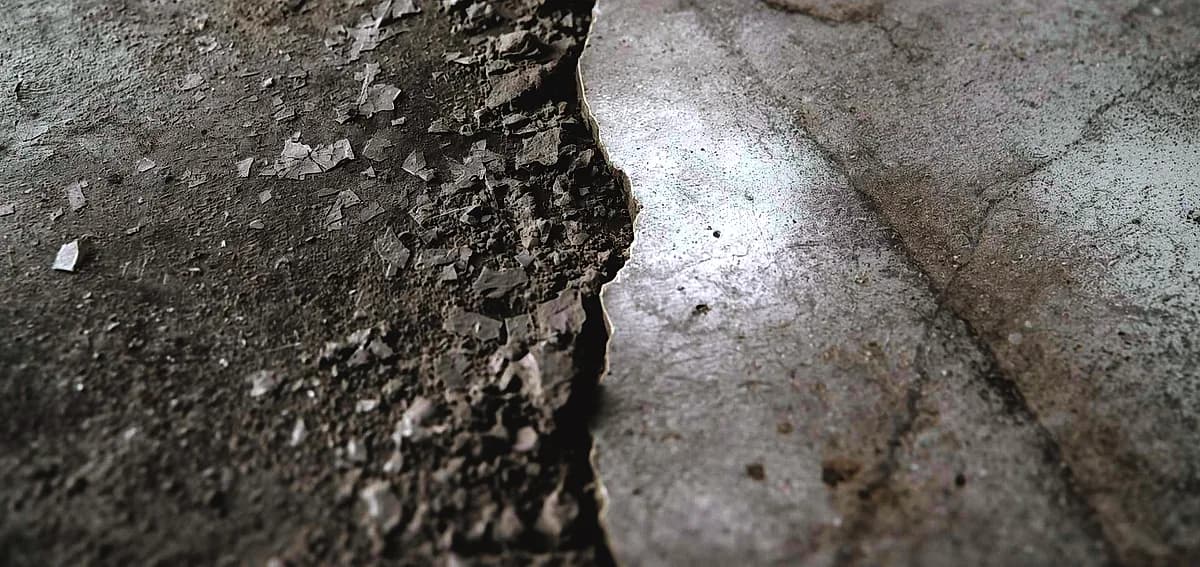
Epoxy & coatings8 min read
DIY vs Professional Epoxy Flooring in Fort Lauderdale
Hardware stores heavily market all-in-one boxes that promise a showroom finish with minimal effort.
Read it
Epoxy & coatings8 min read
Can You DIY Epoxy Flooring in Miami? Pros, Cons, and Tips
Applying a durable floor finish in a tropical or highly humid climate presents unique environmental challenges.
Read it
Epoxy & coatings7 min read
DIY Epoxy Flooring in South Florida: Is It Worth the Risk?
However, these products generally contain high levels of water or solvents to extend their pot life.
Read it
Tell us about the floor
Tell us the space and roughly how big it is.We come back with what it would cost and when we could start.
Prefer to talk? Call +1 844-876-5474
- Leads@
nationalconcretepolishing.net - 2200 NW 32nd St #600,
Pompano Beach, FL 33069 Mon to Fri, 9:00 to 5:30