
The NCP blog
Commercial vs Residential Epoxy Flooring: Pros, Cons & Best Uses
CommercialUpdated 6 min read
Did you know a properly installed floor coating can last over 10 years with minimal upkeep?
Did you know a properly installed floor coating can last over 10 years with minimal upkeep? This durability makes it a standout solution for high-traffic spaces. Whether you’re upgrading a garage or designing a commercial building, understanding the differences between applications is key to maximizing your investment.
Epoxy transforms concrete floors into resilient surfaces that handle spills, heavy use, and daily wear. Residential projects often prioritize design flexibility, with finishes ranging from metallic colors to decorative flakes. For businesses, thicker coatings and industrial-grade formulas ensure long-lasting performance under constant foot traffic.
National Concrete Polishing, specializes in tailoring solutions to your needs in South Florida and beyond. Our expertise ensures your space gets the right balance of aesthetics and strength. Below, we’ll break down how to choose between finishes, maintenance requirements, and ideal use cases for kitchens, garages, or commercial areas.
Epoxy Flooring Solutions in South Florida
South Florida’s tropical climate demands surfaces that combat humidity, salt air, and intense sunlight. Epoxy coatings create a protective shield for concrete, resisting moisture damage and UV fading. This makes them a practical choice for homes and businesses near coastal areas.
Local conditions influence which products perform best. For example, UV-stable formulas prevent yellowing, while moisture-resistant layers stop mold growth. The table below highlights key factors for South Florida installations:
| Factor | South Florida Consideration | Epoxy Benefit |
|---|---|---|
| UV Exposure | High sunlight intensity | Prevents yellowing, fading |
| Humidity Levels | Moisture-prone environments | Seals concrete, resists mold |
| Salt Air | Coastal areas | Corrosion-resistant coatings |
Proper application ensures surfaces stay vibrant and durable for years. Experts like National Concrete Polishing follow strict protocols to meet local building codes. Our team uses specialized tools to prep surfaces and apply coatings evenly.
For installations that handle South Florida’s unique challenges, call National Concrete Polishing. Later on this guide, we will compare how different spaces—from kitchens to warehouses—benefit from tailored epoxy solutions.
Commercial vs residential epoxy flooring: Understanding Your Options
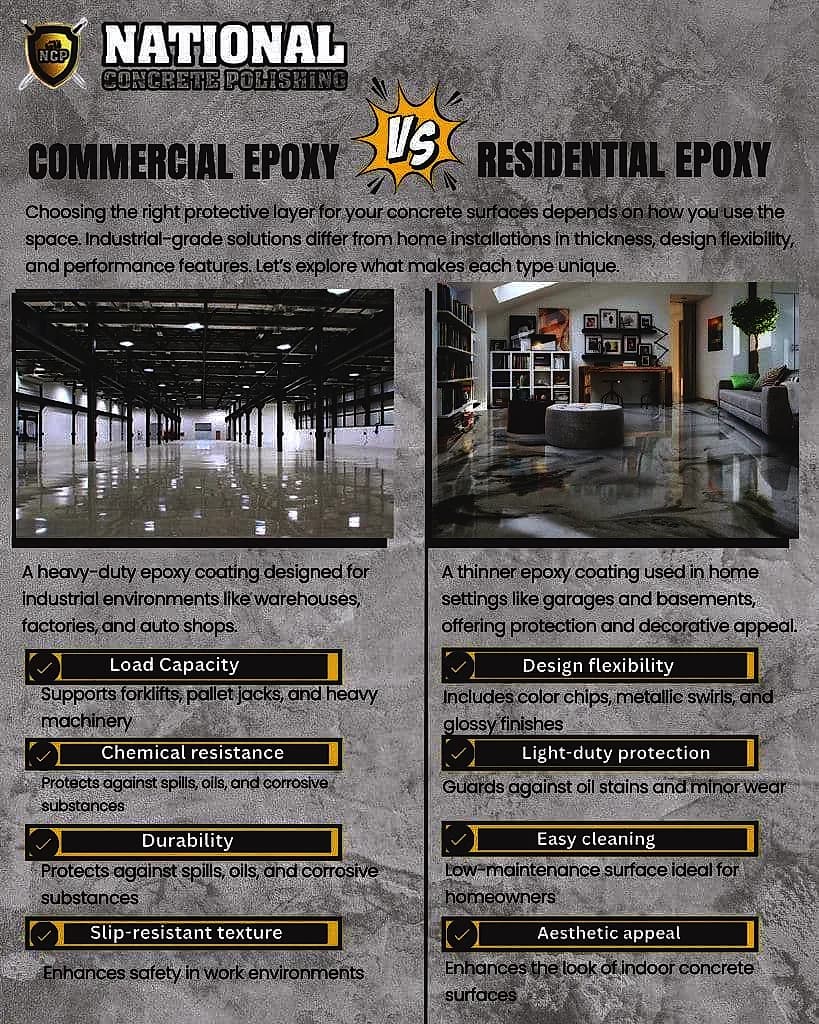
Choosing the right protective layer for your concrete surfaces depends on how you use the space. Industrial-grade solutions differ from home installations in thickness, design flexibility, and performance features. Let’s explore what makes each type unique.
Industrial-Grade Applications
Heavy-duty formulas handle forklifts, pallet jacks, and constant foot traffic. These thicker layers often include additives for chemical resistance, making them ideal for warehouses or auto shops. Installation involves multiple coats to ensure durability against impacts and spills.
Home Installation Features
For garages or basements, decorative finishes like metallic swirls or colored chips add style while protecting against oil stains. Thinner layers work well here since they face less stress than industrial settings. Many homeowners choose glossy finishes to brighten dim spaces.
Key differences include:
- Load capacity: Industrial coatings support heavier equipment
- Design options: Residential projects offer more color choices
- Cost: Thicker commercial layers require more material
Consider exposure to harsh substances or machinery when selecting your solution. High-traffic zones need slip-resistant textures, while home spaces prioritize easy cleaning. Always consult professionals to match the coating to your needs.
Comparing Pros, Cons, and Best Uses
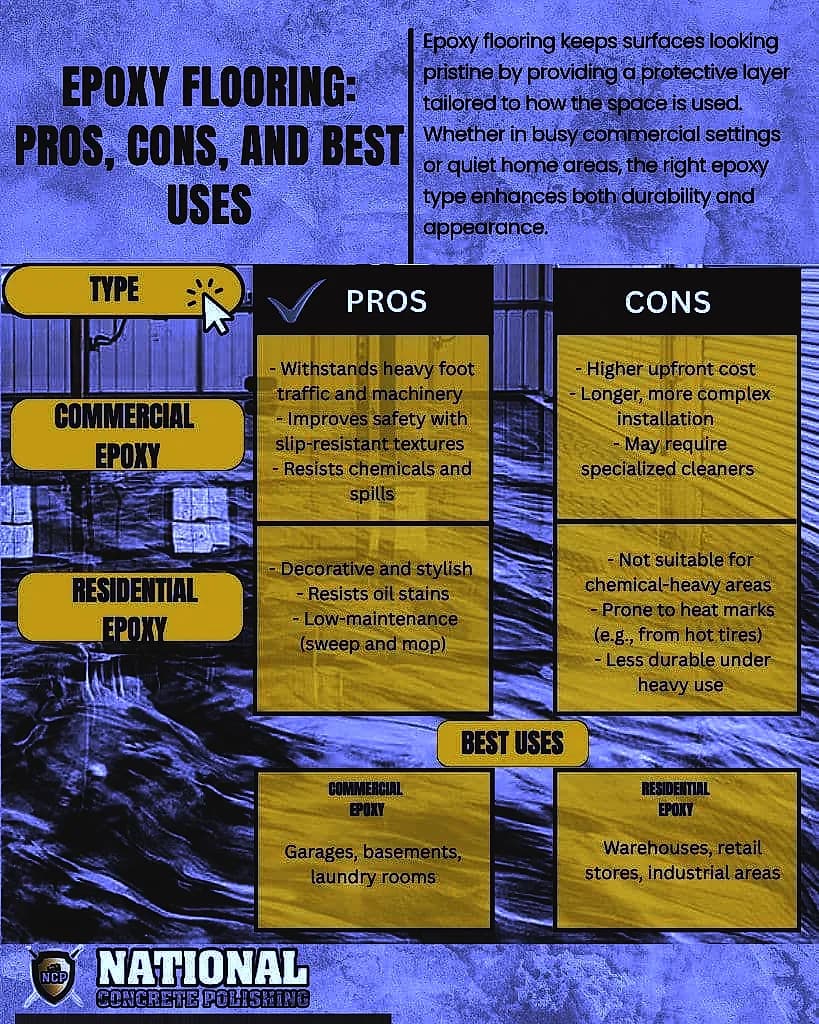
Ever wonder why some surfaces stay pristine despite heavy use? The answer lies in matching protective layers to specific needs. Let’s explore how different settings benefit from tailored approaches.
Benefits & Drawbacks for Business Environments
Thick, industrial-strength layers excel in warehouses and retail spaces. They handle heavy equipment and foot traffic without cracking. Slip-resistant textures improve safety, while chemical guards protect against spills.
However, these systems cost more upfront. Installation often takes longer due to multiple coats. Specialized cleaners may be needed for stubborn stains.
Benefits & Drawbacks for Home Settings
In garages or basements, thinner decorative layers shine. Metallic finishes or colored flakes add personality while resisting oil stains. Maintenance is simple—just sweep and mop.
These options aren’t ideal for harsh chemicals. Hot tires might leave marks if the coating isn’t heat-resistant. Always check product specs for your specific needs.
Tailored Aesthetics and Functional Finishes
Your space can reflect your style without sacrificing practicality. Consider these pairings:
| Design Choice | Best For | Performance Boost |
|---|---|---|
| Matte Finish | Modern kitchens | Hides scratches |
| Glossy Surface | Small rooms | Enhances light |
| Flake Systems | Outdoor patios | Improves traction |
Balance looks with features like UV protection or heat resistance. National Concrete Polishing helps South Florida residents choose options that withstand local conditions. Call us at +1 844-876-5474 for personalized advice.
Key Considerations for Durability, Maintenance, and Safety
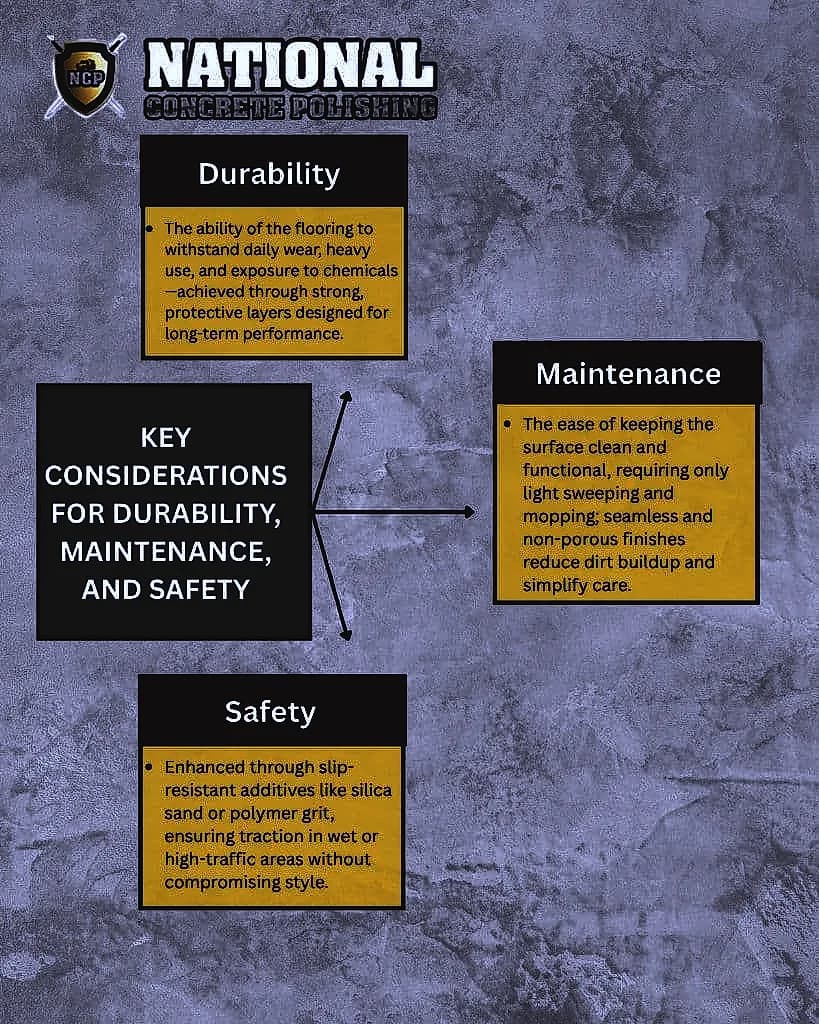
Durability isn’t just about strength—it’s about smart design. Protective layers must withstand daily challenges while keeping upkeep simple. Let’s explore how modern solutions balance longevity with practicality.
Resistance, Maintenance, and Ease of Cleaning
High-performance surfaces excel through three key features:
- Chemical guards that repel oil, acids, and solvents
- Seamless application preventing dirt buildup in cracks
- Non-porous textures allowing quick spill cleanup
Daily care requires only sweeping and occasional mopping with mild detergent. Avoid abrasive cleaners—they can dull glossy finishes over time. For stubborn stains, use pH-neutral solutions approved for sealed concrete.
Enhancing Safety with Slip-Resistant Coatings
Textured additives create traction without compromising style. Popular options include:
| Additive Type | Ideal For | Traction Level |
|---|---|---|
| Silica Sand | Warehouse aisles | High grip |
| Aluminum Oxide | Pool decks | Weather-resistant |
| Polymer Grit | Garage ramps | Medium texture |
Always test coatings under wet conditions during installation. Many products meet OSHA safety standards for workplaces. In homes, consider matte finishes with subtle texture for kitchens or entryways.
Pro tip: Schedule annual inspections to check for wear patterns. High-traffic zones may need localized resealing every 2-3 years. Pair your space’s unique needs with certified products for lasting results.
Conclusion
Selecting the right protective solution for your space balances practicality and style. Thick industrial-grade coatings excel in high-traffic areas, offering unmatched durability against heavy equipment. Home installations prioritize customizable designs with options like metallic finishes or speckled patterns, though they may require gentler maintenance.
Safety and ease of cleaning remain critical factors. Slip-resistant textures and seamless surfaces simplify upkeep while reducing accident risks. Properly installed systems also boost property value through lasting performance and polished aesthetics.
National Concrete Polishing brings 13+ years of South Florida expertise to every project. Our team evaluates humidity levels, UV exposure, and usage patterns to recommend tailored solutions. Whether upgrading a garage or outfitting a warehouse, our approach ensures optimal results.
Ready to transform your concrete surfaces? Contact us for a free consultation. Let our specialists guide you toward a floor system that fits your budget, design preferences, and functional needs—all backed by industry-leading warranties.
Frequently Asked Questions
What’s the main difference between epoxy used in warehouses versus homes?
Industrial-grade coatings prioritize extreme durability and chemical resistance for heavy machinery or foot traffic. Home installations focus on aesthetics, lighter wear, and blending with interior design, using thinner layers or decorative flakes.
Can slip-resistant additives be applied to garage floors?
Yes! Safety features like grit textures or anti-skid sealants are popular for garages, workshops, or pool decks. These reduce accident risks while maintaining stain protection against oil spills or moisture.
Are color options limited for concrete coatings in kitchens?
Not at all. Modern systems offer metallic finishes, terrazzo patterns, or custom tints. Homeowners often choose lighter shades to brighten spaces, while businesses might opt for branded colors or high-visibility accents.
How often should sealed surfaces be maintained?
Properly installed systems last 5–10 years with minimal upkeep. Sweep regularly and mop with pH-neutral cleaners. Reapplying a topcoat every few years refreshes shine and protection, especially in high-traffic zones.
Will UV exposure fade my patio’s finish?
Standard epoxy yellows under sunlight, but UV-stable polyurethane topcoats prevent this. They’re recommended for outdoor areas like balconies or driveways in sunny regions like South Florida.
Is it cost-effective compared to tiles or polished concrete?
Initial costs vary, but long-term savings come from lower repairs and cleaning time. Unlike tiles, there’s no grout to stain, and it resists cracks better than untreated concrete in freezing temperatures.
How long does installation take for a two-car garage?
Prep work (cleaning, etching) takes 1–2 days. Applying base coats and decorative layers adds 2–3 days. Most projects finish within a week, depending on humidity and design complexity.
Can it withstand harsh chemicals like battery acid or solvents?
Industrial-grade seals protect against most automotive fluids, bleach, or oils. For labs or factories, specialty coatings with higher chemical resistance are available.
Does South Florida’s humidity affect curing times?
High moisture can slow drying. Professionals use dehumidifiers or fast-cure formulas to prevent bubbling or uneven adhesion, ensuring a smooth result even during rainy seasons.
Written by

Founder and CEO
Chris Lavin is an esteemed leader in concrete polishing and epoxy coatings with a distinguished 20-year career. As founder and CEO of National Concrete Polishing and owner of Xtreme Polishing Systems, he's renowned for polishing and epoxy coating more floors than anyone globally. Chris is recognized for his innovative approach and commitment to enhancing floor durability and aesthetics. His hands-on experience and technical proficiency make him a respected authority and a valuable resource in the field of floor polishing and coatings.
Same topic
Related articles
All stories
Commercial9 min read
How Polished Concrete Solves Office Acoustic Problems
Hard floors and noise complaints. What polished concrete does to sound in an open office, and how to spec around it.
Read it
Commercial10 min read
Flooring for Hotel Wet Areas, Kitchens, and Parking Decks
Kitchens, pool decks and parking structures punish a floor daily. Which systems hold up in hotel service areas, and why.
Read it
Commercial11 min read
Specifying Floors for a New Hotel Build
For owners and architects on a new build. What to write into the flooring spec so the hotel opens on a floor that lasts.
Read it
Tell us about the floor
Tell us the space and roughly how big it is.We come back with what it would cost and when we could start.
Prefer to talk? Call +1 844-876-5474
- Leads@
nationalconcretepolishing.net - 2200 NW 32nd St #600,
Pompano Beach, FL 33069 Mon to Fri, 9:00 to 5:30