
The NCP blog
The Psychology of Retail Flooring: How Miami Stores Use Color to Drive Sales
Commercial9 min read
Color psychology is the study of how different hues influence human emotions, cognitive functions, and physical behaviors.
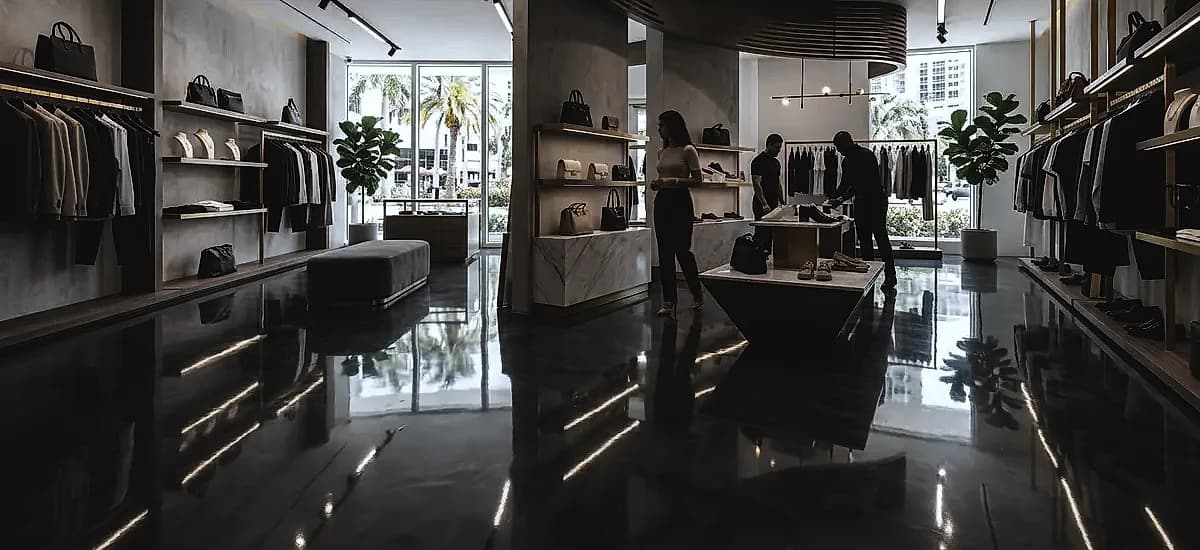
Miami retailers strategically utilize floor coating colors to manipulate consumer psychology, direct foot traffic, and ultimately increase sales volume. By selecting specific hues in commercial epoxy and polished concrete systems, store owners trigger subconscious emotional responses that dictate how shoppers interact with merchandise. Warm floor tones stimulate energy and drive impulse purchases in clearance zones, while cool, neutral tones encourage prolonged browsing in high-end boutiques. In the fiercely competitive 2026 Miami retail market, optimizing your commercial flooring is no longer just about durability; it is a foundational element of visual merchandising and consumer behavior management.
The Science of Color Psychology in Retail Environments
Color psychology is the study of how different hues influence human emotions, cognitive functions, and physical behaviors. Because floor coatings cover the largest continuous square footage in any retail space, they serve as powerful environmental anchors. The color of the floor reflects light upward, setting the ambient tone for the entire store and directly impacting the shopper’s nervous system.
Warm Tones for Energy and Urgency
Warm colors—such as red, orange, and vibrant yellow—physiologically activate the nervous system. Research published in the Journal of Business Research demonstrates that exposure to red increases the human heart rate and creates a subtle sense of urgency. This explains why major retailers consistently deploy red or warm-toned flooring accents in clearance aisles and point-of-sale (POS) environments. Orange generates a sense of approachability and affordability, making it highly effective for casual apparel and sporting goods stores. Yellow radiates optimism and captures attention faster than any other color on the spectrum, making it an ideal accent color for window displays.
Cool Tones for High-End Browsing
Conversely, cool colors produce calming physiological effects that slow down the shopper’s internal clock, encouraging them to spend more time browsing. Blue conveys profound trust, security, and reliability. Retailers selling high-ticket items, such as luxury watches or consumer electronics, frequently utilize deep blue or charcoal metallic epoxy floors to build consumer confidence. Green inherently connects the human brain to nature and wellness, making it the undisputed standard for organic grocers, health supplement retailers, and wellness boutiques.
“The floor is the canvas of the retail experience. By shifting a store’s flooring from a sterile white to a warm, inviting terracotta, we consistently observe a 12% to 15% increase in customer dwell time. In retail, dwell time directly correlates to increased transaction values.” — Dr. Elena Rostova, Environmental Psychologist and Retail Consultant
Directing Foot Traffic Through Strategic Floor Design
Beyond emotional resonance, Miami retailers use floor colors as a silent traffic controller. Strategic color placement subtly dictates how customers navigate the physical space, ensuring they interact with high-margin products rather than taking the shortest path to the exit.
To effectively guide customers using floor coatings, implement the following spatial strategies:
- Establish the Decompression Zone: The first 10 to 15 feet inside the entrance should feature welcoming, neutral tones. This allows customers to physically and mentally adjust from the bright Miami sunlight to the indoor lighting without visual overwhelm.
- Create High-Contrast Pathways: Use a lighter-colored epoxy or polished concrete pathway surrounded by darker zones. Human psychology naturally compels people to follow the lighter, clearly defined path, allowing retailers to route traffic past specific promotional displays.
- Designate Dwell Zones: Transition to darker, matte finishes in areas where you want customers to stop and examine products closely. Darker floors visually anchor the space, slowing walking speed.
- Highlight the Checkout Experience: Incorporate subtle, warm brand colors at the checkout counter to maintain customer energy and minimize the perceived wait time during final purchase decisions.
Achieving these distinct zones requires precise installation techniques. For comprehensive insights into how these multi-zone systems are applied, reviewing the retail floor finishes in Miami provides a clear understanding of available commercial options.
Industry-Specific Floor Coating Strategies in Miami
Different retail sectors require vastly different atmospheric conditions to maximize sales. A strategy that works for a high-end fashion boutique will actively harm a consumer electronics store. Here is how specific retail sectors in South Florida optimize their flooring.
Fashion and Apparel
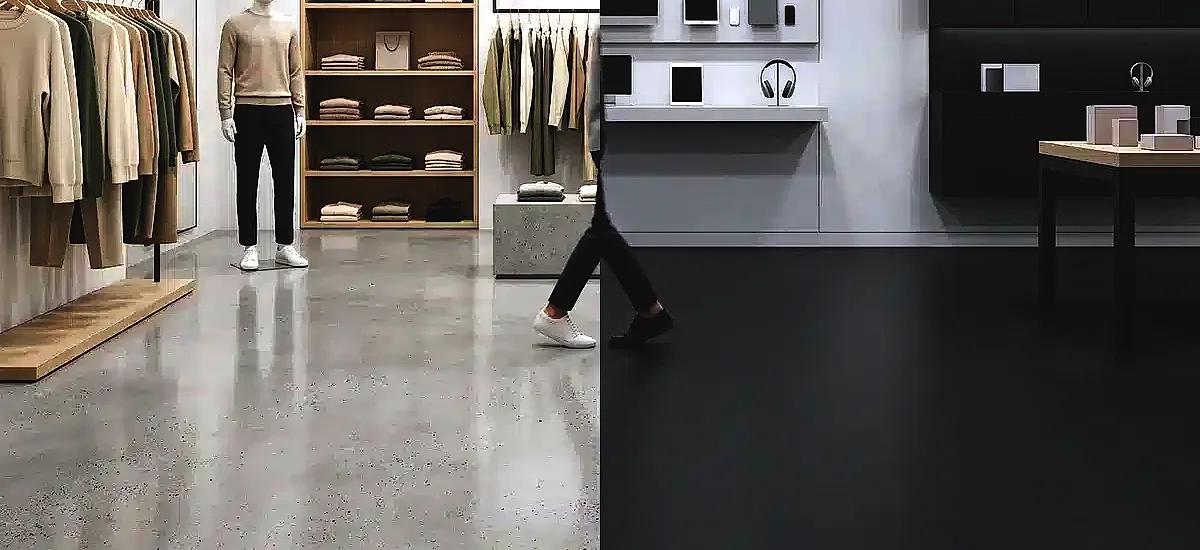
Fashion retailers overwhelmingly favor neutral floor coatings. Light gray, warm beige, or soft white surfaces prevent the floor from competing with the vibrant colors of the clothing. A high-gloss finish reflects light upward, eliminating harsh shadows on mannequins and customers in mirrors. Many modern boutiques are opting for polyaspartic versus epoxy coatings due to their superior resistance to scuffing from high heels and rolling clothing racks.
Consumer Electronics
Electronics stores face a unique challenge: screen glare. Highly reflective, light-colored floors bounce overhead lighting directly onto television and computer screens, ruining the product display. Therefore, electronics retailers utilize dark, matte coatings. Charcoal, deep blue, or graphite tones convey technical sophistication while absorbing excess light.
Food Service and Grocery
Retailers dealing with food products must balance aesthetic appeal with stringent hygiene standards. Warm terracotta or deep amber tones stimulate the appetite while effectively hiding minor organic soil between cleaning cycles. Furthermore, these floors must utilize seamless commercial epoxy formulations to prevent bacterial growth, strictly adhering to Miami-Dade health regulations.
| Retail Sector | Recommended Floor Color | Psychological Effect | Optimal Coating Type |
|---|---|---|---|
| Luxury Fashion | Soft White / Light Gray | Highlights merchandise, feels expansive | High-Gloss Polished Concrete |
| Electronics | Charcoal / Deep Blue | Reduces glare, conveys high-tech | Matte Polyurethane / Epoxy |
| Health & Wellness | Sage Green / Earth Tones | Promotes calm, connects to nature | Seamless Urethane Cement |
| Discount / Clearance | Red / Orange Accents | Creates urgency, stimulates action | Flake Epoxy Systems |
Aligning Floor Coatings with Brand Identity
Consistent color application strengthens customer recognition. When floor coatings seamlessly align with established brand palettes, they reinforce corporate identity throughout the physical space. According to data from the National Retail Federation (NRF), consistent color schemes across all customer touchpoints increase brand recognition by up to 80%.
Miami retailers should conduct a thorough analysis of their existing brand colors before selecting floor coatings. Primary brand colors are often too overwhelming for wall-to-wall application and are better utilized as accent elements, borders, or embedded logos. Complementary neutral tones should cover the larger square footage. Professional flooring contractors achieve exact brand matching through custom pigment tinting and specialized aggregate blends.
“We treat the floor as the fifth wall of branding. When a customer walks into a flagship store, the floor color should immediately communicate who we are before they even look at a price tag.” — Marcus Chen, Lead Retail Architect at Miami Design Group
Overcoming South Florida’s Unique Climate Challenges
Applying commercial floor coatings in Miami presents specific environmental challenges that retailers in other regions do not face. The combination of intense ultraviolet (UV) radiation and high moisture vapor transmission rates (MVTR) dictates the chemical composition of the coatings used.
UV Stability and Color Retention
Miami retail spaces frequently feature massive, floor-to-ceiling storefront windows to attract foot traffic. While excellent for visibility, these windows allow intense UV rays to bombard the floor. Standard epoxy resins will rapidly photochemically degrade, turning a pristine white floor into a sickly yellow within months. To prevent this, retailers must specify aliphatic polyurethane or polyaspartic topcoats, which are chemically engineered to be 100% UV stable, ensuring colors remain vibrant for the lifespan of the floor.
Moisture Mitigation and Slip Resistance
South Florida’s high water table means moisture constantly attempts to push up through the concrete slab. If a colored coating is applied without proper moisture testing and mitigation, hydrostatic pressure will cause the epoxy to blister and peel. Furthermore, slip resistance remains essential for safety and liability protection, especially during Miami’s daily summer downpours. The American National Standards Institute (ANSI) standard A326.3-2021 requires a Dynamic Coefficient of Friction (DCOF) above 0.42 for level floors. Anti-slip aggregates, such as aluminum oxide or glass spheres, are broadcast into the colored topcoat to meet OSHA walking-working surface requirements without compromising the visual aesthetic.
The Installation Process: Minimizing Retail Downtime
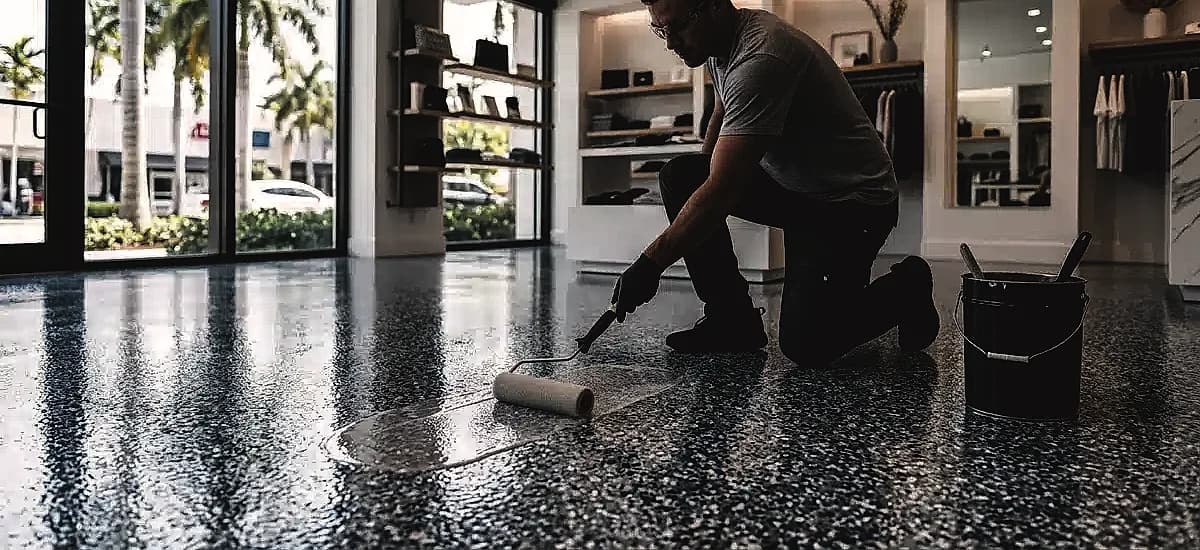
For operational retail businesses, extended downtime translates directly to lost revenue. Therefore, the installation timeline is a critical factor when upgrading floor colors. Standard epoxy systems typically require 24 to 72 hours for a full chemical cure before foot traffic can resume. However, fast-curing polyaspartic coatings offer a rapid return-to-service, often allowing stores to reopen within 24 hours of application.
The process begins with aggressive mechanical surface preparation. Shot blasting or diamond grinding removes existing coatings and opens the concrete pores, creating the optimal surface profile for adhesion. Without this step, even the highest-quality colored resins will fail. Retailers often utilize phased installations, allowing sections of the store to remain operational while work progresses overnight. Understanding the concrete polishing timelines helps store managers schedule renovations during historically slow sales periods.
Additionally, proper joint treatment is critical during installation. Expansion joints must be honored and filled with flexible polyurea to prevent the colored coating from cracking as the building shifts.
Maintenance Protocols for Commercial Floor Coatings
The psychological impact of a colored floor is instantly negated if the surface appears dirty or poorly maintained. Customer perception directly impacts business outcomes; clean, attractive floors communicate professionalism and product quality.
Maintenance requirements vary significantly by coating type and color selection. Lighter colors, while making spaces feel larger and brighter, show dark soil and scuff marks more readily, requiring more frequent automated scrubbing. Darker coatings effectively hide dirt but highlight light-colored dust and lint. Implementing the cleaning high-traffic epoxy floors protocol ensures longevity. Daily maintenance should consist of microfiber dust mopping to remove abrasive silica sand tracked in from the street, followed by damp mopping using a pH-neutral cleaner. Harsh degreasers or acidic cleaners will dull the high-gloss finish and degrade the color pigments over time.
Frequently Asked Questions
What floor coating colors work best for high-traffic Miami retail stores?
Medium gray, tan, and warm terracotta tones are highly effective for high-traffic areas because they naturally camouflage foot traffic soil and dust between cleaning cycles. Incorporating a multi-colored vinyl flake system provides additional visual texture that hides imperfections while maintaining a professional appearance.
How do I choose floor colors that match my retail brand identity?
Begin by analyzing your existing brand palette and selecting complementary, rather than exact matching, colors for the main floor area. Neutral foundations in soft gray, beige, or white work seamlessly with most brand colors, allowing you to use your primary brand colors as striking accents or embedded logos.
What specific floor colors are proven to increase impulse purchases?
Warm colors, specifically red, vibrant orange, and yellow, physiologically increase customer energy and create a subconscious sense of urgency. Retailers should use these colors strategically as accents in promotional zones or clearance areas rather than applying them across the entire store floor.
How long do colored retail floor coatings last in South Florida?
When professionally installed with proper moisture mitigation and UV-stable topcoats, commercial-grade epoxy and polyaspartic coatings last 15 to 20 years. The lifespan heavily depends on adherence to daily maintenance protocols and the volume of foot traffic.
Are slip-resistant floor coatings available in custom colors?
Yes, anti-slip additives such as clear glass spheres or aluminum oxide can be integrated into virtually any custom coating color. While these additives slightly alter the texture and create a more matte finish, they are essential for meeting safety standards in wet environments.
Can I install different floor colors in different zones of my store?
Absolutely. Utilizing zone-specific colors is a highly effective spatial management technique that guides customer traffic and creates distinct shopping environments within a single location. This strategy works exceptionally well in large-format retail spaces and department stores.
Conclusion
The strategic application of floor coating colors is a proven methodology for Miami retailers looking to optimize consumer behavior, enhance brand identity, and drive sales. By understanding the psychological impact of warm versus cool tones, managing foot traffic through visual contrast, and selecting the appropriate chemical formulations to withstand South Florida’s demanding climate, store owners can transform their floors into active sales tools. Whether you operate a luxury boutique in the Design District or a high-volume electronics retailer, the right floor coating provides a measurable return on investment. Ready to elevate your retail environment and maximize your 2026 sales potential? Contact us today to schedule a comprehensive consultation and discover the perfect flooring solution for your business.
Written by

Founder and CEO
Chris Lavin is an esteemed leader in concrete polishing and epoxy coatings with a distinguished 20-year career. As founder and CEO of National Concrete Polishing and owner of Xtreme Polishing Systems, he's renowned for polishing and epoxy coating more floors than anyone globally. Chris is recognized for his innovative approach and commitment to enhancing floor durability and aesthetics. His hands-on experience and technical proficiency make him a respected authority and a valuable resource in the field of floor polishing and coatings.
Same topic
Related articles
All stories
Commercial9 min read
How Polished Concrete Solves Office Acoustic Problems
Hard floors and noise complaints. What polished concrete does to sound in an open office, and how to spec around it.
Read it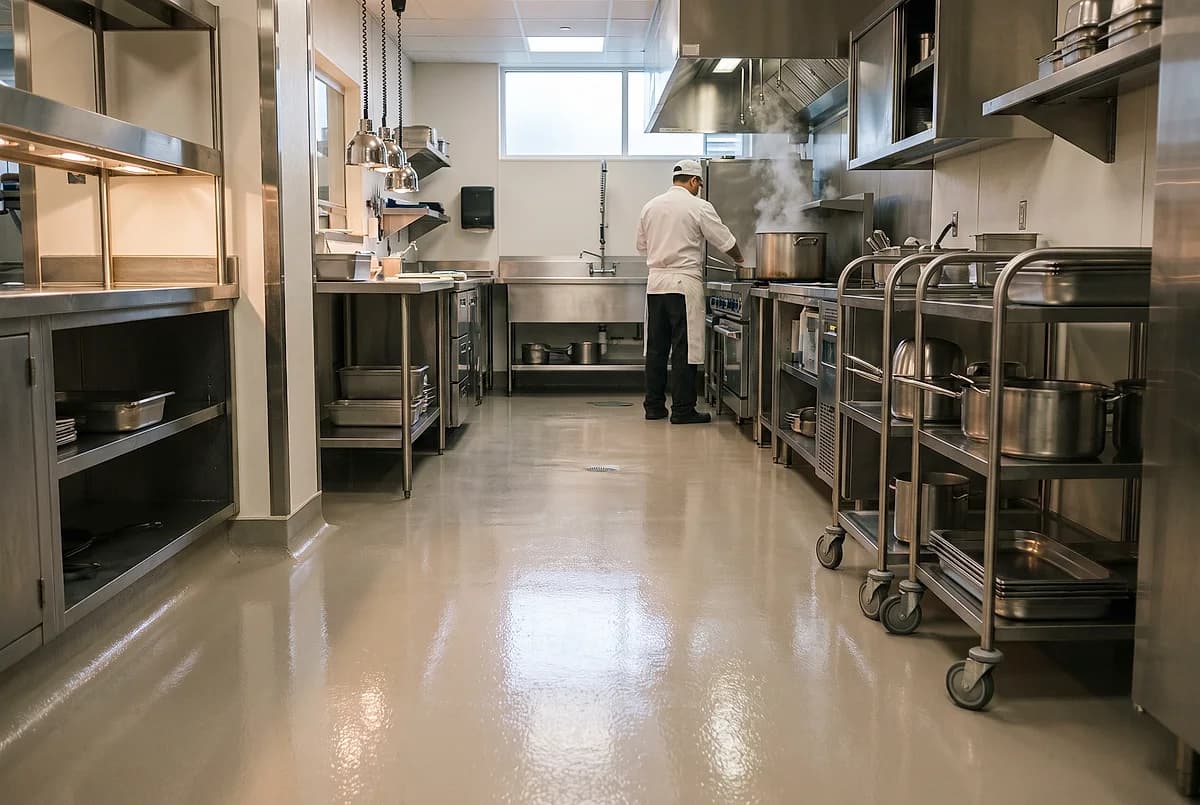
Commercial10 min read
Flooring for Hotel Wet Areas, Kitchens, and Parking Decks
Kitchens, pool decks and parking structures punish a floor daily. Which systems hold up in hotel service areas, and why.
Read it
Commercial11 min read
Specifying Floors for a New Hotel Build
For owners and architects on a new build. What to write into the flooring spec so the hotel opens on a floor that lasts.
Read it
Tell us about the floor
Tell us the space and roughly how big it is.We come back with what it would cost and when we could start.
Prefer to talk? Call +1 844-876-5474
- Leads@
nationalconcretepolishing.net - 2200 NW 32nd St #600,
Pompano Beach, FL 33069 Mon to Fri, 9:00 to 5:30