
The NCP blog
Static Shock from Your Warehouse Floor is More Dangerous Than You Think
Commercial6 min read
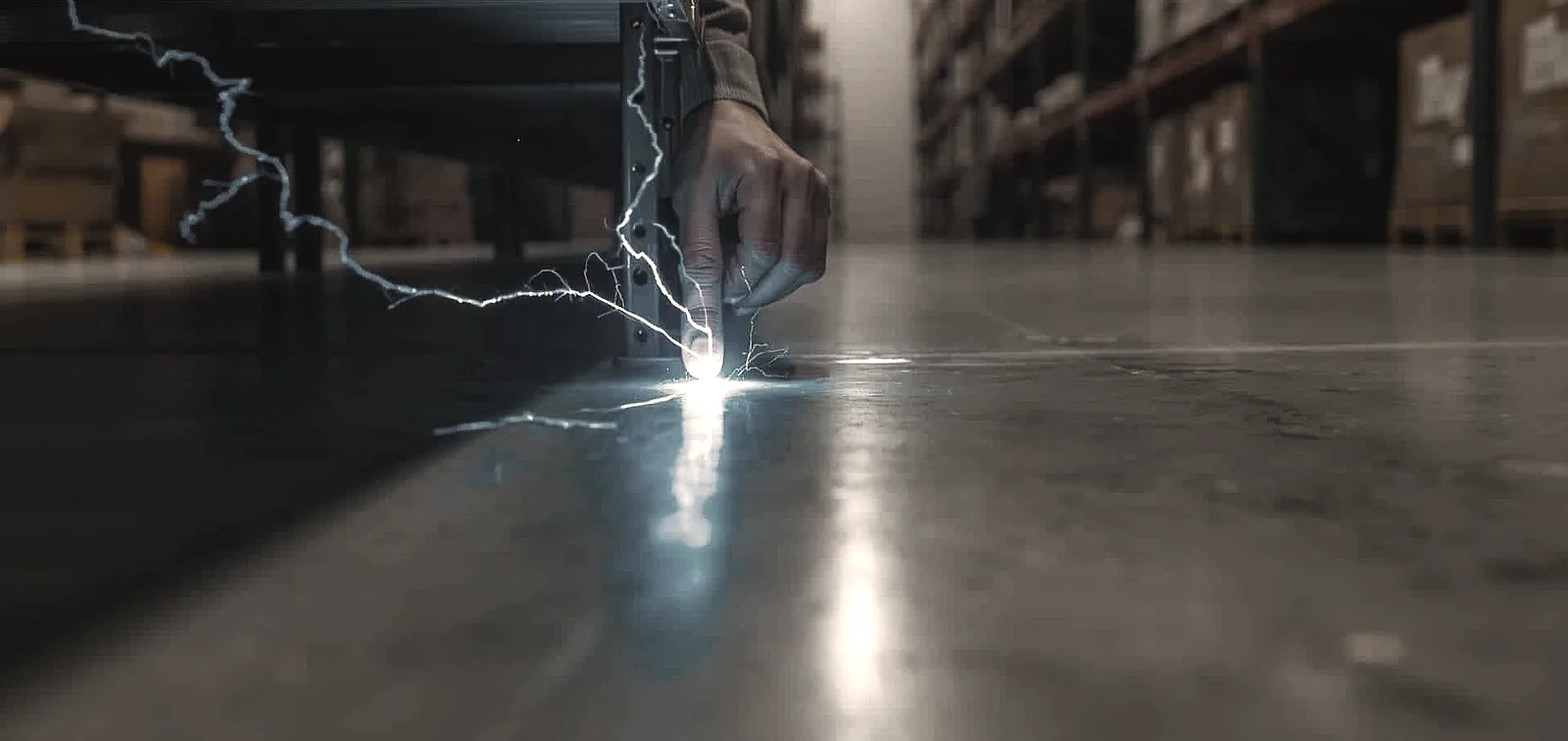
That small spark you feel when touching a metal shelf in your warehouse could signal a serious safety problem.
That small spark you feel when touching a metal shelf in your warehouse could signal a serious safety problem. Epoxy floor static electricity warehouse hazards cause equipment failures, product damage, and in worst-case scenarios, fires and explosions. Standard epoxy coatings act as insulators, allowing static charges to build up on people and equipment as they move across the floor. When these charges discharge near flammable materials or sensitive electronics, the results can be catastrophic.
This article explains the real dangers of static electricity in warehouse environments and shows how ESD (electrostatic discharge) flooring systems provide effective protection.
Why Standard Epoxy Floors Create Static Hazards
Regular epoxy coatings provide excellent durability and chemical resistance for warehouse floors. However, epoxy acts as an electrical insulator, preventing static charges from dissipating safely to ground.
When workers walk across a standard epoxy floor, friction between shoe soles and the floor surface generates electrical charges through triboelectric charging. This process produces voltages exceeding 5,000 volts under dry conditions. The charge accumulates until the person touches a grounded object, causing sudden discharge.
Low humidity levels, rapid forklift movement, and synthetic-soled footwear compound the problem. The movement of plastic packaging, shrink wrap, and cardboard boxes also contributes to continuous charge buildup throughout the workday.
The Real Dangers of Warehouse Static Discharge
Static electricity poses three main risk categories in warehouse operations: fire hazards, equipment damage, and personnel injury.
Fire and Explosion Risks
The most serious danger occurs in warehouses storing flammable liquids, gases, or combustible dust. According to OSHA Standard 1910.106, static electrical sparks are recognized ignition sources requiring control in areas with flammable vapors. NFPA 77, the Recommended Practice on Static Electricity, provides detailed guidance on preventing fires from electrostatic discharge.
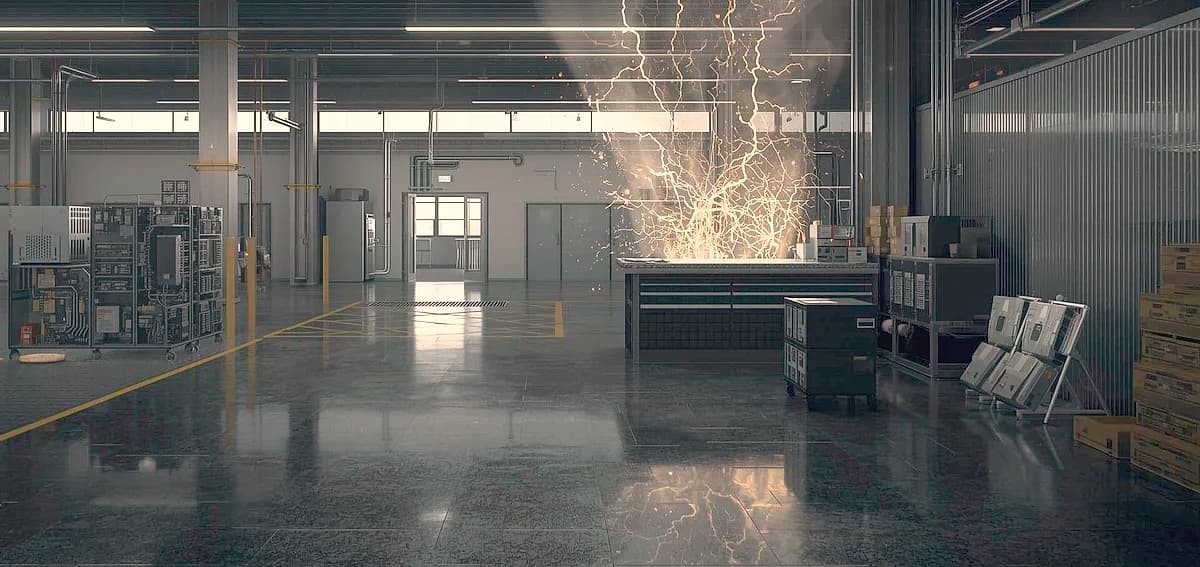
A static spark contains enough energy to ignite many industrial materials. Gasoline vapors require only 0.2 millijoules for ignition—easily produced by normal static discharge. Warehouses storing paints, solvents, or petroleum products face elevated risk with standard epoxy floors.
Combustible dust presents similar dangers. Grain, flour, metal powders, and pharmaceutical materials form explosive atmospheres when suspended in air. Static discharge into these clouds can trigger devastating explosions.
Electronic Equipment Damage
Static discharge damages sensitive electronic components at voltage levels far below human perception. While people notice shocks above 3,000 volts, electronic components fail from discharges as low as 100 volts.
Warehouses storing electronic products risk destroying circuit boards and memory chips during handling. Latent defects from static events cause products to fail months later, leading to warranty claims and reputation damage. Automated systems, barcode scanners, and conveyor controls also suffer from static exposure.
Personnel Safety Concerns
While static shocks rarely injure healthy adults directly, they create secondary hazards. Sudden shocks cause workers to drop materials, lose balance, or make involuntary movements. Near moving equipment or elevated platforms, these reactions lead to serious injuries.
Understanding ESD Flooring Standards
Several industry standards govern static-control flooring performance requirements.
ANSI/ESD S20.20
This standard provides comprehensive requirements for electrostatic discharge control programs. For flooring, S20.20 requires surface resistance below 1.0 x 10⁹ ohms and body voltage generation below 100 volts during walking.
NFPA 77
NFPA 77 focuses on preventing fires and explosions from static electricity. This recommended practice addresses conductive and static-dissipative floors as primary control measures in hazardous locations. Facilities storing flammable materials should follow NFPA 77 guidance.
Resistance Classifications
Conductive floors measure below 1.0 x 10⁶ ohms, providing rapid charge dissipation. Static-dissipative floors measure between 1.0 x 10⁶ and 1.0 x 10⁹ ohms, offering controlled charge drainage that protects both equipment and personnel. For most warehouses, static-dissipative flooring provides the optimal balance.
ESD Epoxy Flooring Solutions for Warehouses
ESD epoxy systems incorporate conductive materials that transform standard coatings into effective static-control surfaces while maintaining durability and chemical resistance.
How ESD Epoxy Works
ESD epoxy coatings contain conductive particles—typically carbon fibers or metallic additives—dispersed throughout the material. These particles create continuous electrical pathways through the coating. When grounded, charges flow from the floor surface through the coating to earth ground.
The system includes multiple layers: a conductive primer bonding to the concrete substrate, a ground plane ensuring electrical continuity, and a topcoat providing wear resistance while maintaining surface conductivity.
Installation Requirements
Surface preparation must achieve appropriate concrete profiles while removing contaminants. Moisture testing ensures proper coating performance. Copper grounding strips connect to the facility’s electrical ground at specified intervals—typically every 1,000 square feet.
Professional installation by experienced flooring contractors ensures specifications are met and performance is verified through testing.
Testing and Verification
After installation, surface resistance measurements using ANSI/ESD STM7.1 verify electrical properties. Body voltage generation testing measures charge accumulated during walking. Regular verification testing—quarterly or annually—identifies problems before they compromise safety.
Choosing the Right ESD Solution
Selecting appropriate ESD flooring requires evaluating specific hazards, operational requirements, and budget.
Assessing Your Static Risks
Facilities storing flammable liquids require stringent controls. Electronics distribution centers need component protection. Climate-controlled facilities with low humidity generate more static than naturally ventilated spaces.
Comparing Flooring Options
ESD epoxy coatings provide seamless, easy-to-clean surfaces ideal for high-traffic areas. They handle forklift traffic and resist chemicals. Commercial epoxy systems rated for ESD combine durability with static control.

Polished concrete with topical ESD treatments provides another option. Densifiers and sealers formulated for static control convert existing polished floors into ESD-compliant surfaces.
Budget Considerations
ESD flooring costs more than standard coatings but must be weighed against potential losses from fires, equipment damage, and injuries. Facilities with high-value electronics or hazardous materials often find ESD flooring pays for itself through reduced losses.
Maintenance Requirements for ESD Floors
Proper maintenance preserves the electrical properties that make ESD floors effective.
Use only cleaning products approved for ESD floors—standard cleaners leave residues that increase surface resistance. Avoid wax, polish, or any product not specifically formulated for static-control surfaces.
Schedule regular resistance testing to verify continued performance. Quarterly testing catches problems early. Increased resistance indicates contamination or wear requiring corrective action.
Frequently Asked Questions
How do I know if my warehouse needs ESD flooring?
Evaluate stored materials. Warehouses with flammable materials, electronics, or explosive atmospheres require ESD flooring. General warehouses benefit from static control for equipment protection and worker comfort.
What is the difference between conductive and static-dissipative flooring?
Conductive floors measure below 1.0 x 10⁶ ohms for rapid charge dissipation. Static-dissipative floors measure between 1.0 x 10⁶ and 1.0 x 10⁹ ohms, providing controlled drainage protecting both equipment and personnel.
Can ESD coating be applied over existing epoxy floors?
Yes, in many cases. The existing floor requires proper preparation and adhesion testing. Professional evaluation determines feasibility for your situation.
How long does ESD epoxy flooring last in warehouse environments?
Properly installed and maintained ESD epoxy provides 10 to 20 years of service depending on traffic, chemical exposure, and maintenance. Regular testing verifies continued performance.
What footwear is required with ESD flooring?
For maximum protection, workers should wear ESD-rated footwear with built-in resistors. In less critical applications, leather-soled shoes provide better conductivity than rubber or synthetic soles.
How often should ESD floors be tested?
Quarterly testing is recommended for critical applications. Annual testing provides minimum oversight for general warehouse use.
Can forklifts damage ESD floor coatings?
Quality commercial-grade ESD epoxy systems handle forklift traffic. Specify appropriate thickness and hardness for expected traffic loads.
What humidity levels affect static generation?
Static problems increase when relative humidity drops below 30%. Maintain humidity above 40% when possible to supplement floor-based static control.
Do ESD floors require special grounding?
Yes. Copper strips must connect the floor system to the facility’s electrical ground at required intervals throughout the installation.
What causes ESD floors to lose effectiveness?
Common causes include wrong cleaning products, physical damage, moisture problems, and degradation over time. Regular testing identifies problems early.
Sources
- OSHA Electrical Safety Overview
- Canadian Centre for Occupational Health and Safety: Static Electricity
Get Professional ESD Flooring Solutions
Static electricity hazards in your warehouse require professional assessment and proven solutions. National Concrete Polishing specializes in ESD epoxy flooring systems designed for demanding warehouse environments throughout South Florida and beyond.
Get a free estimate on static-control flooring for your facility.
Written by

Founder and CEO
Chris Lavin is an esteemed leader in concrete polishing and epoxy coatings with a distinguished 20-year career. As founder and CEO of National Concrete Polishing and owner of Xtreme Polishing Systems, he's renowned for polishing and epoxy coating more floors than anyone globally. Chris is recognized for his innovative approach and commitment to enhancing floor durability and aesthetics. His hands-on experience and technical proficiency make him a respected authority and a valuable resource in the field of floor polishing and coatings.
Same topic
Related articles
All stories
Commercial9 min read
How Polished Concrete Solves Office Acoustic Problems
Hard floors and noise complaints. What polished concrete does to sound in an open office, and how to spec around it.
Read it
Commercial10 min read
Flooring for Hotel Wet Areas, Kitchens, and Parking Decks
Kitchens, pool decks and parking structures punish a floor daily. Which systems hold up in hotel service areas, and why.
Read it
Commercial11 min read
Specifying Floors for a New Hotel Build
For owners and architects on a new build. What to write into the flooring spec so the hotel opens on a floor that lasts.
Read it
Tell us about the floor
Tell us the space and roughly how big it is.We come back with what it would cost and when we could start.
Prefer to talk? Call +1 844-876-5474
- Leads@
nationalconcretepolishing.net - 2200 NW 32nd St #600,
Pompano Beach, FL 33069 Mon to Fri, 9:00 to 5:30