
The NCP blog
Weather-Resistant Concrete Countertops for Florida Outdoor Kitchens
Polished concrete13 min read
Florida’s year-round outdoor living culture makes outdoor kitchens an increasingly popular home improvement investment.
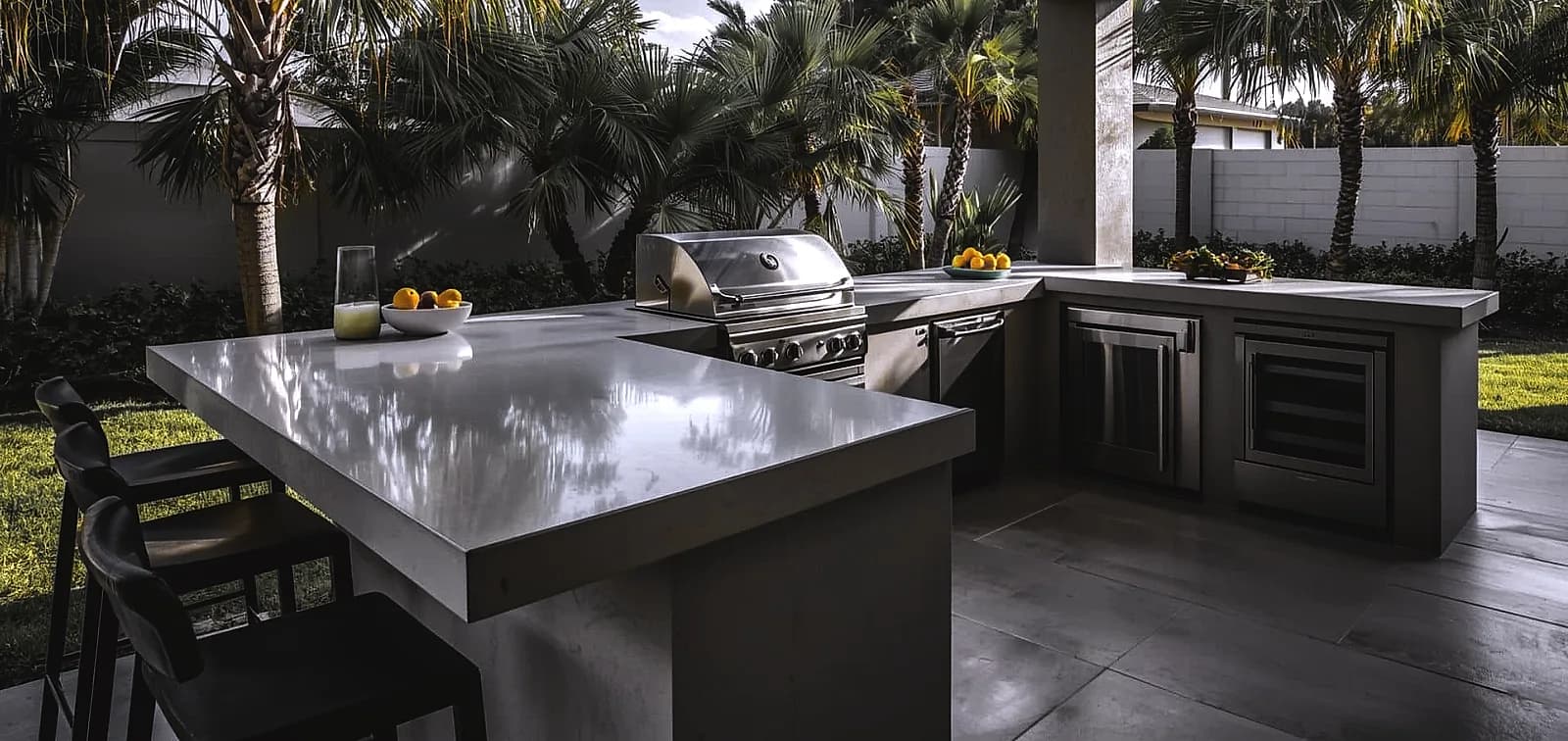
Florida’s year-round outdoor living culture makes outdoor kitchens an increasingly popular home improvement investment. However, the state’s unique climate presents significant challenges for outdoor surfaces, particularly countertops that must withstand intense UV radiation, heavy rainfall, high humidity, and occasional severe weather events. When it comes to creating durable, attractive outdoor kitchen surfaces, concrete countertops outdoor Florida homeowners are discovering represent one of the most versatile and resilient options available.
Unlike traditional indoor countertop materials that may crack, fade, or deteriorate under Florida’s harsh environmental conditions, properly designed and installed outdoor concrete countertops can provide decades of reliable service while maintaining their aesthetic appeal. The key lies in understanding the specific weather-related challenges that Florida presents and implementing appropriate design strategies, material selections, and installation techniques that address these concerns proactively.
Florida’s subtropical and tropical climate zones create a perfect storm of environmental stressors for outdoor surfaces. The combination of intense solar radiation, frequent temperature fluctuations, high humidity levels, and seasonal hurricane threats requires countertop materials that can flex, breathe, and resist both physical and chemical degradation. Concrete, when properly formulated and finished, offers unique advantages in addressing these challenges while providing unlimited design flexibility.
The growing popularity of outdoor concrete countertops reflects not only their practical benefits but also their ability to complement Florida’s architectural styles, from Mediterranean and contemporary to tropical modern designs. Professional installation by experienced contractors like National Concrete Polishing ensures that these surfaces are engineered specifically for Florida’s demanding outdoor environment, incorporating specialized mix designs, reinforcement strategies, and protective treatments that maximize longevity and performance.
Key Takeaways
Weather Resistance: Properly formulated concrete countertops can withstand Florida’s intense UV radiation, heavy rainfall, and high humidity when designed with appropriate admixtures, reinforcement, and protective coatings that prevent cracking, fading, and water damage.
Design Flexibility: Concrete offers unlimited customization options for outdoor kitchens, including integrated features like built-in grills, sinks, ice bins, and decorative elements that can be seamlessly incorporated during the casting process.
Thermal Performance: Unlike metal or dark stone surfaces that become uncomfortably hot in Florida’s sun, concrete can be formulated with light-colored aggregates and reflective finishes that remain cooler to the touch while providing excellent heat resistance around cooking areas.
Maintenance Requirements: Modern concrete countertops require minimal ongoing maintenance when properly sealed and finished, with periodic resealing every 2-3 years being the primary requirement for maintaining weather resistance and appearance.
Cost Effectiveness: When considering long-term durability and replacement costs, concrete countertops often provide superior value compared to natural stone, tile, or manufactured materials that may require frequent repair or replacement in Florida’s challenging climate.
Professional Installation: Success with outdoor concrete countertops depends heavily on proper installation techniques, including appropriate substrate preparation, reinforcement placement, curing procedures, and application of protective treatments by experienced contractors.
Understanding Florida’s Climate Challenges
Florida’s unique geographic position creates a complex set of environmental conditions that outdoor surfaces must withstand year-round. The state’s location between the Atlantic Ocean and Gulf of Mexico, combined with its latitude, results in consistently high temperatures, intense solar radiation, and elevated humidity levels that can accelerate material degradation through both physical and chemical processes.
Solar radiation in Florida is among the most intense in the continental United States, with UV levels that can cause rapid fading, surface chalking, and thermal expansion in many materials. Traditional countertop materials like laminate, wood, or even some natural stones can experience significant color changes, surface deterioration, or structural damage when exposed to this constant bombardment of ultraviolet energy. Concrete countertops, however, can be engineered with UV-stable pigments and protective treatments that maintain their appearance indefinitely. Understanding why polished concrete is popular in Florida helps explain its superior performance.
Temperature fluctuations, while less extreme than in northern climates, still present challenges for outdoor surfaces in Florida. Daily temperature swings, particularly during winter months, can cause expansion and contraction cycles that stress rigid materials. Concrete’s ability to accommodate these movements through proper joint placement and reinforcement design makes it particularly well-suited for Florida applications.
Moisture management represents perhaps the greatest challenge for outdoor surfaces in Florida. The combination of high humidity, frequent rainfall, and occasional flooding requires materials that can resist water penetration while allowing vapor transmission to prevent trapped moisture damage. Modern concrete formulations and sealing systems provide excellent moisture resistance while maintaining the breathability necessary for long-term durability in humid conditions. Research shows how Florida humidity impacts concrete floor finishes, which applies to countertop applications as well.
Design Advantages for Florida Outdoor Kitchens
The design flexibility offered by concrete countertops makes them particularly attractive for Florida outdoor kitchens, where functionality must be balanced with aesthetic appeal and weather resistance. Unlike prefabricated materials that come in standard sizes and configurations, concrete can be cast in place or precast to exact specifications, allowing for complex shapes, integrated features, and custom details that enhance both form and function.
Color options for outdoor concrete countertops are virtually unlimited, with integral pigments, decorative aggregates, and surface treatments providing endless possibilities for customization. Light-colored finishes are particularly popular in Florida applications, as they reflect heat and maintain comfortable surface temperatures even during peak sun exposure. Earth tones, coastal blues, and tropical greens can be achieved through various coloring techniques, allowing homeowners to coordinate their outdoor kitchen surfaces with their home’s architecture and landscape design.
Texture variations in concrete surfaces provide both aesthetic interest and practical benefits for outdoor applications. Smooth, polished finishes offer easy cleaning and maintenance, while textured surfaces provide slip resistance and hide minor wear or weathering. Exposed aggregate finishes are particularly popular for Florida outdoor kitchens, as they provide excellent durability, attractive appearance, and natural slip resistance that improves safety around wet areas.
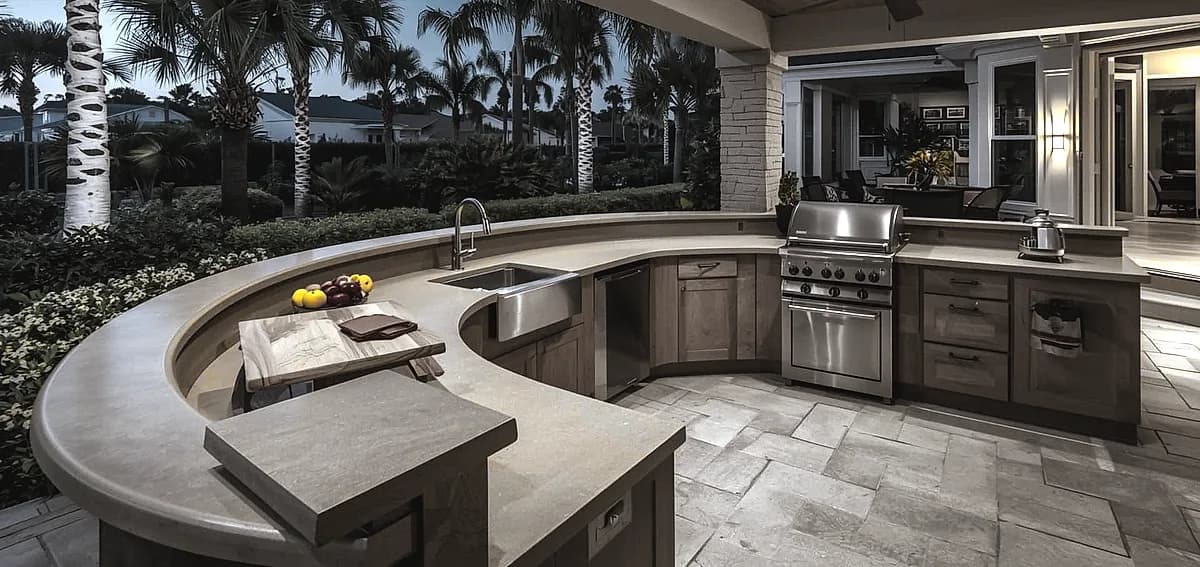
Integration of functional elements directly into concrete countertops represents one of the material’s greatest advantages for outdoor kitchen applications. Built-in drainage channels, ice bins, cutting boards, trivets, and even lighting elements can be incorporated during the casting process, creating seamless, weatherproof installations that would be difficult or impossible to achieve with other materials. These integrated features eliminate joints and seams where water and debris might accumulate, improving both hygiene and long-term durability.
Edge treatments for concrete countertops can be customized to complement any design aesthetic, from simple beveled edges for contemporary installations to elaborate ogee profiles for traditional styles. These edge details can incorporate decorative aggregates, contrasting colors, or special finishes that add visual interest while maintaining weather resistance and durability. Professionals who specialize in concrete countertops polishing can achieve stunning custom edge profiles.
Material Selection and Mix Design
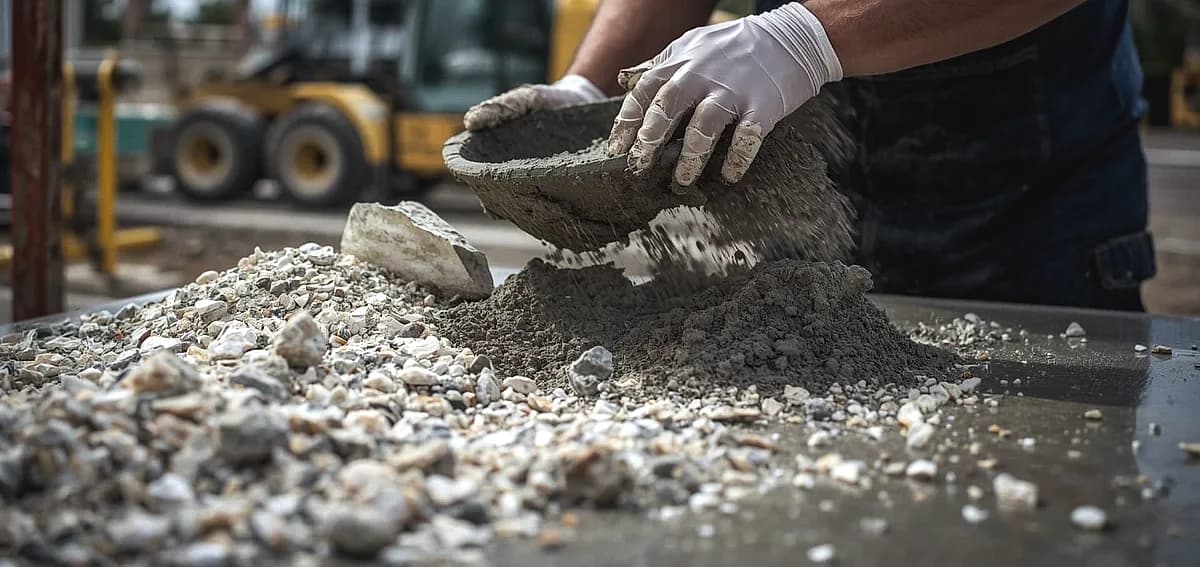
Creating weather-resistant concrete countertops for Florida outdoor kitchens requires careful attention to mix design, incorporating specific materials and admixtures that enhance durability, weather resistance, and long-term performance. The foundation of any successful outdoor concrete countertop begins with selecting appropriate cement types, aggregates, and supplementary cementitious materials that work together to create a dense, impermeable matrix capable of withstanding environmental stresses.
High-performance concrete mixes for outdoor applications typically incorporate supplementary cementitious materials such as fly ash, silica fume, or ground granulated blast furnace slag. These materials not only improve the concrete’s strength and durability but also enhance its resistance to chemical attack, reduce permeability, and improve long-term performance in aggressive environments. In Florida’s high-humidity, salt-laden coastal atmosphere, these additions are particularly beneficial for preventing chloride penetration and subsequent reinforcement corrosion.
Aggregate selection plays a crucial role in both the performance and appearance of outdoor concrete countertops. Local aggregates that have proven their durability in Florida’s climate are often preferred, as they have demonstrated resistance to alkali-silica reaction and other deleterious processes. Lightweight aggregates may be specified for certain applications to reduce thermal mass and improve insulation properties, while decorative concrete aggregates can provide aesthetic enhancement and improved surface durability.
Chemical admixtures are essential components of weather-resistant concrete mixes, with water-reducing agents, air-entraining admixtures, and specialty additives each serving specific functions. High-range water reducers allow for lower water-cement ratios while maintaining workability, resulting in denser, stronger concrete with improved weather resistance. Air-entraining admixtures create microscopic air bubbles that provide freeze-thaw protection, which while less critical in Florida than northern climates, still offer benefits for thermal cycling resistance.
Fiber reinforcement has become increasingly popular for outdoor concrete countertops, with synthetic fibers providing crack control and impact resistance while steel fibers enhance structural performance. Glass fibers offer excellent alkali resistance and can be used in thin-section applications where traditional reinforcement might be impractical. The selection of appropriate fiber types and dosages depends on specific performance requirements and aesthetic considerations.
Installation Techniques for Maximum Durability
Proper installation techniques are critical for ensuring the long-term performance of concrete countertops in Florida’s challenging outdoor environment. The installation process begins with careful substrate preparation, as the supporting structure must be capable of handling both the weight of the concrete and the thermal movements that occur in outdoor applications. Steel or concrete block supports are typically preferred over wood framing, as they provide superior dimensional stability and moisture resistance.
Reinforcement design and placement require special attention for outdoor applications, where thermal movements and potential impact loads exceed those encountered in indoor installations. Steel reinforcement must be properly positioned to provide adequate cover while maintaining structural effectiveness. Stainless steel reinforcement or epoxy-coated steel may be specified for coastal applications where chloride exposure is a concern. The reinforcement layout should account for potential crack patterns and provide adequate support for cantilevers, cutouts, and other stress concentrations.
Forming systems for outdoor concrete countertops must accommodate the increased complexity of outdoor installations while providing the precision necessary for high-quality finishes. Flexible forms may be required for curved sections, while rigid forms ensure straight edges and consistent dimensions. Form release agents must be compatible with subsequent sealing and finishing operations, and care must be taken to prevent contamination that could interfere with protective treatments.
Curing procedures for outdoor concrete countertops in Florida require modification from standard practices to account for high temperatures, intense solar radiation, and potential wind exposure. Evaporation retardants may be necessary to prevent plastic shrinkage cracking, while curing compounds or coverings protect the surface from rapid moisture loss. Extended curing periods are often beneficial for achieving maximum strength and durability, particularly when supplementary cementitious materials are used in the mix design. Understanding how epoxy flooring cures in South Florida weather provides insights applicable to concrete curing.
Quality control during installation includes monitoring concrete temperature, slump, air content, and other critical parameters that affect final performance. Test specimens should be cast and cured under conditions similar to the actual installation to verify strength development and identify any potential issues before they affect the finished product. National Concrete Polishing employs rigorous quality control procedures to ensure consistent results and long-term performance for all outdoor countertop installations.
Protective Treatments and Finishing Systems
The application of appropriate protective treatments and finishing systems represents the final and perhaps most critical step in creating weather-resistant concrete countertops for Florida outdoor kitchens. These systems must provide protection against UV radiation, moisture penetration, chemical attack, and physical wear while maintaining the concrete’s natural beauty and tactile qualities. The selection of appropriate treatments depends on the specific exposure conditions, aesthetic requirements, and maintenance preferences of the installation.
Penetrating sealers represent the first line of defense against moisture intrusion and chemical attack. These products penetrate into the concrete matrix, reacting with calcium hydroxide to form insoluble crystalline structures that block capillary pores while allowing vapor transmission. Silane and siloxane-based sealers are particularly effective for outdoor applications, providing excellent water repellency while maintaining breathability. These sealers are typically colorless and do not significantly alter the concrete’s appearance, making them ideal for applications where natural concrete aesthetics are desired.
Topical sealers and coatings provide additional protection and can enhance the concrete’s appearance through gloss development, color enhancement, or special effects. Acrylic sealers offer good UV resistance and are available in various gloss levels, while polyurethane coatings provide superior chemical and abrasion resistance. For outdoor applications in Florida, UV-stable formulations are essential to prevent yellowing, chalking, or other degradation that can occur with prolonged sun exposure. Epoxy resin on concrete countertops can also provide exceptional protection.
Specialized protective treatments may be required for specific applications or exposure conditions. Anti-graffiti coatings can provide protection against vandalism in accessible locations, while anti-slip additives may be incorporated into sealing systems for areas where wet conditions are common. Heat-reflective coatings can reduce surface temperatures in high-solar-exposure applications, improving comfort and reducing thermal stress.
Application procedures for protective treatments require careful attention to surface preparation, environmental conditions, and product-specific requirements. The concrete surface must be properly cleaned and prepared to ensure adequate adhesion and penetration of the protective system. Temperature and humidity conditions during application can significantly affect performance, with most products requiring specific ranges for optimal results. Multiple coat applications are often necessary to achieve the desired level of protection, with proper curing time between coats essential for system integrity.
Maintenance of protective systems involves periodic inspection and reapplication as needed to maintain effectiveness. In Florida’s aggressive outdoor environment, most protective treatments require renewal every 2-3 years, depending on exposure conditions and product selection. Regular cleaning with appropriate products helps maintain both appearance and protective effectiveness, while prompt repair of any damage prevents more extensive deterioration. Proper maintenance practices similar to how to seal and polish concrete floor ensure long-lasting protection.
Frequently Asked Questions
How long do concrete countertops last in Florida’s outdoor environment?
Properly designed and installed concrete countertops can last 20-30 years or more in Florida’s outdoor environment when maintained appropriately. The key factors affecting longevity include mix design quality, installation techniques, protective treatments, and regular maintenance. High-quality installations by experienced contractors like National Concrete Polishing often exceed these timeframes significantly.
Do concrete countertops crack in Florida’s climate?
While concrete naturally develops some minor surface crazing over time, properly reinforced and installed concrete countertops should not develop structural cracks in Florida’s climate. Control joints, appropriate reinforcement, and quality installation techniques prevent problematic cracking. Understanding why concrete floors crack in Florida buildings helps prevent similar issues in countertops.
How do concrete countertops handle Florida’s intense heat and UV exposure?
Concrete countertops perform exceptionally well under intense heat and UV exposure when properly formulated with UV-stable pigments and protective sealers. Light-colored finishes reflect heat effectively, keeping surfaces cooler than many alternatives. The thermal mass of concrete also helps moderate temperature fluctuations throughout the day.
What maintenance is required for outdoor concrete countertops in Florida?
Maintenance requirements are minimal, consisting primarily of regular cleaning with mild detergents and periodic resealing every 2-3 years. Immediate cleanup of spills, particularly acidic substances, helps maintain appearance and protective effectiveness. Annual inspection for any damage or wear allows for prompt repairs when needed.
Can concrete countertops withstand hurricane conditions?
Properly installed concrete countertops are extremely resistant to hurricane conditions due to their weight, strength, and monolithic construction. The primary concerns during severe weather are typically related to flying debris impact rather than structural failure of the countertop itself. According to the National Hurricane Center, proper installation and anchorage are critical for outdoor structures in hurricane-prone areas.
How do costs compare between concrete and other outdoor countertop materials?
Initial costs for concrete countertops are often competitive with high-quality alternatives, while long-term value is typically superior due to durability and low maintenance requirements. When factoring in replacement costs over 20-30 years, concrete often provides the best overall value for outdoor applications in Florida.
Are there color limitations for outdoor concrete countertops?
Color options are virtually unlimited with modern concrete coloring techniques. Integral pigments, decorative aggregates, and surface treatments can achieve any desired color scheme. Light colors are often recommended for Florida applications to minimize heat absorption and maintain comfortable surface temperatures.
How quickly can outdoor concrete countertops be installed?
Installation timelines vary depending on project complexity, but most outdoor concrete countertop projects can be completed within 1-2 weeks from start to finish. This includes time for substrate preparation, forming, casting, curing, and application of protective treatments. Weather conditions may affect scheduling during Florida’s rainy season.
Conclusion
Concrete countertops outdoor Florida installations represent an ideal solution for homeowners seeking durable, attractive, and cost-effective surfaces for their outdoor kitchens. The unique combination of design flexibility, weather resistance, and long-term value makes concrete an increasingly popular choice for Florida’s challenging outdoor environment. When properly designed, installed, and maintained, these surfaces can provide decades of reliable service while enhancing the beauty and functionality of outdoor living spaces.
The success of any outdoor concrete countertop project depends heavily on working with experienced professionals who understand the specific requirements of Florida’s climate and environmental conditions. National Concrete Polishing brings the expertise, materials knowledge, and installation techniques necessary to create concrete surfaces that not only survive but thrive in Florida’s demanding outdoor environment. Their commitment to quality and attention to detail ensures that each installation meets the highest standards for both performance and aesthetics.
As outdoor living continues to grow in popularity throughout Florida, the demand for durable, attractive outdoor kitchen surfaces will only increase. Concrete countertops offer the perfect combination of practicality and beauty, providing homeowners with surfaces that can withstand whatever Mother Nature delivers while maintaining their appeal for years to come. The investment in quality materials, professional installation, and appropriate protective treatments pays dividends in both immediate satisfaction and long-term performance, making concrete the smart choice for Florida outdoor kitchens.
Written by

Founder and CEO
Chris Lavin is an esteemed leader in concrete polishing and epoxy coatings with a distinguished 20-year career. As founder and CEO of National Concrete Polishing and owner of Xtreme Polishing Systems, he's renowned for polishing and epoxy coating more floors than anyone globally. Chris is recognized for his innovative approach and commitment to enhancing floor durability and aesthetics. His hands-on experience and technical proficiency make him a respected authority and a valuable resource in the field of floor polishing and coatings.
Same topic
Related articles
All stories
Polished concrete11 min read
Polished Concrete vs Epoxy Coatings: Which Floor Is Right for Your Space?
Two systems, two price curves, one slab. What each one costs to install and to keep, and which spaces each one actually suits.
Read it
Polished concrete8 min read
What to Know Before Polishing Your Existing Concrete Slab
Before any mechanical refinement can begin, a thorough evaluation of the current foundation is required.
Read it
Polished concrete8 min read
Is Polished Concrete Worth the Investment for Miami Properties?
It is essential to distinguish between a simple topical seal and mechanically refined concrete.
Read it
Tell us about the floor
Tell us the space and roughly how big it is.We come back with what it would cost and when we could start.
Prefer to talk? Call +1 844-876-5474
- Leads@
nationalconcretepolishing.net - 2200 NW 32nd St #600,
Pompano Beach, FL 33069 Mon to Fri, 9:00 to 5:30