
The NCP blog
Vinyl vs Epoxy Floor: Which is the Best Flooring Solution?
Epoxy & coatings6 min read
Vinyl flooring is a versatile and cost-effective option made from synthetic materials like PVC.
Vinyl flooring is a versatile and cost-effective option made from synthetic materials like PVC. It comes in sheets, tiles, or planks and is praised for its ease of installation, water resistance, and wide range of designs.
Epoxy flooring is a chemically bonded coating designed for heavy-duty performance. It creates a protective barrier over concrete, offering excellent resistance to chemicals, impacts, and moisture.
The key difference between vinyl and epoxy flooring lies in their durability and application. Vinyl is less resistant to heavy impacts and wear. Epoxy, on the other hand, excels in high-traffic environments.
The cost differences reflect materials and installation. Vinyl costs $2–$5 per square foot, with easier DIY installation lowering expenses. Epoxy is more expensive, ranging from $3–$7 per square foot, requiring a professional application for optimal results.
Maintenance for vinyl flooring involves regular sweeping and mopping to prevent dirt buildup. Epoxy requires similar care but benefits from its non-porous surface, which resists stains and spills more effectively.
What Is Vinyl Flooring?
Vinyl flooring is a synthetic material primarily made from polyvinyl chloride (PVC), featuring multiple layers for enhanced durability and design. It includes a backing layer for support, a printed design layer mimicking natural materials, and a protective wear layer for resistance against scratches, stains, and moisture.
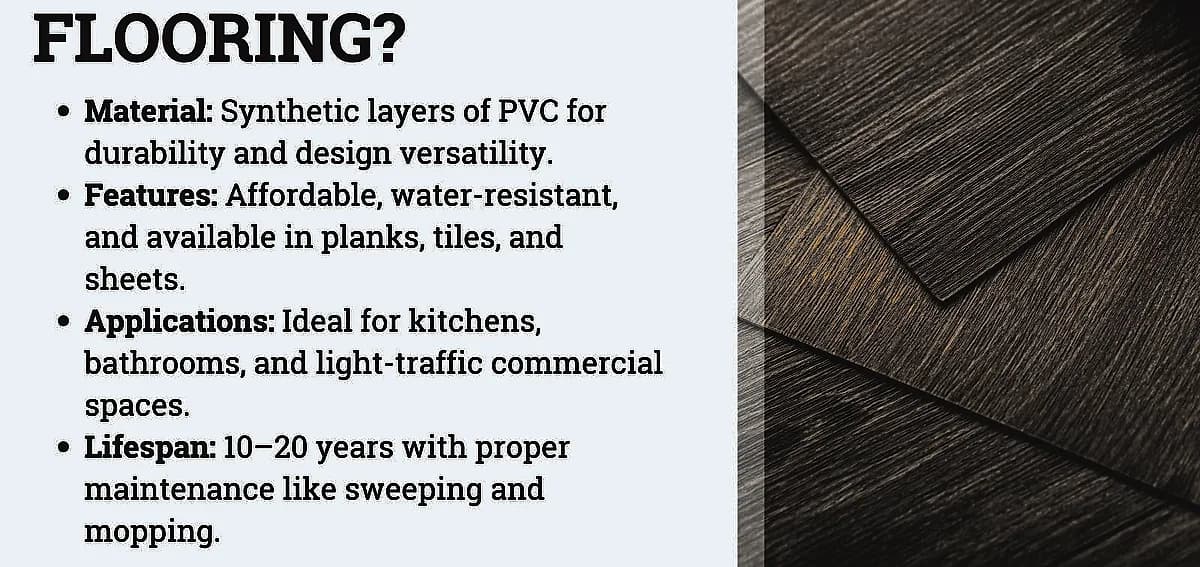
This flooring is trendy due to its affordability, water resistance, and versatility. It is ideal for kitchens, bathrooms, and other moisture-prone areas in homes, as well as moderate-traffic commercial spaces. Its ability to replicate wood, stone, and ceramic textures adds to its appeal to various design preferences.
Modern manufacturing techniques, like advanced printing and embossing, make vinyl flooring visually realistic and stylish. Available in planks, tiles, and sheets, it caters to diverse installation methods and budgets. With simple maintenance, such as sweeping and mopping, vinyl flooring offers long-term value, lasting 10–20 years in most settings.
What Is Epoxy Flooring?
Epoxy flooring is a durable and high-performance flooring solution created by mixing resin and hardener, which chemically bond to form a protective surface. Applied as a liquid over prepared concrete, it cures into a seamless, hard finish that resists moisture, chemicals, and heavy traffic.
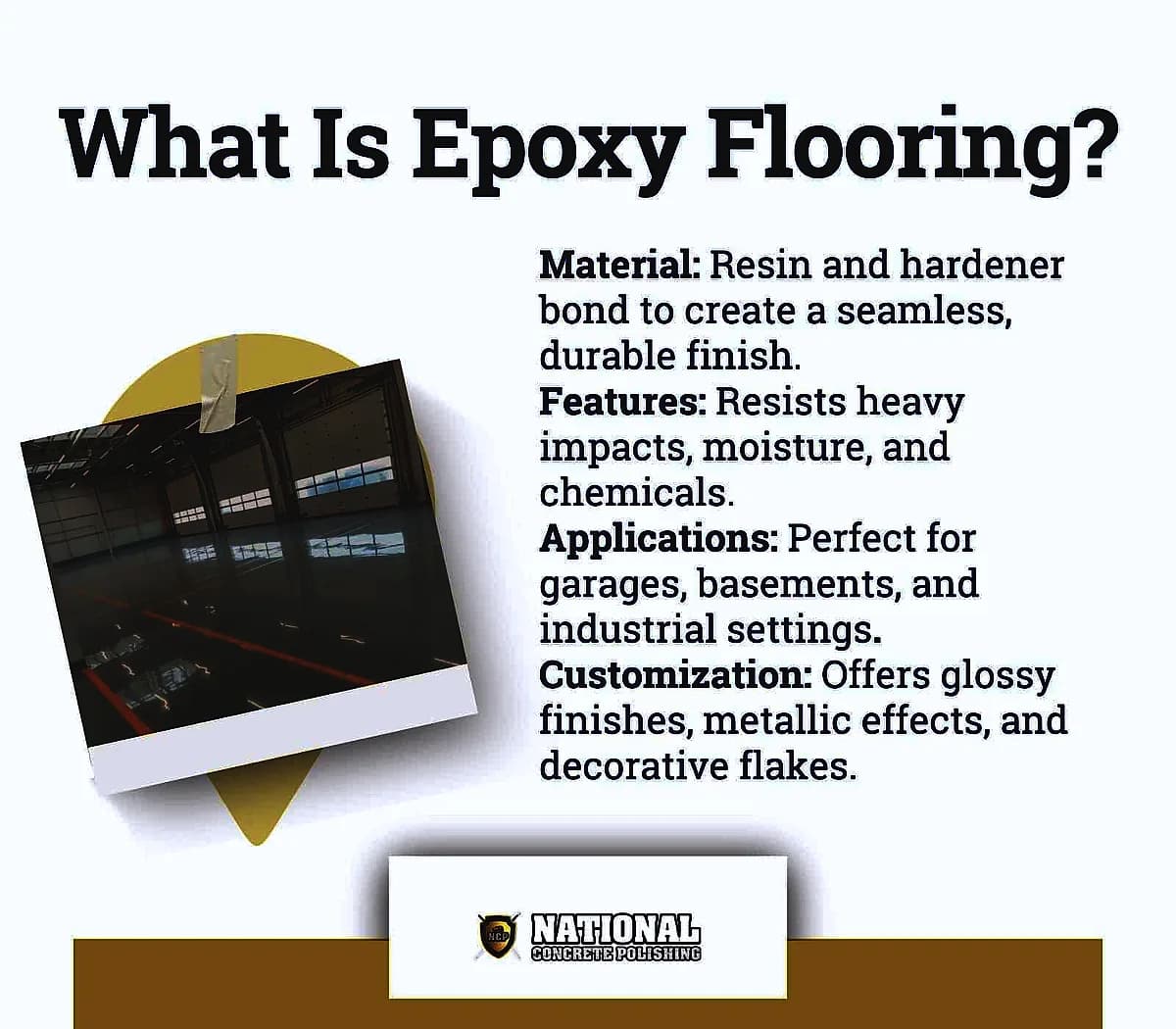
This flooring is widely used in industrial, commercial, and residential settings due to its exceptional durability and versatility. Typical applications include garages, basements, and warehouses, where long-lasting, low-maintenance surfaces are required to handle heavy use and challenging conditions.
Epoxy flooring also enhances aesthetics with its glossy finish and customization options, including solid colors, metallic effects, and decorative flakes. Its combination of strength, resistance, and design flexibility makes it a preferred choice for both functional and visually appealing spaces.
Which Flooring Type Is More Durable?
The more durable flooring type is epoxy flooring. Its chemically bonded surface provides superior resistance to heavy impacts, abrasions, chemicals, and moisture. It performs exceptionally well in high-traffic environments, such as garages and industrial areas, where durability is essential. With proper care, epoxy flooring lasts 10–20 years, even under extreme conditions.
Epoxy’s strength also lies in its ability to create a seamless, non-porous surface that prevents cracks, peeling, or water damage. This makes it highly reliable for spaces exposed to spills, heavy machinery, or frequent movement. Its durability ensures minimal maintenance over its lifespan, contributing to long-term cost savings.
Vinyl flooring, while durable for moderate-use spaces, is not as robust in heavy-duty applications. It resists scratches and light wear but is prone to dents, tears, and damage from heavy impacts or prolonged exposure to moisture. Proper care extends vinyl’s lifespan to 10 years, but it lacks the same toughness and longevity as epoxy flooring in demanding settings.
Which Flooring Option Is More Cost-Effective?
The more cost-effective flooring option is vinyl flooring. With an initial cost of $2–$5 per square foot and straightforward DIY installation, vinyl flooring offers an affordable choice for residential and light-use commercial areas. Its low upfront investment makes it ideal for those seeking a budget-friendly solution, though it requires replacement sooner than other options.
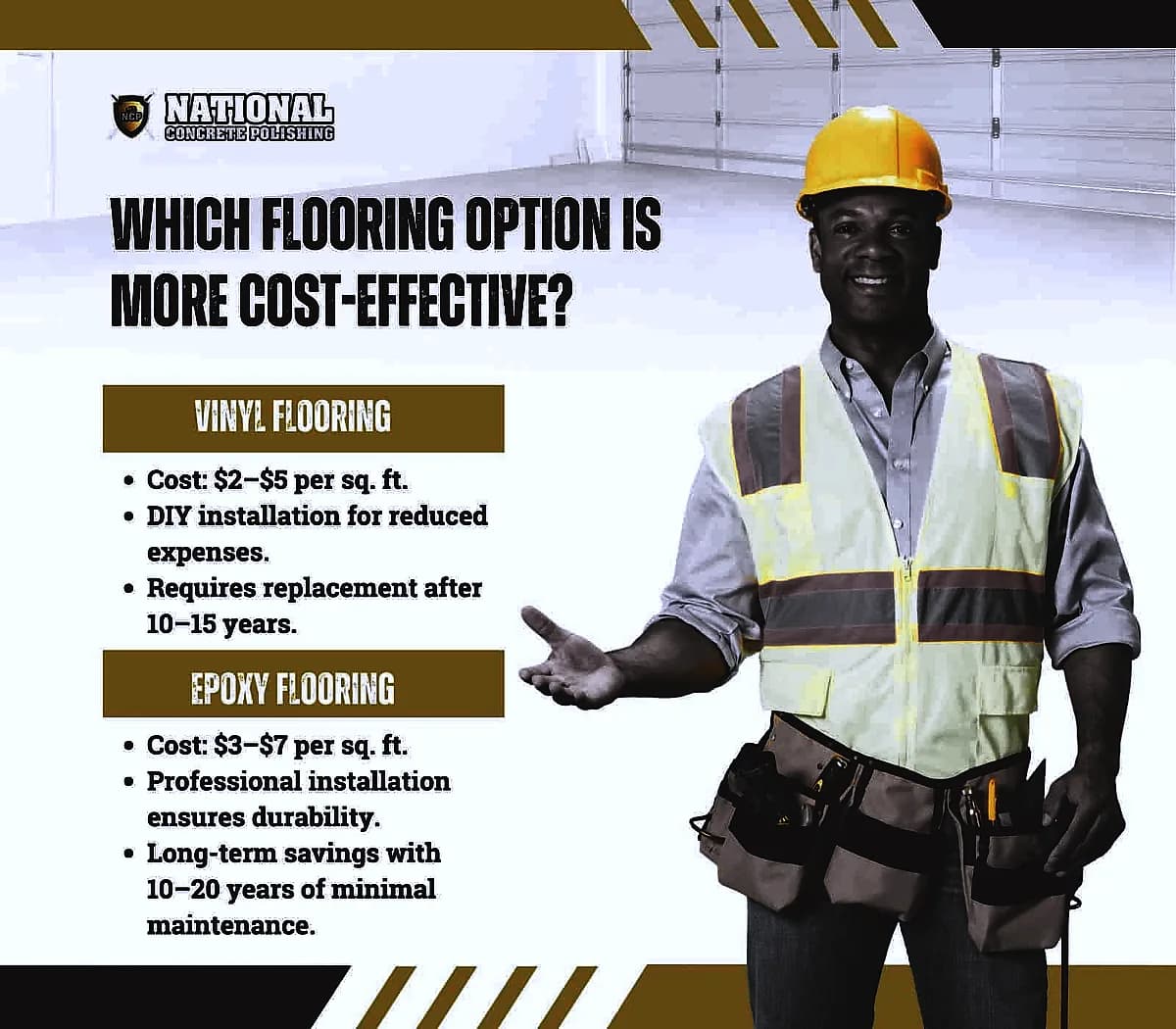
Epoxy flooring, costing $3–$7 per square foot, has higher upfront expenses, especially with professional installation. However, its durability and minimal maintenance requirements translate into long-term savings.
Epoxy’s ability to resist damage from heavy traffic and spills reduces the need for frequent repairs or replacements, making it cost-effective for high-use environments over time.
How Do Vinyl and Epoxy Compare in Terms of Maintenance?
Epoxy flooring requires less maintenance compared to vinyl flooring. Its seamless, non-porous surface resists stains, moisture, and dirt, requiring only regular sweeping and occasional mopping. Its durability minimizes the need for repairs, with resealing necessary every 5–10 years in high-traffic areas.
Epoxy’s resistance to chemical spills and heavy use ensures a polished appearance with minimal effort. Its low-maintenance nature makes it ideal for garages, basements, and other busy spaces, offering long-term convenience and cost savings.
Vinyl flooring, while low-maintenance, needs more frequent care to maintain its appearance. Routine sweeping and mopping are essential, as it is more prone to scratches and dents. Damaged sections require patching or replacement, increasing upkeep over time.
Which Option Offers Better Aesthetic Variety?
The option that offers better aesthetic variety is vinyl flooring. It provides an extensive range of colors, patterns, and textures, including highly realistic designs that replicate natural materials like wood, stone, and ceramic. Vinyl’s flexibility in design makes it suitable for a wide variety of interior styles, from rustic to contemporary.
Vinyl flooring is available in planks, tiles, and sheets, allowing homeowners to achieve unique and personalized looks. Its advanced printing technology enables intricate patterns and designs, offering both functionality and style. Vinyl’s ability to seamlessly fit into living rooms, kitchens, and bathrooms enhances its aesthetic versatility.
Epoxy flooring, while more limited in variety, offers distinct customization through metallic effects, decorative flakes, and bold, solid colors. Its glossy, seamless appearance adds a sleek, modern touch, ideal for industrial or high-traffic spaces. However, epoxy lacks the textured and natural look of vinyl, making it less appealing for spaces requiring organic or traditional designs.
Which Flooring Type Is Easier to Install?
Vinyl flooring is easier to install because it requires minimal surface preparation and can often be completed in a single day. In contrast, epoxy flooring involves extensive preparation, curing time, and precise application techniques.
Vinyl flooring installation involves laying pre-cut planks or sheets directly onto the existing floor with minimal preparation. The process is straightforward, requires fewer tools, and can often be completed in just a few hours.
Epoxy flooring, on the other hand, demands extensive surface preparation, including cleaning, repairing, and grinding the concrete to ensure proper adhesion. The application process also requires mixing components, applying multiple layers, and allowing curing time, which takes several days to complete.
Which Flooring Solution Is Best for You?
The flooring solution that is best for you depends on your specific needs and space requirements. Epoxy flooring is ideal for garages, basements, and industrial areas due to its exceptional durability, resistance to chemicals, and capacity to handle heavy loads. It creates a seamless, long-lasting surface that withstands high traffic and challenging conditions, requiring minimal maintenance over decades.
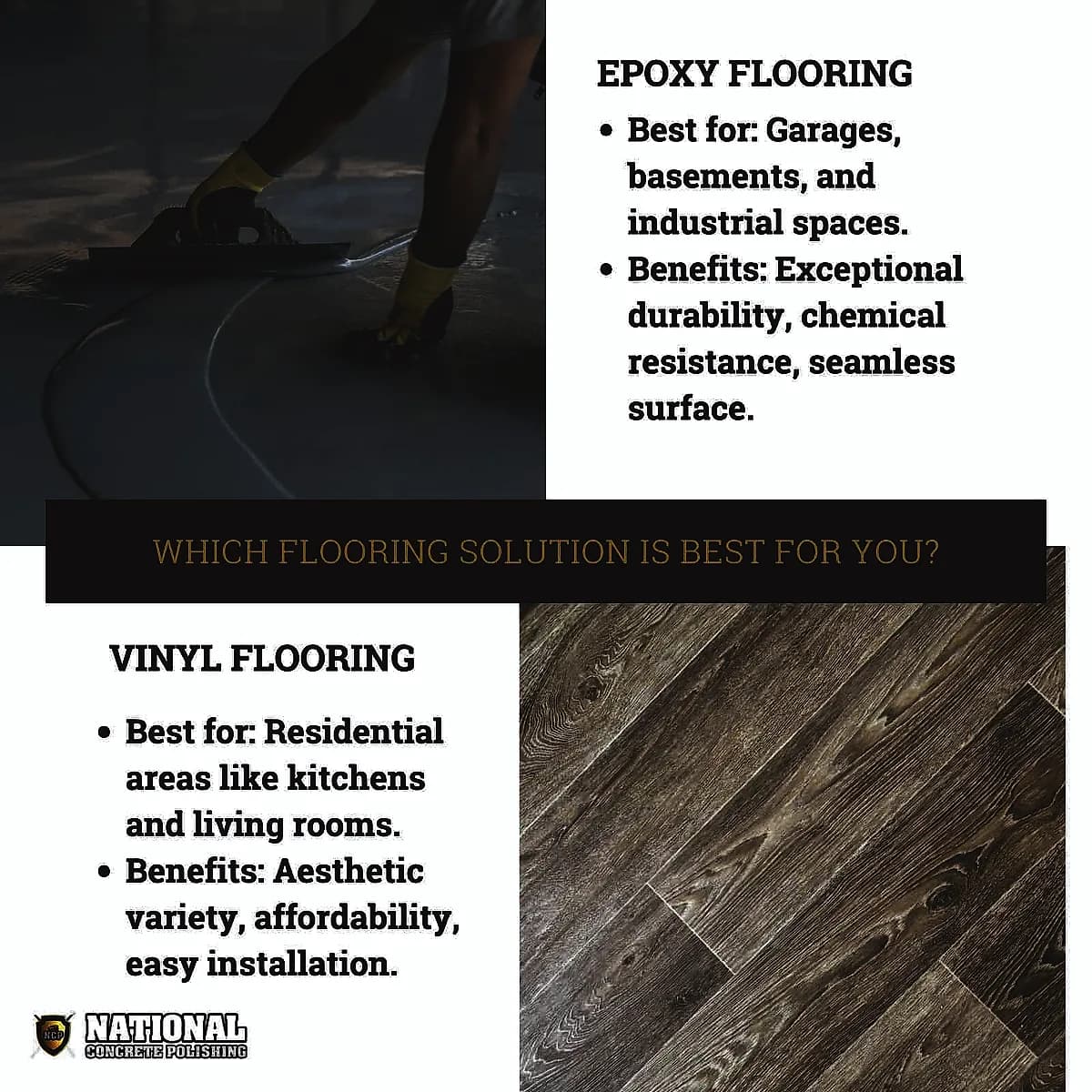
Vinyl flooring, by contrast, is better suited for residential spaces like living rooms, bedrooms, or kitchens, where affordability and aesthetic appeal are priorities. Its wide range of designs, from wood-look planks to patterned tiles, allows homeowners to personalize their spaces. Vinyl’s easy installation and softer underfoot feel make it a comfortable, practical option for homes.
While epoxy excels in functional spaces demanding resilience, vinyl caters to decorative and budget-conscious needs. For high-impact environments, epoxy’s strength and longevity are unmatched, but for cozy, visually appealing interiors, vinyl offers versatility and cost-effective charm. Choosing between them depends on whether your priority is durability or design.
Written by

Founder and CEO
Chris Lavin is an esteemed leader in concrete polishing and epoxy coatings with a distinguished 20-year career. As founder and CEO of National Concrete Polishing and owner of Xtreme Polishing Systems, he's renowned for polishing and epoxy coating more floors than anyone globally. Chris is recognized for his innovative approach and commitment to enhancing floor durability and aesthetics. His hands-on experience and technical proficiency make him a respected authority and a valuable resource in the field of floor polishing and coatings.
Same topic
Related articles
All stories
Epoxy & coatings8 min read
DIY vs Professional Epoxy Flooring in Fort Lauderdale
Hardware stores heavily market all-in-one boxes that promise a showroom finish with minimal effort.
Read it
Epoxy & coatings8 min read
Can You DIY Epoxy Flooring in Miami? Pros, Cons, and Tips
Applying a durable floor finish in a tropical or highly humid climate presents unique environmental challenges.
Read it
Epoxy & coatings7 min read
DIY Epoxy Flooring in South Florida: Is It Worth the Risk?
However, these products generally contain high levels of water or solvents to extend their pot life.
Read it
Tell us about the floor
Tell us the space and roughly how big it is.We come back with what it would cost and when we could start.
Prefer to talk? Call +1 844-876-5474
- Leads@
nationalconcretepolishing.net - 2200 NW 32nd St #600,
Pompano Beach, FL 33069 Mon to Fri, 9:00 to 5:30