
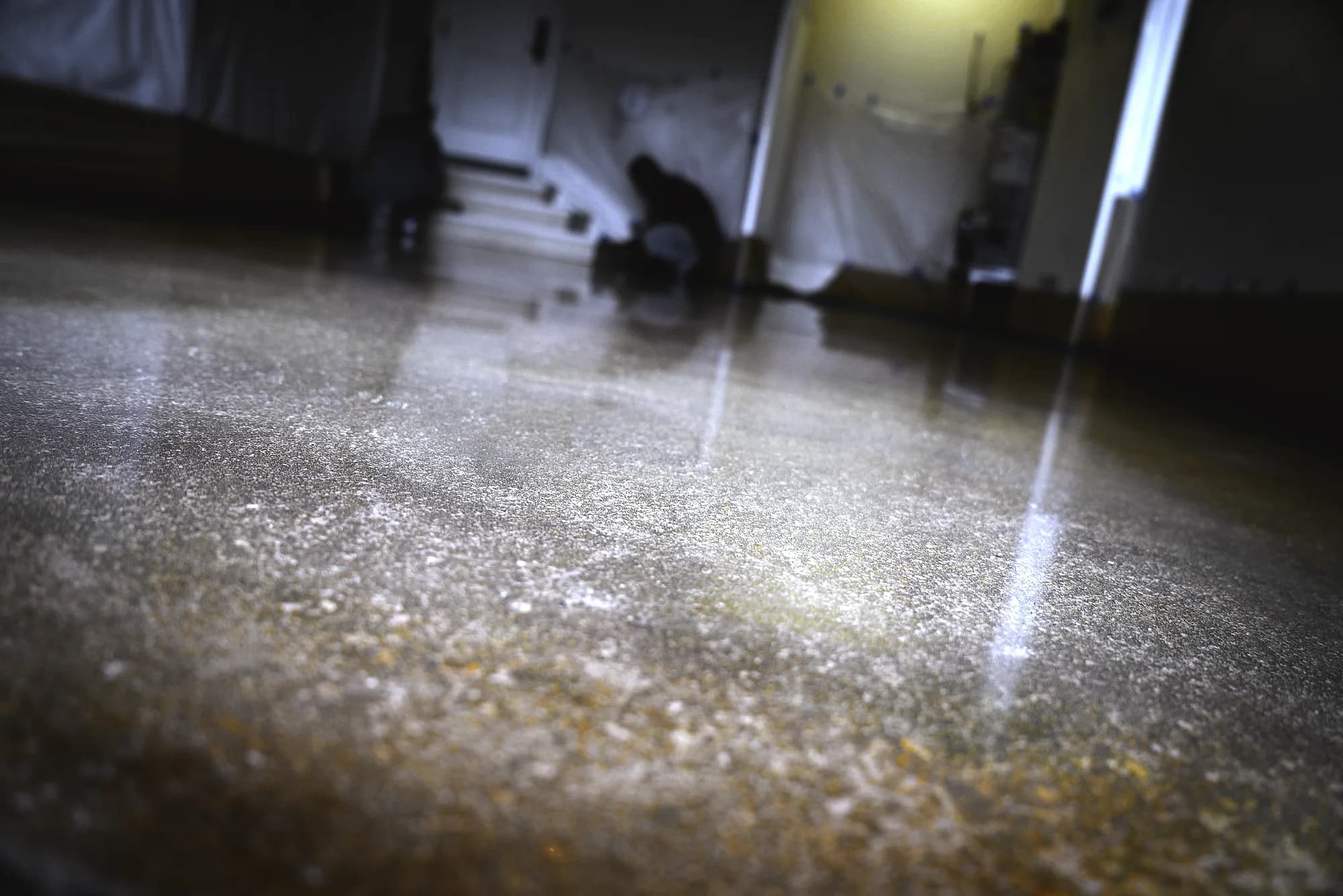
The NCP blog
Sealed Concrete vs Polished Concrete: Which Option is Right for You?
Polished concrete12 min read
The decision can significantly impact the aesthetics, durability, and maintenance requirements of your floor.
Are you torn between choosing sealed or polished concrete floors for your space? The decision can significantly impact the aesthetics, durability, and maintenance requirements of your floor.
Understanding the fundamental differences between these two popular options is crucial. Sealed concrete creates a protective film over the surface, whereas polished concrete relies on mechanical grinding and densifying to achieve its finish.
In this article, we walk you through the differences so you can determine which option best suits your needs and budget.
Understanding Concrete Floor Finishes
When it comes to enhancing the durability and aesthetic appeal of your concrete floors, understanding the different types of finishes available is crucial. The goal of all finishings, whether it’s a sealed or polished concrete floor, is to protect a concrete slab from staining and abrasion.
What Are Concrete Floor Finishes?
Concrete floor finishes are specialized treatments applied to concrete surfaces to enhance their appearance, durability, and functionality. These finishes transform plain concrete into attractive, long-lasting flooring solutions suitable for residential, commercial, and industrial applications. The two primary categories of concrete floor finishes are sealed concrete and polished concrete, each with distinct characteristics and benefits.
The Importance of Finishing Concrete Floors
Finishing concrete floors is essential for protecting the porous concrete surface from stains, moisture infiltration, and wear from daily foot traffic. Proper finishing extends the lifespan of concrete floors, reduces maintenance requirements, and enhances the overall aesthetic appeal of the space. Without adequate finishing, concrete floors are susceptible to dusting, cracking, and deterioration, which can lead to costly repairs and replacements.
What is Sealed Concrete?
You might be wondering what sealed concrete is and how it can benefit your space. Sealed concrete involves applying a protective coating or sealant to the concrete surface, creating a barrier that shields the concrete from stains, moisture, and daily wear. This process enhances the durability of the concrete, making it a practical choice for various applications.
The Sealing Process Explained
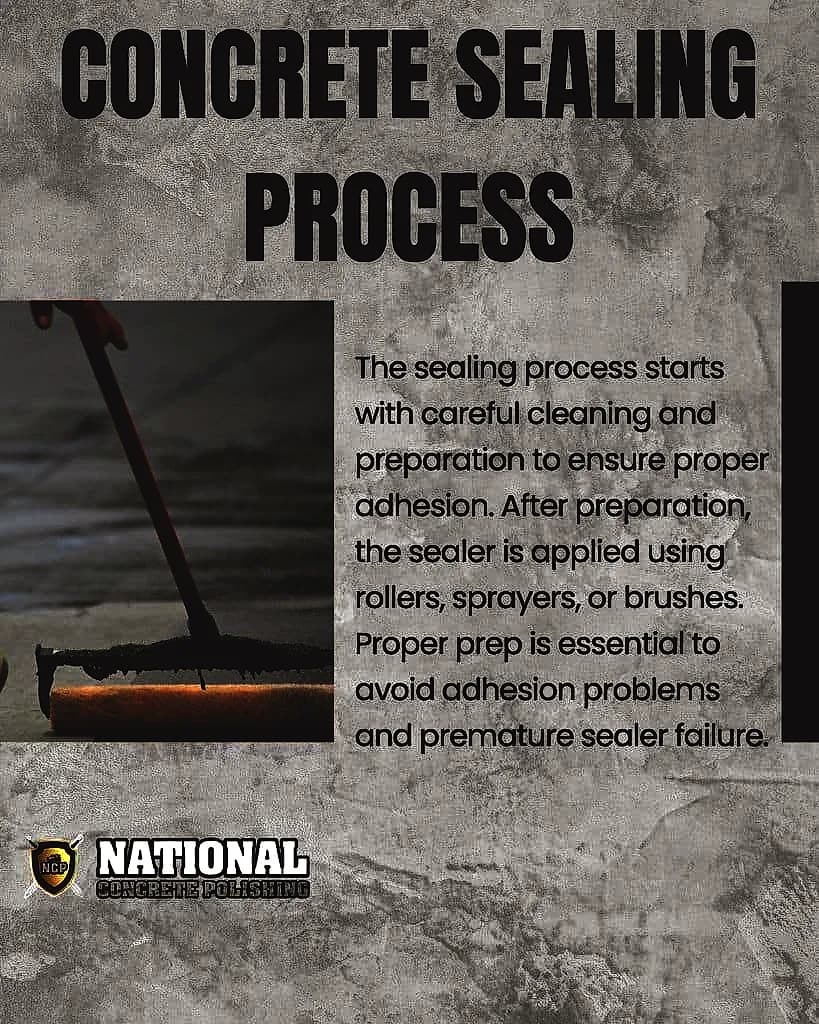
The sealing process typically begins with thorough cleaning and preparation of the concrete surface. This step is crucial for ensuring the sealer adheres properly to the concrete. Once the surface is prepared, the chosen sealer is applied using rollers, sprayers, or brushes. Proper surface preparation is critical for the success of sealed concrete floors, as poor preparation can lead to adhesion issues and premature failure of the sealer.
Types of Concrete Sealers
There are several types of concrete sealers available, each offering different levels of protection, appearance, and durability. These include acrylic sealers, which are the most common and cost-effective; epoxy sealers, known for their high durability and chemical resistance; polyurethane sealers, ideal for high-traffic areas; and penetrating sealers, suitable for outdoor applications. By choosing the right type of sealer, you can customize the sealed concrete floor to meet the specific needs of your space.
Sealed concrete floors are particularly well-suited for areas prone to spills and stains, such as garages, basements, and commercial kitchens. The application of stains or dyes before sealing can also create decorative effects, enhancing the aesthetic appeal of sealed concrete floors.
What is Polished Concrete?
If you’re considering a durable and sophisticated flooring solution, polished concrete might be the ideal choice. Polished concrete floors involve a multi-step process of grinding and polishing the surface of the concrete to achieve a smooth, high-gloss finish.
The Process Explained
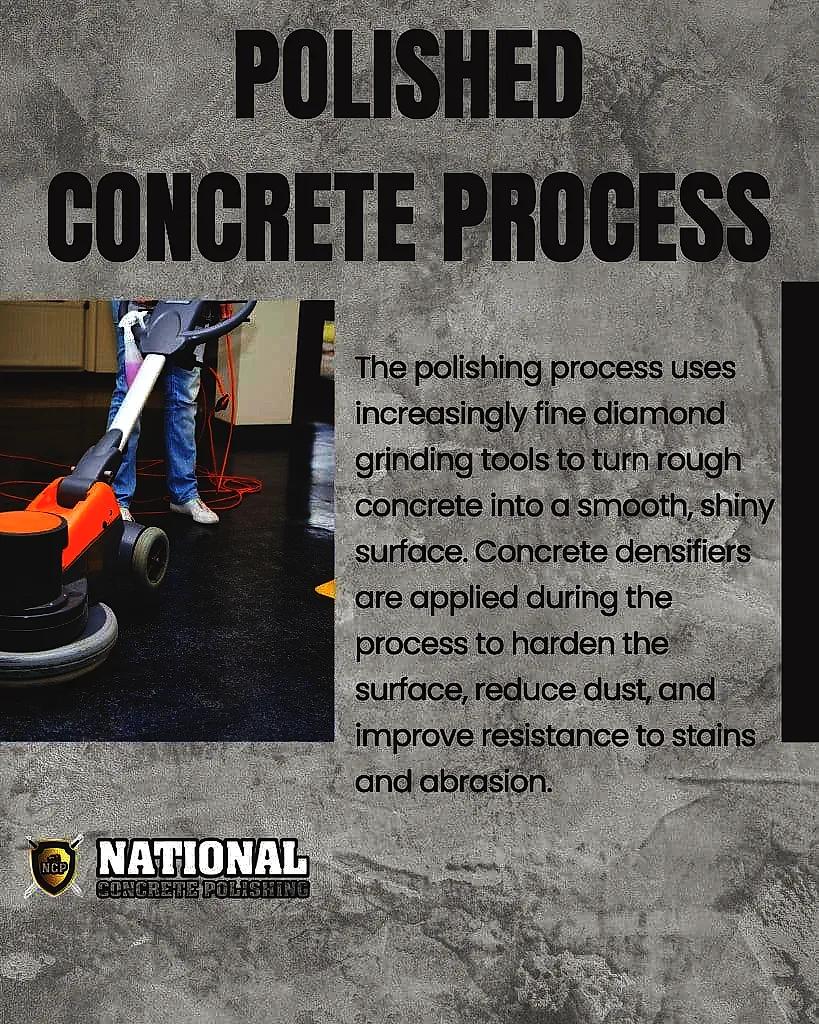
The polishing process typically involves multiple steps using progressively finer diamond grinding tools, transforming rough concrete into a glass-like surface with varying degrees of shine. During polishing, concrete densifiers are applied to chemically react with the concrete, hardening and dustproofing the surface while increasing its resistance to stains and abrasion.
Levels of Polished Concrete Finishes
Polished concrete finishes are categorized by their level of gloss. The Concrete Polishing Council's Appearance Chart defines four levels: exposed/flat (level 1, a flat or matte appearance), exposed/satin (level 2), polished (level 3) and highly polished (level 4, a sharp, near-mirror reflection), measured by distinctness of image. Finer final grits generally give more reflective finishes, and the final grit is project-specific. 800 grit is our common finish, and 1,500 and 3,000 grit are upgrades.
| Level of Gloss | Description | CPC Appearance Chart Level |
|---|---|---|
| Matte | Low sheen, subtle finish | Level 1 (DOI 0 to 9) |
| Satin | Medium sheen, elegant appearance | Levels 2 and 3 (DOI 10 to 69) |
| Highly Reflective | High sheen, mirror-like finish | Level 4 (DOI over 70) |
The densifier used in the polishing process strengthens the concrete surface, although the Concrete Polishing Council notes that how much it helps depends on how hard the slab was to begin with. Polished concrete floors can be customized with decorative elements such as aggregate exposure, scoring patterns, and integral or topical coloring methods.
Sealed Concrete vs Polished Concrete: Key Differences
When deciding between sealed concrete and polished concrete for your flooring needs, it’s essential to understand the key differences between these two popular options. The distinction between them lies in their installation processes, appearances, and durability, which ultimately affect their longevity and maintenance requirements.
Installation Process
The installation process for sealed concrete is generally quicker and less labor-intensive, involving surface preparation and the application of a topical sealer. This process typically takes less time. In contrast, polished concrete requires multiple grinding steps with progressively finer abrasives, which takes longer depending on the size of the area and the desired finish level. As a planning range for open, accessible floors, a standard crew polishes about 1,500 to 3,000 square feet a day; repairs, edges, small rooms and slab condition can reduce that.
- Sealed concrete involves a simpler, faster process.
- Polished concrete requires more complex, time-consuming grinding and polishing.
Appearance and Aesthetics
Aesthetically, sealed concrete offers a uniform appearance with a visible coating on top of the concrete. Polished concrete, on the other hand, showcases the natural character of the concrete with a reflective finish that comes from within the material itself. Polished concrete can achieve higher levels of shine and reflectivity, creating a sophisticated, mirror-like finish.
Durability and Longevity
In terms of durability, polished concrete generally outperforms sealed concrete because the polishing process densifies the concrete surface, making it more resistant to wear, stains, and moisture. Sealed concrete, relying on a protective coating, may require reapplication as the sealer wears, and the ASCC Decorative Concrete Council says the timing varies tremendously with conditions, whereas how long a properly maintained polished floor lasts depends on the traffic, the concrete and the upkeep.
- Polished concrete is more durable due to its densified surface.
- Sealed concrete’s longevity is limited by the durability of its sealer.
Benefits of Sealed Concrete Floors
The benefits of sealed concrete floors are multifaceted, ranging from cost-effectiveness to enhanced durability. Sealed concrete floors offer a variety of benefits that extend beyond just aesthetics, making them a wise investment for the long-term health and longevity of your property.
Cost-Effectiveness
Sealed concrete floors offer good value, typically costing between $1.00 to $1.75 per square foot. This makes them an affordable option for homeowners and businesses with budget constraints. The cost-effectiveness extends beyond initial installation, as sealed concrete floors can transform existing concrete slabs without the need for replacement or extensive preparation.
Stain and Chemical Resistance
Sealed concrete provides excellent resistance to stains from oil, grease, food spills, and other common contaminants. This makes it ideal for kitchens, garages, and commercial spaces where spills are frequent. Chemical resistance depends on the type of sealer, so check the product data for the substances in your space.
Quick Installation Time
One of the most significant advantages of sealed concrete floors is the quick installation time. Sealing takes less time than the more time-intensive process of polishing. The ASCC Decorative Concrete Council’s sealer guide says that at 70°F a sealer is typically dry to the touch in 1-2 hours and accepts light foot traffic in 3-4 hours, and it advises waiting 24 hours or more before furniture or a car goes on. The fast curing time of many sealers allows for rapid return to service, minimizing downtime for businesses and inconvenience for homeowners.
Benefits of Polished Concrete Floors
Among various flooring solutions, polished concrete offers distinct benefits that make it an attractive option for both residential and commercial spaces.
Superior Durability
Polished concrete floors are known for their durability due to the densification process that strengthens the concrete surface. This process makes the floor resistant to heavy foot traffic and daily wear, ideal for high-traffic areas. The hardened surface can withstand impacts and abrasion better than many flooring alternatives.
Low Maintenance Requirements
One of the most significant advantages of polished concrete floors is their low maintenance requirements. Regular dust mopping and occasional damp mopping with a neutral cleaner are typically all that’s needed to maintain their appearance. Unlike sealed concrete, polished concrete has no topical sealer that wears off and needs periodic resealing, which reduces long-term maintenance costs.
Environmentally Friendly Aspects
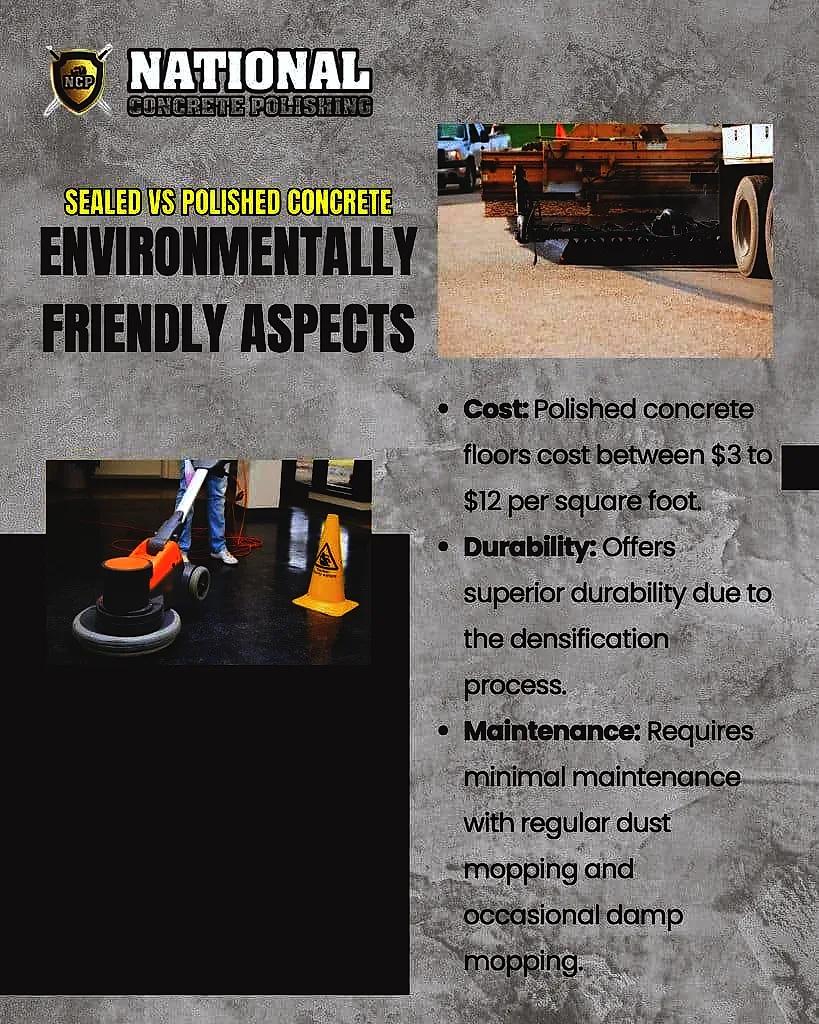
Polished concrete floors are environmentally friendly as they utilize the existing concrete slab, eliminating the need for additional coverings. They also don’t require harsh chemicals for maintenance or periodic replacement. Because polished concrete needs no topical coating, it limits VOC emissions, although densifier and guard products vary, so check their data sheets.
Drawbacks to Consider
As you weigh the advantages of sealed and polished concrete, it’s essential to examine the potential downsides of each flooring type. Understanding these limitations will help you make an informed decision that suits your needs.
Sealed Concrete Limitations
Sealed concrete floors have several limitations. One significant drawback is the potential for sealer failure due to poor surface preparation, excessive moisture vapor transmission, or improper application techniques. When sealed concrete fails, the sealer can delaminate, bubble, or peel away from the concrete surface, requiring complete removal and reapplication, a costly and time-consuming process. Additionally, sealed concrete is vulnerable to scratching and wear patterns in high-traffic areas, as the protective coating is gradually abraded away, revealing an uneven appearance over time.
Polished Concrete Limitations
Polished concrete, while highly durable, has its own set of limitations. The hardness of polished concrete can cause fatigue for those standing for extended periods. The rigid nature of polished concrete makes it unforgiving when objects are dropped, potentially leading to breakage of glassware, dishes, or other fragile items. Furthermore, polished concrete can create acoustical challenges by reflecting sound and creating echo effects in large, open spaces. It’s also worth noting that polished concrete can become slippery when wet, requiring proper maintenance protocols and possibly the addition of anti-slip treatments in moisture-prone areas.
Choosing the Right Option for Your Space
When deciding between sealed and polished concrete for your space, several factors come into play. Your decision should be based on the specific needs of your area, including traffic patterns, aesthetic preferences, and budget constraints.
Best Applications for Sealed Concrete
Sealed concrete is ideal for areas prone to chemical spills, stains, or moisture exposure. It’s suitable for garages, workshops, basements, and commercial kitchens where protection is the primary concern. Additionally, sealed concrete performs well in exterior applications such as patios, pool decks, and outdoor commercial spaces.
Ideal Scenarios for Polished Concrete
Polished concrete excels in high-traffic commercial environments like retail stores, showrooms, hotels, and office buildings where both aesthetics and durability are essential. It’s also ideal for modern homes, art galleries, and upscale commercial establishments seeking to maximize natural light and create an open atmosphere.
Budget Considerations
Budget plays a significant role in your decision. Sealed concrete has a lower upfront cost, typically ranging from $1 to $3 per square foot. In contrast, polished concrete costs between $3.5 to $12 per square foot. However, polished concrete can prove more economical over its lifetime due to reduced maintenance requirements.
| Criteria | Sealed Concrete | Polished Concrete |
|---|---|---|
| Cost per Square Foot | $1-$3 | $3.5-$12 |
| Ideal Applications | Garages, Workshops, Exterior Spaces | Retail Stores, Showrooms, Modern Homes |
| Maintenance Requirements | Higher | Lower |
For expert guidance, consider consulting with professionals like National Concrete Polishing, who can look at your floor and recommend the most appropriate concrete finishing solution.
Conclusion: Making Your Decision
To make an informed decision between sealed concrete and polished concrete, you need to evaluate your space, budget, and requirements. When comparing these two options, it’s essential to consider the primary function of your space: is it primarily aesthetic, utilitarian, or a balance of both?
For spaces with heavy traffic and where long-term value is important, polished concrete floors can offer a strong return on investment despite higher initial costs, with low maintenance requirements. On the other hand, if budget constraints are significant or if you need a quick turnaround time, sealed concrete floors provide an affordable solution that still offers good protection and can be enhanced with decorative elements like color stains or patterns.
Consider the moisture conditions in your environment: a topical sealer can fail where moisture vapor moves up through the slab, and ASTM F2170 says excessive moisture in a slab can cause floor covering system failures such as debonding and deterioration of finish flooring and coatings. A polished surface with no topical coating has nothing to debond, so it is often the safer choice where ground moisture is a concern, though the slab should be tested either way. The desired aesthetic should heavily influence your choice: polished concrete offers a sophisticated, reflective finish with various gloss levels, while sealed concrete can provide rich color options through staining before sealing.
Maintenance capabilities and expectations are crucial factors: sealed concrete requires resealing as the sealer wears, while polished concrete needs routine cleaning and occasional maintenance polishing. National Concrete Polishing has been polishing and coating floors since 2013 and can provide recommendations based on your specific situation, so contact us or call us today to discuss your project needs.
Ultimately, both sealed concrete and polished concrete can transform ordinary concrete into beautiful, functional flooring, and the right choice depends on aligning your specific priorities with the inherent strengths of each option.
Frequently Asked Questions
What is the main difference between sealed and polished floor finishes?
The primary difference lies in their application process and the resulting appearance. Sealed floors are treated with a topical sealer, whereas polished floors are mechanically refined to create a glossy finish.
How do I maintain my sealed or polished floor to ensure its longevity?
Regular sweeping and mopping are essential for both types of floors. For sealed floors, reapply the sealer as needed, typically every few years. Polished floors require periodic polishing to maintain their shine and may need additional coats of densifier to enhance durability.
Can I install sealed or polished flooring over existing surfaces?
It is possible to install sealed or polished flooring over existing surfaces, but the condition and type of the existing surface will affect the outcome. It’s crucial to assess the surface before proceeding with the installation.
How long does the installation process take for sealed and polished flooring?
The installation time varies depending on the size of the area, the condition of the surface, and the type of finish chosen. Generally, sealed flooring can be installed relatively quickly, while polished flooring requires more time due to the multi-step polishing process.
Are sealed and polished floors suitable for high-traffic areas?
Both sealed and polished floors can be used in high-traffic areas, but polished floors are often more durable and resistant to wear and tear. Proper maintenance is essential to ensure the longevity of either type of floor.
Can I customize the color and appearance of my sealed or polished floor?
Yes, you can customize the color and appearance of both sealed and polished floors. Sealed floors can be stained or colored before applying the sealer, while polished floors can be stained or treated with various chemicals to achieve the desired color and finish.
What is the cost per square foot for sealed and polished flooring?
The cost per square foot varies depending on factors such as the type of sealer or polish used, the condition of the surface, and the location.
Are there any eco-friendly options available for sealed and polished flooring?
Yes, there are eco-friendly options available for both sealed and polished flooring. Some sealers are water-based and low in VOCs (volatile organic compounds), while polished flooring is considered eco-friendly due to its longevity and the fact that it is made from existing concrete, reducing the need for additional materials.
Written by

Founder and CEO
Chris Lavin is an esteemed leader in concrete polishing and epoxy coatings with a distinguished 20-year career. As founder and CEO of National Concrete Polishing and owner of Xtreme Polishing Systems, he's renowned for polishing and epoxy coating more floors than anyone globally. Chris is recognized for his innovative approach and commitment to enhancing floor durability and aesthetics. His hands-on experience and technical proficiency make him a respected authority and a valuable resource in the field of floor polishing and coatings.
Same topic
Related articles
All stories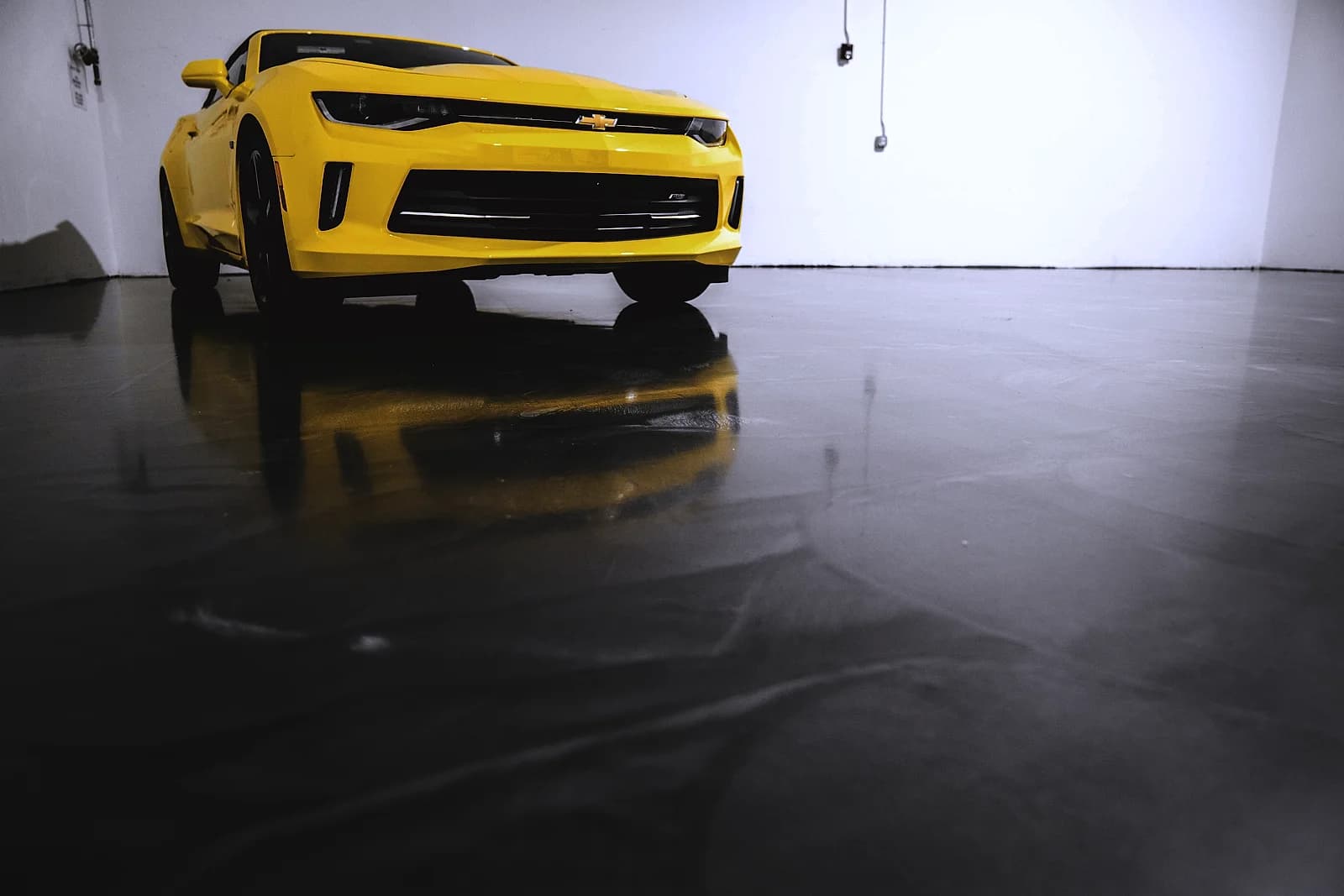
Residential7 min read
Polished Concrete Garage Floor vs Epoxy: Pros and Cons
This process smooths the surface, and a densifier hardens it, so polished concrete is used in high-traffic areas.
Read it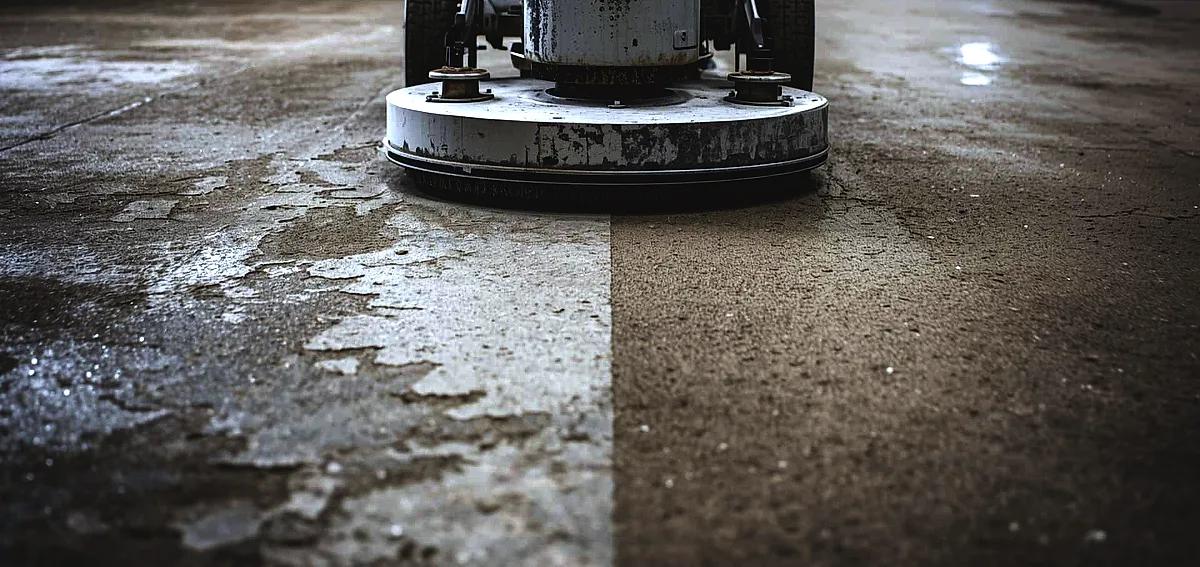
Polished concrete11 min read
Can You Polish Old Concrete? Transform Your Floors Today
Old concrete floors often hide tremendous potential beneath their weathered, dull surfaces.
Read it
Cost & ROI11 min read
How Much Does It Cost To Polish Concrete Floors?
Choosing polished concrete flooring for your residential or commercial space is a no-brainer these days.
Read it
Tell us about the floor
Tell us the space and roughly how big it is.We come back with what it would cost and when we could start.
Prefer to talk? Call +1 844-876-5474
- Leads@
nationalconcretepolishing.net - 2200 NW 32nd St #600,
Pompano Beach, FL 33069 Mon to Fri, 9:00 to 5:30