
The NCP blog
How to Refresh and Re-Color an Existing Epoxy Garage Floor
Residential8 min read
The average cost to professionally repair and recoat a standard two-car garage floor in 2026 is approximately $1,800.
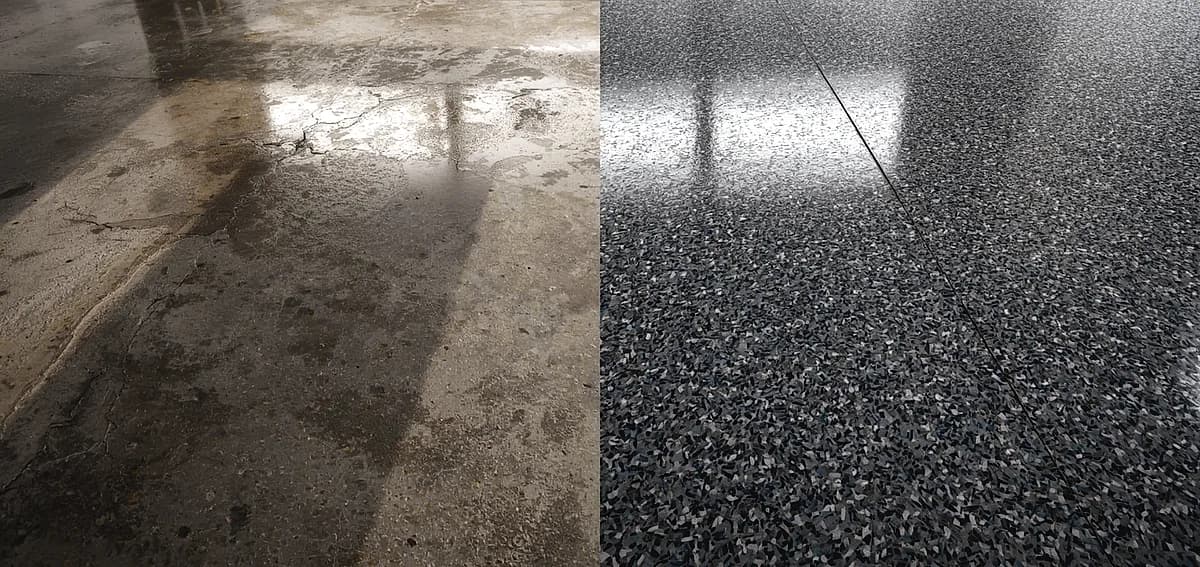
The average cost to professionally repair and recoat a standard two-car garage floor in 2026 is approximately $1,800. If your once-glossy surface now shows signs of wear, you are likely wondering how to properly update the space without tearing out the concrete entirely. We have the right article for you, covering surface preparation, advanced re-coloring methods, and professional application techniques to restore your facility or home.
Signs Your Garage Floor Coating Needs Maintenance
Even the most durable polymer coatings require maintenance over time. According to the American Society for Testing and Materials, typical resin topcoats lose roughly 40 percent of their original gloss after five years of daily vehicular traffic. Identifying early signs of wear allows you to plan a successful recoating project before the underlying concrete suffers damage. Frequent exposure to extreme temperature fluctuations accelerates this degradation.
One of the most common issues is UV degradation. When clear resins are exposed to direct sunlight over several years, they begin to yellow. This process is known as ambering. Once ambering occurs, cleaning will not restore the original clarity. The only effective solution is applying a new, UV-stable topcoat.
Identifying Micro-Scratches and Dullness
Daily use introduces microscopic abrasions to the surface. Vehicle tires track in silica sand, road salts, and sharp debris. Over time, these particles act like sandpaper against the glossy finish. While a single micro-scratch is invisible, millions of them create a hazy, dull appearance. Research from the National Association of Realtors indicates that a well-maintained, aesthetically pleasing garage yields a 64 percent return on investment during a home sale. Restoring this gloss is a practical way to maintain property value.
Managing Hot Tire Pickup and Delamination
Hot tire pickup occurs when heated vehicle tires soften the resin beneath them. As the tires cool and contract, they grip the coating and pull it away from the concrete. This results in patches of bare concrete that expose the slab to moisture. Delamination is a similar issue where the coating loses its bond with the substrate due to improper initial installation or moisture vapor transmission. Both issues require prompt patching and resurfacing.
Can You Put New Coating Over an Old One?
Applying a fresh layer of resin over an older, cured layer is entirely possible. However, the success of this procedure depends entirely on mechanical profiling. Mechanical profiling involves physically scratching the old surface so the new liquid material has a texture to grip. If you pour new liquid over a smooth, glossy surface, it will peel within a few months.
As Dr. Emily Chen, Lead Material Scientist at the American Concrete Institute, explains: “Creating a Concrete Surface Profile, or CSP, of 2 or 3 is critical for inter-coat adhesion. The newly applied polymers must interlock physically with the micro-grooves created during the abrasion process.” Without this step, the chemical bond is insufficient to withstand heavy vehicle traffic.
Factors That Affect Resurfacing Costs
Understanding the financial investment required for a resurfacing project helps you make informed decisions. Several variables dictate the final cost of restoring your surface in 2026.
- Square Footage: Larger industrial or commercial spaces benefit from economies of scale, lowering the cost per square foot, whereas standard residential garages have a higher baseline cost.
- Surface Condition: Extensive cracking, deep oil stains, or significant spalling require specialized polymer-modified overlays (cementitious blends used to level uneven areas) before any new color can be applied.
- Material Selection: Standard epoxies are cost-effective, while advanced polyaspartic coatings carry a higher upfront cost but offer faster cure times and superior UV resistance.
- Labor and Geographic Location: Labor rates vary by region, and properties located in areas with severe freeze-thaw cycles often require specialized flexible membranes.
Cost and Performance Comparison
| Approach | Average Cost per Sq. Ft. | Expected Lifespan | Warranty Availability |
|---|---|---|---|
| DIY Store-Bought Kit | $1.50 – $3.00 | 2 – 4 Years | Rarely included or highly limited |
| Professional Epoxy | $5.00 – $8.00 | 10 – 15 Years | Standard 5 to 10-year coverage |
| Professional Polyaspartic | $7.00 – $12.00 | 15 – 20+ Years | Often includes lifetime guarantees |
Steps to Refresh and Re-Color Your Existing Floor
Proper execution is non-negotiable when dealing with resinous flooring. Our professionals follow a strict, standardized process to guarantee longevity and visual appeal. Here is the exact methodology required to achieve a flawless finish.
1. Deep Cleaning and Degreasing
The process begins with aggressive cleaning. We apply industrial-grade degreasers to extract engine oil, transmission fluid, and organic contaminants from the existing layers. Any residual oils will act as a barrier, preventing the new materials from bonding. According to the U.S. Environmental Protection Agency, using water-based, low-VOC degreasers minimizes environmental impact while effectively preparing the site.
2. Mechanical Profiling
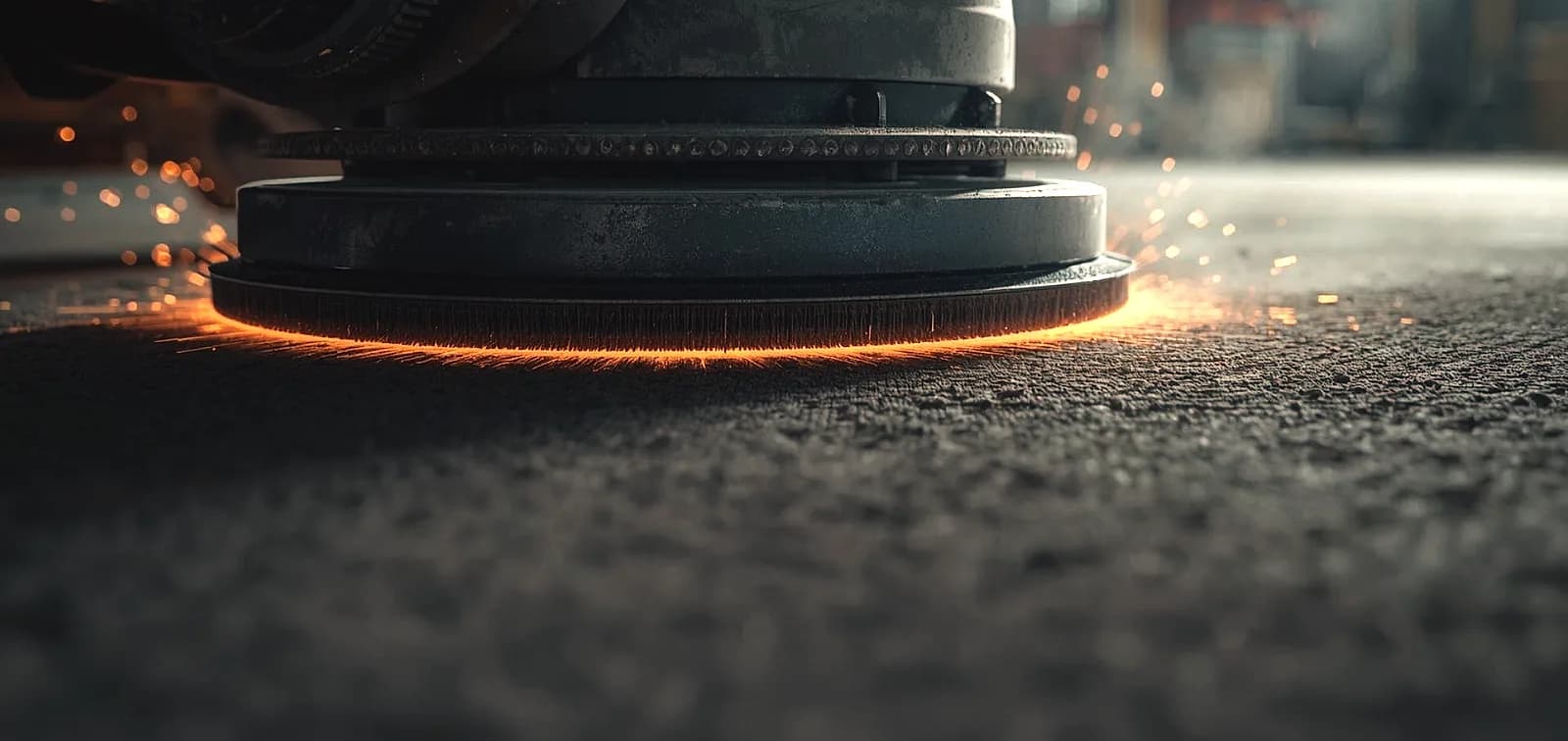
Next, we utilize heavy-duty diamond grinders equipped with 30-grit metal-bonded abrasives. This equipment removes the top layer of the old sealer, strips away the faded color, and leaves behind a uniformly scratched texture. Dust control vacuums are attached directly to the grinders to maintain a safe, clean environment. This step is where DIY projects typically fail, as hand-held sanders lack the necessary weight and torque.
3. Patching and Crack Repair
Once the surface is clean and profiled, structural repairs begin. We inject fast-curing polyurea crack fillers into any visible fractures. For larger areas of delamination, we apply self-leveling overlays to restore a flat, even plane. The repair materials must be ground flush with the surrounding floor after they cure.
4. Applying the Pigmented Base Coat
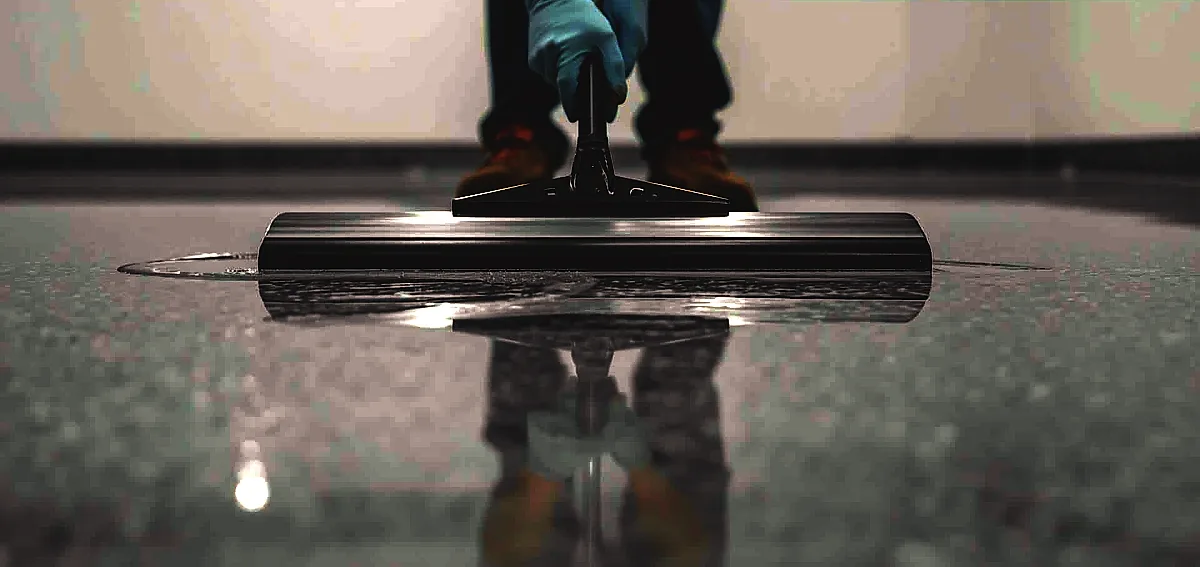
To change the color of your flooring, a heavily pigmented base coat is applied. This layer serves as the new visual foundation. Our technicians use squeegees and specialty rollers to push the material into the micro-scratches created during the grinding phase. By applying a thick, 100 percent solids resin, we ensure the old color is entirely hidden.
5. Broadcasting Flakes or Quartz
While the base coat is still wet, decorative vinyl flakes or quartz aggregates are broadcast across the surface. You can choose a sparse broadcast for a subtle look or a full broadcast to completely cover the solid color. A full broadcast provides an added benefit. It creates a textured, slip-resistant surface that improves safety in wet environments.
6. Sealing with a Clear Topcoat
The final step involves scraping away any loose flakes and applying a clear, protective topcoat. In 2026, polyaspartic aliphatic polyureas are the industry standard for topcoats. They cure up to 400 percent faster than traditional materials and provide exceptional resistance to hot tire pickup, chemicals, and UV ambering.
The Environmental Impact of Concrete Restoration
Choosing to resurface rather than demolish and replace your concrete slab is a highly sustainable decision. The production of new cement is a carbon-intensive process, responsible for nearly eight percent of global carbon dioxide emissions. By restoring your current slab, you significantly reduce construction waste and lower your carbon footprint. Furthermore, we proudly employ LEED-compliant, eco-friendly practices by utilizing low-VOC materials that protect indoor air quality during and long after the installation phase.
Frequently Asked Questions
How long does the re-coating process take?
A standard residential re-coating project typically requires two to three days to complete. The first day is dedicated exclusively to mechanical grinding and crack repair. The subsequent days involve applying the colored base coat, broadcasting flakes, and sealing the surface.
Can I completely change the color of my existing floor?
Yes, you can transition to an entirely new color profile. By using a 100 percent solids opaque base coat, the original hue is completely blocked out. You can then select a new flake blend or solid pigment that matches your current aesthetic preferences.
Do I need to remove all the old coating first?
It is not always necessary to strip the floor down to the bare concrete. If the existing coating is securely bonded to the substrate without significant delamination, we can grind the top layer to create a mechanical profile. We then apply the new materials directly over the structurally sound base.
What is the difference between epoxy and polyaspartic materials?
Traditional resins are highly durable and bond exceptionally well to concrete substrates. Polyaspartic coatings are a newer technology that cures much faster, resists UV ambering, and remains slightly flexible. We typically use the former as a primer base and the latter as a high-performance protective topcoat.
How do I maintain my newly refreshed surface?
Maintenance is simple and requires minimal effort. Sweep the floor regularly to remove abrasive dirt and debris. For a deeper clean, mop the surface using warm water and a pH-neutral cleaner. Avoid using acidic solutions or harsh abrasive pads, as these will prematurely dull the clear topcoat.
Is a professionally applied coating worth the investment?
Absolutely. Professional installations utilize heavy machinery to ensure proper adhesion, preventing the peeling and flaking commonly associated with DIY kits. A professionally installed surface can last up to twenty years, making it a highly cost-effective solution over its lifespan.
Final Thoughts
Renewing your garage flooring is a highly effective way to eliminate hazards, improve the aesthetic appeal of your property, and protect your concrete slab from chemical damage. By relying on professional mechanical profiling, superior materials, and expert application techniques, you ensure a durable finish that will perform beautifully for decades. Do not let a deteriorating surface diminish the value of your property. Get in touch with our team to discuss your custom flooring options today.
References
Written by

Founder and CEO
Chris Lavin is an esteemed leader in concrete polishing and epoxy coatings with a distinguished 20-year career. As founder and CEO of National Concrete Polishing and owner of Xtreme Polishing Systems, he's renowned for polishing and epoxy coating more floors than anyone globally. Chris is recognized for his innovative approach and commitment to enhancing floor durability and aesthetics. His hands-on experience and technical proficiency make him a respected authority and a valuable resource in the field of floor polishing and coatings.
Same topic
Related articles
All stories
Residential8 min read
What Restaurants Need to Pass a Health Inspection Floor Check
It endures heavy foot traffic, dropped equipment, boiling water spills, and harsh degreasing chemicals daily.
Read it
Residential9 min read
How Restaurants Replace Their Floors Without Closing for Long
The average food service establishment loses approximately $3,500 in daily revenue during unexpected closures in 2026.
Read it
Residential8 min read
Where Polished Concrete Beats Epoxy in a Home (and Where It Doesn’t)
Before evaluating specific rooms, it is essential to understand how these two flooring systems function.
Read it
Tell us about the floor
Tell us the space and roughly how big it is.We come back with what it would cost and when we could start.
Prefer to talk? Call +1 844-876-5474
- Leads@
nationalconcretepolishing.net - 2200 NW 32nd St #600,
Pompano Beach, FL 33069 Mon to Fri, 9:00 to 5:30