
The NCP blog
Common Homeowner Concerns About Polished Concrete, Answered
Residential9 min read
We have the right article for you, covering the primary concerns homeowners face and providing clear, expert answers.
In 2026, polished concrete floors offer an average lifespan of 20 to 30 years when properly maintained, saving homeowners up to 60 percent in lifetime flooring costs compared to traditional materials. If you are considering concrete for your residential spaces, you likely have questions regarding maintenance, safety, and long-term durability. We have the right article for you, covering the primary concerns homeowners face and providing clear, expert answers.
ARE POLISHED CONCRETE FLOORS TOO SLIPPERY?
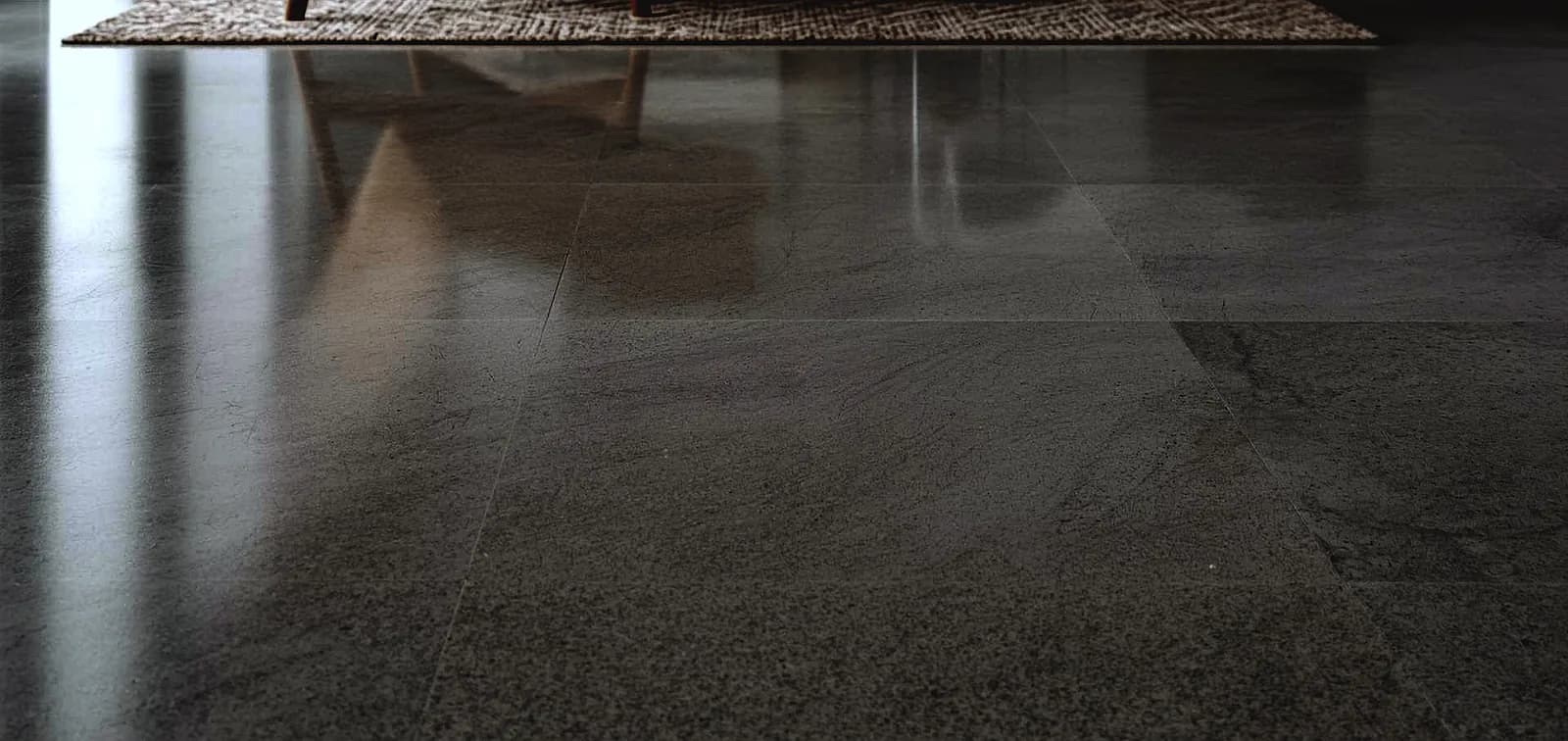
A frequent misconception among homeowners is that a high-gloss concrete floor acts like a sheet of ice. However, the polishing process actually creates a highly porous surface at the microscopic level. This unique texture increases the Dynamic Coefficient of Friction (DCOF), which is the standard metric used to measure slip resistance on hard surfaces. When maintained correctly, these floors offer reliable traction for daily foot traffic.
According to the American National Standards Institute, a safe walking surface in a residential or commercial setting requires a minimum DCOF of 0.42. Professionally polished concrete typically registers between 0.50 and 0.60 when dry. This makes it significantly safer than traditional polished marble, glazed ceramic tile, or wet linoleum surfaces.
As Michael Roberts, Senior Safety Consultant at the Floor Safety Institute, explains: “The mechanical grinding process removes the slick outer paste of the concrete, exposing the aggregate underneath to provide excellent natural traction.” It is advisable to use walk-off mats at entryways to keep the surface dry during rain or snow, ensuring maximum safety.
WILL POLISHED CONCRETE FEEL COLD AND UNCOMFORTABLE?
Homeowners often worry that concrete will make their living spaces feel excessively cold during the winter months. Concrete possesses exceptionally high thermal mass, meaning it absorbs and holds ambient room temperatures effectively. If your home is kept at a comfortable 72 degrees, the floor will naturally acclimate to that exact temperature over time.
Furthermore, polished concrete is the ideal medium for radiant in-floor heating systems. Data from the U.S. Department of Energy indicates that radiant floor heating is up to 30 percent more efficient than traditional forced-air HVAC systems. The thermal conductivity of concrete ensures heat is distributed evenly across the entire room without energy loss.
This efficient distribution eliminates the cold spots and drafts commonly associated with hardwood or tile installations. It is essential to discuss radiant heating options with your contractor before pouring a new slab, as retrofitting these systems into existing floors requires specialized approaches.
HOW SUSCEPTIBLE ARE CONCRETE FLOORS TO CRACKS AND SPALLING?
Concrete is an inherently rigid material, which means it naturally responds to ground movement, settling, and temperature fluctuations. It is generally understood that all concrete will develop minor hairline cracks over time. These micro-cracks do not affect the structural integrity of your home and often add an organic, industrial character to the floor’s aesthetic.
However, homeowners are rightfully concerned about spalling (flaking or chipping) caused by trapped moisture and freeze-thaw cycles. To mitigate these specific structural issues, professionals employ precise saw cuts to act as expansion joints. These control joints dictate exactly where the concrete will shift, keeping the main visible surface pristine and intact.
If you have an older slab with severe pre-existing damage, our team can apply self-leveling overlays or polymer-modified overlays. These treatments create a fresh, flawless canvas before the polishing process begins. This ensures that even deeply aged concrete can be transformed into a durable, beautiful surface.
WHAT IS THE TRUE COST OF POLISHED CONCRETE?
Budget is a primary concern for any home renovation project in 2026. Polished concrete generally costs between $3 and $8 per square foot, depending heavily on the level of grinding, the condition of the slab, and the decorative finishes required. When you factor in its longevity, the lifetime value far exceeds other premium flooring options.
Unlike carpet or engineered wood that requires replacement every decade, a polished slab can last the lifetime of the home. The minimal maintenance requirements further reduce the long-term financial burden on the homeowner. Consider the following cost comparison to understand the long-term investment value.
| Flooring Material | Average Cost per Sq. Ft. | Estimated Lifespan | Maintenance Level |
|---|---|---|---|
| Polished Concrete | $3 – $8 | 20 – 30+ years | Low |
| Hardwood | $8 – $15 | 15 – 20 years | High |
| Ceramic Tile | $5 – $10 | 10 – 15 years | Medium |
WILL THE POLISHING PROCESS CREATE UNMANAGEABLE DUST?
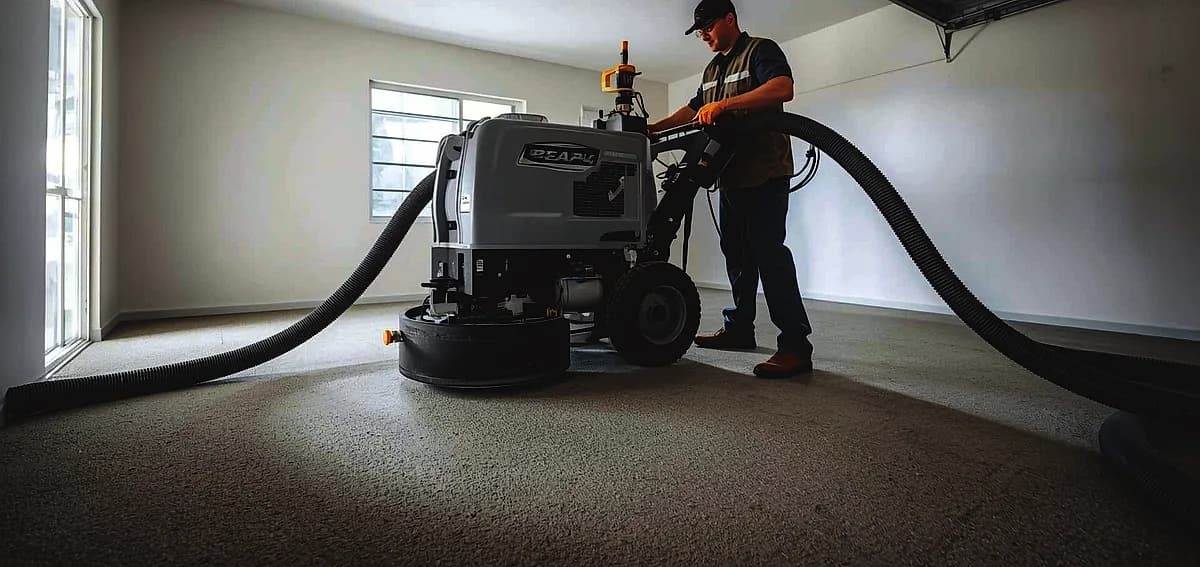
Many homeowners dread the mess associated with major home renovations, particularly the fine dust that coats furniture and air ducts. Fortunately, modern concrete polishing is an exceptionally clean and highly controlled process. We utilize advanced grinding machines equipped with heavy-duty vacuums and integrated HEPA filtration systems.
This closed-loop setup captures up to 99.9 percent of airborne particulates directly at the source before they can enter your living environment. As Sarah Jenkins, Director of Environmental Compliance at the Indoor Air Quality Association, explains: “Using HEPA filtration during mechanical grinding essentially eliminates the risk of silica dust exposure in residential environments.”
Additionally, our operational practices are LEED-compliant and eco-friendly. This ensures your indoor air quality remains pristine and safe throughout the duration of the project. You can remain comfortably in your home while the basement or garage floor is being transformed.
ENVIRONMENTAL IMPACT AND SUSTAINABILITY
In addition to air quality concerns, homeowners are increasingly focused on the environmental footprint of their renovation materials. Polished concrete is widely recognized as one of the most sustainable flooring options available today. By utilizing the existing foundation slab, you eliminate the need to harvest, manufacture, and transport new flooring materials like timber or synthetic carpets.
Research published by the U.S. Green Building Council highlights that polished concrete produces zero Volatile Organic Compound (VOC) emissions. This is a stark contrast to the adhesives and synthetic fibers found in conventional flooring, which can off-gas harmful chemicals for years. A polished surface promotes a naturally healthy indoor environment for your family.
Furthermore, the high reflectivity of a glossy concrete floor can reduce your home’s lighting needs. The surface bounces ambient and artificial light deep into the room, naturally brightening the space. This characteristic lowers electricity consumption and contributes to long-term energy savings.
STEPS TO MAINTAIN YOUR POLISHED CONCRETE FLOORS
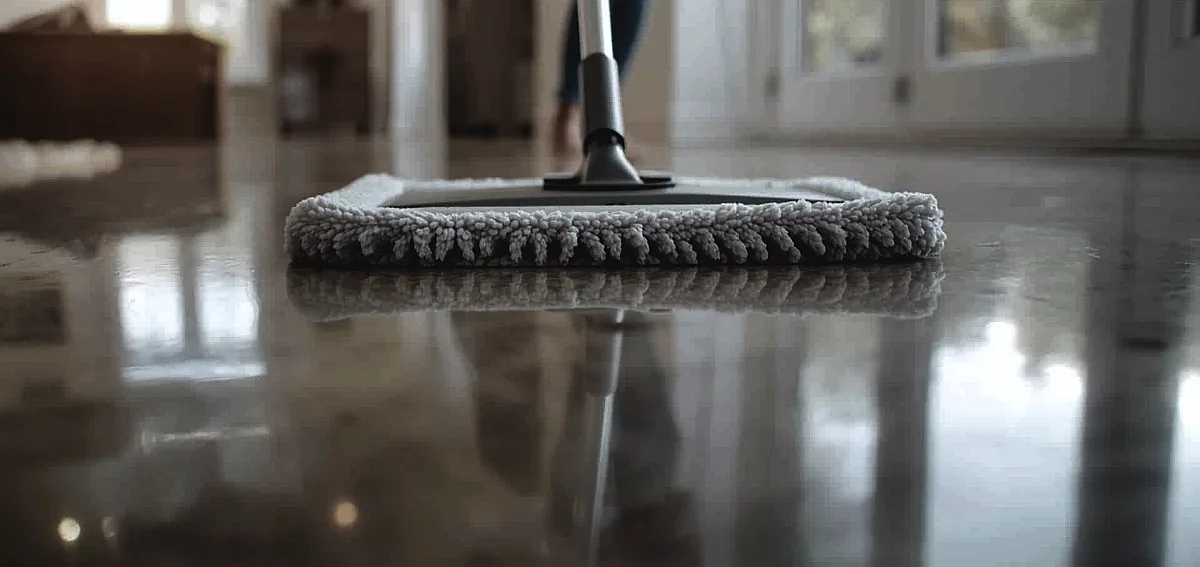
Maintaining the high gloss and extreme durability of your new floor is highly straightforward. Unlike wood or carpet, concrete does not require harsh chemical stripping, waxing, or deep steam cleaning. By following a few simple procedures, you will preserve the finish for decades without intensive labor.
- Dust mop daily: Use a clean, dry microfiber pad to remove loose dirt and abrasive sand particles that can slowly dull the surface over time.
- Damp mop weekly: Clean the floor using warm water and a neutral pH cleaner designed specifically for polished concrete surfaces.
- Clean spills immediately: Acidic liquids like red wine, vinegar, or citrus juice can etch the surface if left unattended for extended periods.
- Avoid harsh chemicals: Never use bleach, ammonia, or acidic grout cleaners, as these will permanently strip the protective densifiers.
- Use protective pads: Place thick felt pads under heavy furniture legs to prevent accidental scratching when moving items across the room.
ARE MICRO-TOPPINGS AND OVERLAYS NECESSARY FOR DAMAGED SLABS?
If your existing garage or basement floor is heavily pitted, uneven, or stained beyond repair, standard polishing may not yield the desired visual aesthetic. In these complex cases, it is advisable to apply professional micro-toppings. These are ultra-thin layers of polymer-modified cement that bond directly to the existing slab.
Micro-toppings provide a brand-new, structurally sound surface that can be beautifully stained, scored, or polished to a high sheen. Research from the National Ready Mixed Concrete Association shows that these overlays restore full functional integrity to slabs that have lost up to 15 percent of their surface density. This advanced technique completely revitalizes neglected concrete.
Opting for a self-leveling overlay saves you the immense cost, labor, and disruption of completely tearing out and repouring a concrete foundation. It is a highly efficient method for upgrading historic or poorly maintained homes into modern showcases.
COMPARING POLISHED CONCRETE TO EPOXY FLOORING
While researching floor upgrades, you will likely encounter epoxy coatings as an alternative to mechanical polishing. Both solutions offer exceptional durability, but they serve different aesthetic and functional purposes in a residential setting. Polished concrete hardens and densifies the actual slab, creating a natural, breathable surface.
Epoxy, conversely, is a topical thermosetting resin applied over the concrete. It provides superior resistance to harsh chemicals, making it exceptionally popular for active automotive garages or workshop environments. However, epoxy can be susceptible to scratching and may yellow over time if exposed to direct, sustained sunlight without a UV-stable topcoat.
Polished concrete is generally preferred for interior living spaces due to its organic appearance, seamless integration with modern decor, and lower long-term maintenance needs. It is advisable to consult with an expert contractor to determine which specific system aligns best with your lifestyle and budget.
Frequently Asked Questions
Will polished concrete fade in direct sunlight?
Unlike dyed carpets or certain luxury vinyl floors, naturally polished concrete will not fade under harsh UV exposure. If you opt for specific colored stains or dyes, we apply specialized UV-resistant sealers to protect the pigmentation. This ensures your floor maintains its vibrant color for decades.
Is polished concrete excessively loud?
Hard surfaces do naturally reflect sound waves more than soft carpeting. However, incorporating standard area rugs, heavy curtains, and acoustic wall panels easily mitigates any noticeable echo in a residential space. Most homeowners find the acoustics comparable to standard hardwood flooring.
Can you polish an existing, older concrete floor?
Yes, nearly any structurally sound concrete floor can be mechanically polished, regardless of its age. We thoroughly evaluate the slab for major structural defects and repair any cracks or spalling (flaking or chipping) before beginning the grinding process. Minor imperfections often add unique character to the final result.
How long does the professional polishing process take?
A standard two-car residential garage or average-sized basement typically takes two to three days to complete. The exact timeline depends heavily on the total square footage and the level of surface preparation required. Our team works efficiently to minimize disruption to your daily routine.
Does polished concrete require routine waxing?
No, a true mechanically polished floor derives its brilliant shine from the density of the concrete itself, not a topical wax coating. You never need to apply wax to maintain its glossy appearance. Routine damp mopping is sufficient to keep the floor looking pristine.
Are concrete floors safe for indoor pets?
Concrete is extremely pet-friendly because it easily resists scratch marks from heavy claws. It does not harbor pet dander, fleas, or lingering odors like traditional carpet. Any occasional pet accidents are easily wiped away without leaving permanent stains or smells.
Can polished concrete be installed in a bathroom?
Yes, polished concrete is an excellent, waterproof option for modern bathrooms. When properly sealed with high-quality topical treatments, it successfully resists water penetration and humidity. We also recommend adding a subtle anti-slip additive for enhanced safety near showers and tubs.
What happens if the floor loses its shine over time?
In high-traffic areas, the floor may gradually lose a small amount of its peak luster after several years. This is easily remedied with a quick professional buffing process using a fine-grit diamond pad. This simple maintenance step instantly restores the floor to its original, brilliant condition.
CONCLUSION
Upgrading your home with polished concrete is a highly rewarding, sustainable investment in 2026. By understanding the realities of slip resistance, thermal properties, and routine maintenance needs, you can confidently choose a flooring solution that will last a lifetime. Our team is dedicated to providing clear answers and flawless execution for every residential or commercial project. We invite you to contact us today to schedule a detailed consultation with our flooring experts.
REFERENCES
Written by

Founder and CEO
Chris Lavin is an esteemed leader in concrete polishing and epoxy coatings with a distinguished 20-year career. As founder and CEO of National Concrete Polishing and owner of Xtreme Polishing Systems, he's renowned for polishing and epoxy coating more floors than anyone globally. Chris is recognized for his innovative approach and commitment to enhancing floor durability and aesthetics. His hands-on experience and technical proficiency make him a respected authority and a valuable resource in the field of floor polishing and coatings.
Same topic
Related articles
All stories
Residential8 min read
What Restaurants Need to Pass a Health Inspection Floor Check
It endures heavy foot traffic, dropped equipment, boiling water spills, and harsh degreasing chemicals daily.
Read it
Residential9 min read
How Restaurants Replace Their Floors Without Closing for Long
The average food service establishment loses approximately $3,500 in daily revenue during unexpected closures in 2026.
Read it
Residential8 min read
Where Polished Concrete Beats Epoxy in a Home (and Where It Doesn’t)
Before evaluating specific rooms, it is essential to understand how these two flooring systems function.
Read it
Tell us about the floor
Tell us the space and roughly how big it is.We come back with what it would cost and when we could start.
Prefer to talk? Call +1 844-876-5474
- Leads@
nationalconcretepolishing.net - 2200 NW 32nd St #600,
Pompano Beach, FL 33069 Mon to Fri, 9:00 to 5:30