
The NCP blog
How Homeowners Decide on a Garage Floor Coating Without Getting Overwhelmed
Residential7 min read
The average cost of professional concrete resurfacing is approximately $2,450 for a standard two-car space in 2026.
The average cost of professional concrete resurfacing is approximately $2,450 for a standard two-car space in 2026. If you are navigating the options for a new surface, you may be wondering which specific material offers the best durability and long-term value. We have the right article for you, covering how to assess your concrete, compare chemical formulations, and select a system that withstands daily vehicle traffic.
Assessing Your Current Concrete Condition
It is essential to evaluate the structural integrity of your existing slab before selecting a new surface. Concrete is naturally porous and prone to absorbing moisture from the ground below. High moisture vapor transmission rates can cause impermeable layers to blister or detach over time. Homeowners should conduct a standard calcium chloride test to measure this hidden moisture emission accurately.
Older slabs often display signs of spalling (flaking or chipping) due to prolonged exposure to road salts and heavy loads. These compromised areas must be fully repaired before any topical layer is applied. Applying premium materials over weak, deteriorating concrete will inevitably lead to premature failure. It is advisable to address foundational cracks to prevent them from mirroring through your new finish.
Research indicates that inadequate surface preparation causes the vast majority of coating failures. As David Reynolds, Lead Engineer at the American Concrete Institute, explains: ‘Mechanically profiling the substrate is the single most critical phase for ensuring permanent mechanical adhesion in residential applications.’ Professional installers utilize heavy-duty grinding equipment to remove contaminants and open the concrete pores.
Comparing Popular Garage Floor Coatings
Understanding the chemical differences between available materials helps you make an informed investment. Each system offers unique benefits regarding curing times, chemical resistance, and overall longevity. It is crucial to match the product specifications to your household’s specific daily demands.
Traditional Epoxy Systems
Epoxy remains one of the most widely recognized solutions for residential and commercial spaces. It creates a thick, durable barrier that resists impacts and automotive fluids effectively. However, traditional epoxy formulations are susceptible to ambering or yellowing when exposed to direct sunlight over long periods. Installations typically require multiple days to cure completely before allowing vehicular traffic.
Polyaspartic And Polyurea Solutions
Polyaspartic and polyurea compounds represent advanced alternatives to standard epoxy layers. These highly flexible materials cure rapidly and can often be installed in a single day under the right conditions. They provide excellent ultraviolet stability, ensuring the color remains vibrant even in sunlit areas. They are highly resistant to hot tire pickup, a common issue where heated tires peel the finish off the slab.
Polished Concrete Alternatives
Polished concrete is a structural treatment rather than a topical layer. Contractors use progressively finer diamond abrasives combined with chemical densifiers to harden the surface itself. This method completely eliminates the risk of peeling or blistering since there is no separate film sitting on top of the slab. It is an exceptionally low-maintenance option that naturally resists dust accumulation.
Material Comparison Overview
| Material Type | Typical Cure Time | UV Resistance | Estimated Lifespan |
|---|---|---|---|
| Standard Epoxy | 3 to 5 Days | Low to Moderate | 10 to 15 Years |
| Polyaspartic | 24 Hours | Excellent | 15 to 20+ Years |
| Polyurea | 24 Hours | Excellent | 15 to 20+ Years |
| Polished Concrete | Immediate | Excellent | 20+ Years |
Factors That Affect Your Final Decision
Selecting the right product requires analyzing several environmental and functional variables specific to your property. A system that performs flawlessly in a mild climate may struggle under extreme weather fluctuations. Consider the following variables carefully before scheduling your project.
- Environmental Conditions: Regions experiencing frequent freeze-thaw cycles (repeated freezing and thawing of water in concrete pores) demand flexible materials. Rigid coatings may crack as the underlying slab expands and contracts with severe temperature shifts.
- Chemical Exposure: Think about the fluids your floor will encounter regularly. Workspaces exposed to harsh solvents, brake fluids, or heavy road salts require materials with elevated chemical resistance ratings.
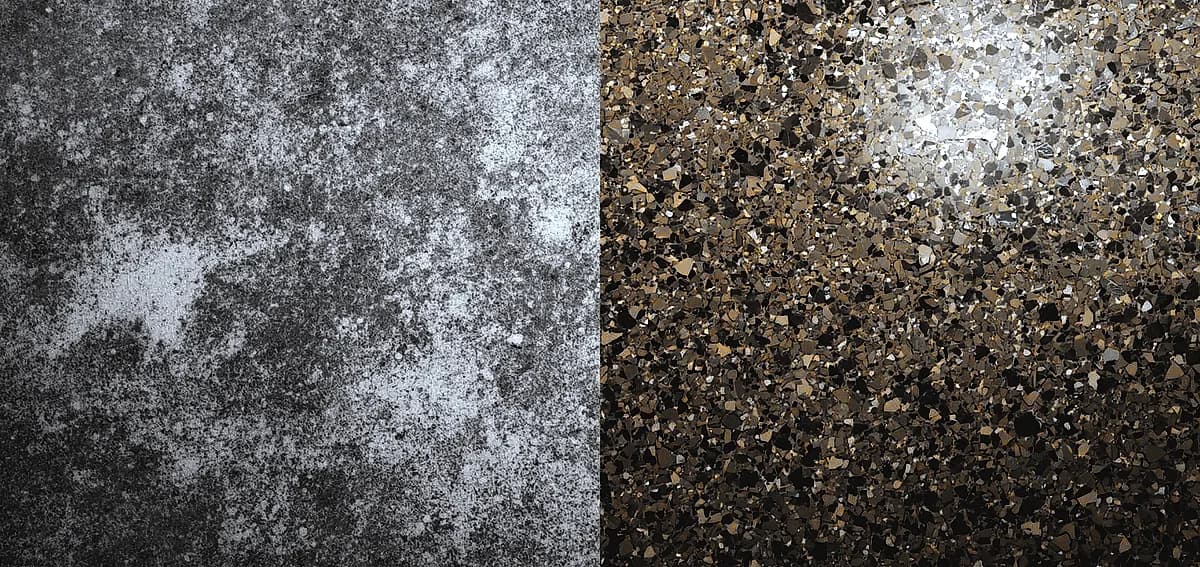
- Aesthetic Preferences: Visual appeal plays a significant role in modern garage renovations. Options range from solid high-gloss colors to decorative vinyl flake broadcasts and metallic pigments.
- Budget Constraints: While premium products require a higher initial investment, they generally offer lower lifetime maintenance costs. Factor in the long-term value and potential increase in property equity.
According to Mark Davis, Lead Researcher at the National Association of Realtors: ‘Garages with professional-grade finishes yield an average return on investment of 70 percent at resale in the 2026 housing market.’ A clean, visually appealing workspace is increasingly viewed as an extension of the primary living area.
Steps To Prepare For A Professional Installation
Proper preparation is the foundation of a lasting bond. Attempting to bypass these essential phases will likely result in a compromised finish. Homeowners should understand the sequential process professional contractors follow.
- Thorough Cleaning: The area must be completely cleared of vehicles, storage units, and debris. Any existing oil stains require heavy degreasing to prevent adhesion failure.
- Moisture Assessment: Contractors will conduct precise moisture vapor readings to ensure the slab is sufficiently dry. Excessive moisture may necessitate the application of a specialized vapor barrier primer.
- Mechanical Profiling: The most crucial step involves grinding or shot-blasting the entire surface. This process removes the smooth upper crust and exposes the porous aggregate below, creating an ideal texture for the primer to grip.
- Structural Repairs: All active cracks, divots, and areas of spalling are filled with rapid-curing polymer patching compounds. The patches are then ground flush with the surrounding floor to ensure a perfectly level canvas.
It is crucial to utilize high-solids materials during the application phase. According to Michael Torres, Operations Director at the Environmental Protection Agency: ‘Utilizing high-solids, low-VOC materials is critical for maintaining indoor air quality during residential renovations.’ Modern chemical formulations are designed to minimize harmful off-gassing.
Frequently Asked Questions
How long does a typical installation take?
The timeline depends entirely on the specific material chosen and the condition of your existing slab. Polyaspartic systems can generally be completed in a single day, allowing for vehicle traffic 24 hours later. Traditional epoxy applications typically require three to five days for proper curing and drying between multiple coats.
Can new materials be applied over heavily damaged concrete?
Yes, but thorough restoration is mandatory before any finishing product is applied. We utilize specialized self-leveling overlays (flowable polymer mixtures used to restore flat surfaces) and industrial patching compounds to rebuild structural integrity. Applying layers directly over crumbling concrete will result in immediate failure.
What is the difference between epoxy and polyurea?
Epoxy is a thicker, rigid material known for its strong adhesion and impact resistance. Polyurea is a synthetic compound that offers much higher flexibility and rapid curing speeds. Furthermore, polyurea is completely ultraviolet stable, meaning it will not turn yellow when exposed to sunlight.
Are these chemical formulas safe for indoor air quality?
Most modern professional-grade systems are engineered to have very low volatile organic compounds (VOCs). We ensure that all products utilized are compliant with current environmental regulations. Once the surface is fully cured, it is completely inert and emits no harmful odors.
How do I clean my newly treated surface?
Maintenance is straightforward and requires minimal effort. It is advisable to sweep debris regularly and mop the area using a pH-neutral cleaner mixed with warm water. Avoid using harsh acidic chemicals or abrasive scrubbing pads, as they can dull the high-gloss finish over time.
Does a finished surface increase overall home value?
Yes, a professionally finished space significantly enhances the visual appeal and functionality of the property. Buyers frequently view a pristine garage as a valuable extension of the home’s usable square footage. Data shows that high-quality finishes can yield up to a 70 percent return on investment.
What causes an applied finish to peel or bubble?
Peeling is almost exclusively caused by improper surface preparation or high hidden moisture levels. If the pores of the slab are not opened mechanically, the resin cannot establish a physical bond. Moisture rising from the soil can also create hydrostatic pressure that forces the layer upward.
Conclusion
Selecting the right treatment for your concrete requires a careful evaluation of your budget, environmental factors, and daily usage. Whether you choose the rapid curing times of polyaspartic formulations or the structural permanence of mechanically polished concrete, proper surface preparation remains the ultimate key to success. We recommend consulting with experienced contractors who can perform accurate moisture testing and recommend the exact chemical formulation your property requires. It is essential to protect your investment by ensuring the work is performed to exact industry specifications. For personalized guidance on your upcoming renovation, contact us today to schedule a professional assessment.
References
Written by

Founder and CEO
Chris Lavin is an esteemed leader in concrete polishing and epoxy coatings with a distinguished 20-year career. As founder and CEO of National Concrete Polishing and owner of Xtreme Polishing Systems, he's renowned for polishing and epoxy coating more floors than anyone globally. Chris is recognized for his innovative approach and commitment to enhancing floor durability and aesthetics. His hands-on experience and technical proficiency make him a respected authority and a valuable resource in the field of floor polishing and coatings.
Same topic
Related articles
All stories
Residential8 min read
What Restaurants Need to Pass a Health Inspection Floor Check
It endures heavy foot traffic, dropped equipment, boiling water spills, and harsh degreasing chemicals daily.
Read it
Residential9 min read
How Restaurants Replace Their Floors Without Closing for Long
The average food service establishment loses approximately $3,500 in daily revenue during unexpected closures in 2026.
Read it
Residential8 min read
Where Polished Concrete Beats Epoxy in a Home (and Where It Doesn’t)
Before evaluating specific rooms, it is essential to understand how these two flooring systems function.
Read it
Tell us about the floor
Tell us the space and roughly how big it is.We come back with what it would cost and when we could start.
Prefer to talk? Call +1 844-876-5474
- Leads@
nationalconcretepolishing.net - 2200 NW 32nd St #600,
Pompano Beach, FL 33069 Mon to Fri, 9:00 to 5:30