
The NCP blog
Epoxy Flooring Composition: What Miami Customers Should Know
Epoxy & coatings9 min read
Industrial epoxy flooring systems possess a compressive strength exceeding 10,000 pounds per square inch in 2026.
Industrial epoxy flooring systems possess a compressive strength exceeding 10,000 pounds per square inch in 2026. If you are dealing with a dull garage floor, commercial wear-and-tear, or cracking concrete, you may be wondering exactly what these durable coatings are made of. We have the right article for you, covering the core ingredients, chemical reactions, and long-term benefits of professional-grade epoxy systems.
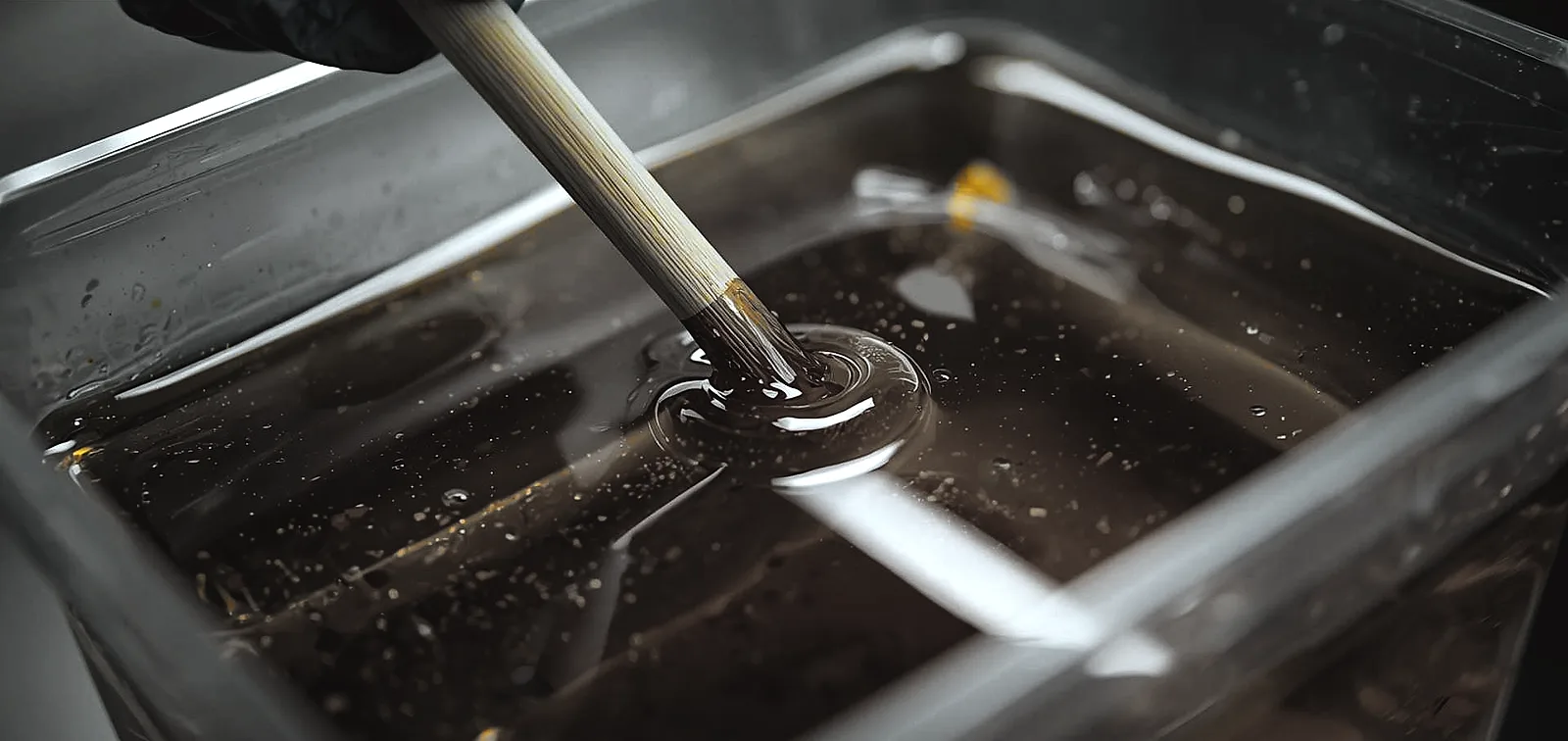
At its core, a true epoxy coating is not a standard paint, but a two-part thermosetting polymer. It consists of an epoxide resin and a polyamine hardener. When our professionals at NCP mix these two components, they undergo a rapid exothermic reaction to form a rigid, seamless plastic material. This unique chemical process creates an incredibly strong structural bond with porous concrete substrates.
The Core Science: Understanding Polymer Materials
To fully grasp the durability of these surface treatments, it helps to understand their molecular building blocks. The foundational ingredients dictate how the floor will perform under heavy vehicular traffic, chemical spills, and daily abrasion. Epoxy flooring systems rely on a very specific balance of synthetic chemistry.
As Dr. Emily Chen, Lead Polymer Scientist at the Advanced Coatings Council, explains: ‘The transition from liquid monomers to a solid cross-linked network provides thermoset epoxies with their signature resistance to chemical degradation and mechanical wear.’ This transformation relies entirely on the precise ratio of Part A to Part B.
Part A: The Epoxide Resin
The first component of the system is the epoxide resin. This clear or pigmented liquid is most commonly derived from bisphenol-A (BPA) or bisphenol-F (BPF). Bisphenol-A resins are the industry standard for general commercial and residential applications due to their excellent adhesion and solid durability.
Bisphenol-F resins, while generally more expensive, offer superior chemical resistance. We often specify BPF resins for industrial facilities, laboratories, and manufacturing plants where harsh acid or solvent spills are a daily risk. The resin provides the bulk of the material volume and carries any base color pigments.
Part B: The Polyamine Hardener
The second essential component is the polyamine hardener, sometimes referred to as the curative or catalyst. Hardeners dictate the curing speed, temperature resistance, and final hardness of the floor. Aliphatic amines are frequently used because they cure well at room temperature and provide excellent structural rigidity.
When the hardener is introduced to the resin, it acts as a molecular bridge. The amine groups react directly with the epoxide groups, linking the short polymer chains together into a massive, interconnected three-dimensional web. It is essential to measure these components precisely, as incorrect ratios lead to soft, tacky floors that fail to cure.
The Curing Process: From Liquid to Solid Surface
Standard architectural paints dry as their water or solvent carriers evaporate into the atmosphere. Epoxy flooring does not dry; it cures. This curing process is a chemical transformation called cross-linking. Once mixed, the liquid components have a limited window of workability known as pot life.
This cross-linking process generates significant heat, known in chemistry as an exothermic reaction. Depending on the ambient temperature and the specific product formulation, an epoxy floor may become dry to the touch in 12 hours. However, it generally requires up to seven full days to reach its maximum mechanical cure and chemical resistance.
According to safety guidelines from the Occupational Safety and Health Administration (OSHA), ensuring proper ventilation during this exothermic curing phase is critical. Modern 100% solids epoxy systems mitigate many risks by containing virtually zero volatile organic compounds (VOCs). These high-solids formulas do not shrink as they cure, resulting in a significantly thicker and more durable final surface.
Specialized Additives and Modifiers
While clear or solid-color epoxy is highly functional, most residential and commercial clients require additional performance features. Installers introduce various additives during the application process to enhance traction, aesthetics, and longevity. These modifiers are broadcast into the wet base coat before it cross-links.
Aggregates for Slip Resistance
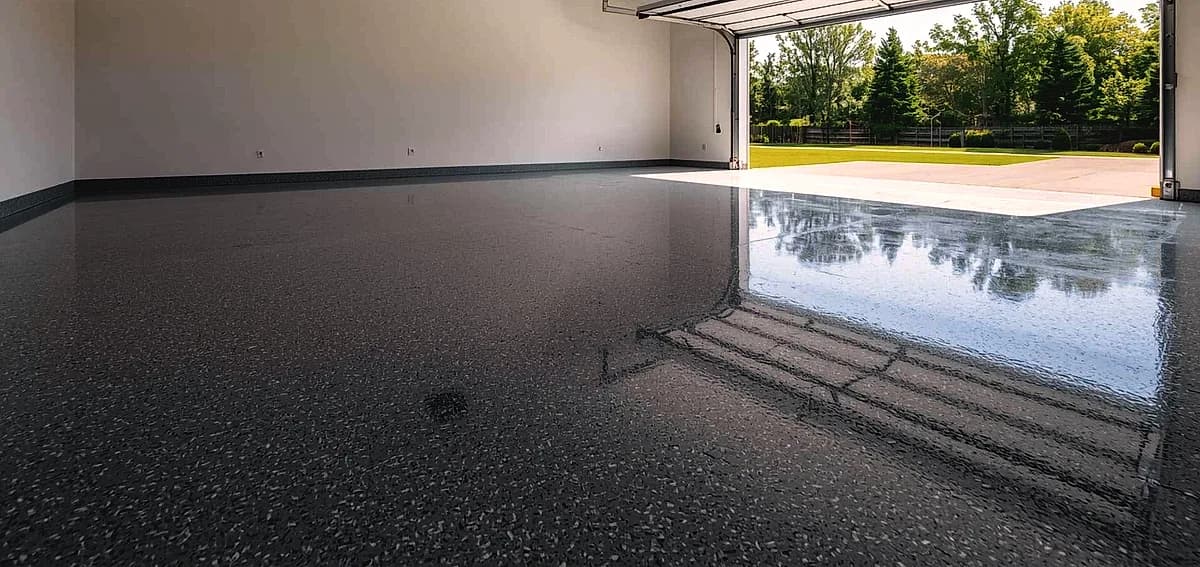
Epoxy creates a non-porous, glass-like surface that can become exceptionally slippery when wet. To mitigate this hazard, our installers incorporate silica sand, aluminum oxide, or colored quartz aggregates into the system. These materials protrude slightly from the final topcoat, creating a micro-texture that drastically improves foot traction.
Decorative Flakes and Metallic Pigments
For garage floors and retail environments, decorative vinyl flakes are the most common aesthetic additive. These flakes are broadcast into the wet primer, hiding concrete imperfections and adding visual depth. For a more dynamic look, metallic pigments can be suspended in clear resin, creating a flowing, three-dimensional marble effect.
UV Inhibitors and Polyurethane Topcoats
Traditional epoxies are sensitive to ultraviolet light. Prolonged exposure to sunlight causes an aesthetic phenomenon known as ambering, where the coating develops a yellowish tint. To prevent this, professional installations utilize aliphatic polyurethane or polyaspartic topcoats. These specialized final layers provide supreme UV stability and superior scratch resistance.
Comparing Epoxy to Standard Concrete Paint
Homeowners often confuse structural epoxy systems with DIY garage floor paints found at big-box hardware stores. The difference in chemical composition dictates entirely different performance metrics. Below is a comparison of how these two distinct products behave in real-world scenarios.
| Feature | Professional Epoxy System | Standard Acrylic Concrete Paint |
|---|---|---|
| Composition | Two-part thermosetting polymer | One-part latex or acrylic |
| Curing Method | Exothermic chemical cross-linking | Water or solvent evaporation |
| Hot Tire Resistance | Excellent (Will not lift) | Poor (Frequently peels under tires) |
| Thickness | 10 to 30+ mils | 2 to 3 mils |
| Average Lifespan | 10 – 20+ years | 1 – 3 years |
Factors That Affect Epoxy Flooring Performance
Understanding what epoxy flooring is made of is only half the equation. The long-term performance of these materials depends heavily on the environment and the substrate they are applied to. Several critical factors determine whether an installation will last two decades or fail in two years.
- Concrete Moisture Levels: High moisture vapor transmission rates (MVTR) can cause hydrostatic pressure beneath the coating. This pressure forces the epoxy to blister and peel away from the concrete. It is essential to perform calcium chloride or relative humidity testing prior to application.
- Surface Preparation: Epoxy cannot bond to smooth, dirty, or sealed concrete. The surface must be mechanically profiled to open the concrete’s pores. Research from the American Concrete Institute shows that proper mechanical profiling drastically improves the tensile bond strength of resinous coatings.
- Ambient Temperature: Extreme heat accelerates the curing process, significantly reducing the pot life of the mixed product. Conversely, freezing temperatures can halt the cross-linking process entirely. Climate control during installation ensures the chemicals bond correctly.
- Substrate Integrity: Epoxy is highly rigid. If the underlying concrete slab cracks due to foundational shifting or severe freeze-thaw cycles, the coating will often crack with it. Treating active joints and repairing spalling (flaking or chipping) before coating is mandatory.
Steps to Prepare Concrete for Epoxy Application
The most advanced polymer chemistry in the world will fail if applied to improperly prepared concrete. The installation process is highly technical and requires specialized industrial machinery. Here is how our teams ensure permanent mechanical adhesion.
- Moisture and Hardness Testing: We begin by evaluating the slab’s internal moisture levels and its structural hardness. Soft concrete may require a densifying agent before it can safely accept a rigid polymer overlay.
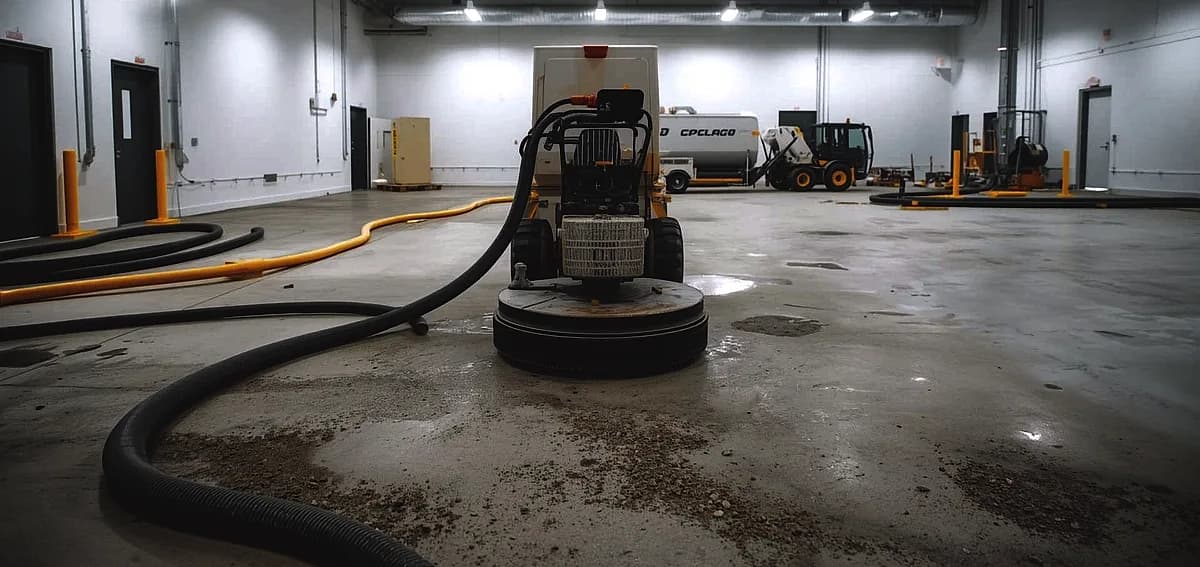
- Mechanical Diamond Grinding: We utilize heavy-duty walk-behind grinders equipped with aggressive diamond tooling. This step removes existing paints, stubborn sealers, and surface laitance, exposing a fresh, porous layer of concrete. The goal is to achieve a Concrete Surface Profile (CSP) of 2 or 3.
- Crack and Joint Repair: All visible cracks, divots, and spalled areas are filled with a fast-curing polyurea or epoxy patching paste. The patched areas are then ground flush with the rest of the floor to ensure a completely seamless final finish.
- Industrial Vacuuming: Even a microscopic layer of dust acts as a bond breaker between the resin and the concrete. We use high-HEPA industrial vacuums to extract all silica dust from the pores of the slab.
- Primer Coat Application: A specialized penetrating epoxy primer is squeegeed and back-rolled into the concrete. This thin, low-viscosity layer sinks deeply into the pores, sealing the slab and creating an anchor point for the subsequent high-build layers.
Frequently Asked Questions
Is epoxy flooring toxic after it cures?
Once an epoxy floor has fully cured and cross-linked, it is completely inert and non-toxic. Modern 100% solids epoxy formulas also emit extremely low volatile organic compounds (VOCs) during the installation process. They are safe for residential interiors, commercial kitchens, and medical facilities.
How long does a professional epoxy floor last?
When installed correctly by skilled contractors over properly prepared concrete, industrial epoxy flooring generally lasts 10 to 20 years. In low-traffic residential settings like private garages, it can easily exceed two decades. Routine maintenance, such as basic sweeping and pH-neutral mopping, significantly extends its lifespan.
Can I apply an epoxy coating over severely damaged concrete?
Epoxy coatings are not structural replacements for heavily degraded slabs. While minor cracks and surface spalling can be repaired with polyurea pastes before application, structurally compromised concrete must be replaced. A polymer-modified overlay or self-leveling overlay may be required for deeply uneven surfaces before the final epoxy application.
What is the difference between epoxy paint and an epoxy coating?
Epoxy paint is typically a standard latex or acrylic paint with a very small amount of epoxy resin added for slight durability. It is applied thinly and dries via evaporation. A true epoxy coating is a two-part structural polymer that cures chemically, creating a thick, hard plastic layer that bonds aggressively to the concrete.
Will my epoxy floor yellow over time?
Standard bisphenol-A epoxy resins are sensitive to ultraviolet light and will slowly amber or yellow when exposed to direct sunlight. To prevent this chemical degradation, professional installers apply a clear aliphatic polyurethane or polyaspartic topcoat. These specialized final layers provide complete UV stability and enhance scratch resistance.
How thick is a commercial epoxy flooring system?
Standard residential garage coatings typically range from 10 to 30 mils in thickness. Heavy-duty commercial and industrial systems, such as epoxy mortars or self-leveling epoxies, can range from 1/16 of an inch to 1/4 of an inch thick. The required thickness depends entirely on the anticipated weight load and forklift traffic.
Final Thoughts
Understanding the fundamental chemistry of these resinous systems empowers facility managers and homeowners to make informed investments. From the initial mixing of bisphenol resins and polyamine hardeners to the critical mechanical preparation of the concrete substrate, proper installation is a highly technical process. By utilizing 100% solids formulations and UV-stable topcoats, these flooring systems deliver decades of uninterrupted performance. If you want to ensure your surfaces are protected with the highest grade materials available, get in touch with our team to discuss your specific project requirements.
References
- American Concrete Institute (ACI) – Guidelines for Concrete Surface Preparation
- Occupational Safety and Health Administration (OSHA) – Ventilation and Chemical Safety Standards
- Wikipedia – Thermosetting Polymers and Epoxide Chemistry
- National Association of Home Builders (NAHB) – Residential Flooring Durability Standards
Written by

Founder and CEO
Chris Lavin is an esteemed leader in concrete polishing and epoxy coatings with a distinguished 20-year career. As founder and CEO of National Concrete Polishing and owner of Xtreme Polishing Systems, he's renowned for polishing and epoxy coating more floors than anyone globally. Chris is recognized for his innovative approach and commitment to enhancing floor durability and aesthetics. His hands-on experience and technical proficiency make him a respected authority and a valuable resource in the field of floor polishing and coatings.
Same topic
Related articles
All stories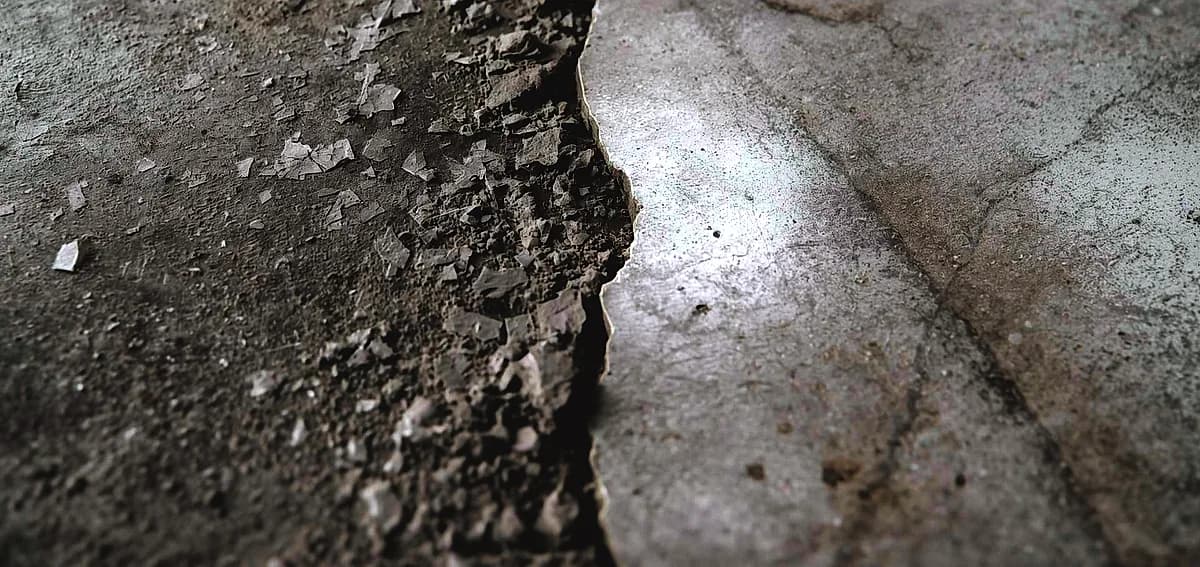
Epoxy & coatings8 min read
DIY vs Professional Epoxy Flooring in Fort Lauderdale
Hardware stores heavily market all-in-one boxes that promise a showroom finish with minimal effort.
Read it
Epoxy & coatings8 min read
Can You DIY Epoxy Flooring in Miami? Pros, Cons, and Tips
Applying a durable floor finish in a tropical or highly humid climate presents unique environmental challenges.
Read it
Epoxy & coatings7 min read
DIY Epoxy Flooring in South Florida: Is It Worth the Risk?
However, these products generally contain high levels of water or solvents to extend their pot life.
Read it
Tell us about the floor
Tell us the space and roughly how big it is.We come back with what it would cost and when we could start.
Prefer to talk? Call +1 844-876-5474
- Leads@
nationalconcretepolishing.net - 2200 NW 32nd St #600,
Pompano Beach, FL 33069 Mon to Fri, 9:00 to 5:30