
The NCP blog
Basement Epoxy Flooring Solutions for South Florida Homes
Residential13 min read
South Florida homeowners choose epoxy for basements because it resists moisture and holds up in below-grade spaces.
South Florida homeowners increasingly choose epoxy coatings for basement transformations because these polymer-based floor systems deliver exceptional durability, moisture resistance, and aesthetic versatility in below-grade spaces. Unlike traditional flooring materials that struggle with the region’s high humidity and occasional flooding concerns, properly installed epoxy creates a seamless, impermeable surface that protects concrete subfloors while elevating the entire living space. This comprehensive guide covers everything South Florida residents need to know about selecting, installing, and maintaining epoxy basement floors that last.
Why Basement Epoxy Flooring Dominates South Florida Climates
South Florida presents unique environmental challenges that make epoxy basement flooring a particularly smart investment for homeowners in Miami-Dade, Broward, and Palm Beach counties. The region’s subtropical climate brings average relative humidity levels exceeding 75% during summer months, creating persistent moisture threats for below-grade spaces that traditional flooring materials simply cannot withstand. According to the National Weather Service, Miami experiences an average of 60 inches of rainfall annually, with concentrated precipitation during the wet season from May through October.
Concrete basement floors in South Florida homes face moisture vapor transmission rates that often exceed 3 pounds per 1,000 square feet per 24 hours during peak humidity periods. Standard flooring materials like carpet, hardwood, and laminate absorb this moisture, leading to mold growth, warping, adhesive failure, and structural degradation within just a few years. Epoxy coatings solve this fundamental problem by creating a continuous barrier that prevents moisture penetration while allowing the concrete to breathe appropriately through micro-porous formulations specifically engineered for below-grade applications.
Research published by the International Association of Certified Home Inspectors indicates that moisture-related floor failures account for approximately 40% of all basement renovation costs in humid climate regions. Homeowners who invest in epoxy basement flooring from the outset avoid these recurring maintenance expenses while gaining a floor system that actually improves with age when properly maintained.
Understanding Epoxy Coating Chemistry for Basement Applications
Epoxy floor coatings consist of two primary components: epoxy resin and polyamine hardener. When mixed together, these chemicals undergo a cross-linking reaction that transforms the liquid mixture into an extremely hard, durable thermoset polymer. This chemical bonding process creates a surface hardness measured at 85-95 Shore D on the durometer scale, significantly outperforming concrete’s natural hardness of 70-80 Shore D.
For South Florida basement installations, contractors typically specify one of four epoxy formulations based on the space’s intended use and moisture conditions:
- 100% Solids Epoxy: Contains no solvents, delivers the thickest coating (10-15 mils per coat), and provides maximum chemical resistance. Ideal for basements with persistent moisture issues.
- Water-Based Epoxy: Lower VOC content meets South Florida air quality regulations, easier application, and suitable for areas with moderate moisture exposure.
- Solvent-Based Epoxy: Penetrates concrete more deeply, excellent adhesion properties, but requires proper ventilation during application.
- Metallic Epoxy: Decorative variant incorporating metallic pigments for unique visual effects, requires skilled application technique.
As James Mitchell, Technical Director at EPO Systems International, explains: “The critical factor for South Florida basement applications is selecting a coating system with appropriate moisture vapor transmission resistance. We recommend minimum 100% solids epoxy at 12-15 mils thickness for below-grade installations, with additional moisture mitigation for areas prone to water intrusion.”
Essential Preparation Steps Before Epoxy Installation
Proper surface preparation determines approximately 70-80% of long-term epoxy coating performance, according to industry standards established by the Society for Concrete Finishing Professionals. South Florida homeowners should insist their contractors follow these critical preparation phases:
Moisture Testing and Assessment
Before any surface preparation begins, contractors must conduct calcium chloride moisture tests following ASTM F1869 protocols. This test measures the rate at which moisture vapor escapes from the concrete slab, expressed in pounds per 1,000 square feet per 24 hours. South Florida basements with readings above 3 lbs typically require additional moisture mitigation strategies before epoxy application proceeds.
Concrete Surface Profile Development
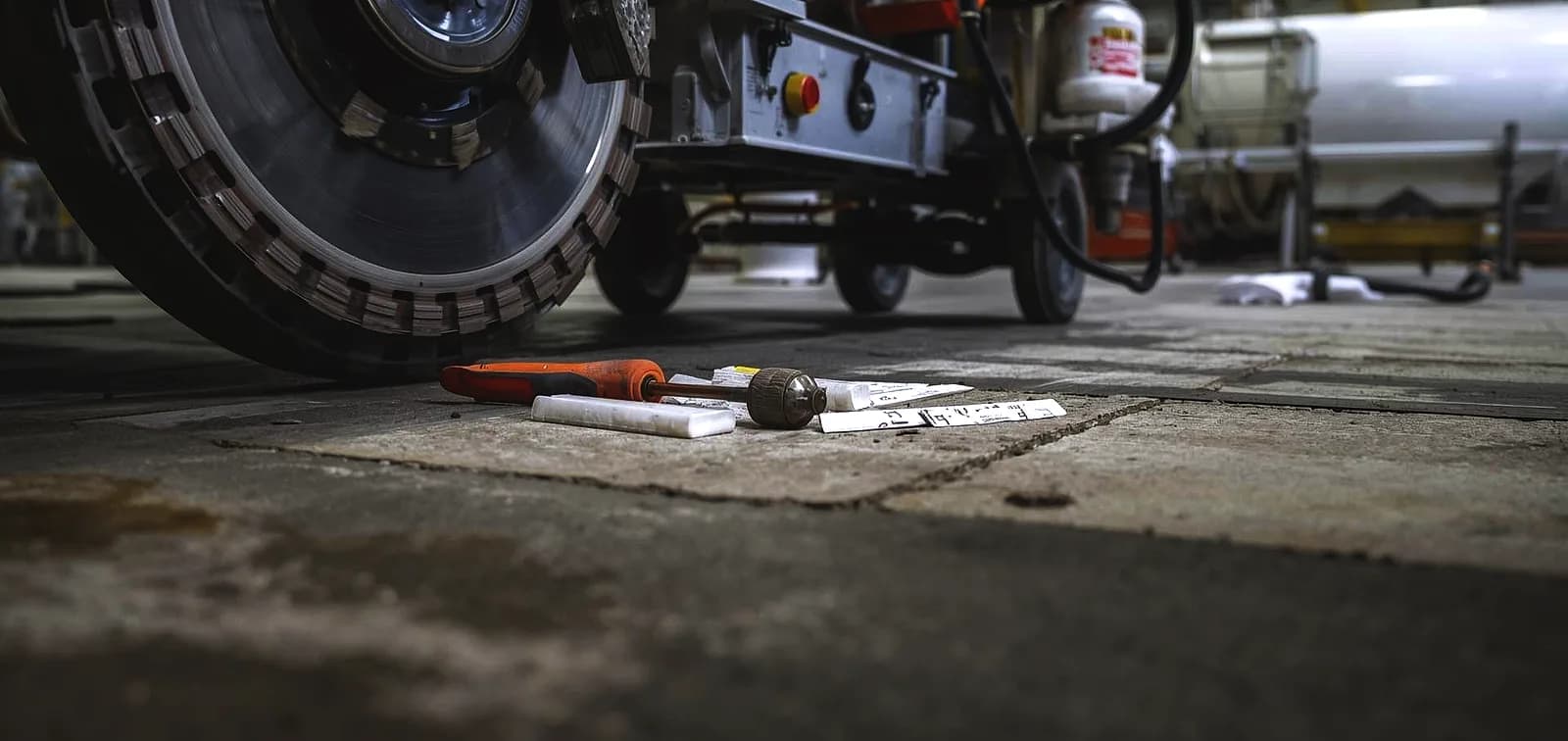
Epoxy coatings require adequate surface roughness, measured as Concrete Surface Profile (CSP), ranging from CSP-2 to CSP-4 depending on the specific coating system. Mechanical grinding using diamond tooling achieves consistent CSP ratings while removing surface contaminants, curing compounds, and weak concrete layers. Shot blasting represents an alternative method particularly effective for larger basement areas exceeding 1,000 square feet.
Crack Repair and Joint Treatment
South Florida’s expansive clay soils and occasional foundation settling create cracks that must be addressed before epoxy installation. Professional contractors use flexible polyurea crack fillers that accommodate minor movement while maintaining adhesion to the surrounding concrete. Control joints receive similar treatment to prevent crack propagation through the finished coating.
Step-by-Step Installation Process for Basement Epoxy Floors
Professional epoxy basement flooring installation follows a systematic process that ensures optimal adhesion, coverage, and long-term performance. Here’s what South Florida homeowners can expect during their installation project:
- Initial Assessment and Moisture Testing: Contractors evaluate existing concrete condition, measure moisture vapor transmission rates, and document any repairs needed before proceeding.
- Surface Preparation: Diamond grinding or shot blasting creates the required surface profile while removing contaminants and achieving uniform texture across the entire basement floor.
- Repairs and Patching: Cracks, spalls, and surface defects receive appropriate repair materials, typically requiring 24-48 hours for full cure before coating application.
- Primer Application: A moisture-mitigating primer coat penetrates the concrete surface, promoting adhesion and providing an additional barrier against vapor transmission.
- Base Coat Installation: The primary epoxy coat applies at specified thickness, with installers working methodically to maintain consistent coverage and avoid puddling in low areas.
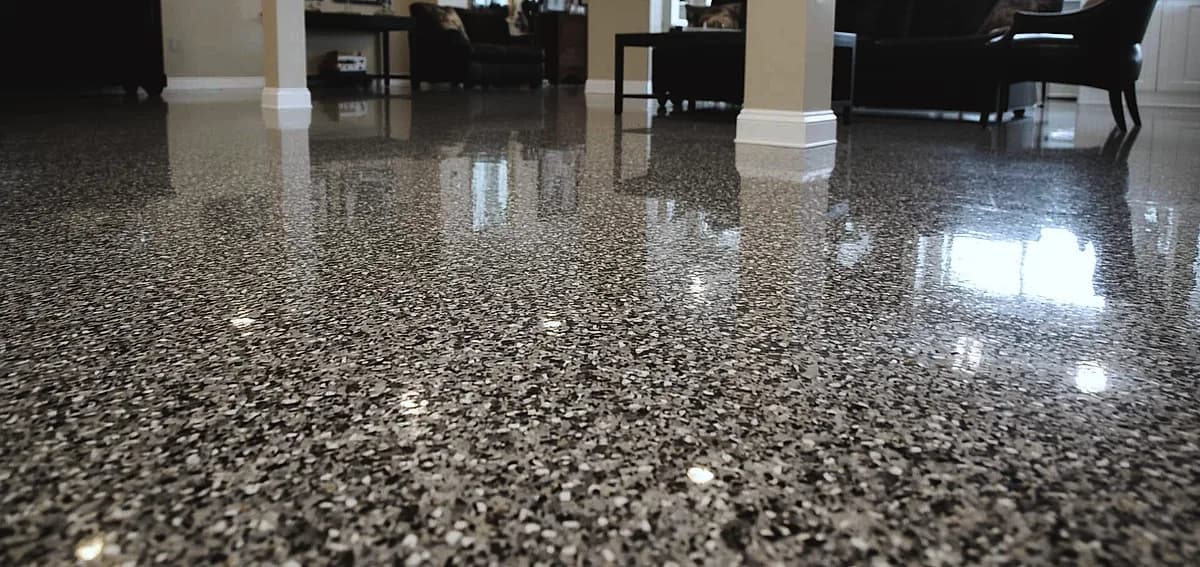
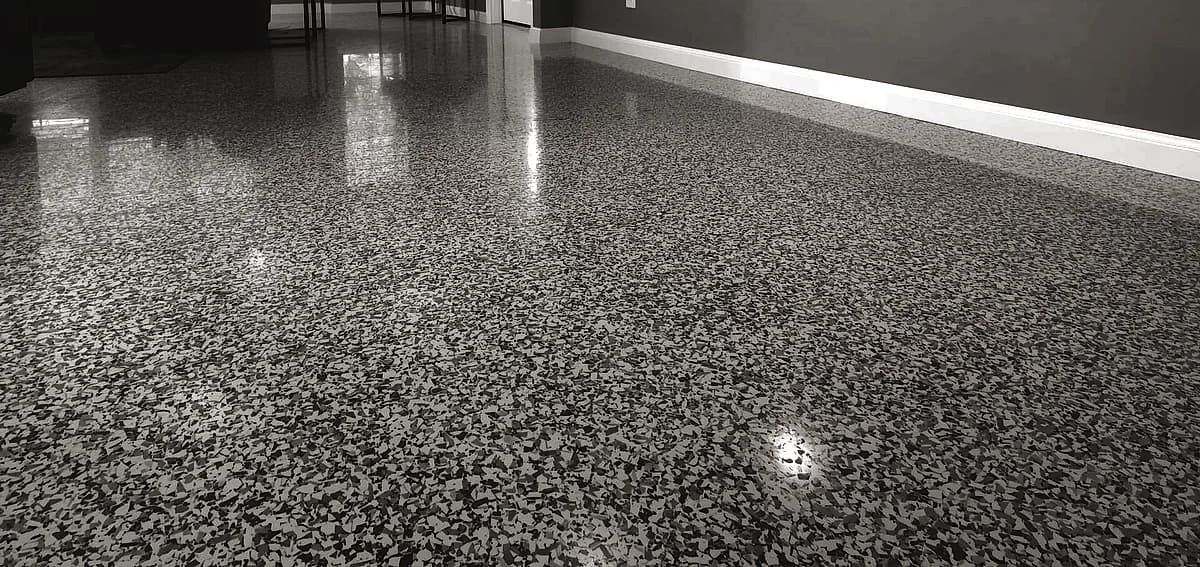
- Decorative Elements (Optional): For flake or metallic systems, decorative materials broadcast into the wet base coat at this stage.
- Top Coat Sealing: A clear urethane or epoxy top coat encapsulates decorative elements while providing chemical resistance, UV stability (where applicable), and enhanced durability.
- Curing and Return to Service: The completed system requires 24-72 hours of cure time before furniture placement and full use commences.
The entire installation process typically spans 3-5 days for an average 500-800 square foot basement, with most of this time allocated to proper curing between coats rather than active installation work.
Comparing Epoxy Systems for South Florida Basements
Different epoxy coating systems offer distinct advantages depending on basement usage, budget constraints, and aesthetic preferences. The following comparison table helps South Florida homeowners evaluate their options:
| System Type | Thickness | Durability | Moisture Resistance | Cost Range (per sq ft) | Best For |
|---|---|---|---|---|---|
| Standard Solid Color | 10-15 mils | Moderate | Good | $3-$6 | Storage basements, utility spaces |
| Decorative Flake | 15-25 mils | High | Excellent | $5-$9 | Living spaces, home gyms, play areas |
| Metallic Epoxy | 20-30 mils | High | Excellent | $8-$15 | Entertainment areas, show spaces |
| Industrial Quartz | 25-40 mils | Very High | Maximum | $7-$12 | Workshops, high-traffic areas |
Industry data from Flooring Inc indicates that decorative flake systems account for approximately 45% of residential basement epoxy installations in humid climate regions, with solid color systems capturing 30% and metallic formulations representing 25% of the market.
Addressing South Florida’s Unique Basement Moisture Challenges
South Florida’s geological composition creates basement moisture conditions that differ significantly from northern climates. The region’s porous limestone bedrock and high water table combine with sandy soils that allow groundwater to migrate upward through concrete slabs via capillary action. This phenomenon, known as rising damp, affects basements throughout Miami-Dade, Broward, and Palm Beach counties regardless of foundation waterproofing measures.
Effective epoxy basement flooring in South Florida requires a multi-layered moisture mitigation approach that addresses both surface moisture and vapor transmission. Professional installers typically recommend the following additional measures:
- Moisture Mitigation Primers: Specially formulated epoxy primers containing moisture-blocking additives penetrate concrete pores and create an impermeable barrier layer.
- Deck Membrane Systems: For basements with documented water intrusion history, installing a fluid-applied deck membrane beneath the epoxy coating provides redundant moisture protection.
- Dehumidification Integration: Permanent dehumidification systems sized for basement square footage maintain relative humidity below 50%, extending coating lifespan.
- Drainage Improvements: Interior French drains or sub-slab depressurization systems redirect groundwater away from the foundation perimeter.
Sarah Chen, P.E., Foundation Specialist with American Society of Civil Engineers, notes: “South Florida homeowners should understand that no floor coating system substitutes for proper moisture management. Epoxy works exceptionally well when combined with appropriate site preparation and humidity control, but addressing the root cause of moisture intrusion remains essential.”
Maintenance Protocols for Long-Lasting Basement Epoxy Floors
South Florida homeowners who follow recommended maintenance schedules can expect their epoxy basement floors to remain functional and attractive for 15-25 years, depending on usage intensity and maintenance consistency. The International Window Film Association reports that properly maintained epoxy coatings in high-humidity environments demonstrate 40% longer service lives compared to neglected installations.
Daily and Weekly Maintenance
Regular maintenance begins with daily dust mopping using a soft-bristled attachment to prevent abrasive particles from accumulating on the surface. Weekly wet mopping with pH-neutral cleaner removes accumulated contaminants without degrading the epoxy’s chemical resistance. Avoid acidic or abrasive cleaning products that can dull the finish over time.
Monthly Inspections
Monthly inspections should examine the floor for signs of coating degradation, particularly along edges, expansion joints, and high-traffic zones. Early identification of potential issues allows targeted repairs before problems escalate. Pay particular attention to areas near floor drains, where standing water might accumulate if drainage becomes compromised.
Annual Professional Assessment
Annual assessments by qualified epoxy flooring contractors identify maintenance needs and potential repair requirements. Professional cleaning and topical reapplication of wear-resistant sealers every 2-3 years refreshes the floor’s appearance while adding protective layers that extend overall system lifespan.
Cost Analysis: Epoxy Basement Flooring Investment in South Florida
Understanding epoxy basement flooring costs helps South Florida homeowners budget appropriately for this renovation project. Industry surveys from the HomeAdvisor platform indicate that basement epoxy flooring costs in the South Florida market range from $3 to $15 per square foot depending on system complexity and preparation requirements.
Breaking down the cost components reveals where investment dollars flow:
- Surface Preparation: $1.50-$3.00 per square foot for grinding, cleaning, and repairs
- Materials: $1.00-$5.00 per square foot depending on coating system selected
- Labor: $1.50-$4.00 per square foot for professional installation
- Moisture Mitigation: $0.50-$2.00 per square foot if additional measures required
- Decorative Elements: $0.50-$3.00 per square foot for flakes, metallic pigments, or quartz
For a typical 600 square foot South Florida basement, total project costs range from $2,400 to $9,000 depending on system selection. While this initial investment exceeds some alternative flooring materials, the 15-25 year service life and minimal replacement frequency result in lower lifecycle costs compared to carpet, luxury vinyl, or laminate flooring that requires replacement every 5-10 years in humid environments.
Common Mistakes to Avoid During Basement Epoxy Installation
South Florida homeowners who understand common installation pitfalls can make informed decisions when selecting contractors and evaluating project approaches. The following mistakes frequently compromise epoxy basement flooring performance:
- Insufficient Surface Preparation: Rushing the grinding or shot blasting phase results in poor coating adhesion, leading to peeling and delamination within 1-3 years.
- Ignoring Moisture Testing: Skipping calcium chloride testing leaves contractors working blind regarding actual moisture conditions, inviting premature failure.
- Temperature Violations: Epoxy curing requires ambient temperatures between 60-85°F. South Florida air conditioning failures during installation can compromise chemical bonding.
- Inadequate Cure Time: Rushing furniture placement before full cure completes creates surface impressions and compromises hardness development.
- Improper Mixing Ratios: Deviating from manufacturer-specified resin-to-hardener ratios weakens the final coating’s chemical resistance and physical properties.
As Michael Torres, Owner of NCCER-certified Concrete Coatings Academy, advises: “The single most important thing homeowners can do is verify their contractor’s training and certification credentials. Epoxy application appears deceptively simple, but achieving consistent results requires understanding chemistry, environmental conditions, and substrate characteristics.”
Design Options: Transforming Basement Spaces with Epoxy
Modern epoxy basement flooring transcends the utilitarian image of industrial coatings, offering South Florida homeowners extensive design possibilities that complement contemporary interior styles. From sleek minimalist finishes to bold artistic statements, epoxy systems accommodate virtually any aesthetic vision.
Popular design directions for South Florida basements include:
- Coastal Contemporary: Light gray or white solid color epoxies paired with bright lighting create bright, airy spaces that complement the region’s tropical aesthetic.
- Industrial Modern: Dark gray or charcoal metallic epoxies with subtle sheen variations evoke urban loft aesthetics popular in Miami’s design districts.
- Natural Stone Simulation: Advanced metallic systems can replicate marble, granite, and quartzite appearances at a fraction of natural stone costs.
- Sports Court Finishes: High-gloss epoxies with custom line markings create professional-quality basketball or pickleball surfaces.
- Playroom Themes: Decorative flake systems incorporating multiple colors create engaging environments for children’s recreational spaces.
The seamless nature of epoxy basement flooring also eliminates grout lines, seams, and transitions that collect dirt and moisture in alternative flooring systems. This hygienic advantage proves particularly valuable for basement spaces converted to home gyms, craft rooms, or hobby areas where cleanliness matters significantly.
Conclusion
Basement epoxy flooring represents one of the most practical investments South Florida homeowners can make for their below-grade spaces. The combination of exceptional moisture resistance, durability, design versatility, and long-term cost efficiency addresses the unique challenges posed by the region’s humid climate and high water table conditions. Whether converting a basement into a home theater, fitness center, workshop, or additional living quarters, epoxy coatings provide the foundation necessary for successful long-term use.
Successful epoxy basement flooring installation requires careful contractor selection, appropriate system specification for South Florida conditions, and commitment to recommended maintenance protocols. Homeowners who invest in proper preparation and quality materials can expect 15-25 years of trouble-free service from their epoxy basement floors.
Ready to transform your South Florida basement with professional epoxy flooring? Contact our team today for a comprehensive assessment and customized installation quote. Our experienced technicians understand South Florida’s unique environmental challenges and deliver epoxy basement flooring solutions built to last.
References
- National Weather Service – South Florida climate and precipitation data
- International Association of Certified Home Inspectors – Moisture-related floor failure statistics
- Society for Concrete Finishing Professionals – Surface preparation standards
- American Society of Civil Engineers – Foundation and moisture management guidelines
- International Window Film Association – Coating maintenance and longevity data
- HomeAdvisor – Industry cost surveys and contractor benchmarks
- NCCER – Concrete coatings certification standards
Frequently Asked Questions
How long does epoxy basement flooring take to install in South Florida?
Professional epoxy basement flooring installation typically requires 3-5 days for an average-sized basement. This timeline includes surface preparation, crack repairs, primer application, base coat installation, decorative elements (if applicable), top coat sealing, and adequate cure time before the space returns to service.
Can epoxy flooring be installed over existing basement concrete with moisture issues?
Yes, epoxy flooring can be installed over concrete with moisture concerns, but proper assessment and mitigation measures are essential. Contractors should conduct calcium chloride moisture testing following ASTM F1869 protocols. Results above 3 pounds per 1,000 square feet per 24 hours require moisture mitigation primers or deck membrane systems before standard epoxy application.
What is the expected lifespan of epoxy basement flooring in South Florida’s climate?
Properly installed and maintained epoxy basement flooring in South Florida typically lasts 15-25 years. The exact lifespan depends on factors including moisture management, usage intensity, maintenance consistency, and whether the original installation used appropriate systems for below-grade applications.
Is epoxy basement flooring safe for homes with children or pets?
Epoxy basement flooring is extremely safe for families with children and pets. Once fully cured (typically 72 hours), cured epoxy coatings are inert, non-toxic, and emit no harmful VOCs. The seamless surface also eliminates allergens that accumulate in carpet and grout lines, making it an excellent choice for allergy sufferers.
How does epoxy flooring perform during South Florida’s hurricane season flooding?
Properly installed epoxy flooring provides excellent water resistance during flooding events. The seamless, impermeable surface prevents water penetration into the concrete subfloor. However, standing water should be removed promptly, and the floor should be inspected for any coating damage or edge delamination after flooding exposure.
What maintenance is required for South Florida basement epoxy floors?
Epoxy basement flooring maintenance includes daily dust mopping, weekly wet mopping with pH-neutral cleaners, monthly inspections for wear or damage, and annual professional assessments. Periodic reapplication of topical sealers every 2-3 years refreshes the appearance and adds protective layers.
Can I install epoxy basement flooring myself to save money?
While DIY epoxy kits exist, professional installation is strongly recommended for South Florida basement applications. The region’s unique moisture conditions, high water table, and specific building code requirements demand expertise that most homeowners lack. Professional installation also typically includes warranties that DIY approaches cannot match.
How much does professional epoxy basement flooring cost in South Florida?
Professional epoxy basement flooring in South Florida costs between $3 and $15 per square foot depending on system complexity. For a typical 600 square foot basement, total project costs range from $2,400 to $9,000. While this exceeds some alternative flooring materials, the 15-25 year service life results in lower lifecycle costs.
Written by

Founder and CEO
Chris Lavin is an esteemed leader in concrete polishing and epoxy coatings with a distinguished 20-year career. As founder and CEO of National Concrete Polishing and owner of Xtreme Polishing Systems, he's renowned for polishing and epoxy coating more floors than anyone globally. Chris is recognized for his innovative approach and commitment to enhancing floor durability and aesthetics. His hands-on experience and technical proficiency make him a respected authority and a valuable resource in the field of floor polishing and coatings.
Same topic
Related articles
All stories
Residential8 min read
What Restaurants Need to Pass a Health Inspection Floor Check
It endures heavy foot traffic, dropped equipment, boiling water spills, and harsh degreasing chemicals daily.
Read it
Residential9 min read
How Restaurants Replace Their Floors Without Closing for Long
The average food service establishment loses approximately $3,500 in daily revenue during unexpected closures in 2026.
Read it
Residential8 min read
Where Polished Concrete Beats Epoxy in a Home (and Where It Doesn’t)
Before evaluating specific rooms, it is essential to understand how these two flooring systems function.
Read it
Tell us about the floor
Tell us the space and roughly how big it is.We come back with what it would cost and when we could start.
Prefer to talk? Call +1 844-876-5474
- Leads@
nationalconcretepolishing.net - 2200 NW 32nd St #600,
Pompano Beach, FL 33069 Mon to Fri, 9:00 to 5:30