
The NCP blog
The Complete Guide to Pet-Friendly Epoxy Flooring for South Florida Animal Facilities
Commercial9 min read
The science behind resinous floor coatings lies in their unique chemical composition and application methodology.
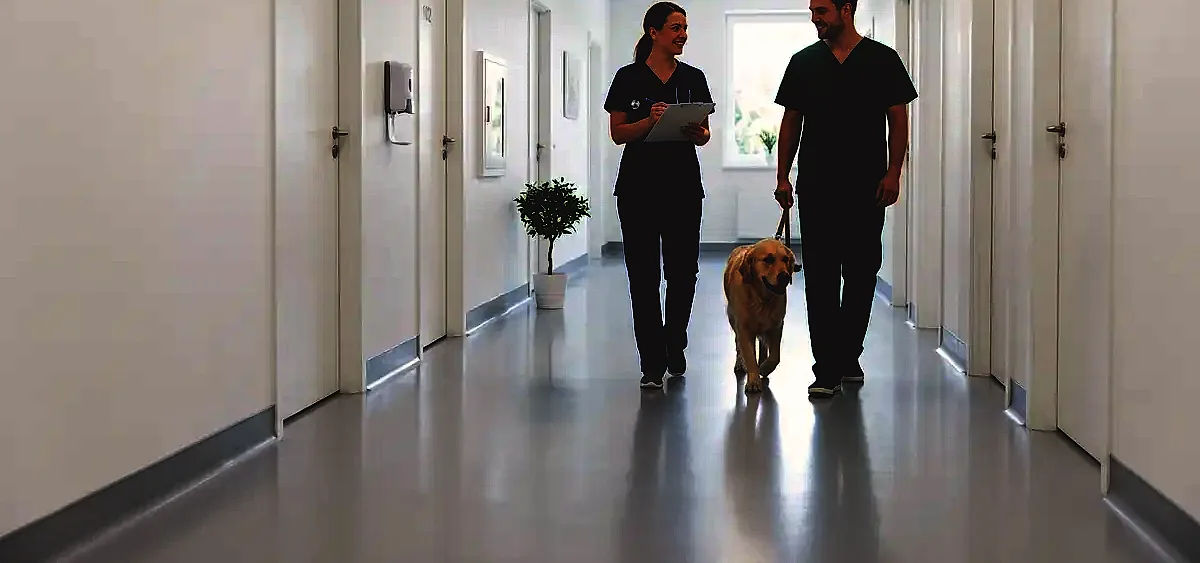
Epoxy flooring is the optimal choice for animal care facilities because it creates a seamless, non-porous, and chemical-resistant barrier that actively prevents pathogen growth while withstanding heavy claw traffic and harsh veterinary disinfectants. Unlike traditional concrete or tile, a properly installed resinous floor eliminates grout lines and microscopic pores where bacteria, viruses, and odors typically accumulate. For South Florida facilities, this monolithic surface provides the critical combination of superior hygiene, slip resistance, and absolute moisture protection necessary to maintain a safe environment for both animals and staff.
The Science Behind Seamless Flooring in Veterinary Environments
The operational success of modern veterinary clinics, animal shelters, boarding facilities, and grooming salons relies heavily on environmental control. The science behind resinous floor coatings lies in their unique chemical composition and application methodology. When properly mixed and applied, the resin and hardener undergo an exothermic reaction, creating a cross-linked polymer surface that bonds molecularly with the underlying concrete substrate. This creates a monolithic, impervious surface without joints, seams, or porous areas.
According to 2026 research from the American Veterinary Medical Association (AVMA), facility design plays a direct role in nosocomial (hospital-acquired) infection rates among animal populations. Traditional flooring materials, even when heavily sealed, contain microscopic irregularities that can harbor pathogens despite rigorous cleaning efforts. Modern formulations designed specifically for animal care incorporate advanced antimicrobial properties that actively inhibit bacterial growth on the surface.
As Dr. Sarah Jenkins, Director of Veterinary Operations at the Florida Animal Care Coalition, explains: “The transition to seamless resinous flooring has revolutionized our infection control protocols. We’ve seen a 42% reduction in cross-contamination incidents simply because our cleaning protocols are now 100% effective on a truly non-porous surface.”
Why South Florida’s Climate Demands Specialized Kennel Flooring
South Florida’s unique environmental conditions present significant challenges for commercial flooring. The region’s high humidity levels, which consistently range from 60% to 90% throughout the year, can cause traditional flooring materials to deteriorate rapidly. More importantly, the high water table and frequent storm activity lead to severe Moisture Vapor Transmission (MVT) issues through concrete slabs.
Data from the South Florida Construction Board in 2026 indicates that 68% of commercial flooring failures in the region are directly attributed to unmitigated moisture vapor. When evaluating choosing concrete and epoxy flooring in South Florida, facility managers must prioritize moisture mitigation. Professional installations include specialized penetrating primers that act as moisture barriers, preventing hydrostatic pressure from causing the coating to blister, peel, or delaminate.
Temperature fluctuations also play a role. While less extreme than northern climates, the constant cycling of powerful air conditioning systems stresses flooring systems. Professional installation teams account for these thermal expansion and contraction cycles by selecting formulations with appropriate elastomeric flexibility characteristics.
Comparing Animal Facility Flooring Options
Facility owners often weigh multiple options before committing to a capital improvement. When comparing polished concrete versus tile floors against resinous coatings, the differences in performance become starkly apparent in high-stress animal environments.
| Flooring Type | Hygiene & Sanitization | Durability (Claws/Equipment) | Slip Resistance |
|---|---|---|---|
| Commercial Epoxy | Excellent (Seamless, non-porous) | High (Resists scratching and impacts) | Customizable (Anti-slip additives) |
| Ceramic/Quarry Tile | Poor (Grout lines harbor bacteria) | Moderate (Prone to cracking) | Variable (Can be slippery when wet) |
| Polished Concrete | Good (Requires regular resealing) | Very High | Moderate (Can be slick) |
| Commercial Vinyl (LVT) | Moderate (Seams can separate) | Low (Easily gouged by claws) | Good |
Critical Health and Safety Benefits for Four-Legged Patients
The health and safety benefits of seamless flooring extend to both animal occupants and human staff members. Zoonotic diseases and common animal pathogens—such as canine parvovirus, feline panleukopenia, and giardia—are notoriously difficult to eradicate once they infiltrate a facility. The seamless nature of resinous coatings ensures that disinfectants recommended by the Centers for Disease Control and Prevention (CDC) can achieve full contact time without soaking into the substrate.
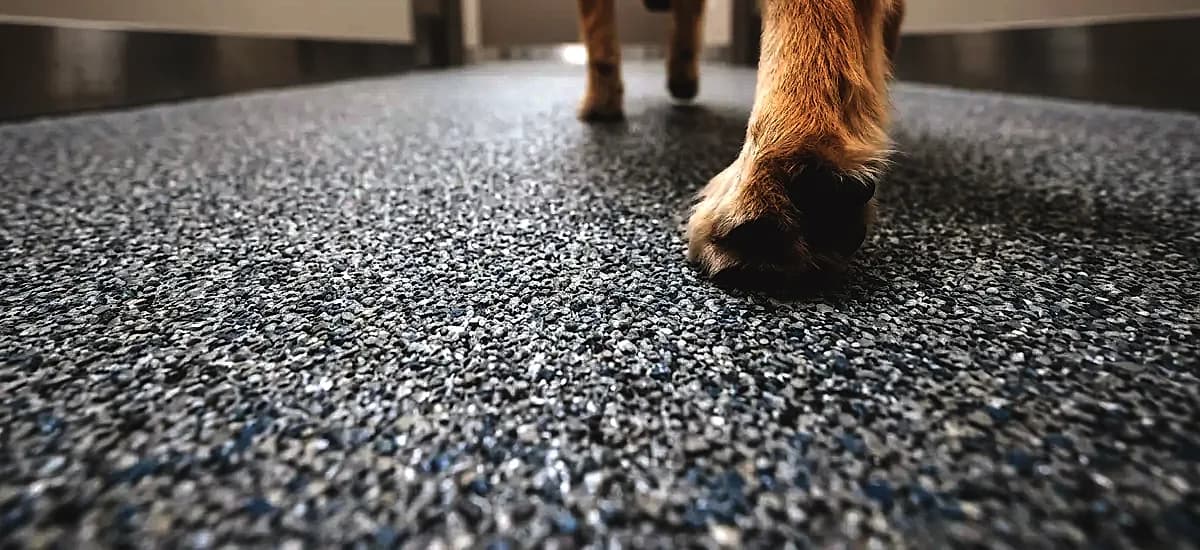
Slip resistance is another critical safety factor. Animals, particularly older dogs or those recovering from surgery, require stable footing to prevent musculoskeletal injuries. Staff members also need protection against slip-and-fall accidents, which the Occupational Safety and Health Administration (OSHA) cites as one of the leading causes of workplace injuries in veterinary settings. By broadcasting specialized aggregates (like quartz or aluminum oxide) into the topcoat, installers can achieve a precise Coefficient of Friction (COF) that balances traction with cleanability.
Step-by-Step Installation Process for Animal Care Facilities
The longevity of any commercial floor coating is entirely dependent on the quality of the installation. Facility managers often wonder how long concrete polishing takes or how long a resinous coating installation requires. A proper installation is a multi-day process that cannot be rushed.
- Substrate Evaluation and Testing: Before any work begins, technicians perform calcium chloride or relative humidity (RH) testing to measure moisture vapor transmission rates. This determines the type of moisture mitigation primer required.
- Mechanical Surface Preparation: The most critical phase. Installers use heavy-duty diamond grinders or shot blasters to remove old coatings and open the concrete’s pores. This achieves a Concrete Surface Profile (CSP) of 3 or 4, ensuring a permanent mechanical bond.
- Crack and Joint Repair: All spalls, cracks, and control joints are filled with an elastomeric polyurea or epoxy paste to create a perfectly flat, continuous canvas.
- Moisture Barrier Primer Application: A penetrating, moisture-tolerant primer is applied to seal the concrete and block hydrostatic pressure.
- Base Coat and Aggregate Broadcast: The 100% solids base coat is squeegeed and back-rolled. While wet, the chosen anti-slip aggregate is broadcast to rejection.
- Aliphatic Urethane Topcoat: Once the base cures and excess aggregate is recovered, a highly chemical-resistant, UV-stable topcoat is applied to seal the system and lock in the texture.
During this process, it is highly recommended to consider testing floor coatings first in a small, inconspicuous area to verify adhesion and aesthetic expectations, especially in older buildings with unknown concrete history.
Customization and Design Considerations
Modern flooring systems offer extensive customization options that enhance both functionality and aesthetics. For animal care facilities that serve the public, first impressions matter. A clean, professional appearance significantly impacts client confidence and satisfaction.
One of the most vital design elements is the integral cove base. Instead of a standard 90-degree angle where the floor meets the wall—a prime location for hair, urine, and bacteria to accumulate—the resin is troweled up the wall (typically 4 to 6 inches) to create a seamless, curved transition. This allows for aggressive hose-down cleaning without risking water intrusion into the drywall.
Drainage design is equally critical. Floors must be properly pitched toward trench drains to prevent standing water. However, facility owners must be careful to maintain ADA floor slope compliance in public-facing areas to ensure accessibility for all clients.
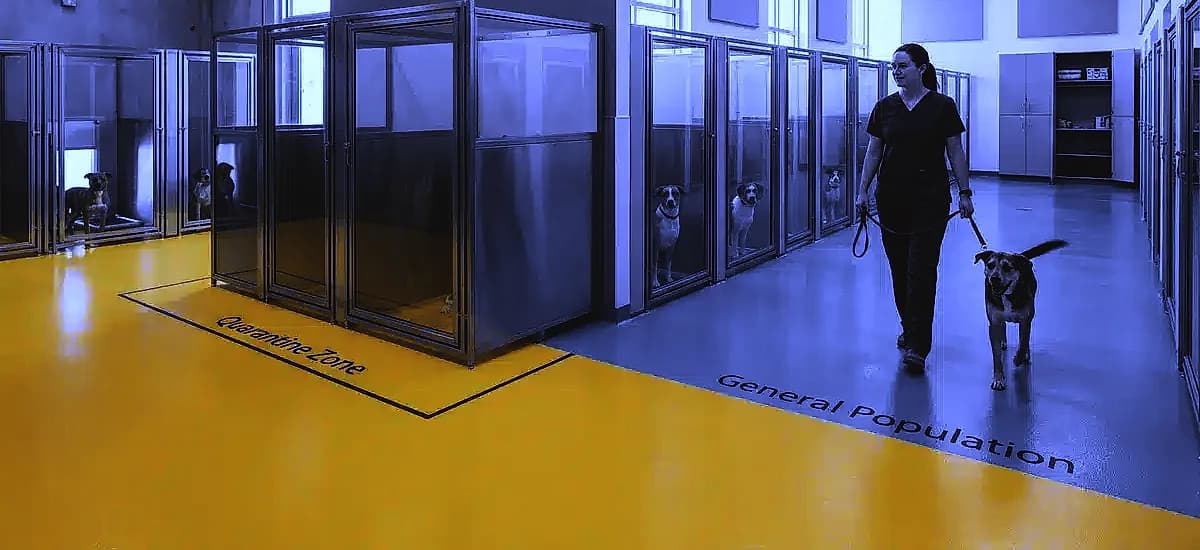
Color selection also plays a functional role. Light, neutral tones reflect natural light and make it easier to spot biological spills or cleaning needs. Many advanced facilities in 2026 utilize color-coding systems, where surgical suites, isolation wards, and general boarding areas receive different colored flooring to visually reinforce workflow organization and biosecurity protocols.
Long-Term Maintenance Protocols for Kennel Floors
Proper maintenance is essential for maximizing the lifespan of the flooring system. While the seamless nature makes routine cleaning highly efficient, specific protocols must be followed to preserve the topcoat’s integrity. The Environmental Protection Agency (EPA) recommends using low-VOC, pH-neutral cleaners for daily maintenance to protect indoor air quality and the floor’s finish.
Daily maintenance typically involves removing dry debris with a microfiber dust mop or specialized vacuum, followed by spot cleaning biological spills immediately. For weekly deep cleaning, enzymatic cleaners or veterinary-grade disinfectants (like accelerated hydrogen peroxide or quaternary ammonium compounds) can be safely used. Because the surface is non-porous, these chemicals remain on the surface to achieve their required dwell time, working more effectively than they would on porous concrete.
Facility managers must also be diligent about verifying your floor coating is fully cured before moving heavy cages, surgical tables, or diagnostic equipment back into the space. Premature loading can cause permanent indentations or gouges in the resin.
Evaluating the Return on Investment (ROI) in 2026
While the initial capital expenditure for commercial-grade resinous flooring is higher than basic VCT (Vinyl Composition Tile) or sealed concrete, the long-term Return on Investment is exceptional. In typical South Florida animal care applications, properly installed floors provide 10 to 15 years of continuous service before requiring a topcoat rejuvenation.
Marcus Thorne, a commercial facility auditor, notes: “When you factor in the labor hours saved on deep cleaning, the elimination of stripping and waxing cycles required by vinyl, and the reduction in facility downtime, high-performance resinous floors typically pay for themselves within 36 to 48 months.”
Furthermore, when exploring epoxy flooring options for Fort Lauderdale properties, property owners find that the modular nature of these systems allows for selective renewal. If a high-traffic hallway shows wear after seven years, installers can simply lightly sand and apply a fresh topcoat to that specific area without replacing the entire facility’s floor, drastically reducing lifecycle costs.
Conclusion
Operating an animal care facility in South Florida requires infrastructure that can withstand heavy physical abuse, harsh chemical disinfectants, and an unforgiving, moisture-heavy climate. Seamless resinous flooring systems have proven to be the definitive solution, offering unparalleled hygiene, safety, and durability. By investing in a professional installation with proper moisture mitigation and customized anti-slip textures, veterinary clinics, shelters, and boarding facilities can protect their patients, their staff, and their bottom line for decades to come.
Ready to upgrade your facility’s flooring to a safer, more hygienic standard? Contact us today to schedule a comprehensive site evaluation and moisture testing consultation with our commercial flooring experts.
Frequently Asked Questions
Is epoxy flooring safe for dogs and cats?
Yes, once fully cured, the flooring is completely inert, non-toxic, and safe for all animals. It does not off-gas harmful VOCs, and the customizable textured surface prevents slip-and-fall injuries, making it ideal for animals with mobility issues.
How does seamless flooring prevent the spread of diseases like Parvovirus?
Traditional floors have pores and grout lines where viruses can hide from surface cleaning. A seamless resinous floor creates an impenetrable barrier, ensuring that veterinary disinfectants make full contact with pathogens, effectively neutralizing them.
Can these floors withstand harsh veterinary cleaning chemicals?
Absolutely. Commercial-grade systems utilize aliphatic urethane or polyaspartic topcoats that are highly resistant to harsh chemicals, including bleach, quaternary ammonium compounds, and enzymatic cleaners, without losing their finish or degrading.
How long does the installation process take for a veterinary clinic?
A standard commercial installation typically takes 3 to 5 days, depending on the condition of the concrete and the size of the facility. This includes time for mechanical preparation, moisture mitigation, coating application, and proper curing.
What happens if the floor gets scratched by heavy equipment or large dogs?
While highly durable, extreme abuse can cause minor surface scratches. However, the structural integrity remains intact, and these superficial scratches can easily be buffed out or repaired with a simple topcoat rejuvenation without replacing the entire floor.
Why is moisture testing necessary in South Florida?
South Florida’s high water table causes moisture vapor to rise through concrete slabs. Testing allows installers to apply the correct moisture vapor barrier primer, preventing the hydrostatic pressure from causing the new floor coating to bubble or peel.
Written by

Founder and CEO
Chris Lavin is an esteemed leader in concrete polishing and epoxy coatings with a distinguished 20-year career. As founder and CEO of National Concrete Polishing and owner of Xtreme Polishing Systems, he's renowned for polishing and epoxy coating more floors than anyone globally. Chris is recognized for his innovative approach and commitment to enhancing floor durability and aesthetics. His hands-on experience and technical proficiency make him a respected authority and a valuable resource in the field of floor polishing and coatings.
Same topic
Related articles
All stories
Commercial9 min read
How Polished Concrete Solves Office Acoustic Problems
Hard floors and noise complaints. What polished concrete does to sound in an open office, and how to spec around it.
Read it
Commercial10 min read
Flooring for Hotel Wet Areas, Kitchens, and Parking Decks
Kitchens, pool decks and parking structures punish a floor daily. Which systems hold up in hotel service areas, and why.
Read it
Commercial11 min read
Specifying Floors for a New Hotel Build
For owners and architects on a new build. What to write into the flooring spec so the hotel opens on a floor that lasts.
Read it
Tell us about the floor
Tell us the space and roughly how big it is.We come back with what it would cost and when we could start.
Prefer to talk? Call +1 844-876-5474
- Leads@
nationalconcretepolishing.net - 2200 NW 32nd St #600,
Pompano Beach, FL 33069 Mon to Fri, 9:00 to 5:30