
The NCP blog
Is Polished Concrete Slippery?
Polished concrete7 min read
Many assume sleek surfaces like polished concrete lack grip, but industry data tells a different story.
What if the floors beneath your feet were safer than you’ve been led to believe? Many assume sleek surfaces like polished concrete lack grip, but industry data tells a different story. Modern techniques transform raw slabs into durable, high-performing floors that defy outdated stereotypes.
National Concrete Polishing, a trusted South Florida contractor, emphasizes that slip resistance depends on two factors: surface texture and maintenance. Advanced grinding methods create micro-textures, boosting the coefficient of friction. Combined with routine cleaning, these floors maintain traction even when wet.
Research shows that well-maintained surfaces meet or exceed safety standards for commercial and residential spaces. The glossy finish doesn’t equate to danger—it’s a result of precision craftsmanship. Durability and low upkeep further enhance their practicality, making them ideal for high-traffic areas.
Still skeptical? Real-world testing reveals that contaminants like spills or dust pose greater risks than the floor itself. Proper care ensures these surfaces stay reliable year after year. Let’s dive deeper into the science behind their safety.
Understanding the Slip Resistance of Polished Concrete
Safety often hides in plain sight when surfaces combine science with craftsmanship. National Concrete Polishing uses advanced methods to create floors that balance style with secure footing. Let’s explore the technical factors that make these surfaces reliable.
Coefficient of Friction Insights
The grip of any surface depends on its coefficient of friction (COF). Industry studies show values between 0.49 and 0.59 for professionally finished floors—exceeding OSHA’s 0.42 requirement for walkways. This means better traction than many tile or vinyl options.
| Flooring Type | Dry COF | Wet COF | Safety Rating |
|---|---|---|---|
| Polished Finish | 0.58 | 0.52 | High |
| Ceramic Tile | 0.47 | 0.35 | Moderate |
| Epoxy Coating | 0.61 | 0.43 | Variable |
Quality and Aesthetic Considerations
Surface treatments play dual roles. Denser finishes from diamond grinding reduce pores where spills collect. Top-tier coatings add subtle texture without dulling the shine. Retail giants like Home Depot use these methods in high-traffic areas to maintain safety and visual appeal.
For expert installations in South Florida, contact National Concrete Polishing at +1 844-876-5474. Their team ensures every project meets strict friction standards while delivering lasting beauty.
Factors Influencing Slip Resistance in Polished Concrete
The safety of high-gloss floors depends on more than just their initial installation. Two critical elements determine traction: environmental conditions and protective treatments. National Concrete Polishing’s field data reveals how these variables interact in real-world settings.
Environmental and Usage Conditions
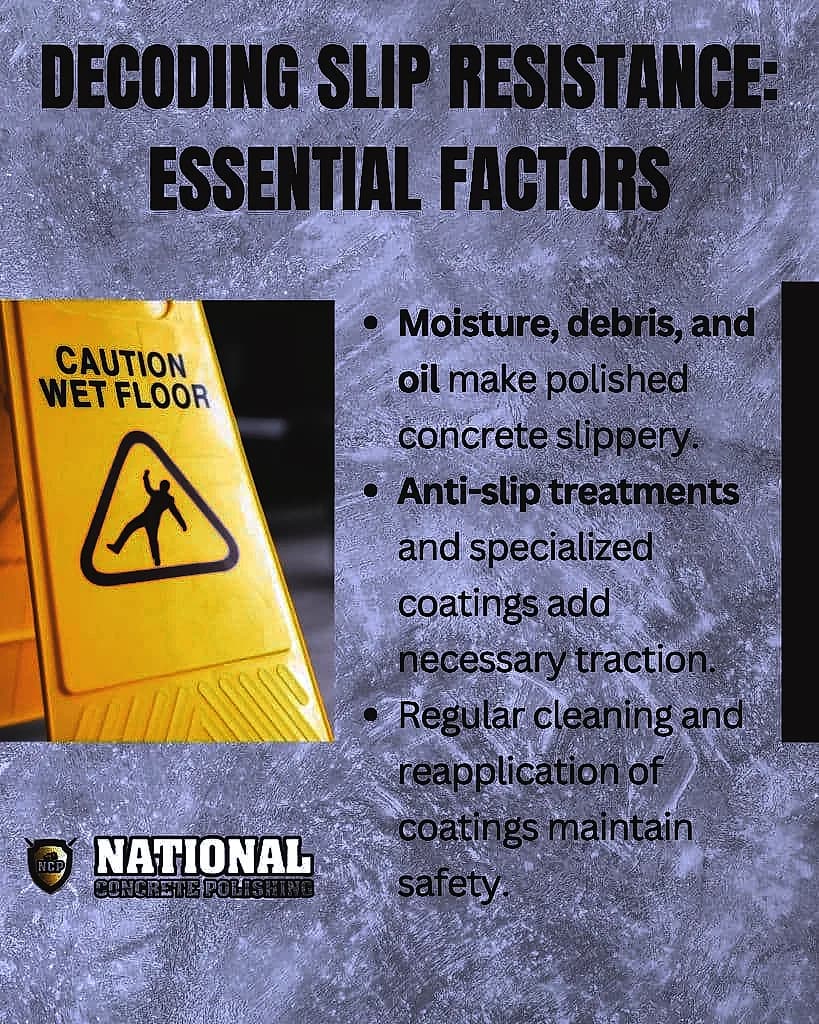
Moisture and debris dramatically alter friction levels. Kitchens with frequent spills show 38% lower grip than dry retail spaces, according to OSHA reports. High-traffic zones accumulate fine particles that act like ball bearings underfoot.
Oil-based contaminants pose the greatest risk, reducing the coefficient of friction by up to 60% on untreated surfaces. Outdoor entries exposed to rainwater require specialized finishes to maintain safe walkways. Proper drainage systems become essential in these areas.
Surface Treatments and Coatings
Advanced sealants create microscopic textures without sacrificing shine. A 2023 study compared treated and untreated flooring in identical environments:
| Condition | Treated COF | Untreated COF |
|---|---|---|
| Dry | 0.61 | 0.43 |
| Wet | 0.55 | 0.29 |
| Oily | 0.48 | 0.17 |
Polymer-based additives used by National Concrete Polishing enhance durability in commercial flooring. These solutions prove particularly effective in healthcare facilities and warehouses where safety standards are non-negotiable.
How to Enhance the Slip Resistance of Your Concrete Floors
Maintaining secure flooring requires more than initial installation—it demands consistent care. Effective strategies combine daily habits with specialized treatments to preserve traction. Let’s explore methods that keep your floors safe while maintaining their sleek appearance.
Routine Cleaning and Maintenance
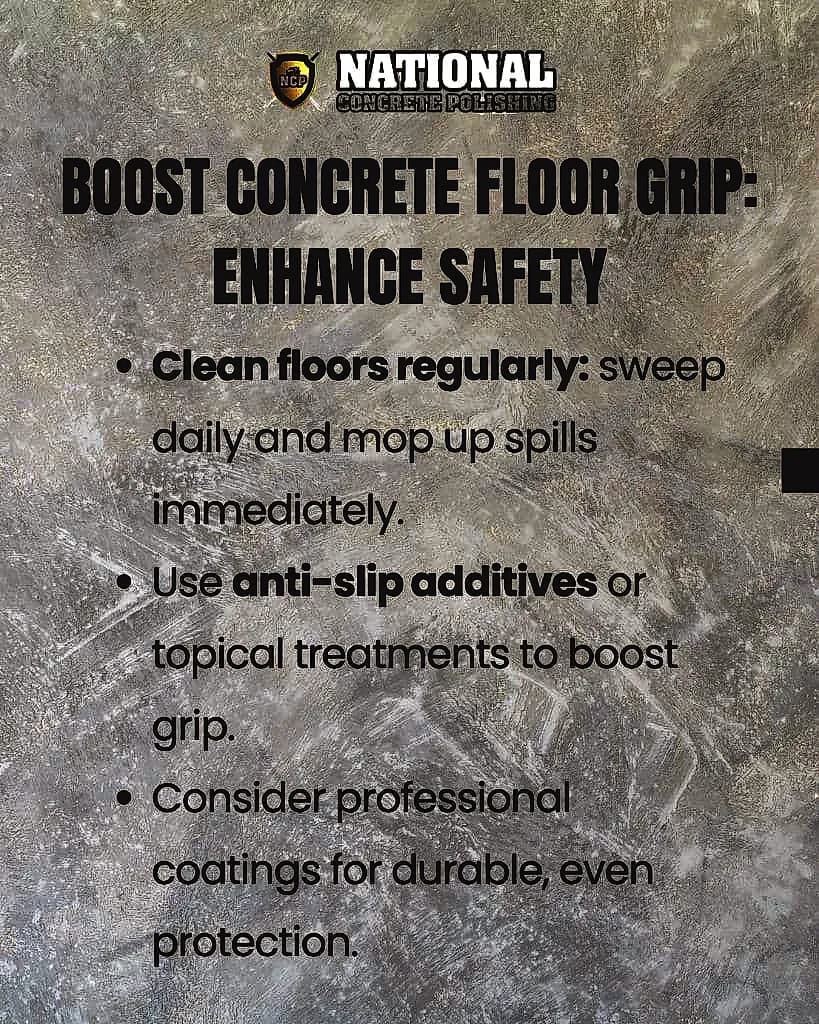
Dust and spills reduce surface grip over time. Use microfiber mops for daily sweeping in residential spaces. Robot vacuums automate dust removal, preventing particle buildup.
Commercial areas benefit from walk-behind scrubbers used twice daily. Address spills immediately, especially near water sources like bathrooms. Quick action prevents slippery residues from hardening.
| Space Type | Recommended Tool | Frequency | Effectiveness |
|---|---|---|---|
| Residential | Robot Vacuum + Microfiber | Daily | High |
| Commercial | Walk-behind Scrubber | Twice Daily | Very High |
| Bathrooms | Non-slip Mat + Immediate Wipe | After Use | Critical |
Application of Anti-slip Additives
Topical treatments like Slip Doctors Polish Grip create microscopic textures. These solutions boost friction without altering finishes. A single application lasts 6–12 months in high-traffic spaces.
For best results, professionals at National Concrete Polishing apply polymer-based coatings. Their expertise ensures even coverage in challenging areas. Call +1 844-876-5474 to schedule a consultation for your commercial or residential project.
Is Polished Concrete Slippery? Debunking Myths & Facts
How often do design choices compromise safety? Industry leaders prove they don’t have to. Third-party testing reveals that modern flooring solutions outperform traditional options in critical safety metrics.
Evidence from Industry Standards
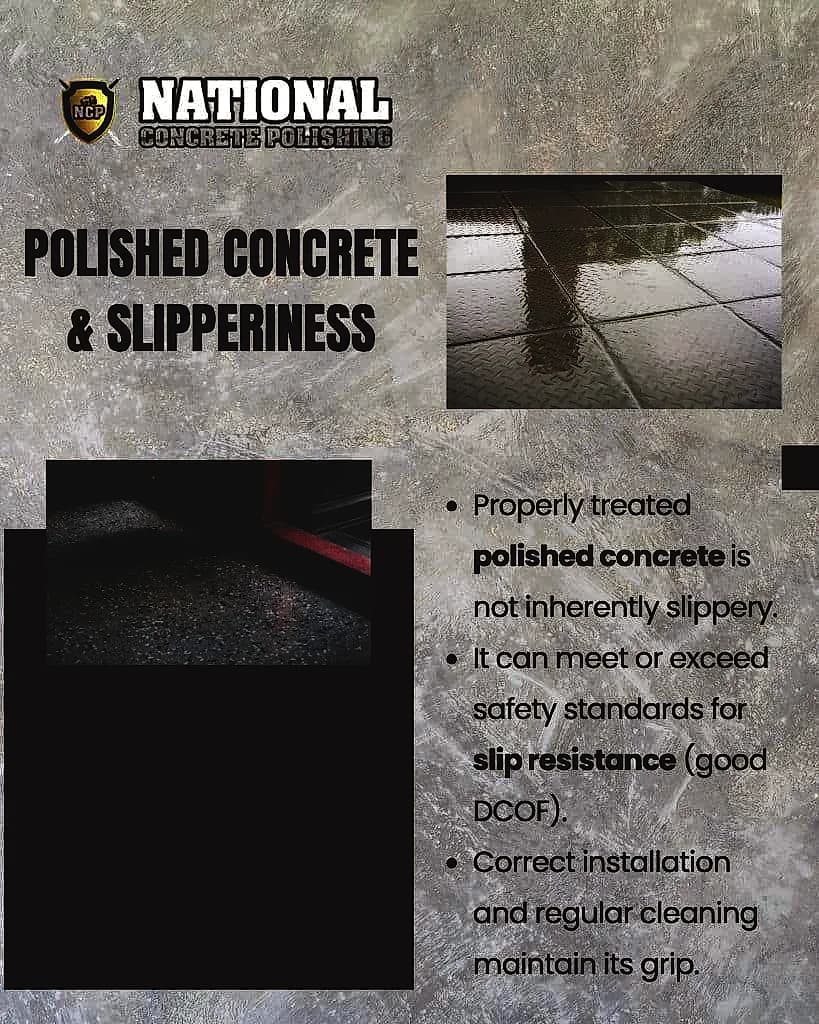
ASTM International’s F2913-19 standard shows treated surfaces achieve a dynamic coefficient of friction (DCOF) between 0.49–0.59. This exceeds the 0.42 threshold for walkways set by the Americans with Disabilities Act. Retail giants like Costco use these finishes in loading docks, demonstrating their reliability under heavy use.
| Material | Dry DCOF | Wet DCOF | Safety Compliance |
|---|---|---|---|
| Finished Floors | 0.58 | 0.53 | Exceeds ADA |
| Porcelain Tile | 0.44 | 0.32 | Meets Minimum |
| Hardwood | 0.51 | 0.21 | Fails Wet Tests |
Home Depot’s 2022 safety audit found 27% fewer slip incidents in areas with specialized finishes compared to vinyl alternatives. Properly installed surfaces retain micro-textures that repel water and oils, maintaining grip even during spills. Regular upkeep with pH-neutral cleaners preserves these properties long-term.
Maintenance Tips and Best Practices for Safer Floors
How often do you check your floors for hidden hazards? Consistent care transforms glossy surfaces into reliable walkways. National Concrete Polishing’s field data shows weekly inspections reduce accident risks by 41% in commercial spaces.
Regular Inspections and Cleaning Protocols
Spot trouble areas before they become slippery. Check high traffic zones daily for spills or residue buildup. Use pH-neutral cleaners to remove grease without damaging finishes.
Moisture-prone areas like entryways need extra attention during wet weather. A 2023 study found immediate cleanup reduces slip fall incidents by 63% in kitchens. Document inspection results to track problem spots over time.
Choosing the Right Tools and Coatings
Not all equipment works equally well. Microfiber mops outperform cotton alternatives by trapping 92% of particles. Pair them with anti-slip solutions like SlipDoctors Polish Grip for enhanced traction.
Consider these maintenance essentials:
- Automatic scrubbers for large commercial areas
- Non-abrasive pads to preserve surface texture
- Polymer-based sealants reapplied every 18 months
Professionals like National Concrete Polishing use laser-guided tools to apply coatings evenly. Their methods ensure floors stay secure even wet, meeting ADA standards. Call +1 844-876-5474 for expert assessments in South Florida.
Conclusion
Your flooring choices shouldn’t force a trade-off between safety and style. Modern finishing techniques create surfaces that excel in both areas when properly cared for. The glossy appearance of treated floors often raises concerns, but texture and upkeep determine actual performance.
Specialized coatings add microscopic grooves that boost traction, even when moisture or spills occur. Routine cleaning removes debris before it compromises grip, while periodic resealing maintains these protective layers. Data from commercial facilities shows accident rates drop by over 50% with consistent care protocols.
Key strategies include immediate cleanup of liquids and using pH-neutral cleaners. Professional treatments from experts like National Concrete Polishing enhance durability without dulling the floor’s aesthetic appeal. Their South Florida team combines industry-leading methods with local climate considerations for lasting results.
For floors that balance beauty with slip resistance, trust professionals who prioritize safety through science-backed solutions. Contact them at +1 844-876-5474 to discuss your project’s specific needs.
Frequently Asked Questions
What factors determine slip resistance in polished flooring?
The coefficient of friction, surface texture, and applied treatments influence traction. Higher-gloss finishes may reduce grip, while matte or textured options improve safety without sacrificing style.
Can environmental conditions affect floor safety?
Yes. Wet areas like bathrooms or outdoor spaces increase slip risks. Proper coatings, such as anti-slip sealants from brands like Prosoco or Euclid Chemical, enhance traction in moisture-prone zones.
How do surface treatments improve grip?
Anti-slip additives, such as aluminum oxide or polymer-based coatings, create microscopic texture. Products like H&C SharkGrip or Legacy Industrial’s HD36 are popular for boosting traction on high-gloss surfaces.
Does routine maintenance impact slip risks?
Absolutely. Regular cleaning prevents buildup of oils or debris that reduce traction. Use pH-neutral cleaners and avoid wax-based products, which can create a slick film over time.
Are there industry standards for measuring floor safety?
Yes. The Americans with Disabilities Act (ADA) recommends a minimum coefficient of friction (COF) of 0.6 for accessible routes. Testing methods like ASTM C1028 ensure compliance in commercial or public spaces.
What tools help maintain safer surfaces?
Microfiber mops, auto-scrubbers, and anti-slip mats in high-traffic zones reduce hazards. For long-term protection, reapply coatings like Curecrete’s RetroPlate every 2–3 years, depending on foot traffic.
Do textured finishes compromise aesthetic appeal?
No. Modern treatments offer subtle texture while maintaining a sleek look. Options like exposed aggregate or light burnishing balance style and functionality, ideal for retail or residential settings.
Written by

Founder and CEO
Chris Lavin is an esteemed leader in concrete polishing and epoxy coatings with a distinguished 20-year career. As founder and CEO of National Concrete Polishing and owner of Xtreme Polishing Systems, he's renowned for polishing and epoxy coating more floors than anyone globally. Chris is recognized for his innovative approach and commitment to enhancing floor durability and aesthetics. His hands-on experience and technical proficiency make him a respected authority and a valuable resource in the field of floor polishing and coatings.
Same topic
Related articles
All stories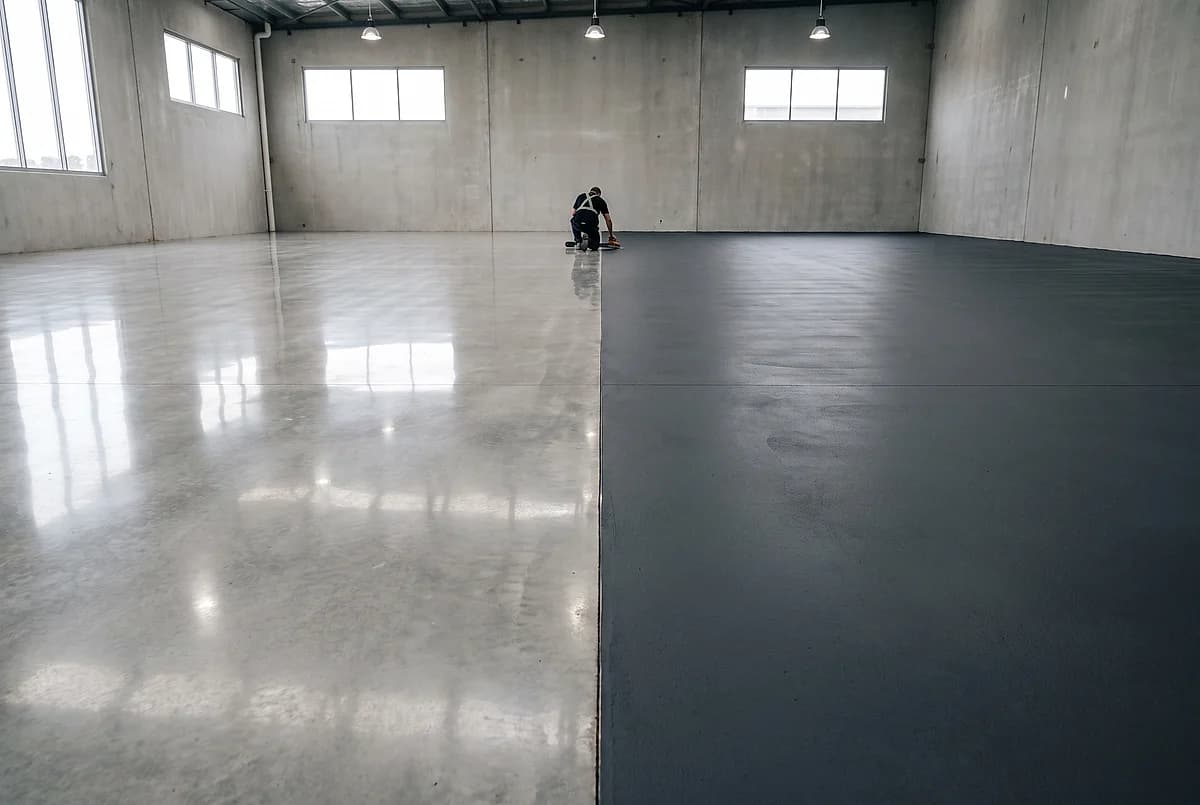
Polished concrete11 min read
Polished Concrete vs Epoxy Coatings: Which Floor Is Right for Your Space?
Two systems, two price curves, one slab. What each one costs to install and to keep, and which spaces each one actually suits.
Read it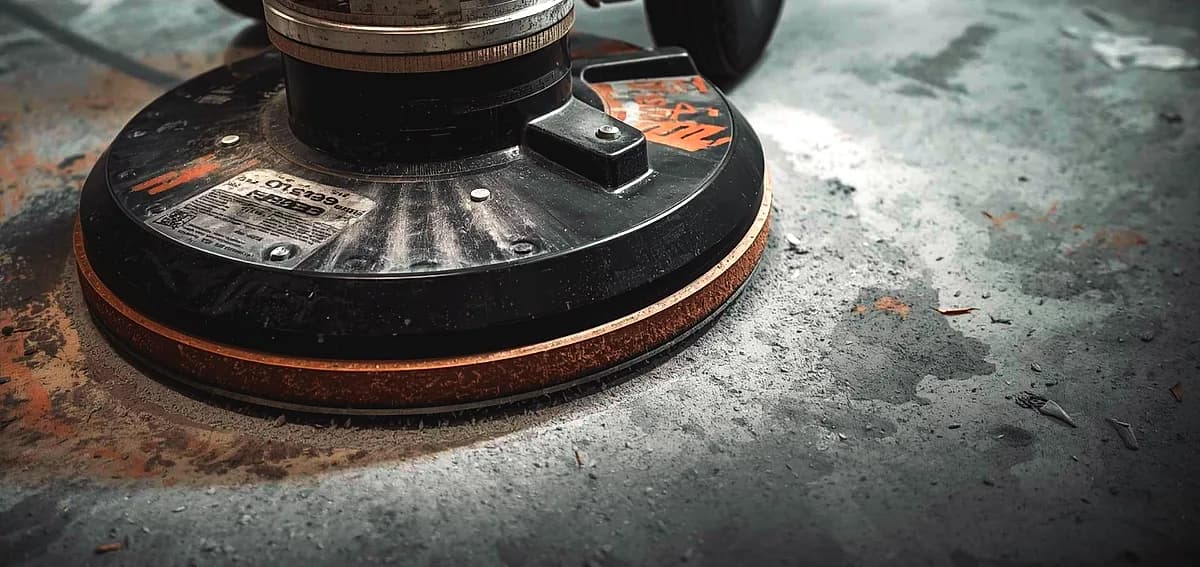
Polished concrete8 min read
What to Know Before Polishing Your Existing Concrete Slab
Before any mechanical refinement can begin, a thorough evaluation of the current foundation is required.
Read it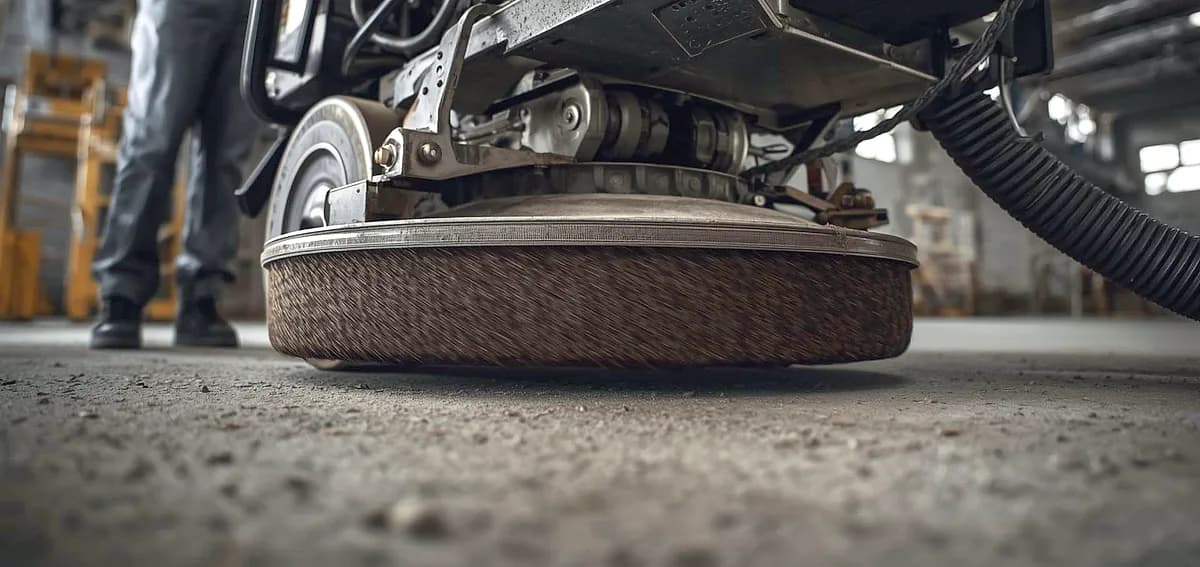
Polished concrete8 min read
Is Polished Concrete Worth the Investment for Miami Properties?
It is essential to distinguish between a simple topical seal and mechanically refined concrete.
Read it
Tell us about the floor
Tell us the space and roughly how big it is.We come back with what it would cost and when we could start.
Prefer to talk? Call +1 844-876-5474
- Leads@
nationalconcretepolishing.net - 2200 NW 32nd St #600,
Pompano Beach, FL 33069 Mon to Fri, 9:00 to 5:30