
The NCP blog
Concrete Densifier Polishing for Fort Lauderdale Properties
Polished concrete12 min read
First, it fills voids and weak points that would otherwise appear as imperfections in the final polish.
Concrete densifier polishing is a transformative floor treatment that hardens, seals, and beautifies concrete surfaces while reducing maintenance costs by up to 60% over the floor’s lifetime. For Fort Lauderdale property owners, this process addresses the unique challenges of South Florida’s humid climate, creating floors that resist moisture penetration, staining, and wear while achieving a stunning polished appearance that adds significant property value. This comprehensive guide walks you through every aspect of densifier polishing, from understanding the science behind lithium silicate technology to selecting the right contractor for your specific project.
Understanding Concrete Densifier Technology
Concrete densifiers are chemical compounds designed to penetrate existing concrete surfaces and react chemically with the calcium hydroxide present in the cement matrix. The most effective densifiers utilize lithium silicate molecules, which are smaller than sodium or potassium silicates, allowing deeper penetration into the concrete pore structure. According to the National Ready Mixed Concrete Association, lithium silicate densifiers provide superior hardening effects compared to older sodium-based formulations.
When applied to a concrete surface, the densifier solution fills micro-cracks and pores while the silicate molecules bond with free calcium ions to form calcium silicate hydrate (C-S-H). This reaction permanently hardens the concrete from within, creating a surface that resists abrasion, moisture intrusion, and chemical attack. Research from the American Concrete Institute confirms that properly densified concrete achieves surface hardness improvements of 30-50% over untreated surfaces.
The densification process serves multiple purposes in the polishing workflow. First, it fills voids and weak points that would otherwise appear as imperfections in the final polish. Second, it creates a uniform hardness across the entire surface, ensuring consistent light reflection and appearance. Third, it reduces the concrete’s porosity, preventing stains from penetrating the surface and simplifying maintenance cleaning.
Why Fort Lauderdale Properties Benefit from Densifier Polishing
South Florida’s subtropical climate presents specific challenges that make densifier polishing particularly valuable for Fort Lauderdale properties. Annual rainfall averages 62 inches, with humidity levels frequently exceeding 80% during summer months. Standard concrete surfaces absorb this moisture, leading to efflorescence, mold growth, and structural degradation over time. Densifier treatment creates an impermeable barrier that redirects moisture resistance while maintaining the breathability necessary to prevent vapor entrapment beneath coatings.
Temperature fluctuations in Fort Lauderdale, though less extreme than northern climates, still cause concrete expansion and contraction cycles that create micro-cracking over years of exposure. The densification reaction actually fills existing micro-cracks with additional C-S-H crystals, effectively “healing” minor surface defects that would otherwise propagate into larger problems. This self-reinforcing characteristic makes densifier-treated floors significantly more durable than untreated concrete in coastal environments.
Salt air exposure, particularly problematic for properties near Fort Lauderdale Beach and the Intracoastal Waterway, accelerates concrete deterioration through chloride ion penetration. Research from the Federal Highway Administration demonstrates that densified concrete surfaces resist chloride penetration by 70-90% compared to untreated surfaces, substantially extending the service life of concrete slabs in coastal applications.
The Densifier Polishing Process: Step-by-Step
The densifier polishing workflow consists of distinct phases, each critical to achieving the desired finish level. Understanding this process helps property owners evaluate contractor proposals and recognize quality workmanship.
Phase 1: Surface Preparation and Assessment
Before any grinding begins, technicians conduct a thorough surface assessment to identify cracks, spalling, oil stains, and existing coatings that require removal. Surface hardness is tested using a Mohs scratch gauge or sclerometer to determine the appropriate grit sequence and densifier application rate. In Fort Lauderdale’s older neighborhoods, existing floors may contain multiple layers of paint, adhesive, or old sealers that must be completely removed for successful densification.
Phase 2: Initial Grinding Passes
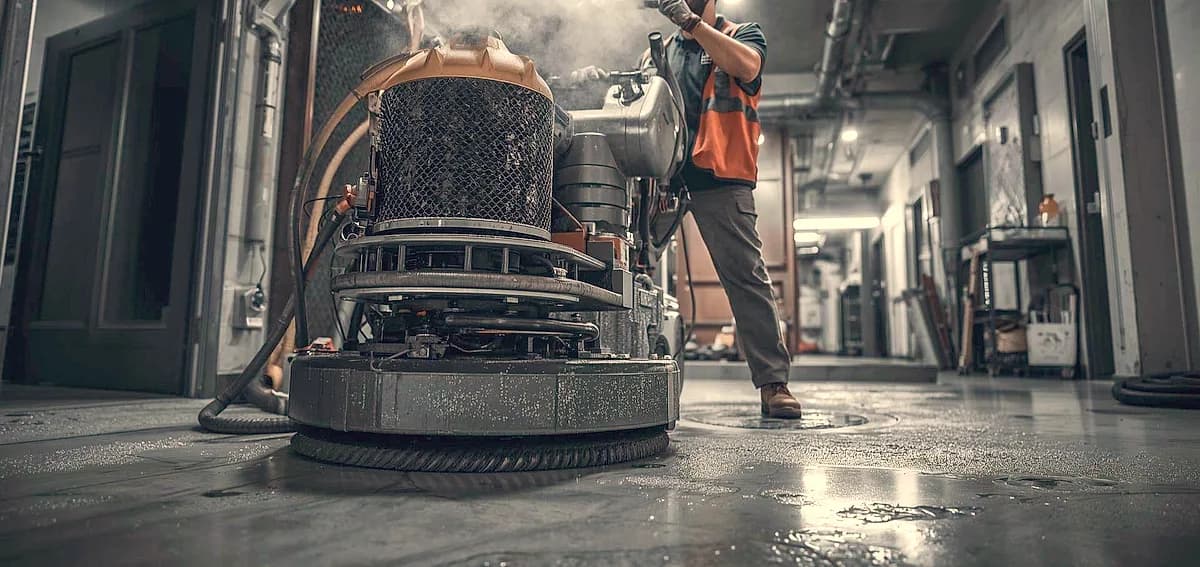
The first grinding pass uses 30-80 grit metal-bonded diamond tooling to remove surface contaminants and achieve initial flattening. This pass typically uses wet grinding techniques with industrial vacuum recovery systems to eliminate dust and contain slurry. For heavily stained floors, additional passes with 16-20 grit tooling may be necessary before proceeding. The Concrete Surface Magazine recommends a minimum of three passes at this stage to ensure uniform substrate exposure.
Phase 3: Densifier Application
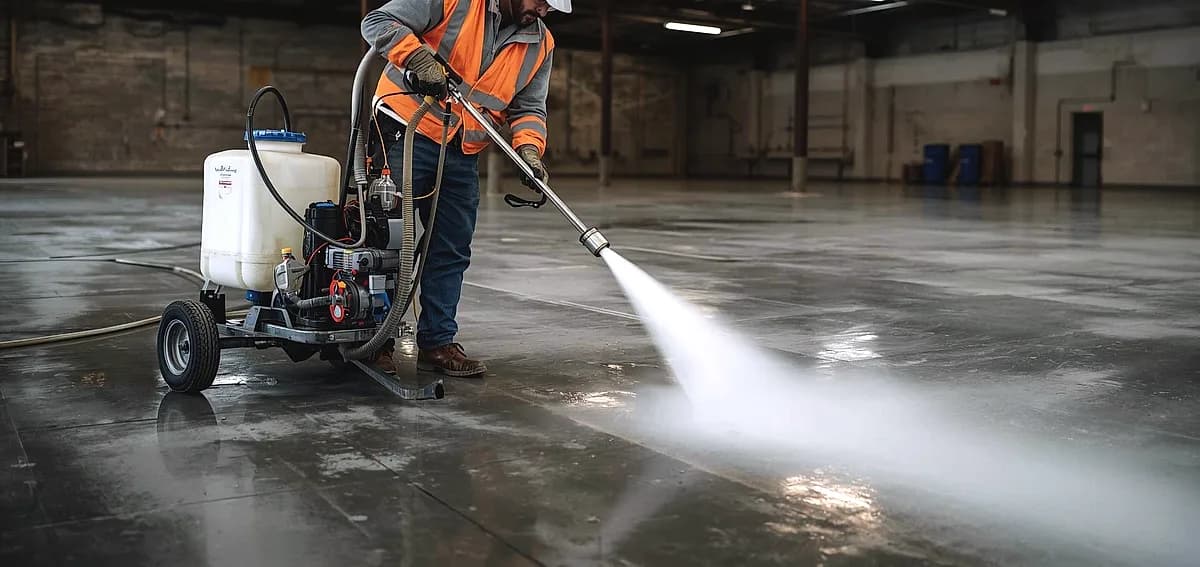
After initial grinding and thorough surface drying, the densifier solution is applied using a low-pressure pump sprayer or roller. Application rates typically range from 200-400 square feet per gallon depending on concrete porosity. The densifier should be applied to achieve “saturated surface dry” conditions—meaning the concrete absorbs the solution but no puddling occurs. Coverage is monitored carefully because over-application wastes product while under-application results in incomplete hardening.
Densifier dwell time varies by product formulation, but most lithium silicate densifiers require 20-40 minutes of contact time before the chemical reaction reaches completion. During this period, technicians may work the densifier into the surface using a floor machine with a nylon brush attachment to ensure uniform penetration. After dwell time, excess densifier is removed, and the surface is allowed to dry completely before proceeding.
Phase 4: Progressive Honing and Polishing
Once the densifier has fully cured—typically 24-72 hours depending on humidity and temperature—polishing resumes with 80-120 grit resin-bonded diamonds. This transitional phase removes the milky residue left by the densifier while continuing to refine the surface. Subsequent passes use 200, 400, and 800 grit diamonds, with densifier re-application between the 200 and 400 grit stages for maximum hardening in high-traffic areas.
For medium-gloss finishes, processing typically concludes at 800 grit. High-gloss finishes require additional passes through 1500 and 3000 grit levels, with optional burnishing using high-speed floor machines equipped with natural or synthetic fiber pads. Each progressive grit level removes scratch marks from the previous level while building the reflective clarity that characterizes polished concrete surfaces.
Phase 5: Stain Protection and Final Sealing
While densified concrete resists staining significantly better than untreated surfaces, most contractors recommend applying a penetrating stain guard to provide additional protection against oil, acid, and dye penetration. These water-based fluorochemical treatments bead liquids on the surface, providing working time to clean spills before staining occurs. Application occurs after final polishing and before any burnishing passes.
Gloss Level Options and Their Applications
Polished concrete finishes range from flat matte to high-gloss mirror reflections, each suited to different functional and aesthetic requirements. Selecting the appropriate gloss level affects both the process duration and long-term maintenance characteristics.
| Finish Level | Grit Progression | Reflectivity | Best Applications | Maintenance Requirements |
|---|---|---|---|---|
| Salt & Pepper | 80-200 grit | 10-20% | Industrial facilities, warehouses | Low; occasional auto-scrubbing |
| Cream Finish | 200-400 grit | 20-40% | Retail spaces, offices | Moderate; periodic burnishing |
| Medium Polish | 400-800 grit | 40-60% | Restaurants, showrooms | Regular; weekly burnishing |
| High Gloss | 1500-3000 grit | 60-90% | Luxury retail, hospitality | Intensive; daily maintenance |
For Fort Lauderdale commercial properties, the cream to medium polish range offers the best balance of aesthetic appeal and practical maintenance requirements. High-gloss finishes, while visually striking, show every footprint, dust particle, and scratch, making them better suited for controlled environments like boutique retail stores than high-traffic areas like restaurant dining rooms or office lobbies.
Cost Considerations for Fort Lauderdale Projects
Concrete densifier polishing costs in Fort Lauderdale range from $3 to $12 per square foot, with the wide range reflecting differences in existing surface condition, desired finish level, and project scope. Understanding what drives these costs helps property owners budget accurately and avoid unexpected expenses.
New concrete slabs in good condition require minimal preparation, keeping costs at the lower end of the range. Existing floors with coatings, adhesives, or significant staining require additional grinding passes and potentially chemical stripping agents, adding $1-$3 per square foot to project costs. Cracked or spalled concrete must be repaired before polishing, with crack injection typically costing $5-$15 per linear foot and patching materials adding $0.50-$2 per square foot.
Finish level significantly impacts total cost. Salt and pepper finishes require 4-5 grinding passes and minimal densifier, while high-gloss finishes demand 8-12 passes with multiple densifier applications and extended burnishing time. Industry data from the International Concrete Repair Institute indicates that gloss level accounts for approximately 40% of the cost variance between projects.
For a typical 2,000 square foot Fort Lauderdale commercial space, property owners should budget between $8,000 and $18,000 for professional densifier polishing, with most projects falling in the $10,000-$14,000 range. While this represents a significant upfront investment, the 20+ year service life and reduced maintenance costs provide excellent return on investment compared to flooring alternatives requiring replacement every 5-10 years.
Common Mistakes That Compromise Results
Even experienced contractors occasionally make errors that compromise the quality and durability of densifier polishing projects. Awareness of these pitfalls helps property owners recognize potential issues during their own project execution.
Insufficient Surface Preparation: Skipping or rushing the initial grinding passes leaves contamination in the surface that prevents proper densifier penetration. This results in uneven hardening and visible imperfections in the final polish. Always verify that contractors allocate adequate time for surface assessment and preparation before pricing is finalized.
Incorrect Densifier Application Rates: Applying densifier too thinly leaves weak spots in the surface, while over-application creates a white residue that requires additional grinding to remove. Professional contractors measure coverage rates carefully and adjust application techniques based on concrete porosity testing.
Premature Traffic Access: Densifier requires adequate cure time to achieve full hardness development. Allowing foot traffic or equipment movement before cure completion results in surface marring and reduced durability. Most densifiers require 24-72 hours before light traffic and 72-96 hours before heavy use.
Inadequate Moisture Management: Fort Lauderdale’s humidity complicates densifier application because excess moisture in the concrete slab can interfere with the chemical reaction. Professional contractors use moisture meters to verify slab moisture content before application and may use dehumidification equipment in extreme conditions.
Maintenance Practices for Long-Term Performance
One of the most significant advantages of densifier polishing is the minimal maintenance required to preserve the finish over decades of use. Unlike topical coatings that require stripping and reapplication, densified concrete maintains its appearance through simple cleaning protocols.
Daily maintenance consists of dust mopping or auto-scrubbing with pH-neutral cleaners specifically formulated for polished concrete. Acidic or alkaline cleaners can degrade the densified surface over time, so product selection matters. Recommended cleaning solutions include specially formulated concrete floor cleaners available from most janitorial supply distributors.
Periodic burnishing using high-speed floor machines (1,500-2,000 RPM) restores surface luster and removes scuff marks without requiring chemicals or water. For medium to high-gloss finishes, monthly burnishing maintains the reflective appearance and extends time between more intensive cleaning sessions. The International Sanitary Supply Association provides detailed guidance on appropriate maintenance equipment and procedures for polished concrete surfaces.
Spill response should be immediate for oil-based substances, even on densified surfaces. While densification significantly improves stain resistance, prolonged exposure to oils, acids, or dyes can still cause discoloration. Keeping pH-neutral cleaner and absorbent materials readily available enables quick response to accidents in commercial settings.
Selecting the Right Contractor for Your Fort Lauderdale Property
Successful densifier polishing requires contractors with specific equipment, training, and experience in the unique requirements of chemical hardening and progressive polishing. Not all concrete polishing contractors specialize in densifier applications, so due diligence during the selection process prevents costly mistakes.
Verify contractor credentials by requesting documentation of manufacturer certifications for the specific densifier products they propose to use. Reputable densifier manufacturers train and certify contractors in proper application techniques, and certification status demonstrates commitment to quality standards. Ask for project portfolios showing similar scope and finish level to your proposed project.
Request site visits from at least three contractors who can assess your specific conditions and provide detailed proposals including scope of work, timeline, and warranty terms. Proposals should specify the exact grit sequence, number of passes at each level, densifier product and application rate, and expected finish characteristics. Vague proposals often indicate contractors who lack the expertise to provide detailed specifications.
For additional guidance on floor surface preparation and finishing options, explore our resources on polished concrete applications, concrete sealing techniques, and polished concrete for commercial spaces.
Conclusion
Concrete densifier polishing represents the gold standard for concrete floor finishing in Fort Lauderdale’s demanding climate. The chemical hardening process creates surfaces that resist moisture penetration, withstand heavy traffic, and maintain their appearance for decades with minimal maintenance. While the upfront investment exceeds that of some alternatives, the long-term value proposition—reduced maintenance costs, extended service life, and enhanced property aesthetics—makes densifier polishing the most economical choice for most commercial and high-end residential applications.
The key to successful outcomes lies in proper surface preparation, correct densifier application, and adherence to the progressive polishing sequence that builds the desired finish level. Property owners who invest time in contractor selection and specification review are rewarded with floors that perform flawlessly for years beyond their original installation. Whether you’re upgrading a warehouse, renovating a restaurant, or finishing a new commercial space, densifier polishing provides the durability, beauty, and value that Fort Lauderdale property owners demand.
Ready to transform your Fort Lauderdale property with professional densifier polishing? Contact our team today to schedule a free consultation and receive a detailed proposal for your project. Our certified technicians bring years of experience in South Florida concrete surface preparation, ensuring results that exceed your expectations.
Frequently Asked Questions
How long does concrete densifier take to cure before polishing can begin?
Most lithium silicate densifiers require 24-72 hours of cure time before polishing can resume, depending on ambient temperature and humidity levels. In Fort Lauderdale’s humid conditions, the longer end of this range is often necessary to ensure complete chemical reaction and optimal hardening. Rushing this process compromises the final hardness and durability of the finished floor.
Can densifier polishing be applied over existing epoxy coatings?
No, existing coatings must be completely removed before densifier application. Epoxy and other topical coatings prevent densifier penetration, resulting in adhesion failure between the coating and substrate. The grinding phase during surface preparation should remove all existing coatings to expose bare concrete for proper densification.
Will densifier polishing eliminate all visible cracks in my concrete floor?
Densifier polishing significantly improves the appearance of hairline cracks by filling them with hardened material during the densification process. However, structural cracks that extend deep into the concrete slab require separate repair procedures before polishing. Your contractor should assess and repair significant cracks as a prerequisite to the polishing process.
How do I know if my concrete is a good candidate for densifier polishing?
Concrete surfaces at least 30 days old with no active moisture problems, significant cracking, or structural damage are excellent candidates for densifier polishing. The concrete should have adequate compressive strength (minimum 3,000 PSI) and minimal surface contamination. A professional contractor can assess your specific conditions and recommend appropriate preparation procedures.
Does densifier polishing create a slippery surface?
Properly densified and polished concrete typically has a coefficient of friction that meets or exceeds OSHA requirements for slip resistance, even when wet. The polishing process creates micro-texture that provides traction, though high-gloss finishes may require additional anti-slip treatments in areas prone to wet conditions. Your contractor can recommend appropriate measures for specific application areas.
How soon can I expect to see results after densifier application?
The hardening effects of densifier are immediate, with surface hardness increasing within hours of application. The visual transformation becomes apparent after the subsequent polishing passes remove densifier residue and reveal the enhanced surface clarity and color depth. Full visual results are visible upon completion of all polishing phases.
What causes the white residue sometimes visible after densifier application?
White residue indicates over-application of densifier or failure to remove excess material before cure completion. This residue requires additional grinding passes to remove and represents wasted material and labor. Professional contractors monitor application rates carefully and remove excess densifier before the cure process begins.
Can densifier polishing be performed in occupied spaces?
Yes, densifier polishing can be performed in occupied spaces with proper dust containment and odor management. Wet grinding techniques eliminate airborne dust, while modern densifier products have minimal odor when properly applied. However, areas must be cleared during active grinding and densifier application, with adequate ventilation provided throughout the process.
References
- National Ready Mixed Concrete Association – Industry standards for concrete surface preparation and finishing
- American Concrete Institute – Technical guidelines for concrete densification and polishing procedures
- Federal Highway Administration – Research on chloride penetration resistance in treated concrete surfaces
- Concrete Surface Magazine – Best practices for polished concrete installation
- International Concrete Repair Institute – Cost guidelines and quality standards for concrete floor treatments
- International Sanitary Supply Association – Maintenance protocols for polished concrete surfaces
Written by

Founder and CEO
Chris Lavin is an esteemed leader in concrete polishing and epoxy coatings with a distinguished 20-year career. As founder and CEO of National Concrete Polishing and owner of Xtreme Polishing Systems, he's renowned for polishing and epoxy coating more floors than anyone globally. Chris is recognized for his innovative approach and commitment to enhancing floor durability and aesthetics. His hands-on experience and technical proficiency make him a respected authority and a valuable resource in the field of floor polishing and coatings.
Same topic
Related articles
All stories
Polished concrete11 min read
Polished Concrete vs Epoxy Coatings: Which Floor Is Right for Your Space?
Two systems, two price curves, one slab. What each one costs to install and to keep, and which spaces each one actually suits.
Read it
Polished concrete8 min read
What to Know Before Polishing Your Existing Concrete Slab
Before any mechanical refinement can begin, a thorough evaluation of the current foundation is required.
Read it
Polished concrete8 min read
Is Polished Concrete Worth the Investment for Miami Properties?
It is essential to distinguish between a simple topical seal and mechanically refined concrete.
Read it
Tell us about the floor
Tell us the space and roughly how big it is.We come back with what it would cost and when we could start.
Prefer to talk? Call +1 844-876-5474
- Leads@
nationalconcretepolishing.net - 2200 NW 32nd St #600,
Pompano Beach, FL 33069 Mon to Fri, 9:00 to 5:30