
The NCP blog
How Polished Concrete Cuts Retail Lighting and Energy Bills
Commercial7 min read
Lighting accounts for approximately 30% of total energy consumption in commercial retail spaces in 2026.
Lighting accounts for approximately 30% of total energy consumption in commercial retail spaces in 2026. If you are considering flooring upgrades for your facility, you may be wondering how your floor choice impacts utility costs. We have the right article for you, covering how commercial floor polishing reduces electricity usage through high reflectivity and thermal mass.
The Science of Light Reflectivity and Floors
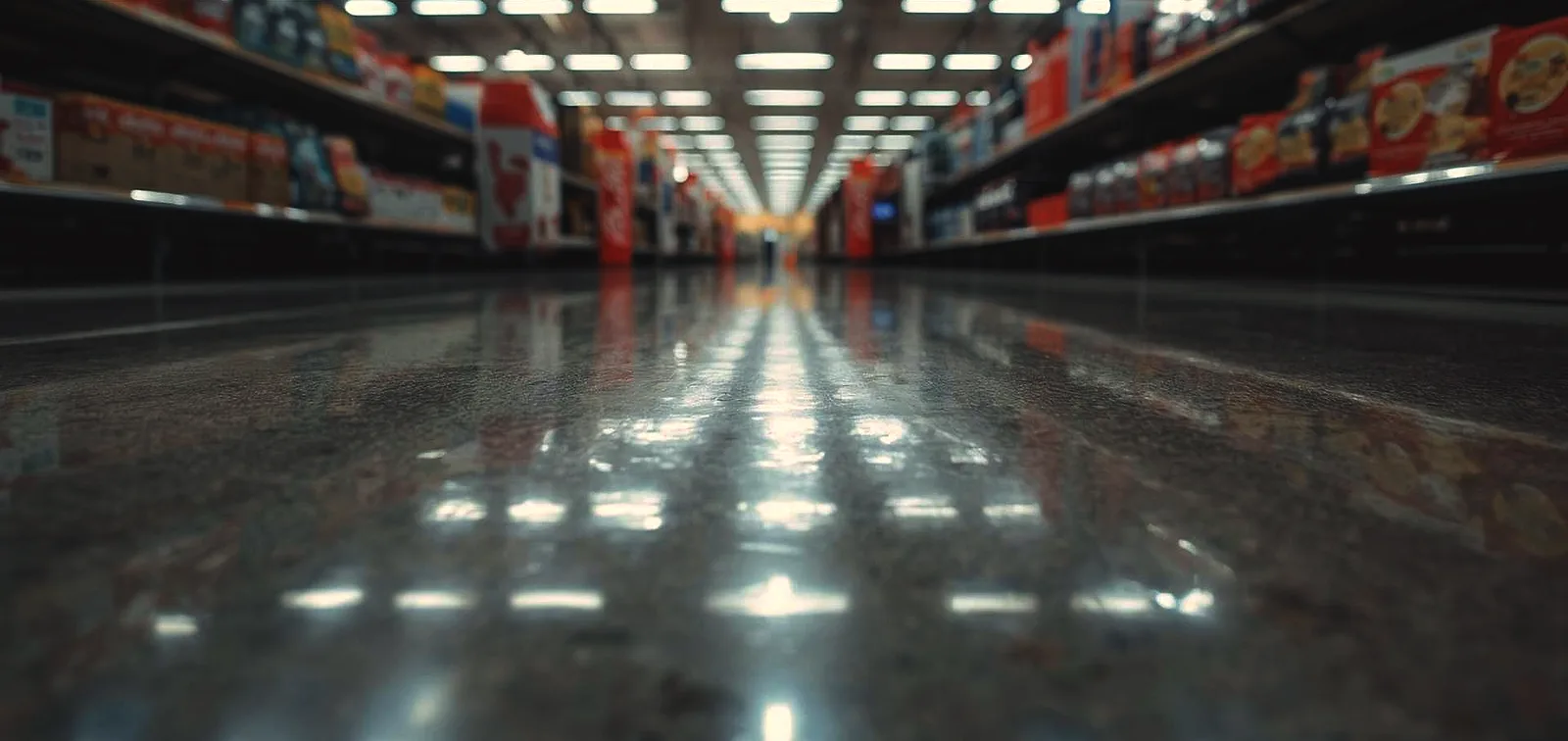
Retail stores rely heavily on bright, inviting lighting to showcase merchandise. However, powering hundreds of overhead fixtures is incredibly expensive. The solution lies in maximizing the Light Reflectance Value (LRV) of your interior surfaces. LRV measures the percentage of visible light that a surface reflects, scaled from zero to 100.
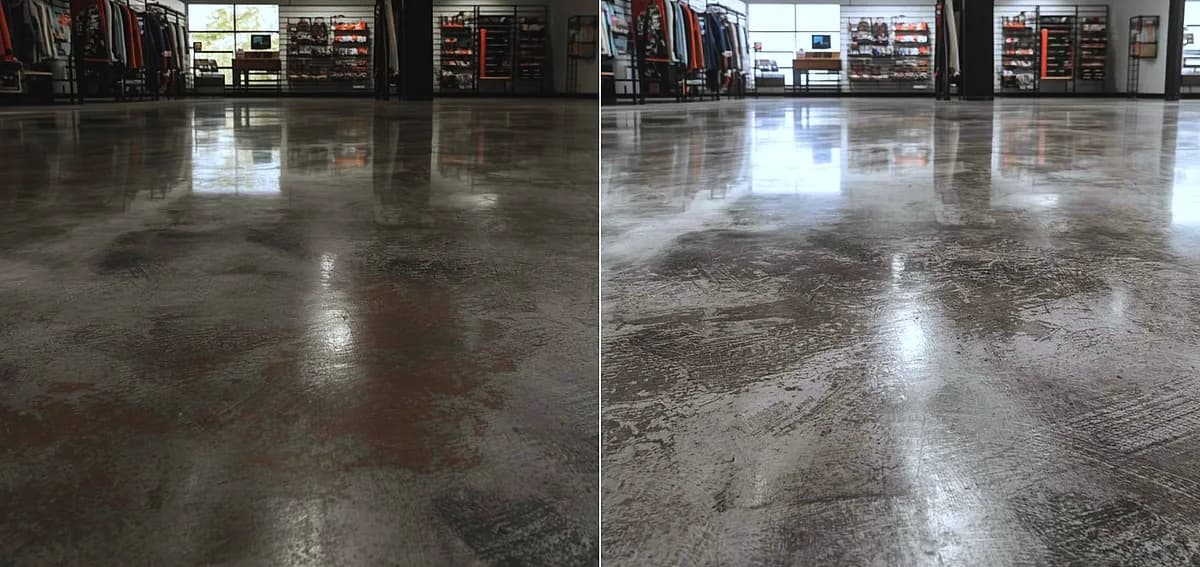
Standard commercial carpet or matte tiles absorb light, requiring higher wattage bulbs to achieve adequate illumination. Conversely, mechanically grinding and densifying a concrete slab creates a mirror-like finish. According to research from the U.S. Department of Energy, increasing surface reflectivity can improve overall ambient brightness by 15 to 30 percent without adding a single lightbulb.
Our professionals at NCP use specialized diamond abrasives to close the porous surface of the slab. This process prevents dust accumulation and creates a dense, highly reflective barrier. When light hits this polished surface, it bounces back into the room. This bounce effect distributes light more evenly across the retail floor, illuminating dark aisles and reducing shadows.
Lowering Lighting Output and Electricity Costs
Once a high-gloss finish is achieved, facility managers can actively reduce their energy loads. Because the floor multiplies the existing light, you can safely decrease the lumen output of your overhead fixtures. Many modern retail facilities are installing intelligent LED systems on dimmers, which automatically lower their output when the ambient light reaches a specific threshold.
As Dr. Marcus Thorne, Director of Energy Engineering at the National Institute of Building Sciences, explains: ‘Maximizing the albedo of interior surfaces is one of the most cost-effective passive energy strategies available to facility managers today. Reflective floors allow stores to de-lamp or dim fixtures, yielding immediate utility savings.’
By lowering the wattage required to light the store, retailers directly lower their monthly electricity bills. Additionally, fewer operating fixtures mean fewer bulbs to replace over the year. This combination of reduced power consumption and lower material replacement costs creates a measurable return on investment for the business.
Thermal Mass and HVAC Efficiency
Energy savings in a retail environment extend beyond lighting. Heating, ventilation, and air conditioning (HVAC) systems represent another massive utility expense. Concrete is a dense material with excellent thermal mass properties. Thermal mass refers to the ability of a material to absorb, store, and slowly release heat or cooling energy.
During the summer months, a concrete floor absorbs the cool air generated by your air conditioning system. It retains this temperature, helping to keep the retail space cool even when doors open and close for customer traffic. This stabilization reduces the workload on the HVAC compressor, lowering the energy required to maintain a comfortable indoor climate.
Furthermore, protecting the slab from spalling (flaking or chipping) through proper densification ensures the thermal integrity of the floor remains intact. According to the Environmental Protection Agency, optimizing a building’s thermal envelope, including the foundation, can reduce HVAC energy consumption by up to 10 percent annually. A sealed, bare concrete floor facilitates better energy transfer than an insulated floor covered in thick carpeting.
Flooring Material Comparison: Energy and Maintenance
When evaluating retail energy savings, it is essential to compare your surface options comprehensively. The operational energy required to maintain a floor is often overlooked during the design phase. Below is a comparison of common commercial flooring types.
| Flooring Type | Light Reflectivity (LRV) | Maintenance Energy Required | HVAC Thermal Benefit |
|---|---|---|---|
| Polished Concrete | High (Up to 80%) | Low (Water and auto-scrubber) | Excellent thermal mass |
| Vinyl Composition Tile (VCT) | Moderate (Depends on wax) | High (Frequent stripping/burnishing) | Poor (Insulates the slab) |
| Commercial Carpet | Low (Under 20%) | Moderate (Frequent vacuuming) | Poor (Traps heat, blocks cooling) |
| Commercial Epoxy | High (With gloss topcoat) | Low (Simple mopping) | Good thermal mass |
Maintaining VCT requires frequent chemical stripping, re-waxing, and high-speed burnishing. These machines draw substantial amounts of electricity during after-hours maintenance shifts. In contrast, bare finished concrete only requires routine cleaning with a walk-behind auto-scrubber and water, drastically cutting down on after-hours power consumption.
Steps to Optimize Your Retail Floors for Energy Efficiency
If you are planning to renovate your retail space to improve energy efficiency, it is advisable to follow a structured approach. Properly executed flooring upgrades will maximize your utility savings over the building’s lifespan.
- Assess the Existing Slab: Have a professional evaluate your current foundation. We check for existing damage, unevenness, or severe cracking. If the surface is heavily damaged, polymer-modified overlays or self-leveling overlays may be required to create a smooth, workable canvas.
- Select the Appropriate Grit Level: The level of shine dictates the reflectivity. Retailers looking for maximum energy benefits typically choose a highly polished finish (often refined up to a 3000-grit resin diamond). This produces a glass-like surface that bounces the maximum amount of light.
- Apply a Premium Densifier: During the grinding process, applying a liquid silicate densifier is crucial. This chemical reacts with the free lime in the cement, hardening the surface and preventing future dust creation. A denser surface holds a higher gloss for longer periods.
- Recalibrate Your Lighting System: Once the floor is finished, use a light meter to measure the new ambient brightness in foot-candles or lux. Work with an electrician to dim, de-lamp, or reconfigure your overhead fixtures to take advantage of the newly reflective environment.
- Establish a Low-Energy Maintenance Routine: Train your janitorial staff to avoid harsh acidic cleaners, which can dull the finish over time. Implement a simple, low-energy cleaning schedule using neutral pH cleaners and soft-bristled auto-scrubbers.
Achieving LEED Certification and Sustainability
Modern businesses are increasingly focused on reducing their carbon footprint and meeting strict environmental standards. Utilizing your existing concrete foundation is one of the most sustainable building practices available. By choosing not to cover the slab with synthetic materials, you eliminate the manufacturing, transportation, and disposal energy associated with carpets or vinyl.
The U.S. Green Building Council recognizes polished concrete under the Leadership in Energy and Environmental Design (LEED) certification program. Retailers can earn LEED points for utilizing existing building structures, optimizing energy performance through lighting reductions, and improving indoor environmental quality. Our practices at NCP are LEED-compliant and strictly utilize eco-friendly, low-VOC (volatile organic compound) densifiers and sealers.
By reducing both lighting electricity and HVAC demands, retailers lower their overall operational carbon emissions. It is a practical, durable solution that aligns financial savings with corporate sustainability goals.
Frequently Asked Questions
How much money can reflective floors save on retail lighting?
Savings vary based on the size of the facility and the local cost of electricity. However, many retailers see a 10 to 20 percent reduction in ambient lighting costs. By relying on the floor to disperse light, you require fewer active fixtures during operating hours.
Will a glossy floor create too much glare for customers?
It is essential to balance reflectivity with visual comfort. While the floor is highly reflective, the diffusion of overhead light typically reduces harsh shadows rather than creating blinding glare. Proper lighting placement ensures the environment remains comfortable for shoppers.
Does polished concrete require electricity-heavy maintenance?
No, it requires significantly less energy to maintain than traditional commercial flooring. There is no need for energy-heavy stripping machines or burnishers. Routine maintenance only involves simple dust mopping and periodic wet scrubbing with a standard machine.
Can existing, old concrete be polished for energy benefits?
Yes, most existing commercial slabs can be restored and refined. Our team grinds away old adhesives, stains, and imperfections before densifying the surface. If the old slab is severely damaged, micro-toppings can be applied before the polishing stages begin.
Does the floor temperature fluctuate wildly with the weather?
Because retail spaces are enclosed and climate-controlled, the floor acts as a stabilizing thermal mass. It generally stays close to the ambient indoor temperature. It does not fluctuate wildly, but rather helps the HVAC system maintain a steady baseline without overworking.
Is the high-gloss finish slippery?
Despite its glass-like appearance, a clean and dry polished concrete floor provides excellent traction. It typically meets or exceeds OSHA standards for slip resistance. Keeping the floor free of dust and spills is the best way to maintain a safe walking surface.
Conclusion
Optimizing your facility to achieve retail energy savings does not require complex technological overhauls. By transforming your existing concrete foundation into a highly reflective, thermally efficient surface, you can drastically reduce both lighting and HVAC expenses. The transition away from high-maintenance VCT or carpet also lowers long-term operational costs, making it a sound investment for any commercial business. If you are ready to upgrade your retail space, ensure you work with seasoned professionals who understand the science behind proper densification and finishing. Get in touch with our team to explore how we can improve your facility’s efficiency today.
References
Written by

Founder and CEO
Chris Lavin is an esteemed leader in concrete polishing and epoxy coatings with a distinguished 20-year career. As founder and CEO of National Concrete Polishing and owner of Xtreme Polishing Systems, he's renowned for polishing and epoxy coating more floors than anyone globally. Chris is recognized for his innovative approach and commitment to enhancing floor durability and aesthetics. His hands-on experience and technical proficiency make him a respected authority and a valuable resource in the field of floor polishing and coatings.
Same topic
Related articles
All stories
Commercial9 min read
How Polished Concrete Solves Office Acoustic Problems
Hard floors and noise complaints. What polished concrete does to sound in an open office, and how to spec around it.
Read it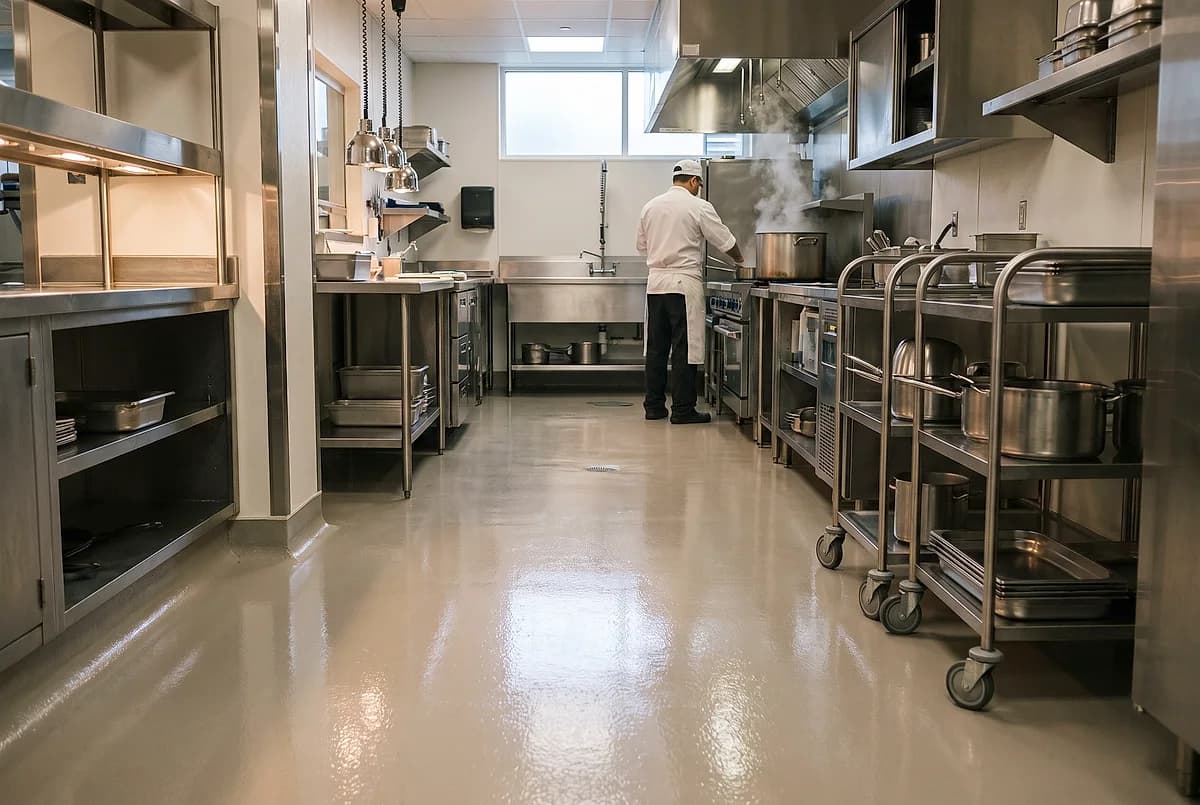
Commercial10 min read
Flooring for Hotel Wet Areas, Kitchens, and Parking Decks
Kitchens, pool decks and parking structures punish a floor daily. Which systems hold up in hotel service areas, and why.
Read it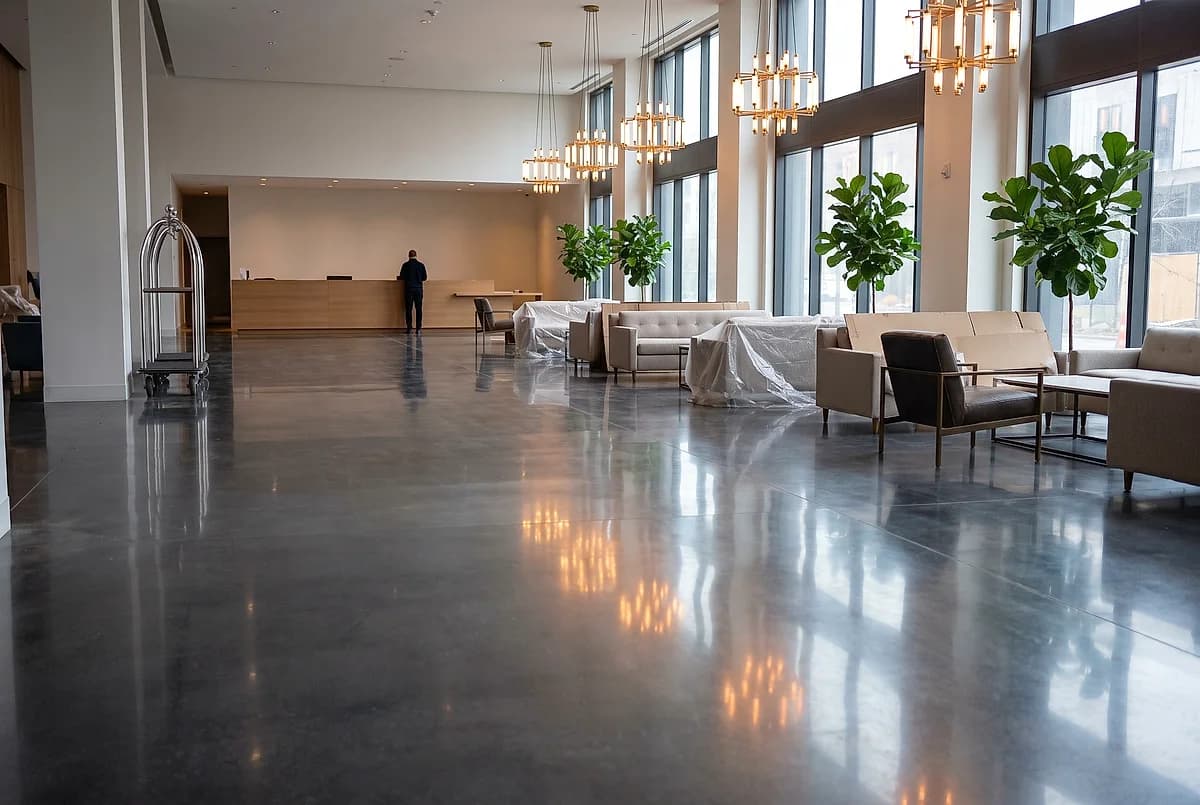
Commercial11 min read
Specifying Floors for a New Hotel Build
For owners and architects on a new build. What to write into the flooring spec so the hotel opens on a floor that lasts.
Read it
Tell us about the floor
Tell us the space and roughly how big it is.We come back with what it would cost and when we could start.
Prefer to talk? Call +1 844-876-5474
- Leads@
nationalconcretepolishing.net - 2200 NW 32nd St #600,
Pompano Beach, FL 33069 Mon to Fri, 9:00 to 5:30