
The NCP blog
How Polished Concrete Earns LEED Credits for Commercial Buildings
Commercial10 min read
Where a polished concrete floor can contribute to LEED credits for a commercial building, and where it cannot.
Commercial buildings utilizing polished concrete floors contribute directly to earning up to 15 points toward sustainable building certifications in 2026. If you are developing a new commercial property or retrofitting an industrial facility, you may be wondering how your flooring choices impact environmental compliance. We have the right article for you, covering how these durable systems meet strict environmental criteria while reducing long-term costs.
Understanding Green Building Certification In Commercial Spaces
The Leadership in Energy and Environmental Design framework remains the global standard for sustainable real estate development. According to the U.S. Green Building Council, this rating system evaluates how efficiently a commercial building uses resources and minimizes environmental impact. In 2026, achieving higher tiers of this certification is highly desirable for property owners seeking tax incentives and premium tenant leases.
Flooring selections play a substantial role in these evaluations. Facility managers must choose systems that offer longevity, minimal chemical emissions, and low environmental impact during manufacturing. Installing new carpet or vinyl frequently works against these goals due to high manufacturing energy and short replacement cycles.
By contrast, transforming the structural foundation into the final wear surface eliminates the need for secondary floor coverings entirely. It is essential to understand how this integration of structure and finish directly translates into compliance points across multiple environmental categories.
The Intersection Of Finished Slabs And Sustainable Building
Sustainable construction prioritizes material reduction and energy efficiency. When you choose to refine an existing concrete slab rather than covering it, you immediately align with these core principles. The process requires mechanical grinding and polishing, which utilizes specialized diamond tooling rather than toxic adhesives or heavy manufacturing processes.
Research from the Environmental Protection Agency emphasizes the importance of reducing construction waste. Covering a 10,000-square-foot facility with vinyl composite tile requires tons of raw materials, glues, and packaging. Refusing to add these redundant layers prevents unnecessary landfill contributions.
Furthermore, the maintenance of these finished surfaces is highly sustainable. Regular upkeep requires only water and neutral cleaners, eliminating the need for harsh stripping chemicals or synthetic waxes. This approach saves approximately $1.50 per square foot annually in commercial maintenance costs while protecting local watersheds from chemical runoff.
Specific Categories Where Your Flooring Earns Points
To maximize your certification potential, you need to understand exactly where a finished slab applies within the rating system. The framework divides points into distinct categories based on environmental impact.
Materials And Resources
The Materials and Resources category rewards projects that reduce the amount of new materials introduced into a building. By polishing the existing slab, you are utilizing 90 percent of an existing structural element. This directly contributes to the Building Life-Cycle Impact Reduction credit.
Additionally, modern densifiers and concrete treatments often carry Environmental Product Declarations. These declarations verify that the chemicals used to harden the surface meet strict environmental transparency standards. Ensure that your specifications explicitly require materials with these published declarations.
Indoor Environmental Quality
Indoor air quality is a primary focus for commercial tenant health. Traditional flooring adhesives and synthetic carpets frequently off-gas toxic chemicals for months after installation. Mechanically polished surfaces contain zero VOCs (volatile organic compounds), which immediately qualifies the space for Low-Emitting Materials credits.
Another crucial factor is daylighting. A highly refined surface acts like a mirror, bouncing natural sunlight deeper into the commercial space. This high light reflectance value directly contributes to Daylight and Quality Views credits by creating brighter, more comfortable interior environments.
Energy And Atmosphere
Energy efficiency is heavily dependent on thermal mass (the ability of a material to absorb, store, and slowly release heat). Exposed concrete provides excellent thermal mass. It absorbs heat during the day and releases it at night, which stabilizes indoor temperatures and reduces the load on HVAC systems.
Moreover, the 30 percent increase in ambient light reflection allows facility managers to lower the wattage of artificial lighting. This reduction in electrical consumption contributes directly to the Optimize Energy Performance credit.
Comparison: Traditional Commercial Flooring Versus Refined Slabs
Understanding the life-cycle advantages requires comparing standard options used in commercial construction. The data below outlines why traditional coverings often fail to support long-term sustainability goals.
| Flooring Type | Expected Lifespan | VOC Emissions | End of Life Impact |
|---|---|---|---|
| Commercial Carpet | 5 to 7 years | Moderate to High | Landfill waste |
| Vinyl Composite Tile (VCT) | 10 to 15 years | Moderate (adhesives) | Landfill waste |
| Epoxy Coatings | 10 to 20 years | Low (if specified) | Can be resurfaced |
| Polished Concrete | 20+ years | Zero | 100% Recyclable |
Essential Steps To Maximize Your Green Building Certification
Executing a sustainable flooring strategy requires careful planning during the pre-construction phase. Following a structured process ensures that no compliance points are left on the table. It is advisable to coordinate these steps closely with your general contractor and architect.
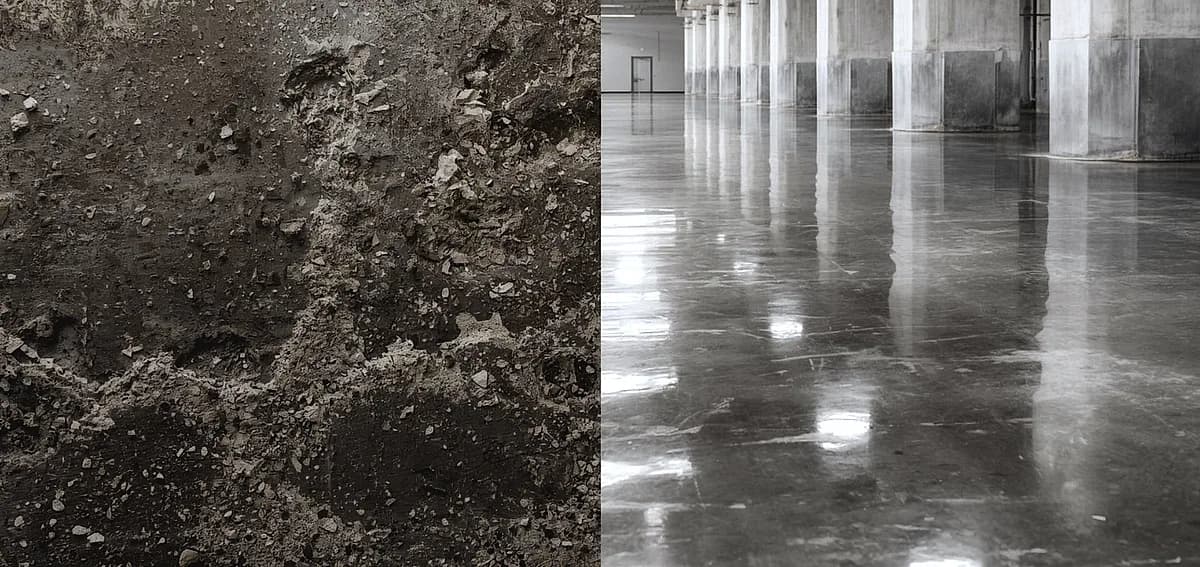
- Evaluate The Existing Slab: Before pouring new material, assess the current foundation for spalling (flaking or chipping) and structural integrity. Repairing existing flaws is significantly more sustainable than pouring a completely new foundation.
- Specify Compliant Chemicals: Ensure that all joint fillers, densifiers, and penetrating sealers meet strict low-emission criteria. Request the environmental product declarations from your contractor prior to material approval.
- Optimize The Grinding Process: Use advanced dust extraction systems during the mechanical grinding phase. High-efficiency particulate air vacuums prevent airborne silica dust from compromising the indoor environmental quality of the job site.
- Calculate Light Reflectance: Work with your lighting designer to adjust the facility’s artificial lighting plan based on the expected gloss level of the floor. This coordination guarantees you capture the energy optimization points.
- Establish A Green Maintenance Plan: Document the required neutral-cleaner maintenance protocol. Submitting this zero-chemical maintenance strategy to the certification board strengthens your application for innovation points.
Expert Perspectives On Sustainable Flooring Solutions
The shift toward utilizing structural elements as finished surfaces is widely supported by industry leaders. The American Institute of Architects consistently highlights material reduction as a primary defense against excessive commercial carbon footprints.
As Marcus Thorne, Senior Analyst at the Green Building Research Council, explains: “Integrating the structural foundation as the final finish is the most efficient design choice a facility manager can make. It entirely eliminates the manufacturing, transportation, and installation carbon footprint of secondary coverings.”
Elena Rostova, Lead Sustainability Architect at EcoDesign Collaborative, echoes this sentiment regarding mechanical efficiency. “In 2026, energy efficiency relies heavily on thermal mass. Exposed slabs regulate indoor temperatures exceptionally well, lowering the baseline operational costs of commercial heating and cooling systems.”
Finally, Dr. Julian Vance, Materials Scientist at the Environmental Building Institute, points out the long-term waste reduction. “Eliminating the cyclical replacement of vinyl or carpet prevents thousands of tons of landfill waste over a building’s lifespan. It is a permanent solution to a temporary problem.”
Navigating Common Mistakes In Environmental Certifications
Even with the best intentions, facility managers can occasionally miss out on valuable certification points due to administrative oversights. It is essential to avoid these common pitfalls during your commercial renovation.
One frequent mistake is failing to document the baseline condition of the existing slab. To claim points for material reuse, you must prove the original state of the foundation and mathematically demonstrate the percentage of the structure that was retained. Take thorough photographs and keep detailed square-footage records.
Another error occurs when contractors use polymer-modified overlays (thin cementitious layers applied over the base concrete) to fix aesthetic imperfections, but fail to check the emission ratings of the overlay. While self-leveling overlays are excellent for repairing heavy damage, they must still comply with low-emitting material standards to qualify for indoor environmental quality credits.
Lastly, ensure that your mechanical polishing process does not rely on topical acrylic sealers to generate shine. True mechanical refinement uses progressive diamond grits to close the pores of the slab. Topical waxes degrade quickly, require chemical stripping, and immediately disqualify the floor from long-term sustainability benefits.
Frequently Asked Questions
Does polished concrete count as recycled material?
While the slab itself may not be newly recycled, utilizing an existing concrete foundation counts heavily toward material reuse credits. It prevents the need to manufacture, transport, and install new flooring materials.
How many points can a commercial building earn from flooring choices?
Depending on the specific rating system and building type, sustainable flooring practices can contribute to approximately 10 to 15 points. These points are spread across material reuse, indoor air quality, and energy efficiency categories.
Are densifiers and sealers compliant with low-emitting material standards?
Most high-quality lithium and silicate densifiers used in professional applications contain zero volatile organic compounds. However, it is crucial to verify the specific product documentation before application to ensure compliance.
How does surface reflectivity impact energy credits?
A highly refined floor reflects up to 30 percent more ambient light than a matte surface. This allows you to reduce the number and wattage of overhead light fixtures, thereby lowering energy consumption and earning efficiency points.
Do we need a specialized contractor for environmental compliance?
Yes. Earning these credits requires specific dust mitigation equipment, compliant chemical application, and precise documentation. An experienced contractor ensures that the execution aligns with the strict requirements of environmental rating systems.
How often does this floor require replacement?
Unlike carpet or vinyl, a mechanically refined slab can last the lifetime of the building if properly maintained. It typically requires only basic cleaning and occasional re-burnishing, eliminating costly tear-outs and landfill waste.
Can new concrete slabs also earn sustainability points?
Yes. If you are pouring a new slab, you can specify concrete mixes that utilize fly ash or slag (recycled industrial byproducts). Finishing this new slab mechanically will still earn you indoor air quality and energy performance points.
Conclusion
Integrating your structural slab as your final finished floor is one of the most effective strategies for achieving a sustainable building certification in 2026. By reducing material waste, eliminating toxic emissions, and enhancing interior lighting efficiency, you create a healthier environment for tenants while lowering operational costs. Securing these environmental credits requires careful planning, compliant materials, and flawless execution. Our professionals at National Concrete Polishing have the expertise to guide your project to success. Contact us today to discuss your commercial flooring needs.
References
Written by

Founder and CEO
Chris Lavin is an esteemed leader in concrete polishing and epoxy coatings with a distinguished 20-year career. As founder and CEO of National Concrete Polishing and owner of Xtreme Polishing Systems, he's renowned for polishing and epoxy coating more floors than anyone globally. Chris is recognized for his innovative approach and commitment to enhancing floor durability and aesthetics. His hands-on experience and technical proficiency make him a respected authority and a valuable resource in the field of floor polishing and coatings.
Same topic
Related articles
All stories
Commercial9 min read
How Polished Concrete Solves Office Acoustic Problems
Hard floors and noise complaints. What polished concrete does to sound in an open office, and how to spec around it.
Read it
Commercial10 min read
Flooring for Hotel Wet Areas, Kitchens, and Parking Decks
Kitchens, pool decks and parking structures punish a floor daily. Which systems hold up in hotel service areas, and why.
Read it
Commercial11 min read
Specifying Floors for a New Hotel Build
For owners and architects on a new build. What to write into the flooring spec so the hotel opens on a floor that lasts.
Read it
Tell us about the floor
Tell us the space and roughly how big it is.We come back with what it would cost and when we could start.
Prefer to talk? Call +1 844-876-5474
- Leads@
nationalconcretepolishing.net - 2200 NW 32nd St #600,
Pompano Beach, FL 33069 Mon to Fri, 9:00 to 5:30