
The NCP blog
The Definitive Guide To Concrete Overlays
Polished concreteUpdated 7 min read
Cementitious overlays can then be polished or you can apply epoxy over them to create the surface that fits your needs.
If you’re planning a decorative concrete or stained concrete project, it’s important to understand what needs to be done to make your concrete slab perfect. Rather than demolishing and replacing your entire concrete floor, a cementitious overlay can be applied on top of the concrete so that it’s level. Cementitious overlays can then be polished or you can apply epoxy over them to create the surface that fits your needs.
What is a Concrete Overlay?
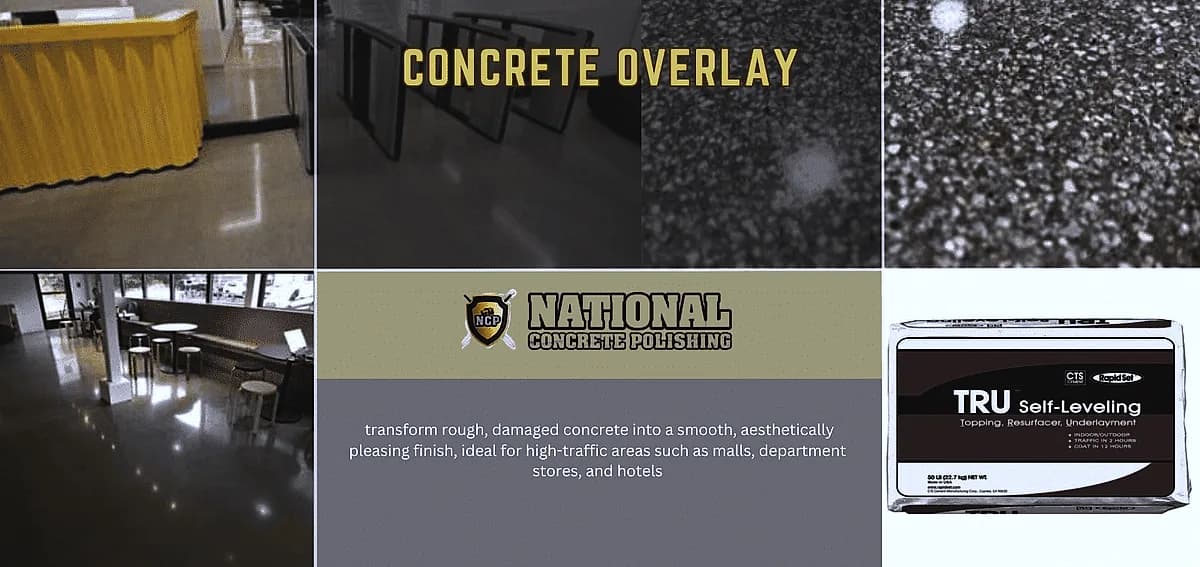
A concrete overlay is a thin layer of cement-based material, often mixed with polymers and aggregates, applied over existing concrete to restore, protect, and enhance its appearance and functionality. Overlays, like the NXT® LEVEL SP, are designed to provide a durable, attractive, and low-maintenance surface suitable for polishing, coloring, and texturing. They can transform rough, damaged concrete into a smooth, aesthetically pleasing finish, ideal for high-traffic areas such as malls, department stores, and hotels. The application process includes surface preparation, priming, and applying the overlay in one or more coats, followed by proper curing and sealing to ensure long-lasting performance and protection against wear and environmental factors.
What Is The Difference Between A Concrete Overlay and Underlayment?
Concrete overlay is primarily used to restore, protect, and enhance existing concrete surfaces, providing both aesthetic and functional improvements, such as polishing, coloring, or texturing to meet design requirements. For example, a decorative concrete overlay can resurface an old patio with cracks, giving it a fresh, attractive finish.
The installation process involves surface preparation, priming, applying the overlay material in two coats, and curing and sealing. Typically thinner than underlayment’s, overlays range from 1/4 inch to 2 inches in thickness and often include decorative elements and polymers, like NXT® LEVEL SP.
Conversely, concrete underlayment is used to prepare subfloors for installing various types of flooring, ensuring a level and smooth surface. For instance, a concrete underlayment is applied over a plywood subfloor before installing ceramic tiles in a kitchen to prevent cracking. The process involves cleaning and priming the substrate, mixing and applying the underlayment material in a single lift, and allowing it to cure before the final flooring installation.
Underlayments are generally thicker, ranging from 1/16 inch to 1-1/4 inches, and focus on providing a stable base, like NXT® LEVEL DL. While overlays are applied over existing concrete surfaces and serve as a finished surface, underlayments are applied over various substrates, including concrete, tile, and plywood, and are hidden beneath the final flooring.
If you’re looking to improve the appearance of an existing concrete surface with decorative options, choose a concrete overlay. If you need to prepare a subfloor for a smooth and level surface to support new flooring, opt for a concrete underlayment. Chris Lavin
What Is The Process For Applying A Concrete Overlay And How Long Does It Take?
1. Surface Preparation
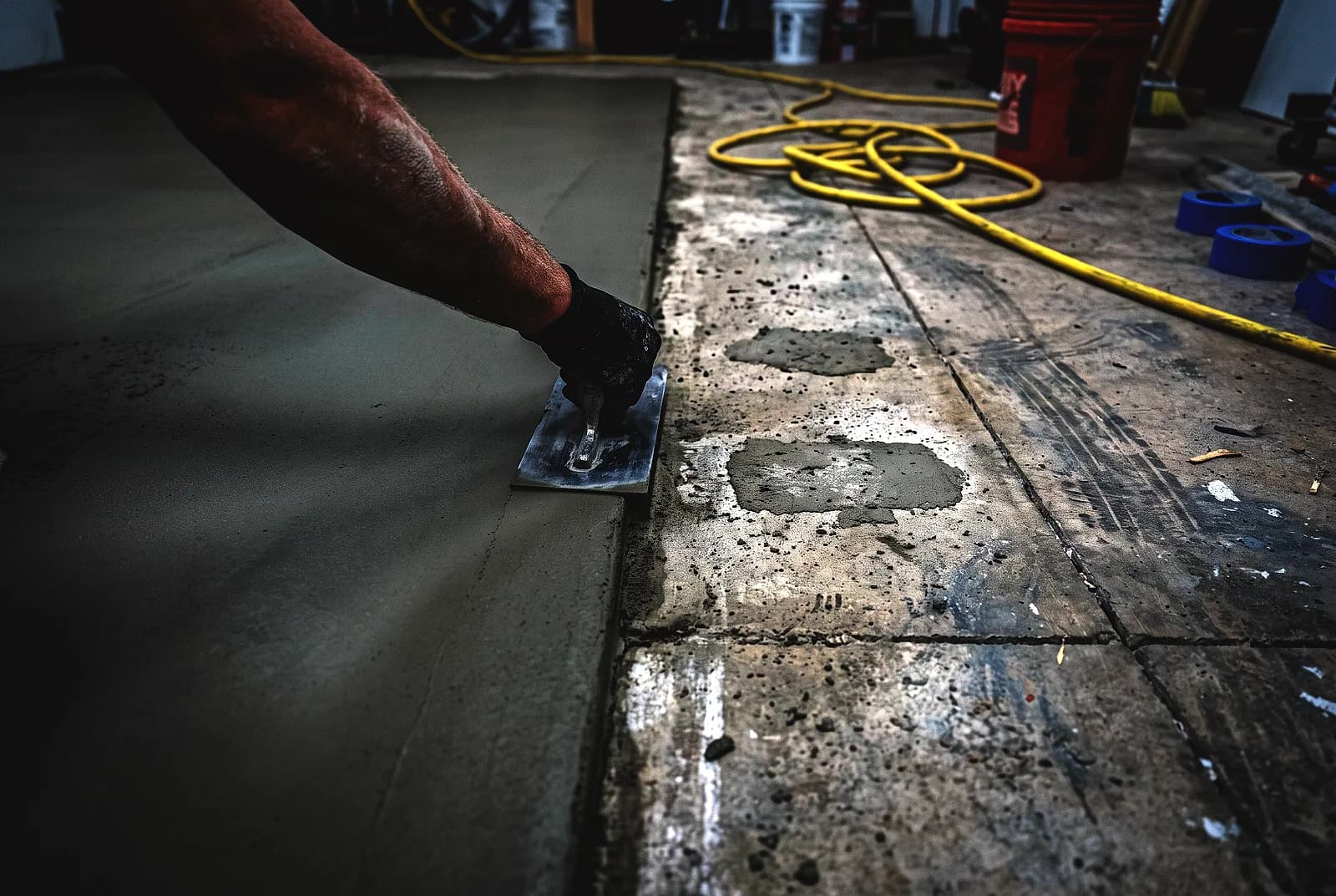
Surface preparation is the initial step in applying a concrete overlay, essential for ensuring proper adhesion and durability of the new overlay. This involves cleaning, repairing, and profiling the existing concrete surface. Cleaning removes dirt, debris, and loose material, which can be done using pressure washing or scrubbing with a strong cleaner. Repairing involves filling any cracks, holes, or imperfections on the surface to create a smooth base. Profiling, achieved through mechanical methods like grinding or shot blasting, roughens the surface to enhance the bond between the old concrete and the new overlay.
Example: For instance, if you have a driveway with visible cracks and stains, you would start by pressure washing the entire area to remove any surface contaminants. Next, you would fill the cracks with a suitable concrete repair material, ensuring a level surface. Finally, you would use a grinder to roughen the surface, increasing the overlay’s adhesion.
Timeline: Surface preparation typically takes 1-2 days, depending on the condition of the existing concrete and the area size.
2. Priming
Priming is the process of applying a bonding agent to the prepared surface to ensure a strong adhesion between the old concrete and the new overlay. This step is crucial as it enhances the overlay’s durability and prevents delamination. The primer should be applied evenly and allowed to dry according to the manufacturer’s instructions.
Example: After preparing the driveway surface, you would apply a concrete primer using a roller or brush, ensuring it covers the entire area uniformly. Allow the primer to dry completely, which might take a few hours as per the product specifications.
Timeline: Priming usually requires several hours to dry, depending on the product used and environmental conditions.
3. Mixing the Overlay
Mixing the overlay involves preparing the overlay material, which typically consists of cement, sand, and polymers. The mixture must be consistent and thoroughly blended according to the manufacturer’s guidelines to ensure a smooth application.
Example: If you are resurfacing a patio, you would mix the overlay material in a large container, ensuring all components are blended well to achieve the desired consistency.
Timeline: This step can take about 1-2 hours, depending on the amount of overlay needed.
4. Application
The application step involves spreading the overlay material onto the primed surface. This usually requires two coats: the first coat is applied thinly and evenly to fill minor imperfections, and the second coat is added after the first has set, which can be textured or patterned as desired.
Example: For a garage floor, you would first apply a thin coat of the overlay using a trowel, ensuring it covers the entire surface. After a few hours, when the first coat has set, you would apply a second coat, adding texture or patterns if desired.
Timeline: Applying the overlay typically takes 1-2 days, including the drying time between coats.
5. Curing
Curing is the process of allowing the overlay to set and harden properly, which is crucial for its strength and durability. This involves keeping the surface moist and covered for a specified period.
Example: After applying the overlay to a sidewalk, you would cover it with a plastic sheet and keep it moist by spraying water periodically, ensuring it cures properly.
Timeline: Curing usually takes 24 to 48 hours, depending on the overlay product used.
6. Sealing
Sealing is the final step, where a sealant is applied to protect the overlay from stains, moisture, and wear. The sealant should be applied evenly and allowed to dry thoroughly.
Example: For a newly overlaid driveway, you would apply a concrete sealant with a roller, ensuring it covers the surface uniformly. Allow it to dry as per the manufacturer’s recommendations before using the driveway.
Timeline: Sealing requires an additional day for application and drying.
Total Timeline For Concrete Overlay
| Step | Time Required |
|---|---|
| Surface Preparation | 1-2 days |
| Priming | Several hours |
| Mixing the Overlay | 1-2 hours |
| Application | 1-2 days (including drying time between coats) |
| Curing | 24 to 48 hours |
| Sealing | 1 day |
This table shows the entire process of applying a concrete overlay which takes 4-6 days, depending on the surface condition and specific products used. Proper adherence to each step and allowing adequate drying times is essential for achieving a durable and aesthetically pleasing result.
Where Are Concrete Overlays Typically Applied?
Common areas where concrete overlays are used are:
- Interior floors
- Patios
- Garage floor
- Driveways
- Pool decks
- Countertops
How Much Do Concrete Overlays Cost?
Concrete overlay costs vary depending on the condition of your existing slab, and how much work you want to be done in terms of color and decoration, and the thickness of the cement that needs to be applied. Typically, applying a self-leveling cement can increase costs by almost 2x for a project, however, when compared to replacing the entire floor, it is more cost-effective.
How Long Do Concrete Overlays Last?
When properly cared for, a concrete overlay can last for years. It needs to be thick, since much of its strength comes from thickness. If it’s applied too thin, it won’t be as strong as it could be, which means it’s more likely to crack and break.
If you’re tempted to save money and attempt a DIY concrete overlay project, it’s best left to professional contractors who are experienced. Many DIY resurfacing projects fail because the overlay doesn’t look as nice as the homeowner hoped, or ends up chipping, flaking, or cracking soon after installation is complete. While it may cost more upfront, the investment will pay for itself with how long it lasts.
Areas where we typically apply concrete overlays
We apply concrete overlays all over the country but the areas below a typical for concrete overlays.
Ready For Your Next Concrete Coating Project?
Want to learn more about resurfacing the concrete in your home or business? National Concrete Polishing provides free estimates on all epoxy and polished concrete projects as well as floor preparation to make it easy for you.
Written by

Founder and CEO
Chris Lavin is an esteemed leader in concrete polishing and epoxy coatings with a distinguished 20-year career. As founder and CEO of National Concrete Polishing and owner of Xtreme Polishing Systems, he's renowned for polishing and epoxy coating more floors than anyone globally. Chris is recognized for his innovative approach and commitment to enhancing floor durability and aesthetics. His hands-on experience and technical proficiency make him a respected authority and a valuable resource in the field of floor polishing and coatings.
Same topic
Related articles
All stories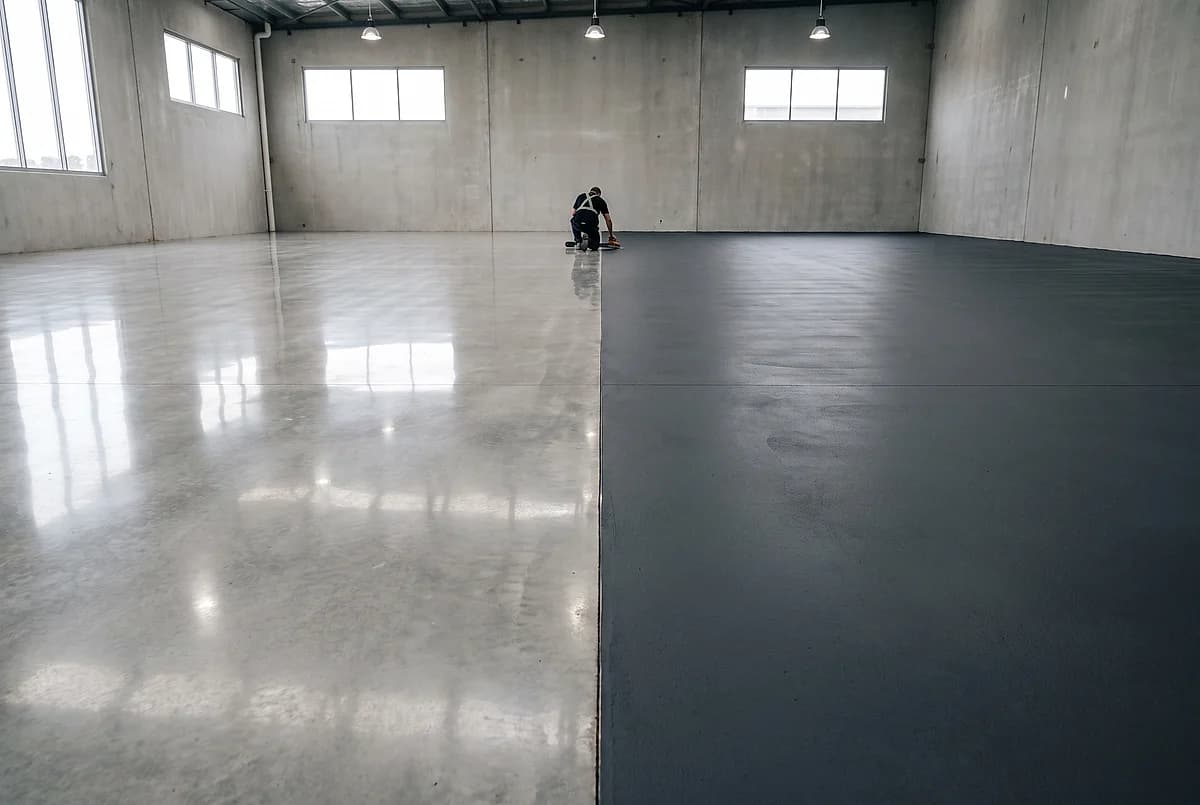
Polished concrete11 min read
Polished Concrete vs Epoxy Coatings: Which Floor Is Right for Your Space?
Two systems, two price curves, one slab. What each one costs to install and to keep, and which spaces each one actually suits.
Read it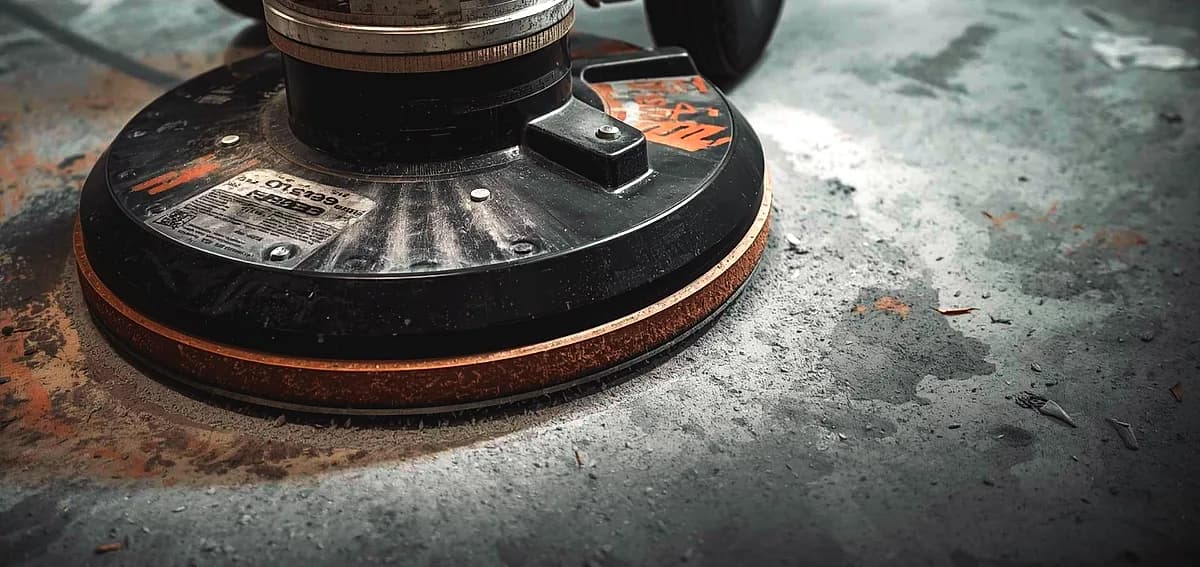
Polished concrete8 min read
What to Know Before Polishing Your Existing Concrete Slab
Before any mechanical refinement can begin, a thorough evaluation of the current foundation is required.
Read it
Polished concrete8 min read
Is Polished Concrete Worth the Investment for Miami Properties?
It is essential to distinguish between a simple topical seal and mechanically refined concrete.
Read it
Tell us about the floor
Tell us the space and roughly how big it is.We come back with what it would cost and when we could start.
Prefer to talk? Call +1 844-876-5474
- Leads@
nationalconcretepolishing.net - 2200 NW 32nd St #600,
Pompano Beach, FL 33069 Mon to Fri, 9:00 to 5:30