
The NCP blog
How to Remove Oil Stains from Driveway Effectively
ResidentialUpdated 15 min read
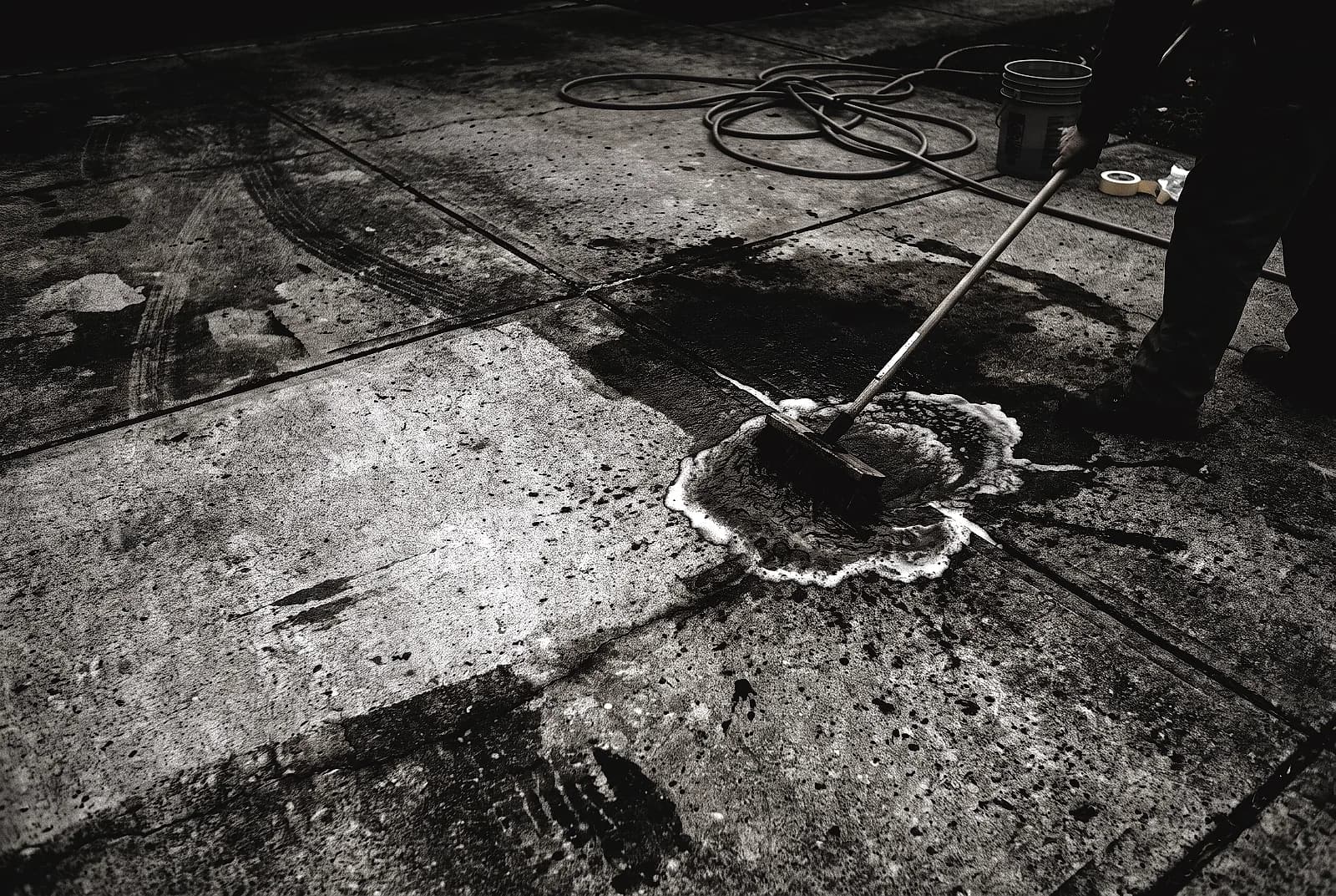
A driveway with unsightly oil stains can significantly detract from a home’s curb appeal.
A driveway with unsightly oil stains can significantly detract from a home’s curb appeal. In fact, a driveway is one of the first things people notice when approaching a house, making its maintenance crucial.
Oil spills on driveways are a common issue that can lead to lasting damage if not addressed promptly. The key to restoring your driveway’s appearance lies in understanding the type of stain you’re dealing with and applying the appropriate removal technique.
For homeowners facing this issue, there’s hope. Various methods, ranging from DIY household solutions to professional-grade treatments, can effectively eliminate oil stains. For particularly stubborn stains, seeking professional help from experts like National Concrete Polishing can provide a solution.
The Science Behind Oil Stains on Concrete
Why Does Concrete Absorb Oil So Easily?
Understanding why oil stains your driveway helps you choose the most effective removal method. Concrete is a porous material with microscopic holes and capillaries that act like tiny sponges, drawing liquids deep into its surface through capillary action.
Unlike water, oil has a low surface tension that allows it to flow easily into these tiny pores rather than beading up on the surface. Once inside, the hydrocarbons in motor oil and other automotive fluids bond with the mineral components of concrete, particularly calcium carbonate, creating stubborn stains that resist surface cleaning.
Factors That Affect Oil Stain Severity
Several factors determine how difficult an oil stain will be to remove:
Concrete porosity: Older concrete tends to be more porous due to weathering and micro-cracks, allowing deeper oil penetration. Newly poured concrete may also absorb oil quickly before it fully cures.
Temperature: Warmer temperatures decrease oil viscosity, allowing it to flow more readily into concrete pores. Hot summer days can accelerate stain penetration.
Time: Fresh stains are exponentially easier to remove than those that have sat for weeks or months. Oil continues to migrate deeper into concrete over time.
Oil type: Thicker oils like gear oil penetrate more slowly but create more persistent stains. Thinner fluids like transmission fluid spread and penetrate quickly, creating larger stained areas.
Why Surface Cleaning Often Fails
When you scrub an oil stain with detergent and water, you may lift surface residue, but the deeper oil remains trapped in the concrete pores. This is why stains often reappear after cleaning and drying. Aggressive scrubbing can actually push oil deeper or spread it to a wider area.
Effective oil removal requires products that either absorb the oil from within the pores, dissolve and emulsify the hydrocarbons so they can be rinsed away, or use biological processes to break down the oil entirely.
Common Types of Oil Stains
Various types of oil stains can affect your driveway, each with distinct characteristics and removal challenges.
Motor Oil and Engine Fluids
Motor oil and engine fluids are among the most common contaminants, typically appearing as dark spots that can deeply penetrate porous concrete surfaces.
Transmission Fluid
Transmission fluid stains are recognizable due to their reddish color and often signal potential vehicle issues that need prompt attention.
Gasoline
Gasoline stains pose safety hazards due to their flammable nature and should be cleaned immediately to prevent damage and risk.
Why Prompt Removal is Important
Prompt removal of oil stains is crucial for maintaining your driveway’s integrity and appearance.
Preventing Permanent Damage
Allowing oil to remain on concrete can lead to permanent discoloration and potential structural weakening of the driveway surface over time.
Maintaining Curb Appeal
Oil stains can significantly detract from your home’s curb appeal, potentially lowering property value and creating a negative impression.
- Motor oil and engine fluids can penetrate deeply into concrete, making removal challenging if not addressed promptly.
- Transmission fluid stains indicate potential vehicle issues that should be addressed to prevent further damage.
- Gasoline stains are not only damaging but also pose safety risks due to their flammability.
How to Remove Oil Stains from Driveway Using Household Products
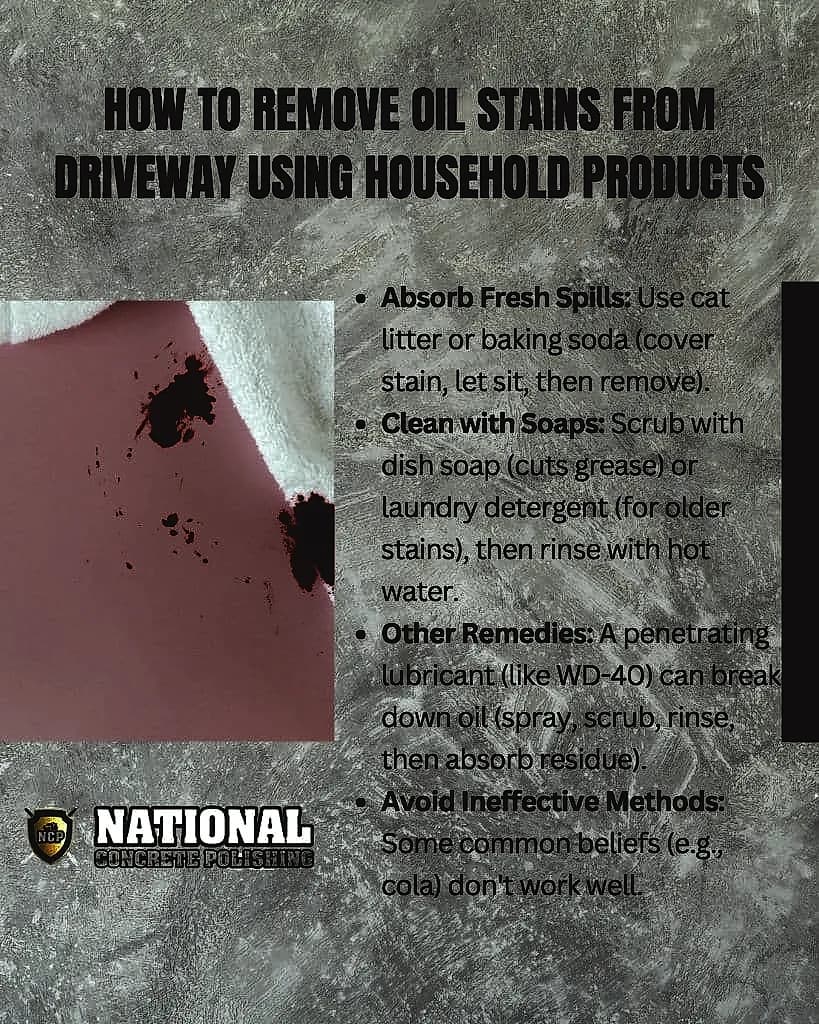
You don’t need harsh chemicals to remove oil stains from your driveway; common household products can do the trick. Various everyday items can help absorb, break down, or clean oil stains effectively.
Absorbing Fresh Oil Stains
When dealing with fresh oil spills, immediate action is crucial. Two effective methods for absorbing fresh oil stains include using cat litter and baking soda.
Cat Litter Method
The cat litter method is highly effective for fresh oil spills. Simply cover the entire stain with cat litter, allow it to sit for 30 minutes to overnight depending on the size of the stain, then sweep away and scrub the area.
Baking Soda Technique
Baking soda provides an excellent alternative absorption method. Apply a thick layer of baking soda over the stain and let it work for at least 30 minutes. This method draws the oil out of the concrete pores.
Cleaning with Kitchen and Laundry Supplies
For oil stains that require more than just absorption, kitchen and laundry supplies can be very effective. Dish soap and laundry detergent are two common household items that can help.
Dish Soap Solution
Dish soap solutions are effective at cutting through oil due to their grease-fighting properties. Apply the soap directly to the stain, scrub vigorously with a stiff brush, and rinse thoroughly with hot water.
Laundry Detergent Application
Laundry detergent works similarly to dish soap but may be more effective on older stains. Apply it generously to the stain, scrub with a bristled brush, let it sit for an hour, then rinse with hot water.
Other Household Remedies
Beyond absorption and soap-based cleaning, there are other household remedies that can help remove oil stains. One such method involves using WD-40.
WD-40 Technique
The WD-40 technique works by breaking down the oil molecules, making them easier to remove. Spray WD-40 liberally over the stain, scrub, rinse, and then follow up with an absorbent like cat litter to collect any residual oil.
What Doesn’t Work
Not all household remedies are effective. For example, using cola products is a popular belief that doesn’t hold up; it may even attract insects. It’s best to stick with proven methods.
| Method | Description | Effectiveness |
|---|---|---|
| Cat Litter | Absorbs fresh oil spills | High |
| Baking Soda | Draws oil out of concrete pores | High |
| Dish Soap | Cuts through oil with grease-fighting properties | Medium to High |
| Laundry Detergent | Effective on older stains | Medium to High |
| WD-40 | Breaks down oil molecules | Medium |
How to Get Motor Oil Off Driveway Concrete
Motor oil is the most common source of driveway stains, whether from engine leaks, oil changes, or accidental spills. Because motor oil contains hydrocarbons that bond tightly with concrete minerals, removing these stains requires a targeted approach based on stain age.
Fresh Motor Oil Spills (Less Than 24 Hours)
Acting quickly gives you the best chance of complete removal. Start by absorbing as much oil as possible before it penetrates deeper into the concrete.
Step 1: Cover the entire spill with an absorbent material such as clay cat litter, oil-dry, or even cornstarch. Avoid clumping cat litter, as clay-based products work best for oil absorption.
Step 2: Work the absorbent into the stain by stepping on it and grinding with a twisting motion. This forces the absorbent material into contact with oil in the surface pores.
Step 3: Allow the absorbent to sit for at least one hour, or overnight for larger spills.
Step 4: Sweep up the saturated material and dispose of it properly according to local regulations.
Step 5: Apply a degreaser or dish soap solution and scrub with a stiff-bristle brush. Rinse thoroughly with water.
Set-In Motor Oil Stains (Days to Weeks Old)
Older motor oil stains require methods that can draw oil up from deeper within the concrete pores.
Poultice method: Create a paste by mixing cat litter or baking soda with acetone, lacquer thinner, or a commercial degreaser. Apply this poultice in a thick layer (about 1/4 inch) over the stain and cover with plastic wrap. Allow it to sit overnight or up to 24 hours. The solvent dissolves the oil while the absorbent material draws it to the surface through osmosis.
Hot water treatment: Pour boiling water directly on the stain to heat the concrete and thin the oil. Immediately apply a concentrated degreaser, scrub vigorously, and rinse with more hot water. The heat helps the degreaser penetrate deeper and mobilizes the trapped oil.
Stubborn or Ancient Motor Oil Stains
For motor oil stains that have been baking in for months or years, consider using a commercial oil stain remover specifically formulated for concrete, or try a microbial bioremediation product. These specialized cleaners contain either powerful surfactants that emulsify deep-set oil, or beneficial microorganisms that actually consume the hydrocarbons over time.
How to Remove Transmission Fluid from Driveway Concrete
Transmission fluid presents unique challenges for driveway cleaning. Its reddish color makes stains highly visible, and its thinner consistency allows it to penetrate concrete more quickly and deeply than motor oil. Many homeowners find that transmission fluid creates some of the most stubborn stains they encounter.
Why Transmission Fluid Stains Differently
Automatic transmission fluid (ATF) is an oil-based lubricant containing dyes, detergents, and other additives that contribute to its distinctive appearance and staining properties. The red dye in most ATF can leave behind visible discoloration even after the oil itself has been removed. Additionally, transmission fluid is designed to remain stable at high temperatures, which makes it resistant to breakdown by standard cleaners.
Best Methods for Transmission Fluid Removal
Oven cleaner method: Spray a generous amount of oven cleaner (the foaming type works best) directly on the transmission fluid stain. Allow it to sit for 10 to 15 minutes, then scrub with a stiff brush and rinse with water. Repeat as necessary. The strong alkaline formula in oven cleaner is particularly effective at breaking down transmission fluid.
Hot water and degreaser: Boil water and pour it slowly and directly onto the stain to heat the concrete. Immediately spray the heated area with a concentrated degreaser like Purple Power or Simple Green. Allow it to sit for two to three minutes, then rinse with more hot water. The heat thins the transmission fluid and opens the concrete pores, allowing the degreaser to penetrate more effectively.
Dawn dish soap treatment: For moderate stains, mix a strong solution of Dawn dish soap with hot water (about 2 cups soap per gallon). Wet the stained area, apply the solution generously, and scrub with a stiff-bristle brush. The grease-cutting surfactants in Dawn help emulsify the transmission fluid so it can be rinsed away.
Addressing Residual Red Staining
Sometimes the red dye from transmission fluid leaves visible discoloration even after the oil has been removed. For these persistent color stains, try applying a paste of powdered laundry detergent (like Tide powder) mixed with just enough water to form a thick slurry. Spread it over the stain, cover with plastic wrap to keep it moist, and let it work overnight. The enzymes and optical brighteners in laundry detergent can help lift the remaining discoloration.
Professional-Grade Solutions for Stubborn Oil Stains
For particularly stubborn oil stains on your driveway, professional-grade solutions offer a more powerful cleaning action than household products. These solutions are specifically designed to tackle tough stains that ordinary cleaning products can’t handle.
Commercial Degreasers and Cleaners
Commercial degreasers specifically formulated for concrete surfaces provide more powerful cleaning action than household products and are available in various strengths for different stain severities. When selecting a commercial degreaser, consider environmentally responsible options like Prosoco Cleaner/Degreaser that effectively cut through oil without harsh acids or chemicals.
Choosing the Right Product
When choosing a commercial degreaser, look for products that are specifically designed for concrete surfaces and suitable for the type of stain you’re dealing with. Always follow the manufacturer’s instructions for dilution and application.
Application Methods
Proper application of commercial degreasers typically involves diluting the product according to manufacturer instructions, applying with a brush or sprayer, allowing brief dwell time, and thorough rinsing. Use a stiff brush to scrub the stain, and then rinse the area thoroughly with water. For tougher stains, you may need to repeat the process.
Poultice Method for Deep Stains
The poultice method is particularly effective for deep, set-in stains that haven’t responded to surface treatments, as it draws oil from deep within concrete pores. Creating a poultice involves applying a thick paste-like commercial product or creating your own with absorbent materials and a solvent, which is then applied directly over the stain.
Creating a Poultice
To create a poultice, you can use a commercial product or mix absorbent materials like baking soda or diatomaceous earth with a solvent like water or a commercial degreaser. Apply the poultice to the stain, making sure to cover it completely.
Application and Removal Process
Allow the poultice to dry completely, which can take several hours or overnight. Once dry, scrape off the poultice with a stiff brush, and then rinse the area thoroughly with water.
Chemical Solutions for Extreme Cases
For extreme cases, muriatic acid (hydrochloric acid) can be effective but requires strict safety precautions including protective gear, proper ventilation, and careful dilution (one part acid to three parts water). When using muriatic acid, never add water to acid (always add acid to water), work in a well-ventilated area, wear complete protective gear, and thoroughly rinse the area afterward.
Muriatic Acid Method
To use muriatic acid, dilute it according to the instructions above, and then apply it to the stain using a stiff brush. Allow the acid to penetrate the stain for 10 minutes before rinsing the area thoroughly with water.
Safety Precautions
When working with muriatic acid, it’s essential to take safety precautions seriously. Wear protective eyewear, gloves, and long-sleeved clothing to prevent skin contact. Work in a well-ventilated area, and avoid mixing the acid with other chemicals.
Bioremediation: Using Microbes to Remove Oil Stains
One of the most innovative approaches to oil stain removal uses beneficial microorganisms that actually consume petroleum-based compounds. These bioremediation products are preferred by the EPA as an environmentally friendly alternative to harsh chemicals and pressure washing.
How Microbial Cleaners Work
Bioremediation cleaners contain billions of specially cultivated microbes that feed on hydrocarbons found in motor oil, transmission fluid, gasoline, and other petroleum products. When applied to an oil stain, these microorganisms:
Penetrate deep into concrete pores where oil has absorbed
Break down hydrocarbon molecules through natural metabolic processes
Convert oil into harmless byproducts (primarily water and carbon dioxide)
Continue working for days or weeks after application
Benefits of Bioremediation Products
Environmentally safe: No harsh chemicals, VOCs, or solvents. Safe for use around pets, plants, and waterways.
Deep cleaning action: Microbes chase oil deep into concrete pores where traditional cleaners cannot reach.
No residue: Because the microbes consume the oil rather than just dispersing it, there is no oily residue left behind that could resurface later.
Minimal effort: Most products simply require application, occasional misting with water, and time. No heavy scrubbing needed.
Popular Bioremediation Products
Several effective microbial oil stain removers are available for residential use, including Terminator-HSD, ACT Concrete Cleaner, and Oil Eater Overnight Stain Remover. These products typically come as dry powders that are sprinkled over the stain and activated with water. Results appear gradually over two to six weeks as the microbes digest the oil.
When to Choose Bioremediation
Microbial cleaners are ideal for: large stained areas where scrubbing is impractical, old or deep-set stains that have resisted other methods, situations where you want to avoid chemicals near gardens or water features, ongoing maintenance programs for parking lots or shop floors, and preparing concrete for sealing or coating (since the oil is consumed rather than just moved around).
Methods to Avoid (What Not to Do)
Not every DIY remedy you find online is safe or effective for removing oil stains. Some popular suggestions can damage your concrete, create additional problems, or simply waste your time and money.
Skip the Cola
Despite persistent internet myths, pouring Coca-Cola or other sodas on oil stains is ineffective and counterproductive. The sugary liquid will not dissolve oil, and may attract ants and other pests to your driveway.
Be Careful with Muriatic Acid
While muriatic acid (hydrochloric acid) is sometimes recommended for stubborn stains, it is extremely caustic and can damage your concrete, leaving discolored or etched areas. The fumes are dangerous to breathe, and improper disposal can harm the environment. Use muriatic acid only as an absolute last resort, with proper protective equipment, in well-ventilated areas, and following all manufacturer safety guidelines.
Avoid Gasoline or Paint Thinner Without Absorbents
Using gasoline, paint thinner, or other solvents alone can thin the oil and drive it deeper into the concrete rather than removing it. These solvents are also highly flammable, produce harmful fumes, and can damage concrete sealers or decorative finishes. If you use solvents, always combine them with an absorbent material in a poultice application.
Do Not Use Bleach
Bleach is ineffective on oil-based stains because it cannot break down hydrocarbons. Using bleach on oil stains may discolor your concrete without removing the stain, leaving you with both an oil mark and a bleached spot.
Pressure Washer Cautions
While pressure washers can help rinse away loosened oil, using a pressure washer alone or at too high a setting can damage concrete surfaces. The high-pressure stream can etch grooves into the concrete or force oil deeper into the pores. Always use a degreaser first to break down the oil, and start with a wide spray tip before using more concentrated pressure.
Conclusion: Maintaining a Stain-Free Driveway
With the right techniques and maintenance routine, you can keep your driveway looking its best. Removing oil stains is just the beginning; maintaining a clean driveway requires regular attention to prevent future stains and damage.
To keep your driveway in top condition, consider the following tips: Regular maintenance is key to preventing oil stains from becoming permanent fixtures. Address spills immediately using absorption methods like kitty litter or baking soda. Applying a concrete sealer can also help create a barrier that makes future stains easier to clean.
For vehicle-related oil stains, it’s crucial to address the source of the leak by having your car serviced to prevent recurring stains. Establishing a regular cleaning schedule, including occasional pressure washing, can help remove minor stains before they become more difficult to treat.
Periodic cleaning with a degreaser and stiff brush can prevent small, unnoticed drips from accumulating into visible stains. A quick pass with a pressure washer once or twice a year helps maintain your driveway appearance.
If you’re dealing with stubborn stains that resist all removal methods, consider seeking professional help. National Concrete Polishing offers expert cleaning services.
By combining prompt action, appropriate cleaning methods, and preventative measures, you can maintain your driveway’s appearance and structural integrity. A clean, stain-free driveway not only enhances your home’s curb appeal but also makes a positive impression on visitors and potential buyers.
Frequently Asked Questions
What is the best way to clean motor oil off a concrete driveway?
The best way to clean motor oil off a concrete driveway is to first absorb as much of the spill as possible using cat litter or another absorbent material, then scrub the area with a degreaser or a mixture of laundry detergent and water, and finally rinse with a pressure washer.
Can I use baking soda to remove engine oil stains from my driveway?
Yes, baking soda can be used to remove engine oil stains from a driveway. Sprinkle baking soda liberally over the stain, let it sit for a period of time, then scrub and rinse the area.
Are there any commercial products available for removing old oil stains from concrete?
Yes, there are many commercial products available for removing old oil stains from concrete, including degreasers, stain removers, and poultices. These products can be found at most hardware stores or home improvement centers.
How can I prevent oil stains from forming on my driveway in the future?
To prevent oil stains from forming on a driveway, regularly inspect and maintain vehicles, use drip pans or trays under vehicles, and consider applying a concrete sealer to protect the surface.
Is it safe to use a pressure washer to clean oil stains from a driveway?
Yes, it is generally safe to use a pressure washer to clean oil stains from a driveway, but be sure to use a wide fan tip and keep the nozzle at least 12 inches away from the surface to avoid damaging the concrete.
Can I use laundry detergent to clean oil stains from my driveway?
Yes, laundry detergent can be used to clean oil stains from a driveway. Mix the detergent with water to create a solution, apply it to the stain, and scrub the area with a brush before rinsing.
Written by

Founder and CEO
Chris Lavin is an esteemed leader in concrete polishing and epoxy coatings with a distinguished 20-year career. As founder and CEO of National Concrete Polishing and owner of Xtreme Polishing Systems, he's renowned for polishing and epoxy coating more floors than anyone globally. Chris is recognized for his innovative approach and commitment to enhancing floor durability and aesthetics. His hands-on experience and technical proficiency make him a respected authority and a valuable resource in the field of floor polishing and coatings.
Same topic
Related articles
All stories
Residential8 min read
What Restaurants Need to Pass a Health Inspection Floor Check
It endures heavy foot traffic, dropped equipment, boiling water spills, and harsh degreasing chemicals daily.
Read it
Residential9 min read
How Restaurants Replace Their Floors Without Closing for Long
The average food service establishment loses approximately $3,500 in daily revenue during unexpected closures in 2026.
Read it
Residential8 min read
Where Polished Concrete Beats Epoxy in a Home (and Where It Doesn’t)
Before evaluating specific rooms, it is essential to understand how these two flooring systems function.
Read it
Tell us about the floor
Tell us the space and roughly how big it is.We come back with what it would cost and when we could start.
Prefer to talk? Call +1 844-876-5474
- Leads@
nationalconcretepolishing.net - 2200 NW 32nd St #600,
Pompano Beach, FL 33069 Mon to Fri, 9:00 to 5:30